
Due Diligence Mistakes That Cost Foreign Buyers in Japan

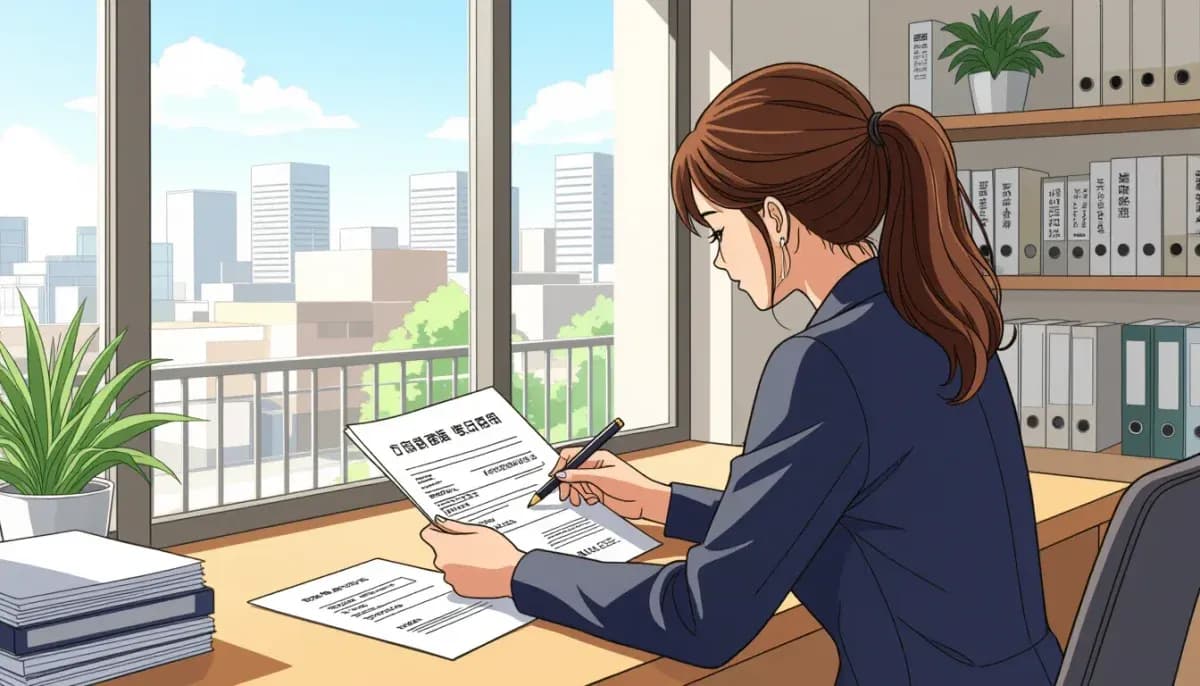
Discover the most costly due diligence mistakes foreign buyers make when purchasing property in Japan — from title verification failures to hidden fees, scams, and seismic safety oversights. Includes a complete checklist.
Due Diligence Mistakes That Cost Foreign Buyers in Japan
Buying property in Japan as a foreigner is genuinely possible — and can be an excellent investment. But the path from "interested buyer" to "registered owner" is riddled with pitfalls that trip up even experienced investors. Skipping or rushing due diligence is the single biggest driver of costly mistakes, from hidden fees that balloon your budget to outright scams that can result in total financial loss.
This guide breaks down the most critical due diligence mistakes foreign buyers make in Japan, with practical steps to avoid each one. Whether you're eyeing a city condo in Tokyo or a rural akiya, knowing what to check — and what red flags to watch for — can save you hundreds of thousands of yen and enormous stress.
Mistake 1: Not Verifying Title at the Legal Affairs Bureau
Many foreign buyers assume the property is theirs once they sign a purchase contract and hand over the money. This is a dangerous misconception. In Japan, you do not legally own the property until the transfer is registered with the Legal Affairs Bureau (法務局, Hōmukyoku). Until registration is complete, a third party could theoretically claim priority over the same property.
What to do instead:
- Always obtain an official registry extract (登記事項証明書, tōki jikō shōmeisho) directly from the Legal Affairs Bureau — never accept a copy from the seller.
- Verify that the registered owner's name matches the seller's ID documentation exactly.
- Request an "all matters" certificate to see the complete encumbrance history: existing mortgages, liens, easements, and any court orders.
- Confirm that any seller-declared mortgages have a concrete payoff arrangement in writing before closing — not just a verbal assurance they'll be cleared.
Red flag: Any agent or seller who asks you to pay money before you have personally obtained and verified the official registry extract is a major warning sign of potential fraud.
For a full walkthrough of the legal side, see our guide on Legal Procedures and Documentation for Japan Property Purchase.
Mistake 2: Underestimating Total Purchase Costs
The listed price is just the beginning. Foreign buyers routinely shock themselves — or blow their budgets — by ignoring the full stack of fees layered on top of the purchase price. In Japan, ancillary costs typically add 5–10% to the purchase price.
| Cost Item | Typical Amount |
|---|---|
| Real estate agent commission | ~3% of price + ¥60,000 + 10% consumption tax |
| Judicial scrivener (司法書士) fees | ¥200,000–500,000 |
| Registration license tax | 0.4–2% of assessed value |
| Real estate acquisition tax | 3–4% of assessed value (billed months later) |
| Stamp duty | ¥10,000–60,000 depending on price |
| Fire insurance / earthquake insurance | ¥100,000–300,000+ upfront |
| Monthly condo management fee | ¥15,000–40,000/month |
| Monthly repair reserve fund | ¥5,000–30,000/month |
| Surprise special assessments (older condos) | ¥500,000–2,000,000 one-time |
On a ¥50 million property, you should budget ¥2.5–5 million in additional upfront costs — plus ongoing monthly fees if buying a condominium. Older buildings often have underfunded repair reserves, which means a large special assessment notice could arrive months after you move in.
Pro tip: Always request the condominium's management association financial statements (管理組合の財務諸表). A depleted repair reserve fund in a building that's 20+ years old is a clear warning sign.
For a detailed breakdown, read our article on Hidden Costs and Fees When Buying Property in Japan.
Mistake 3: Skipping the Seismic Safety Check
Japan sits on the Pacific Ring of Fire. Earthquakes are not a hypothetical — they are a scheduled inevitability. Buying a property without checking its seismic safety standard is a mistake that could cost you your life, not just your money.
Japan revised its Building Standards Act in 1981, introducing the "new earthquake resistance standard" (新耐震基準, shin taishin kijun). Buildings constructed or significantly renovated before June 1981 may not meet current standards.
Seismic Due Diligence Checklist:
- Confirm when the building was constructed. Request the 建築確認通知書 (Building Inspection Certificate).
- For pre-1981 buildings, check whether a seismic retrofit (耐震補強, taishin hokyō) has been performed and obtain documentation.
- Review the local government's hazard map (ハザードマップ) to assess flood, landslide, tsunami, and liquefaction risk for the specific parcel.
- For land purchases, get a soil investigation report — liquefaction during earthquakes can make land worthless.
Buildings that don't meet the 1981 standard are harder to sell, harder to finance, and potentially unsafe. Banks often refuse mortgages on pre-1981 structures without retrofit certification.
Mistake 4: Trusting Unverified Agents or Sellers
Japan's real estate industry is regulated, but unlicensed middlemen do operate — particularly in online channels targeting foreigners. Three scams consistently appear in reports from foreign buyers:
- Unlicensed middlemen who collect introduction fees or deposits without the legal authority to facilitate a transaction.
- Title confusion: paying a seller who doesn't actually have the legal right to sell.
- The "cheap akiya trap": rural homes listed for ¥0–¥1 million that come with hidden demolition costs, access road restrictions, or rebuilding prohibitions due to old zoning classifications.
How to verify a legitimate agent:
- Every licensed real estate agent in Japan must display a 宅建業免許番号 (real estate license number). Verify it through the Ministry of Land, Infrastructure, Transport and Tourism (MLIT) official database.
- Licensed agents are legally required to provide a 重要事項説明書 (jūyō jikō setsumeisho) — an Explanation of Important Matters — before you sign any contract. If no such document is provided, walk away.
- Never wire money via informal channels (Western Union, PayPal Friends & Family, cryptocurrency) to any seller or agent. Legitimate Japanese transactions use official bank transfers to verified business accounts.
For more context on common scams and protection strategies, see Bamboo Routes' guide to Japan property risks and pitfalls.
Mistake 5: Misreading the Important Matters Disclosure
The 重要事項説明書 (Explanation of Important Matters) is a legally mandated document that every licensed agent must present to the buyer before signing. It discloses zoning, legal constraints, building condition, hazard zone status, boundary issues, and much more.
For foreigners, this document presents two major risks:
- Language barrier: It is written entirely in formal Japanese legal language. Machine translation is unreliable for legal nuance.
- Assumed comprehension: Agents are legally required to explain the document verbally, but if that explanation is in Japanese and the buyer nods along without understanding, problems discovered later have limited legal recourse.
What to check in the jūyō jikō setsumeisho:
- Zoning classification — does it allow your intended use?
- Road access — is the property legally connected to a public road? Landlocked properties with only private road access have severe rebuild restrictions.
- Building coverage ratio and floor area ratio — affects what you can build or renovate.
- Known history — disclosure of deaths, structural defects, past flooding.
- Any registered easements or servitudes affecting the land.
Always hire a bilingual licensed agent or bilingual judicial scrivener to translate and explain this document in full before signing anything. This is non-negotiable.
Learn more about the complete home buying process in Japan, including when and how the jūyō jikō setsumeisho is presented.
Mistake 6: Ignoring Land Rights and Boundary Issues
Japan distinguishes sharply between owning land and owning buildings on leased land. Many foreign buyers purchase what they think is freehold (both land and building) only to discover afterward that they own the structure but lease the land under a 借地権 (shakuchiken) — land lease agreement.
Leasehold arrangements:
- Have fixed terms (often 30–50 years) that affect resale value dramatically.
- May require consent fees (更新料, kōshinryō) upon renewal.
- Can make mortgage financing significantly harder.
- The land lease may have terms that revert the building to the landowner.
Additionally, boundary disputes (境界問題) are surprisingly common in Japan, particularly in older neighborhoods where cadastral surveys haven't been updated in decades. Buying a property with unclear boundaries can trigger expensive legal disputes and prevent future construction or sale.
Recommended actions:
- Request a 地積測量図 (cadastral survey map) from the Legal Affairs Bureau and compare it to actual site measurements.
- Confirm all four boundary markers (境界標) are physically present on the property.
- If boundaries are unclear, commission a fresh boundary survey before purchase.
Read more about different property types and their legal structures in our Types of Properties Available in Japan guide.
Mistake 7: Overlooking Ongoing Tax and Administrative Obligations
Buying property in Japan doesn't end your financial obligations — it begins a set of annual responsibilities that many foreigners are unprepared for.
| Obligation | Details |
|---|---|
| Fixed Asset Tax (固定資産税) | ~1.4% of assessed value annually, billed in 4 installments |
| City Planning Tax (都市計画税) | Up to 0.3% of assessed value in urban areas |
| Real Estate Acquisition Tax | One-time, 3–4% of assessed value, billed months after purchase |
| Income reporting (for non-residents) | Rental income must be reported in Japan and potentially home country |
| Tax withholding (non-resident sellers) | If you later sell as a non-resident, buyers must withhold 10.21% of sale price |
Foreign buyers who do not live in Japan must also appoint a tax representative (納税管理人) who can receive notices and pay taxes on their behalf. Failure to do so can result in penalties and complications when trying to sell later.
For a complete picture of ongoing costs, see our dedicated article on Property Taxes and Annual Costs of Owning Property in Japan.
Building Your Due Diligence Team
No amount of online research replaces having the right professionals on the ground in Japan. Here's the team every foreign buyer should assemble:
- Bilingual licensed real estate agent — preferably one with verified experience working with foreign buyers.
- Judicial scrivener (司法書士) — handles registration, verifies title, prepares legal documents. Independent from your agent.
- Building inspector — conducts physical inspection of structure, systems, and any visible defects.
- Tax accountant (税理士) — advises on purchase structure, annual obligations, and eventual exit strategy.
The combined cost of this team is typically ¥200,000–700,000, but it can prevent mistakes that cost 10–100 times more.
For real-world case studies of how foreign buyers have navigated these challenges — both successes and costly errors — read Gaijin Buy House's collection of foreigner home purchase experiences. For a comprehensive overview of the full due diligence process from an investor's perspective, Property Access's due diligence guide for Japan is also highly recommended.
Summary: Your Due Diligence Checklist
Before signing any Japan property purchase contract, verify:
- [ ] Official registry extract obtained directly from Legal Affairs Bureau
- [ ] Registered owner matches seller's ID
- [ ] All mortgages/liens confirmed dischargeable with written payoff plan
- [ ] Full cost budget including 5–10% ancillary fees prepared
- [ ] Condominium repair reserve fund reviewed
- [ ] Building construction date confirmed; seismic standard verified
- [ ] Local hazard map reviewed for flood, landslide, liquefaction risk
- [ ] Agent license verified via MLIT database
- [ ] Jūyō jikō setsumeisho reviewed with bilingual professional
- [ ] Land rights (freehold vs. leasehold) confirmed in writing
- [ ] Boundary markers physically present and cadastral map obtained
- [ ] Ongoing tax obligations understood and tax representative appointed if non-resident
If you are just beginning your Japan property journey, our Complete Guide to Buying Property in Japan as a Foreigner is the best place to start. For expats researching life in Japan more broadly, Living in Nihon is an excellent resource covering everything from visas to day-to-day life. And if navigating the visa and work side of your Japan plans alongside property ownership is relevant, For Work in Japan provides practical guidance on employment and residency.
Due diligence in Japan is not optional — it is the only reliable protection a foreign buyer has. The paperwork is dense, the language is a barrier, and the legal system assumes knowledge that most newcomers don't have. Invest in the right professionals, take nothing at face value, and verify everything through official sources before you sign.

Originally from Vietnam, living in Japan for 16+ years. Graduated from Nagoya University, with 11 years of professional experience at Japanese and international companies. Sharing information about buying property in Japan for foreigners.
View Profile →Related Articles

Consumer Protection Rights for Foreign Property Buyers in Japan
Complete guide to consumer protection rights for foreign property buyers in Japan. Learn about the Statement of Important Matters, mandatory warranties, title registration, and dispute resolution options available to non-Japanese buyers.
Read more →
Legal Dispute Resolution for Property Issues in Japan
Facing a property dispute in Japan? Learn how to resolve legal issues as a foreigner — from mediation and arbitration to court litigation. Practical step-by-step guide with costs, timelines, and attorney tips.
Read more →
Skipping Property Inspection: Consequences and How to Avoid
Skipping a property inspection in Japan can cost you millions of yen in hidden defects. Learn what happens when you skip, how much inspections cost, and how to protect yourself as a foreign buyer.
Read more →
Rushing the Purchase: Why Taking Your Time Matters in Japan
Discover why patience is essential when buying property in Japan. Learn the real costs of rushing a purchase, what due diligence steps take time, and how to protect yourself as a foreign buyer.
Read more →
Language Barrier Mistakes When Buying Property in Japan
Avoid costly language barrier mistakes when buying property in Japan. Learn how to handle Japanese contracts, mortgage documents, and legal disclosures as a foreign buyer.
Read more →
Property Investment Scheme Fraud in Japan: Warning Signs
Protect yourself from property investment scheme fraud in Japan. Learn the top warning signs, common scam types targeting foreigners, and essential due diligence steps to avoid losing your money.
Read more →