
Property Investment Scheme Fraud in Japan: Warning Signs

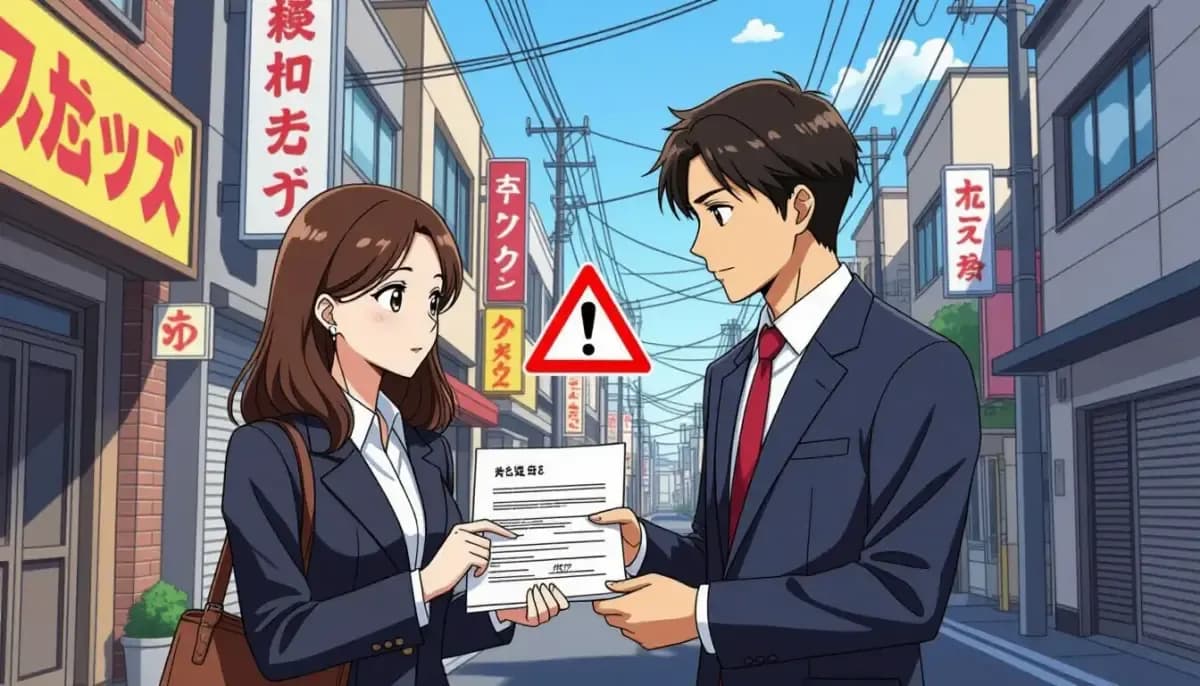
Protect yourself from property investment scheme fraud in Japan. Learn the top warning signs, common scam types targeting foreigners, and essential due diligence steps to avoid losing your money.
Property Investment Scheme Fraud in Japan: Warning Signs Every Foreigner Must Know
Japan has a well-earned reputation as one of the world's safest countries, with reliable institutions and a low crime rate. But that very reputation creates a dangerous blind spot: many foreign property buyers assume that "safe Japan" means risk-free real estate transactions. The truth is more nuanced. Investment scheme fraud does exist, and foreigners — especially those unfamiliar with Japanese procedures, language, and verification systems — are disproportionately vulnerable.
Victims in Japan lost a record US$833 million to romance and investment scams in 2024, while losses from all types of specialized fraud soared 58.6% to ¥71.8 billion in the same year (57,324 fraud cases reported). Understanding the warning signs could save you millions of yen and years of legal headaches.
This guide breaks down the most common property investment fraud schemes targeting foreigners in Japan, the red flags that signal danger, and the concrete steps you can take to protect yourself.
The Most Common Property Investment Fraud Schemes in Japan
1. Unlicensed Intermediary Scams
The most widespread scam involves someone posing as a "helpful English-speaking agent" who collects upfront fees — framed as translation costs, reservation fees, holding deposits, or application charges — before disappearing or denying any legal responsibility.
These operators are not licensed real estate agents. They exploit the fact that many foreigners search for English-language help and trust someone who speaks their language over verifying credentials. In reality, all legitimate real estate agents in Japan must hold the "takuchi tatemono torihiki gyosha" (宅地建物取引業者) license. This license is mandatory and verifiable through the Ministry of Land, Infrastructure, Transport and Tourism (MLIT) official database.
2. Title Confusion and Fraudulent Sellers
In title scams, the buyer pays someone who is not legally authorized to sell the property. The seller may use forged documents, impersonate the real owner, or exploit legal ambiguities around inherited or jointly-owned properties. This is especially common with older rural properties (akiya) where ownership records may be complex.
The certified registry extract (登記事項証明書, touki jikou shomeisho) — obtained directly from the Legal Affairs Bureau (法務局, Houmukyoku) — is the definitive record of ownership. Never rely solely on documents provided by the seller or agent.
3. Fake High-Yield Investment Schemes (Whole-Building Scams)
These sophisticated scams have been widely reported to concern Japan's regional banking sector. They typically target high-income salaried workers, doctors, and business professionals, offering whole-building investments (entire rental apartment buildings) in regional areas priced from tens to hundreds of millions of yen.
The scheme works by grossly inflating guaranteed or estimated market rents — far above actual market rates — to manufacture artificially high yield projections and sale prices. Share houses are particularly vulnerable because it's difficult for buyers to independently verify market-rate rents. Once the buyer takes ownership, the guaranteed rent collapses, revealing the investment is deeply unprofitable.
4. Fake Listings on English-Language Platforms
Fraudulent listings scrape authentic photos from major Japanese property portals like SUUMO, HOME'S, or Airbnb, then repost them on English-language Facebook groups, expat forums, and classifieds at suspiciously attractive prices. These fake agents then demand immediate deposits via wire transfer, PayPal, or cryptocurrency before disappearing.
Warning indicators include: photos that appear on multiple listings, communication exclusively through messaging apps, vague property addresses, and pressure to pay before viewing.
5. Akiya (Abandoned House) Traps
Japan's rural depopulation has created millions of abandoned homes (akiya), sometimes listed for very low prices or even free. While legitimate akiya opportunities exist, fraudsters exploit the apparent bargain to push buyers toward properties with severe hidden problems: unpermitted structures, legal rebuilding restrictions, demolition requirements costing ¥2–5 million, access issues (no road frontage), shared title disputes, or contaminated land.
Critical Warning Signs: Red Flags That Should Stop You Cold
The following warning signs are your early-detection system. If you encounter any of these, halt the transaction and seek independent legal advice before proceeding.
| Warning Sign | Why It's Dangerous |
|---|---|
| Upfront fees before registry documents | Classic advance-fee fraud; no licensed agent asks for payment before providing documentation |
| Agent cannot show license number | All legitimate Japanese agents are legally required to display their license |
| Too-good-to-be-true rent yields | Inflated yields are the engine of whole-building investment fraud |
| Communication only via LINE or WhatsApp | Legitimate firms communicate through verifiable business channels |
| Pressure to decide "today" | Artificial urgency prevents due diligence — a hallmark of fraud |
| Photos reused across multiple listings | Indicates stolen images from SUUMO or other portals |
| No verifiable company address | Licensed real estate companies must have registered business addresses |
| Seller resists providing registry documents | The certified extract is your right to review; resistance is a serious red flag |
| Contracts only available in Japanese with no translation | Not inherently illegal, but exploited to hide unfavorable terms from foreign buyers |
| Guaranteed rent with suspiciously high returns | Legally meaningful "guarantees" are heavily regulated; fake guarantees are common in fraud schemes |
How to Verify — Your Due Diligence Checklist
Protecting yourself from property fraud in Japan requires specific, concrete actions — not just general caution.
Verify the Agent's License
Every licensed real estate broker in Japan must have a 宅地建物取引業者 (takuchi tatemono torihiki gyosha) license issued by either the Ministry of Land, Infrastructure, Transport and Tourism (for brokers operating across prefectures) or by the prefectural governor (for single-prefecture operations). Their license number must be displayed in their office and on all documents.
You can verify any license through MLIT's online database. If the agent claims to be licensed but their number does not appear, walk away immediately.
Obtain the Registry Extract Yourself
Do not rely on registry documents provided by the seller or agent. Obtain the certified registry extract (登記事項証明書) directly from your nearest Legal Affairs Bureau (法務局). This document costs approximately ¥600 and shows the legal owner, any mortgages or liens, and any encumbrances. Match the name on the extract to the seller's government-issued ID.
Check for Disciplinary Records
Beyond verifying that a license exists, check whether the agent has any disciplinary history. MLIT maintains a separate disciplinary records database that is publicly accessible.
Hire Independent Professionals
- Judicial scrivener (司法書士, *shihouShoshi*): Required for property registration; choose your own, not one introduced by the selling agent.
- Building inspector: Essential for any property over 20 years old, particularly for structural issues, water intrusion, and unpermitted additions.
- Licensed surveyor: For rural or boundary-ambiguous properties, survey the land independently.
For Investment Properties: Verify Market Rents Independently
Never accept yield projections from the seller. Research actual rental listings on SUUMO and HOME'S for comparable properties in the same area, and cross-check with local property management companies for realistic vacancy rates and maintenance costs.
Where to Report Property Investment Fraud in Japan
If you believe you have encountered fraud or have already been victimized, the following organizations handle complaints and investigations:
- National Consumer Affairs Center of Japan (消費者庁, *Shouhishacho*): Handles consumer fraud complaints
- Japan Financial Services Agency (金融庁, *Kinchou*): For investment product fraud involving financial instruments
- Prefectural Real Estate Division: Investigates complaints against licensed (and unlicensed) agents
- National Police Agency (警察庁): File a criminal complaint if fraud has occurred
Foreigners who do not speak Japanese can access consultation services through the Japan Support Center for Foreigners (外国人在留支援センター, FRESC) in Tokyo, which provides multilingual legal advice.
How Japan Compares Internationally
It's important to maintain perspective. Japan ranks 14th globally in the World Justice Project Rule of Law Index 2024, with particularly strong civil justice rankings. Property fraud is significantly less common here than in many other countries popular with foreign investors.
The Japanese legal system provides strong contract enforcement, clear property registration systems, and regulatory frameworks that protect buyers. Most licensed real estate agents operate professionally and ethically. The risks outlined in this article are real but manageable with proper due diligence — the same diligence you should apply to any major property purchase anywhere in the world.
Additional Resources for Foreign Property Buyers in Japan
Understanding fraud prevention is just one part of buying property successfully in Japan. For a comprehensive overview of the entire purchase process, including financing, legal procedures, and market research, see our Complete Guide to Buying Property in Japan as a Foreigner.
If you're evaluating whether to proceed with an investment property, understanding the Japan Real Estate Market Overview and Trends helps you benchmark any yield projections against realistic market data.
Before signing any contract, familiarize yourself with the Legal Procedures and Documentation for Japan Property Purchase — particularly the mandatory "important matters explanation" (重要事項説明) that licensed agents must provide before any purchase agreement.
Also review Hidden Costs and Fees When Buying Property in Japan so that inflated cost estimates in fraudulent schemes don't catch you off-guard.
For guidance on how to choose legitimate, verified real estate agents and companies, Gaijin Buy House has a dedicated guide on choosing real estate agents in Japan for foreigners — a critical first step before engaging with any agent.
For practical tips on what to look for when buying property and navigating Japan's property market safely, Living in Nihon's guide for foreign buyers covers mortgage considerations and essential legal points.
For those considering Japan for employment alongside property investment, For Work in Japan provides useful context on financial planning and legal status considerations that intersect with property ownership.
For additional fraud-awareness resources specifically about Japan's real estate market, Bamboo Routes' guide on avoiding real estate scams in Japan and Japan Property Central's Buyer Beware section are both excellent references.
Summary: Stay Alert, Stay Safe
Property investment fraud in Japan is real, but it is preventable. The key principles are simple:
- Never pay any fee before seeing and verifying official registry documents.
- Always verify your agent's license number through MLIT's official database.
- Obtain registry extracts yourself — do not rely on seller-provided copies.
- Be deeply skeptical of guaranteed high yields on investment properties.
- Hire independent professionals: your own scrivener, inspector, and surveyor.
- Recognize that urgency is a weapon — legitimate sellers don't need your decision today.
Japan's property market offers genuine opportunities for foreign investors and homebuyers. Protecting yourself from the minority of fraudulent actors is about knowledge, process, and appropriate skepticism — not fear.

Originally from Vietnam, living in Japan for 16+ years. Graduated from Nagoya University, with 11 years of professional experience at Japanese and international companies. Sharing information about buying property in Japan for foreigners.
View Profile →Related Articles

Consumer Protection Rights for Foreign Property Buyers in Japan
Complete guide to consumer protection rights for foreign property buyers in Japan. Learn about the Statement of Important Matters, mandatory warranties, title registration, and dispute resolution options available to non-Japanese buyers.
Read more →
Legal Dispute Resolution for Property Issues in Japan
Facing a property dispute in Japan? Learn how to resolve legal issues as a foreigner — from mediation and arbitration to court litigation. Practical step-by-step guide with costs, timelines, and attorney tips.
Read more →
Due Diligence Mistakes That Cost Foreign Buyers in Japan
Discover the most costly due diligence mistakes foreign buyers make when purchasing property in Japan — from title verification failures to hidden fees, scams, and seismic safety oversights. Includes a complete checklist.
Read more →
Skipping Property Inspection: Consequences and How to Avoid
Skipping a property inspection in Japan can cost you millions of yen in hidden defects. Learn what happens when you skip, how much inspections cost, and how to protect yourself as a foreign buyer.
Read more →
Rushing the Purchase: Why Taking Your Time Matters in Japan
Discover why patience is essential when buying property in Japan. Learn the real costs of rushing a purchase, what due diligence steps take time, and how to protect yourself as a foreign buyer.
Read more →
Language Barrier Mistakes When Buying Property in Japan
Avoid costly language barrier mistakes when buying property in Japan. Learn how to handle Japanese contracts, mortgage documents, and legal disclosures as a foreign buyer.
Read more →