
Tower Mansions in Japan: Pros, Cons and Investment Potential

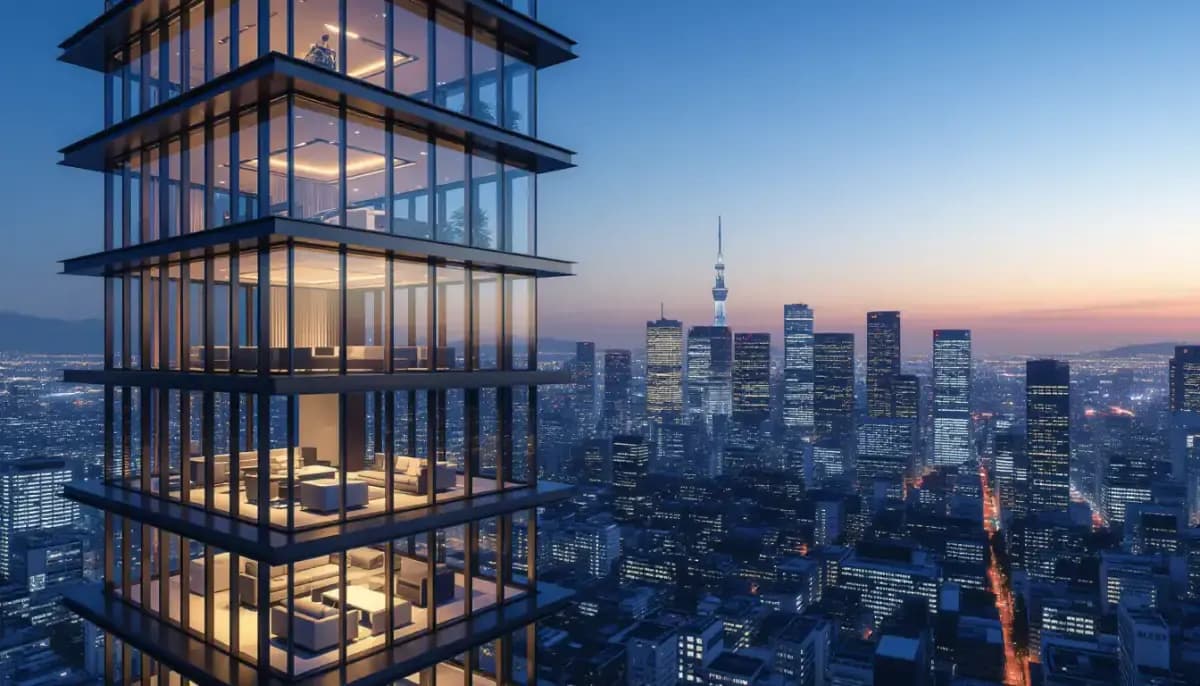
Complete guide to tower mansions (タワーマンション) in Japan for foreign buyers. Discover pros, cons, pricing, investment potential, and practical tips for buying a high-rise condo in Tokyo or Osaka.
Tower Mansions in Japan: Pros, Cons and Investment Potential
Tower mansions (タワーマンション) have become one of the most recognizable symbols of modern urban Japan. These soaring high-rise condominiums — typically defined as buildings of 60 meters or more, generally exceeding 20 floors — dominate the skylines of Tokyo, Osaka, Yokohama, and other major cities. For foreigners considering buying property in Japan, tower mansions represent both an attractive lifestyle option and a potentially lucrative investment. But they also come with unique risks and challenges that every buyer should understand before signing the contract.
This guide covers everything you need to know: what tower mansions are, their pros and cons, pricing realities, investment potential, and practical advice for foreign buyers.
What Is a Tower Mansion in Japan?
The term "tower mansion" (タワーマンション, or タワマン in casual speech) refers specifically to high-rise condominium buildings. Japan's first modern tower mansions appeared following building code deregulation in the late 1990s, though the concept itself traces back to a 1976 development in Saitama. The construction boom peaked in 2007 when 75 new tower mansion buildings were completed in a single year.
Today, tower mansions are a dominant force in Japan's urban real estate market. Nationwide, approximately 1,641 tower mansions exist. Tokyo alone has 183 buildings containing 84,012 units as of a 2019 survey. Across Tokyo and 35 other prefectures, some 333,789 units exist in 1,289 buildings. Remarkably, 1 in every 5 new residences sold in Japan is now a tower mansion unit.
Tower mansions are concentrated heavily in certain locations:
- ~80% are located in the Tokyo and Kansai (Osaka/Kyoto) regions
- Many cluster around major train stations and waterfront areas
- Popular districts include Toyosu, Harumi, Shiodome, Umeda, and Namba
For a broader overview of the Japanese property market, see our Japan Real Estate Market Overview and Trends.
The Pros: Why Buyers Love Tower Mansions
Tower mansions attract buyers for compelling reasons. Here are the most significant advantages:
1. Prime Locations Near Transport Hubs
Tower mansions are almost always built near major train stations and urban amenities. This gives residents unparalleled access to public transportation, shopping, dining, and employment — a key factor in Japan where car ownership is less common and commute convenience drives property values.
2. Stunning Views and Natural Light
High-rise living means panoramic city views, abundant natural light, and freedom from the noise and shadows of street-level living. Floors above the 20th floor in particular offer views that dramatically enhance quality of life — and since 2021, they have also commanded measurably stronger price appreciation than lower floors.
3. Premium Amenities
Tower mansions typically offer amenities that regular condominiums cannot match:
- 24-hour concierge and security services
- Key-card access and surveillance systems
- Fitness centers, party rooms, sky lounges
- Automated parcel lockers and guest suites
- Luxury lobby designs often compared to five-star hotels
4. Lower Property Tax Per Unit
Because land ownership in a tower mansion is shared fractionally among all unit owners, each individual owner's land value share is very small — and Japan's property taxes are partly based on land value. This means tower mansion owners often pay lower property taxes than buyers of standalone houses on equivalent land. See our guide to Property Taxes and Annual Costs in Japan for details.
5. Modern Construction and Seismic Safety
The vast majority of Japan's tower mansions were built in the last 25 years under modern seismic building codes. These buildings incorporate the latest earthquake-damping technologies, making them structurally among the safest in the country.
6. Strong Foreign Buyer Demand
Japan imposes no restrictions on foreign ownership of real estate. Tower mansions have become especially popular with East Asian buyers: Chinese nationals represented 40% of customers at Tokyo real estate agencies as of 2023, and foreign purchase ratios reached 20% in premium developments like Toyosu Tower. This sustained international demand supports values. Learn more at Can Foreigners Buy Property in Japan? Legal Rights.
The Cons: Risks and Downsides to Consider
No property type is perfect, and tower mansions have significant drawbacks that buyers often overlook.
1. Disaster Vulnerability — Especially Flooding
Perhaps the most underappreciated risk is infrastructure vulnerability in disasters. Tower mansions typically house critical building systems — electrical panels, elevators, water pumps, sewage — in underground basements. During Typhoon Hagibis in October 2019, a 47-story tower mansion near Musashi-Kosugi Station suffered catastrophic flooding when its underground infrastructure was inundated. Hundreds of residents were stranded for weeks. Following this incident, Japan's Ministry of Land began mandating updated disaster-preparedness standards for tower condominiums.
While upper floors are safe from flooding, loss of elevators and utilities can render them essentially uninhabitable for extended periods.
2. Seismic Swaying
Modern tower mansions are engineered to survive earthquakes through controlled swaying rather than rigid resistance. This means upper floors can sway significantly — sometimes for several minutes — during major seismic events. While this is by design and safe, it can be psychologically distressing and can damage furniture and belongings not secured for earthquakes.
3. Maintenance Fund Shortfalls
This is one of the most serious long-term risks. According to 2018 data, 28% of tower mansions had insufficient reserve funds for major repairs, and 40% were behind on management fee collection. Tower mansions require expensive large-scale restorations every 12–15 years — exterior scaffolding alone for a 50-story building costs vastly more than for a standard low-rise. Under Japanese condominium law, 75% owner agreement is required to approve special repair budgets. With hundreds of unit owners, achieving consensus is often extremely difficult.
Some urban planners and local officials (including a former mayor of Kobe) have expressed concern that aging tower mansions could eventually become difficult-to-manage "hulking ruins" as maintenance coordination breaks down.
4. Low Rental Yields
For investors focused on cash flow, tower mansions in central Tokyo offer modest rental yields. Cash yields range from 2.5% to 5.2% — low by international standards. Most investment returns come from capital appreciation rather than income.
5. Financing Challenges for Foreigners
Japanese nationals with stable employment can sometimes borrow up to 100% of a property's purchase price. Foreign buyers, especially non-permanent residents, typically face requirements of 20–30% down payment and may have access to fewer lenders. See our guide to Mortgages and Home Loans for Foreigners in Japan for current options.
6. Long-Term Demographic Risk
Japan's population is declining and aging. While major urban centers currently maintain demand, long-term investors must factor in potential softening of demand in secondary cities and peripheral tower mansion locations.
Tower Mansion Pricing: What to Expect in 2025
Tower mansion prices have risen sharply in recent years, especially in Tokyo and Osaka.
| Location | Price Range (per unit) | Approx. Price per Tsubo |
|---|---|---|
| Central Tokyo (Chiyoda, Minato, Chuo) | ¥80M–¥500M+ | ¥60M/tsubo |
| Greater Tokyo (Shibuya, Shinjuku, Toyosu) | ¥50M–¥200M | ¥30M–¥50M/tsubo |
| Osaka City Center (Umeda, Namba) | ¥40M–¥150M | ¥27M/tsubo |
| Osaka (Toyosu, Bayside) | ¥25M–¥80M | ¥15M–¥25M/tsubo |
| Yokohama/Kawasaki | ¥35M–¥120M | ¥20M–¥35M/tsubo |
| Nagoya, Fukuoka | ¥20M–¥80M | ¥12M–¥25M/tsubo |
Key pricing benchmarks for 2025:
- Average price of new apartments in greater Tokyo reached ¥104.85 million in March 2025 — a 37.5% year-over-year increase
- Luxury condos in central Tokyo have appreciated 64% since 2021
- Tokyo property prices are projected to increase 5–6% annually through 2025
- A luxury 46th-floor unit in Osaka was priced at ¥2.5 billion (~300 sq m)
Investment Potential: Should Foreigners Buy Tower Mansions?
Tower mansions are a compelling investment for the right buyer profile, but clear-eyed assessment of the numbers is essential.
Capital appreciation has been strong, particularly in central Tokyo and Osaka. Luxury condos in premium wards have outperformed broader market gains. Post-2021, upper-floor units (20th floor and above) in non-central wards have shown meaningfully stronger appreciation than lower floors — likely reflecting the premium placed on views and status. In premium central wards (Chiyoda, Minato, Chuo), floor level matters less; location prestige dominates.
Rental income is modest relative to purchase prices. Tower mansions are better suited to investors targeting capital gains than those seeking strong yield.
Foreign buyer competition creates both opportunity and risk. Sustained demand from overseas buyers (particularly East Asian investors) supports pricing, but it also means competition is intense and prices in popular buildings can be bid up quickly.
Currency effects matter. For USD, EUR, or AUD-based buyers, yen weakness in recent years has made Japanese property purchases cheaper in foreign-currency terms — but also means future proceeds converted back to foreign currency may be reduced if the yen strengthens.
For resources on the buying process, visit Living in Nihon for lifestyle context, and Gaijin Buy House for practical purchasing guidance tailored to foreign buyers.
Floor Level: Does Higher Mean Better?
The relationship between floor level and value is nuanced:
- Pre-2021: No consistent price premium between high and low floors
- Post-2021: Floors 20 and above show measurably stronger appreciation, particularly in non-premium wards
- Central premium wards (Chiyoda, Minato, Chuo): Floor level shows minimal price impact — location and building brand dominate
- View obstruction matters: Units facing other high-rises lose much of their premium; south-facing units with unobstructed views command the highest prices
Practical implication: if you're buying for investment upside, prioritize upper floors in well-located buildings outside the absolute premium central wards, where the floor premium has more room to be recognized by the market.
Practical Tips for Foreign Buyers
- Work with a bilingual real estate agent experienced in tower mansions — management rules, repair fund status, and building documentation require careful review. Resources at For Work in Japan can help with broader Japan relocation context.
- Always check the repair reserve fund balance before buying. A building with an underfunded repair reserve is a financial liability. Request the 管理費・修繕積立金 (management fee and repair fund) records.
- Review the 管理組合 (management association) minutes for the past 2–3 years. Disputes, repair delays, or low meeting attendance are warning signs.
- Understand the evacuation and disaster plan for the specific building, including whether critical infrastructure is flood-protected.
- Budget for higher monthly costs: Tower mansion monthly fees (管理費 and 修繕積立金) are higher than standard condos — often ¥30,000–¥80,000/month or more for large units.
- Consult a tax advisor about Japanese property taxes, rental income reporting, and implications in your home country. See Hidden Costs and Fees When Buying Property in Japan for a full breakdown.
- Secure financing early. Foreign buyers face stricter mortgage requirements. Start the financing process before making offers. See our full guide: Step-by-Step Home Buying Process in Japan for Foreigners.
Conclusion: Are Tower Mansions Right for You?
Tower mansions offer an undeniably compelling combination of location, lifestyle, and investment potential in Japan's major cities. For foreigners who want urban convenience, modern amenities, and exposure to one of Asia's most sophisticated real estate markets, they represent an excellent option — especially in Tokyo and Osaka where international demand and economic fundamentals remain strong.
But buyers must go in with eyes open. The risks of disaster vulnerability, maintenance fund shortfalls, low rental yields, and long-term demographic pressure are real and must be weighed carefully. For long-term capital appreciation plays in central locations, tower mansions have delivered for informed buyers. For cash-flow-focused investors, other property types may offer better returns.
For more on the types of properties available in Japan, see Types of Properties Available in Japan: A Complete Guide. For comprehensive information on buying as a foreigner, start with our Complete Guide to Buying Property in Japan as a Foreigner.
Sources: realestate.co.jp, Tokyo Portfolio, Japan Today, InvestorVisa.jp, RealEstateGuide.jp

Originally from Vietnam, living in Japan for 16+ years. Graduated from Nagoya University, with 11 years of professional experience at Japanese and international companies. Sharing information about buying property in Japan for foreigners.
View Profile →Related Articles
Japan Condo Resale Value: Key Factors That Affect Price
Discover the key factors that affect Japan condo resale value — from station proximity and building age to management quality and market timing. Essential guide for foreign buyers.
Read more →
Luxury and Branded Condominiums in Japan
Complete guide to buying luxury and branded condominiums in Japan as a foreigner. Covers Aman Residences, Ritz-Carlton, tower mansions, prices, costs, and investment potential in Tokyo and beyond.
Read more →
Rental Rules and Regulations for Japan Condominiums
Complete guide to Japan condominium rental rules for foreigners: lease agreements, deposits (shikikin/reikin), house rules, noise policies, pet restrictions, subletting laws, move-out obligations, and tenant rights explained.
Read more →
Japan Condo Building Inspection: What to Check Before Buying
Complete guide to condo building inspections in Japan for foreign buyers. Learn inspection types, costs (¥40,000–¥150,000), seismic standards, and critical documents to review before signing.
Read more →
Earthquake Safety Concerns in Older Japan Condominiums
Buying an older condo in Japan? Learn about the critical 1981 seismic code, risks of pre-1981 buildings, retrofitting options, and how to protect yourself as a foreign buyer.
Read more →
Japan Condo Common Facilities and Amenities Guide
Discover what common facilities to expect in Japanese condominiums — from auto-lock entrances and parcel lockers to gyms and concierge services. Learn about management fees, what to inspect, and what foreign buyers should know before purchasing.
Read more →