
Supermarket and Shopping Convenience: Evaluating Japan Neighborhoods

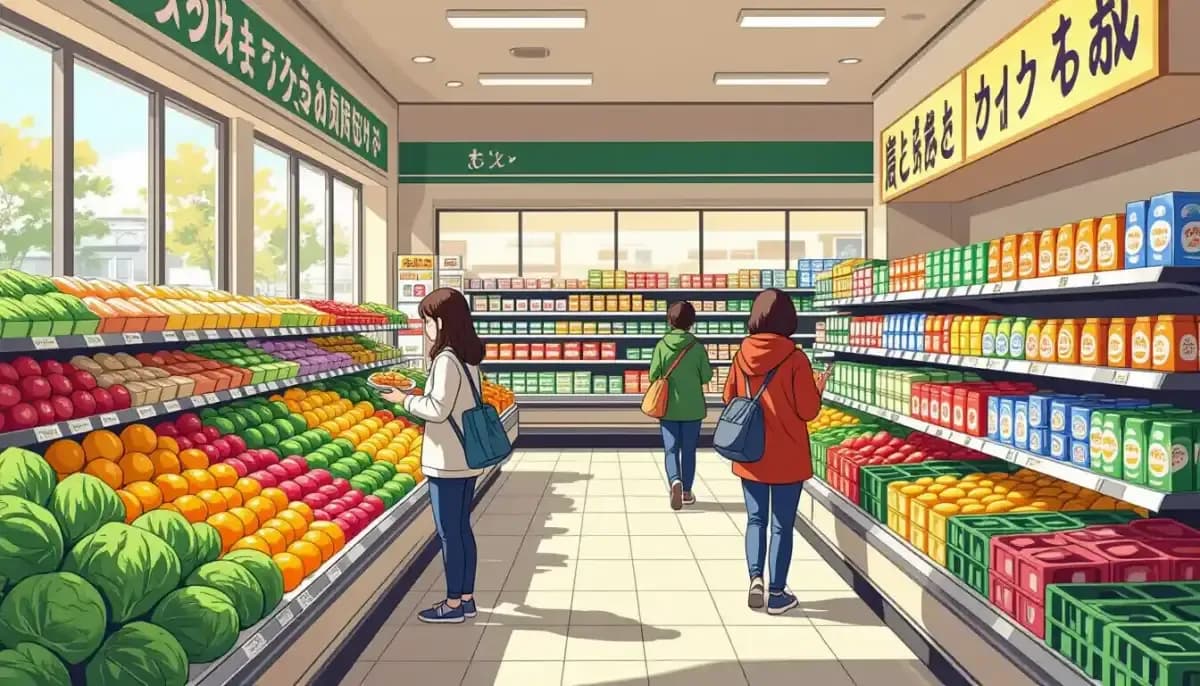
How to evaluate supermarket and shopping convenience when buying property in Japan. Covers major chains, konbini density, expat-friendly stores, and what proximity to retail means for property values.
Supermarket and Shopping Convenience: Evaluating Japan Neighborhoods
When you're buying property in Japan as a foreigner, the location of supermarkets, convenience stores, and daily shopping options can make or break your quality of life. Japan's retail landscape is unlike anywhere else in the world — a dense network of konbini (convenience stores), neighborhood supermarkets, and specialty food shops woven tightly into residential areas. Understanding what shopping infrastructure exists in a neighborhood, and how to evaluate it before you buy, is an essential step in the home-buying process.
This guide walks you through how to assess supermarket and shopping convenience in Japanese neighborhoods, which chains to look for, and why retail access matters more in Japan than in most countries.
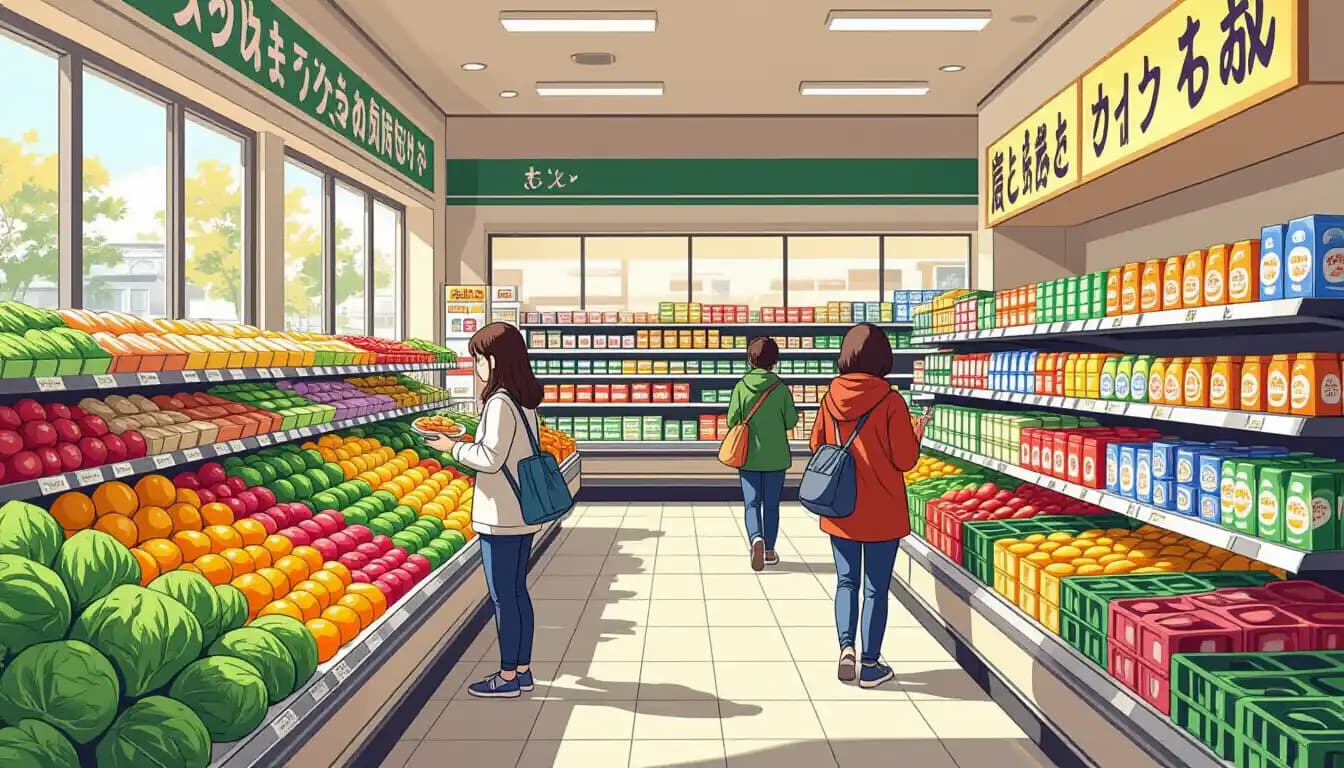
Why Shopping Access Matters When Buying Property in Japan
Japan's urban density means that most city neighborhoods have excellent shopping access — but there's a big range between "convenient" and "excellent." For foreign buyers especially, the difference between a neighborhood with an AEON supermarket and one with only a small local store can significantly affect daily life.
Unlike many Western countries, Japanese households — particularly in cities — tend to shop more frequently and in smaller quantities. Refrigerator sizes are smaller, apartments have less storage space, and freshness is prized. This means proximity to a supermarket isn't just a convenience: it's a practical necessity.
For foreigners specifically, access to international food items, English-language labeling, and stores familiar with serving non-Japanese customers adds another layer of importance. A neighborhood that scores well on shopping convenience will have:
- At least one full-size supermarket within 10 minutes on foot
- Multiple convenience stores (konbini) within a 5-minute walk
- Ideally, one or more stores with international food sections or English signage
- A drugstore (drakkusu-toa) for household goods and over-the-counter medications
When evaluating a neighborhood before purchase, shopping infrastructure should be on your checklist alongside factors like train station proximity and neighborhood safety.
Japan's Convenience Store Network: A Neighborhood Essential
Japan's convenience store density is genuinely extraordinary. As of 2023, there are over 56,000 convenience stores operating nationwide — approximately 45.24 stores per 100,000 people, or roughly one store per 2,210 residents. To put that in perspective: Tokyo alone has over 7,400 konbini.
The three dominant chains are:
| Chain | Store Count | Market Share | Notable Features |
|---|---|---|---|
| 7-Eleven | 21,208 | 37% | Widest network, strong food quality |
| FamilyMart | 16,636 | 29% | Popular desserts, good ATM network |
| Lawson | 14,476 | 25% | Natural Lawson health-food sub-brand |
| Others (Ministop, etc.) | ~4,000 | 9% | Regional variations |
Together, these three chains control approximately 92% of all konbini in Japan. In any well-populated residential neighborhood, you'll find at least one of these within a 5-minute walk.
What makes Japanese konbini remarkable isn't just their density — it's their functionality. Beyond food and drinks, they offer:
- ATM services (especially important: Japan is still largely cash-based)
- Utility bill payments (electricity, gas, water)
- Postal and courier services
- Ticketing for events, transport, and theme parks
- Hot prepared foods (onigiri, sandwiches, hot snacks, full meals)
- Printing and copying services
For foreigners, the Japan Post Bank and 7-Bank ATMs in many konbini accept international cards — a critical feature to check when scoping out a neighborhood.
Major Supermarket Chains and What They Offer Expats
Japan's supermarket landscape is fragmented but well-developed. Across the country, there are approximately 6,000 supermarket stores operating within a food retail sector valued at over $413 billion. Here's a breakdown of the major chains and what they mean for foreign residents:
AEON Group
AEON is Japan's largest retail group and the gold standard for expat-friendly supermarkets. Major AEON malls and AEON supermarkets offer:
- Multilingual signage in up to 10 languages
- Tax-exempt shopping counters for non-residents
- Extensive international food sections
- Imported wines, cheeses, and specialty items
AEON stores tend to be larger and are often found near major train hubs or in suburban shopping complexes. Neighborhoods near an AEON tend to be popular with foreign buyers.
Seiyu (Walmart-owned)
With over 300 stores, primarily near train stations, Seiyu offers prices 20–30% lower than upscale competitors. Many locations operate 24 hours. The Walmart connection means occasional Western food products appear in stock.
Gyomu Super
A cult favorite among expats and budget-conscious residents, Gyomu Super specializes in bulk frozen foods at wholesale prices. Many locations are expanding their halal food sections — making them increasingly attractive to Muslim expats and those cooking international cuisines.
Seijo Ishii
For those who want quality imports, specialty items, and gourmet products, Seijo Ishii is the premium option. More expensive, but carries an impressive range of European and international foods. Common in upscale Tokyo neighborhoods.
National Azabu (Tokyo)
Serving Tokyo's international community since 1962, National Azabu in Hiroo is the legendary expat grocery store. Its neighborhood — Minato-ku — consistently ranks as one of the most expat-friendly in Japan, in part because of retail access like this.
For more information on expat-friendly shopping options and daily life resources, see Living in Nihon's comprehensive guide and the expat community resources at For Work in Japan.
How to Evaluate Shopping Convenience Before Buying
Before committing to a property, use these strategies to assess the shopping landscape of the neighborhood:
Use Google Maps or Apple Maps
Search for "スーパー" (supermarket), "コンビニ" (convenience store), and "ドラッグストア" (drugstore) around the property address. Check walking distances. In Japan, anything within 10 minutes on foot is considered convenient.
Check the Walk Score Equivalent
Japan doesn't use Walk Score, but real estate listing sites like SUUMO, Home's, and At Home often list the number of minutes to the nearest supermarket. This is a standard metric in Japanese real estate listings.
Visit at Different Times of Day
Evening time sales — typically between 7 PM and 8 PM — are when supermarkets mark down prepared foods and perishables by 20–50%. This is a major part of how many Japanese households manage their food budgets. Visiting in the evening lets you see real shopping patterns in the neighborhood.
Look for Multi-Store Strategy Opportunities
Experienced residents in Tokyo and other cities often rotate among several supermarkets — using Life for weekly staples, Seijo Ishii for specialty items, and Gyomu Super for bulk frozen goods. A neighborhood that has multiple options within walking distance is significantly more valuable than one with a single store.
For a complete pre-purchase neighborhood evaluation, refer to the neighborhood visit checklist which covers shopping access alongside other key livability factors.
Shopping by Neighborhood: Tokyo, Osaka, and Beyond
Retail access varies significantly by city and district. Here's what to expect in Japan's major markets:
Tokyo
Tokyo's best neighborhoods for shopping access include:
- Minato-ku (Hiroo, Azabu, Roppongi): Highest concentration of international food stores, premium supermarkets, and expat-focused retail. National Azabu, Nissin World Delicatessen, and multiple Seijo Ishii locations.
- Shinjuku-ku and Shibuya-ku: Dense konbini networks, multiple supermarket chains, and Takashimaya food halls (depachika) within walking distance.
- Setagaya-ku: More residential, but well-served by AEON, Ito-Yokado, and the Tokyu network of stores.
Osaka
Osaka's Namba, Shinsaibashi, and Umeda neighborhoods offer exceptional shopping density, while residential areas in Nishi-ku and Kita-ku provide a strong mix of supermarkets and konbini. Osaka also has a robust international food scene reflecting its position as a foodie capital.
Smaller Cities
In cities like Fukuoka, Nagoya, and Sapporo, the same chain networks apply — but density drops in outer residential zones. Always verify supermarket access specifically rather than assuming urban convenience.
For city-specific property buying guidance, see our guides on buying property in Tokyo and buying property in Osaka.
Grocery Shopping Tips for Foreign Buyers in Japan
Once you've chosen a neighborhood with good shopping access, these practical tips will help you navigate Japan's supermarkets:
Understanding taxes: Food in Japan is taxed at a reduced 8% rate (not the standard 10% consumption tax). This means groceries are slightly cheaper relative to other goods — a useful detail when budgeting.
Reusable bags are standard: Plastic bags cost ¥1–¥5 at checkout. Bring a reusable shopping bag — this is universal practice across Japan.
Reading labels: Look for "アレルギー情報" (allergy information) and "原材料" (ingredients) sections on packaging. Major chains like AEON are increasingly adding English translations to common products.
International food availability: While basic international cooking staples are available at most large supermarkets, specialty items (certain cheeses, cuts of meat, specific sauces) may require a dedicated trip to an international food store. Factor this into how you evaluate a neighborhood if international cuisine is important to you.
Konbini food quality: Japanese convenience store food is genuinely good — hot prepared meals, fresh sandwiches, salads, and desserts are standard. Many expats rely on konbini for breakfast and quick lunches. The industry generated over ¥12.7 trillion in sales in 2023, and nearly 50% of Japanese consumers visit at least once a week.
For more practical guidance on daily life in Japan, Gaijin Buy House offers resources specifically for foreign property buyers navigating Japanese neighborhoods. Additional expat grocery tips can be found at Japan Living Life's supermarket guide and the Japan Living Guide's retail overview.
Shopping Convenience as a Property Value Driver
Real estate professionals in Japan consistently flag shopping access as a direct factor in property values. Properties within walking distance of a major supermarket command a premium — similar to the documented effect of school districts on property values or proximity to train stations.
The relationship works in both directions: neighborhoods with strong shopping infrastructure tend to maintain property values better over time, as they remain attractive to a broad pool of buyers and renters. Conversely, areas where supermarkets close or consolidate can see softening demand.
For foreign buyers thinking about resale value or rental income alongside personal use, evaluating current shopping infrastructure and any planned changes (new shopping centers, store closures) is a worthwhile part of due diligence.
Final Checklist: Evaluating Neighborhood Shopping Before You Buy
Use this checklist when visiting a neighborhood before purchase:
| Item | What to Check | Ideal Result |
|---|---|---|
| Nearest supermarket | Walking distance | Under 10 minutes |
| Supermarket size | Full-size or small local | Full-size preferred |
| International options | Does it carry imported/halal/English-labeled goods? | At least 1 store with international section |
| Konbini count | Number within 5-min walk | 2 or more |
| Drugstore | Within 10 minutes | Yes |
| Evening time sales | Available nearby? | Yes (20-50% discounts) |
| ATM access | International-card-compatible ATM | 7-Bank or Japan Post Bank nearby |
| Multiple store options | Can you rotate between chains? | Yes (at least 2-3 options) |
Shopping convenience is one of the most practical and underappreciated factors in choosing where to buy property in Japan. With a little research and a thorough in-person visit, you can ensure that your new neighborhood supports the daily life you're looking for — from quick konbini runs to full international grocery hauls.
For a complete framework on choosing the right Japanese neighborhood, visit the full guide to choosing a Japanese neighborhood as a foreign buyer.

Originally from Vietnam, living in Japan for 16+ years. Graduated from Nagoya University, with 11 years of professional experience at Japanese and international companies. Sharing information about buying property in Japan for foreigners.
View Profile →Related Articles
Neighborhood Visit Checklist Before Buying Property in Japan
Use this comprehensive neighborhood visit checklist before buying property in Japan. Covers safety, transport, noise, schools, and community quality for foreign buyers.
Read more →
Future Development and Urban Planning in Japanese Neighborhoods
Understand Japan's urban planning system, major redevelopment projects, and compact city policies before buying property. Essential guide for foreign buyers navigating Japanese neighborhoods.
Read more →
Understanding Neighborhood Demographics in Japan
Learn how neighborhood demographics affect property values in Japan. Discover foreign resident concentrations by ward, aging rural trends, and how to research demographics before buying.
Read more →
Japan Neighborhood Walkability and Livability Scoring Guide
Learn how to score and evaluate Japanese neighborhoods using walkability indexes, livability criteria, and expat-friendly tools. Compare cities, wards, and key factors before buying or renting in Japan.
Read more →
Best Expat Community Neighborhoods in Japan by City
Discover the best expat neighborhoods in Japan's major cities — Tokyo, Osaka, Fukuoka, Yokohama, Kyoto, and Kobe. Practical guide for foreign residents on where to live, costs, and community resources.
Read more →
Checking Flood and Earthquake Risk for Japan Neighborhoods
Learn how to check flood and earthquake risk for any Japan neighborhood using official hazard maps, J-SHIS, and real estate tools. Essential guide for foreign property buyers.
Read more →