
Japan Property Insurance Renewal and Annual Review Guide

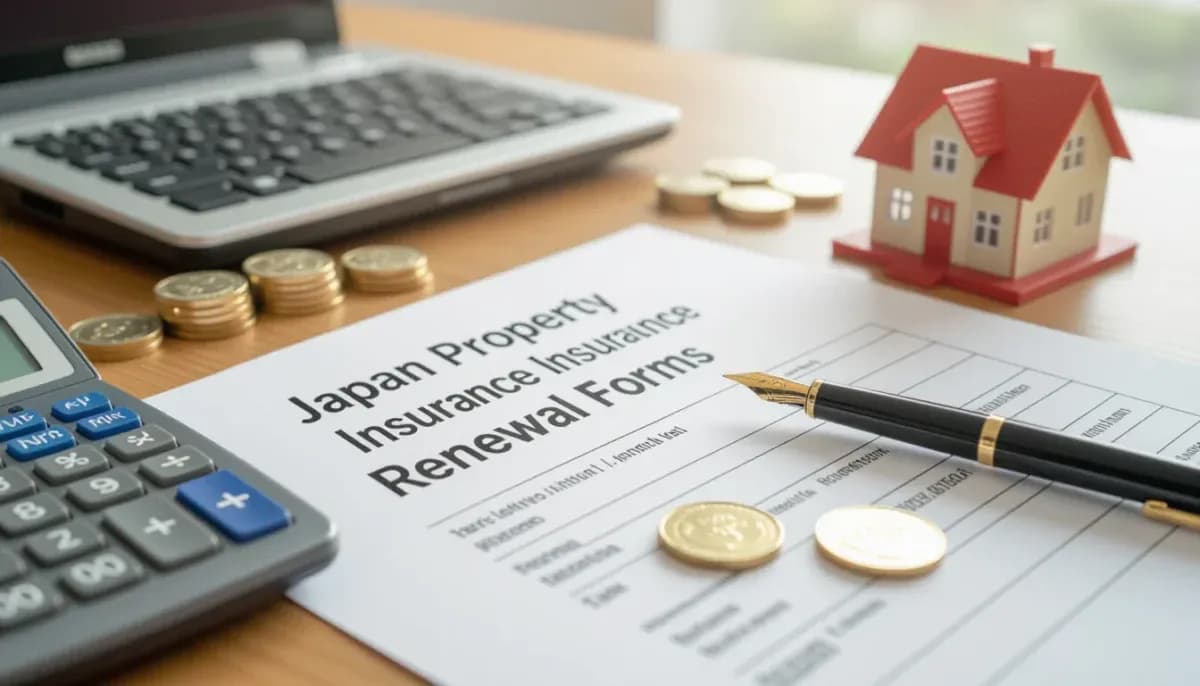
A complete guide to reviewing and renewing property insurance in Japan as a foreign owner. Covers fire insurance, earthquake insurance, the 2025 policy term changes, costs, and annual review checklists.
Japan Property Insurance Renewal and Annual Review Guide
Owning property in Japan comes with ongoing responsibilities — and one of the most important is making sure your insurance coverage stays current, adequate, and aligned with your evolving situation. Whether you are a foreign resident managing a home you live in or an overseas investor watching your asset from abroad, the annual review and renewal of your Japan property insurance is not something to leave on autopilot.
Japan's insurance landscape has changed significantly. From September 2025, new regulations require earthquake insurance policies to align exactly with fire insurance terms — a shift that affects how renewals are coordinated. Meanwhile, property values, regional disaster risk classifications, and personal circumstances change every year. This guide walks you through everything you need to know about reviewing and renewing property insurance in Japan as a foreign property owner.
Understanding Japan's Property Insurance Structure
Before diving into renewal, it helps to understand how Japanese property insurance works. The system is built on two distinct but interlinked policies.
Fire Insurance (火災保険 / Kasai Hoken) is the base policy that every property owner needs. Despite its name, it covers far more than fire alone: lightning strikes, explosions, smoke damage, windstorms, hail, snow accumulation, water leakage from neighboring units, falling objects, theft, and vandalism are all typically included. What it does NOT cover is earthquake damage, volcanic eruptions, or tsunamis.
Earthquake Insurance (地震保険 / Jishin Hoken) is a government-backed add-on that must be purchased alongside fire insurance — it cannot stand alone as a policy. Coverage is legally capped at 30–50% of your fire insurance limit. Because it is backed by the Japan Earthquake Reinsurance Company, premiums are standardized nationwide, though they vary by prefecture based on seismic risk.
Optional riders such as water disaster coverage, landslide protection, and contents insurance can be layered on top. Understanding this structure is the foundation for making informed renewal decisions each year.
For a deeper overview of the full insurance landscape for property owners, see our Complete Guide to Insurance for Property Owners in Japan and the dedicated Fire Insurance (Kasai Hoken) Guide for Japan Homeowners.
Why Annual Reviews Matter Even on Multi-Year Policies
Many property owners choose multi-year policies (up to 10 years) to lock in premiums and reduce administrative burden. This is financially smart — a 10-year policy can save up to 20% compared to annual renewals. However, choosing a long-term policy does not mean you should ignore your insurance until the term ends.
An annual review serves several purposes:
Property value changes. Japan's real estate market has been appreciating in many urban areas. If your insured amount was set years ago based on a lower reconstruction cost estimate, you may be underinsured. The industry rule of thumb is that your insured amount should cover at least 80% of full replacement cost. Falling below that threshold can trigger proportional payout reductions in the event of a claim.
Risk profile reclassification. Local governments periodically update hazard maps (ハザードマップ). If your neighborhood has been reclassified as higher-risk for flooding, landslide, or liquefaction, you may want to add or expand riders accordingly. Approximately 23.1% of Japanese households live in areas designated as flood or landslide-prone — checking whether your property falls in that category is essential.
Life situation changes. Did you renovate? Change from owner-occupied to rental? Begin renting short-term (minpaku)? Each of these changes may require different coverage. Standard homeowner policies typically do not cover rental activities or short-term stays. See our Insurance Guide for Rental Property Owners in Japan for coverage considerations specific to landlords.
New regulations. As of September 2025, the option to separately auto-renew earthquake insurance on its own schedule has been eliminated. Both policies must now share the same policy term. Owners who set up mismatched terms before this change will face a gap at some point — reviewing now prevents that gap from becoming a problem.
The 2025 Earthquake Insurance Renewal Change: What Foreign Owners Need to Know
This is the single most important regulatory update affecting Japan property insurance in recent years. Prior to September 2025, it was common for fire insurance and earthquake insurance to have different term lengths, with earthquake insurance auto-renewing independently. The Japan government eliminated this option for new policies.
What this means in practice:
- Going forward, if you purchase or renew fire insurance for 5 years, your earthquake insurance must also be set for 5 years
- Policies already in place with mismatched terms will remain valid until they expire, but at renewal they must be synchronized
- Owners who fail to actively renew both policies together at the same time risk having one lapse while the other continues
For foreign property owners who may not be living in Japan full-time, or who rely on property managers or Japanese representatives to handle administrative tasks, this change makes proactive communication with your insurer (or your representative) essential well before renewal dates arrive.
Policy Term Options and Cost Comparison
Choosing the right term length is one of the most impactful decisions during renewal. Here is how typical policy structures compare:
| Policy Term | Relative Cost vs Annual | Best For |
|---|---|---|
| 1 year | Baseline (100%) | Those uncertain about ownership plans |
| 2 years | ~95% | Short-term owners, frequent reviewers |
| 3 years | ~90% | Medium-term stability with some savings |
| 5 years | ~85% | Most common balance of savings and flexibility |
| 10 years | ~80% | Long-term owners seeking maximum savings |
Note: Actual discount percentages vary by insurer and policy type. Fire insurance can be purchased for up to 10 years. Earthquake insurance terms must match the fire insurance term under 2025 rules.
Premium cost reference ranges for typical Japanese properties:
| Property Type | Approximate Annual Premium (Fire + Earthquake) |
|---|---|
| Wooden house (H-structure, ~100 sqm) | ¥80,000–¥120,000/year |
| Steel-frame house (T-structure) | ¥50,000–¥80,000/year |
| Concrete apartment/condominium | ¥30,000–¥60,000/year |
| Small condominium unit (70 sqm) | ¥15,000–¥45,000/year |
Wooden (H-structure / 木造) buildings carry materially higher premiums than concrete or steel-frame buildings because of their greater fire risk. This is the single largest cost driver in Japanese home insurance.
For a detailed breakdown of what drives costs, see our Japan Property Insurance Premium Costs and Comparison guide.
Step-by-Step: How to Conduct Your Annual Insurance Review
Even if your policy is not up for renewal, an annual check takes less than an hour and can save significant money and heartbreak down the line.
Step 1: Gather your policy documents. Locate your fire insurance policy (火災保険証券) and earthquake insurance policy (地震保険証券). Note the insured amounts, coverage riders, policy term end dates, and the insurer contact details. If you cannot find physical copies, your insurer or agent can provide duplicates.
Step 2: Check your insured amount against current replacement cost. Construction costs in Japan have risen significantly in recent years due to labor shortages and material price increases. The cost to rebuild a 100-sqm wooden house that was ¥15 million five years ago may now be ¥18 million or more. Ask your insurer or a licensed insurance agent to run a current replacement cost estimate.
Step 3: Review your hazard map standing. Check the latest hazard map for your municipality at the national database (国土交通省ハザードマップポータルサイト). If your risk classification has changed, consider whether your water disaster rider and earthquake coverage levels remain appropriate. Our Flood Insurance Coverage Options for Japan Property Owners guide explains this in more detail.
Step 4: Assess life situation changes. Have you started renting out rooms, converted the property to a rental, or begun hosting short-term guests? If so, your coverage category may need to change entirely. Standard owner-occupied policies do not cover commercial rental activities.
Step 5: Compare renewal quotes. If your current policy is approaching renewal, it is worth getting quotes from multiple insurers. Major insurers offering English support include Tokio Marine, Mitsui Sumitomo Insurance, and Sompo Japan. Premium rates for fire insurance are not regulated (unlike earthquake insurance), so prices can vary meaningfully.
Step 6: Confirm renewal details in writing. Once you decide to renew or switch, confirm the new policy terms in writing before your current policy expires. Pay particular attention to the term alignment between fire and earthquake insurance under the 2025 rules.
Special Considerations for Overseas and Non-Resident Property Owners
Foreign nationals who own property in Japan but do not reside there full-time face additional administrative challenges during renewal.
Representative requirement. If you are not in Japan, your insurer may require you to have a designated Japanese representative (代理人) who can receive policy documents, handle correspondence, and authorize renewals. This is often a property management company, a real estate agent, or a trusted bilingual contact.
Automatic payment setup. Most Japanese insurers require automatic premium payments from a Japanese bank account. If your account becomes dormant, closed, or underfunded, your policy may lapse without direct notification — especially if the renewal notice goes to a Japan address you no longer monitor.
Language barriers. Insurance contracts in Japan are overwhelmingly Japanese-language documents. Renewal terms, coverage changes, and exclusion updates may be communicated only in Japanese. Working with an insurer that offers English support (such as Tokio Marine or Sompo Japan), or using a bilingual insurance broker, is strongly recommended.
Non-resident considerations. Some insurers restrict certain types of coverage to owner-occupied properties. If you have left Japan but retained ownership, verify that your policy remains valid under the insurer's terms for non-resident owners.
For broader guidance on managing property in Japan from abroad, resources from Living in Nihon cover the lifestyle side of Japan residency, while For Work in Japan addresses employment and administrative processes relevant to long-term residents. For property-specific concerns like the sell-vs-rent decision when leaving Japan, see Gaijin Buy House's sell vs rent guide.
What to Check When Switching Insurers at Renewal
Renewal is the natural moment to evaluate whether your current insurer is still the best fit. When comparing options:
Compare total coverage, not just price. A cheaper policy may exclude water disaster coverage or have lower contents limits. Read coverage summaries carefully or have a bilingual broker translate and compare.
Check claims service reputation. Japan's major insurers have strong track records, but English-language claims support varies significantly. If you are a non-Japanese speaker, the claims process (which requires submitting photos, repair estimates, and often meeting inspectors) can be extremely difficult with a Japanese-only insurer.
Review the exclusions list. Common exclusions to watch for include: earthquake-triggered landslides, tsunami damage (requires earthquake insurance, not water disaster rider), valuables over ¥300,000, and business equipment used in commercial activities at the property.
Evaluate bundling options. Some insurers offer discounts when fire and earthquake insurance are purchased together, or when home insurance is bundled with other coverage (auto, life). Ask your agent whether bundling applies to your situation.
For a full comparison of major insurers serving foreign property owners, see our Japan Property Insurance Companies Comparison for Foreigners guide.
Understanding Common Exclusions and How to Fill the Gaps
Many property owners discover coverage gaps only at the moment of a claim. The most common exclusions in Japanese fire insurance that surprise foreign owners are:
- Earthquake damage: Only covered by the earthquake insurance add-on
- Tsunami damage: Only covered under earthquake insurance (not water disaster riders)
- Earthquake-triggered landslides: Only earthquake insurance applies
- Flood water below 45 cm: The water disaster rider requires flood water to reach at least 45 cm above floor level AND cause damage exceeding 30% of the property's value
- Landslide from heavy rain: Often excluded unless a specific landslide rider is added
- Damage to vehicles: Separate auto insurance applies
- Commercial activity losses: Standard policies do not cover business operations
Our detailed guide on Japan Property Insurance Exclusions and Limitations covers these gaps in full.
For properties in natural disaster-prone areas, our guide on Natural Disaster Insurance Coverage Gaps in Japan explains how to assess and address those specific risks.
After a Claim: How the Payout System Works
If you do need to file a claim, understanding the payout structure helps set expectations during renewal discussions about coverage amounts.
Japan's property insurance claims are assessed in three tiers:
- Total Loss (全損): Full insured amount paid out
- Half Loss (半損): 50% of insured amount paid
- Partial Loss (小損): 5% of insured amount paid
These categories apply to the building itself. Contents coverage, if purchased separately, follows similar but separate assessment criteria.
For earthquake insurance, the government standardizes payout categories across all insurers — ensuring consistent treatment regardless of which company holds your policy.
If you need to navigate the claims process, our How to File an Insurance Claim in Japan: Property Owner Guide and Disaster Rebuilding and Insurance Claims Process in Japan guides walk through the process step by step.
Building Good Renewal Habits: A Practical Checklist
90 days before renewal:
- [ ] Request current replacement cost estimate from insurer or independent appraiser
- [ ] Check municipal hazard maps for any zone reclassifications
- [ ] Review whether life situation changes (rental activity, renovation, absence) require coverage updates
- [ ] Contact English-speaking insurer or bilingual broker to request renewal quotes
60 days before renewal:
- [ ] Compare at least 2–3 quotes (fire + earthquake package)
- [ ] Confirm term alignment between fire and earthquake insurance (required under 2025 rules)
- [ ] Verify that your Japanese bank account and contact information with the insurer are current
30 days before renewal:
- [ ] Finalize and sign renewal documents
- [ ] Confirm new policy documents received and stored
- [ ] Set calendar reminder for next annual review
Ongoing:
- [ ] Notify insurer of any renovation, change of use, or extended absence from the property
- [ ] Keep insurer contact information updated if you move or change phone numbers
Conclusion: Stay Proactive With Japan Property Insurance
Japan's property insurance system rewards proactive owners. The 2025 earthquake insurance alignment rule, rising reconstruction costs, and evolving disaster risk classifications all mean that insurance coverage set years ago may no longer be optimal today.
For foreign property owners — especially those managing from abroad — the combination of language barriers, administrative complexity, and geographic distance makes it all too easy for insurance to slip into the background. Building an annual review into your property ownership routine, working with bilingual professionals, and staying connected to regulatory changes will protect your investment and give you peace of mind.
For additional resources on managing the costs and responsibilities of property ownership in Japan, see our guides on Property Taxes and Annual Costs of Owning Property in Japan and Fire and Earthquake Insurance Costs in Japan.
External resources with helpful information on Japan home insurance for expats include the AkiyaHub Home Insurance Guide, MailMate's Property Insurance Guide, and the A-Realty Fire and Earthquake Insurance Guide.

Originally from Vietnam, living in Japan for 16+ years. Graduated from Nagoya University, with 11 years of professional experience at Japanese and international companies. Sharing information about buying property in Japan for foreigners.
View Profile →Related Articles
Natural Disaster Insurance Coverage Gaps in Japan
Discover dangerous coverage gaps in Japan's natural disaster insurance system — earthquake, flood, and typhoon risks foreign property owners frequently overlook, with practical steps to protect yourself.
Read more →
Insurance for Vacant Properties and Akiya in Japan
Learn how to insure your akiya or vacant property in Japan as a foreigner. Covers fire insurance, earthquake coverage, costs, providers, and tips for non-residents.
Read more →
Japan Property Insurance Exclusions and Limitations to Know
Learn what Japan property insurance does NOT cover: earthquake damage, flood exclusions, basement flooding, commercial use limits, and more. Essential guide for foreign buyers.
Read more →
Japan Property Insurance Companies: Comparison for Foreigners
Compare Japan's top property insurance companies for foreigners. Learn about fire insurance, earthquake insurance costs, English-friendly providers, and how to apply as an expat.
Read more →
How to File an Insurance Claim in Japan: Property Owner Guide
Step-by-step guide to filing property insurance claims in Japan for foreigners. Learn Japan's three-tier damage system, required documents, language tips, and non-resident claim strategies.
Read more →
Japan Property Insurance Premium Costs and Comparison
Complete guide to Japan property insurance premium costs for foreigners. Compare fire insurance and earthquake insurance costs, providers, and tips for foreign buyers in Japan.
Read more →