
Natural Disaster Insurance Coverage Gaps in Japan

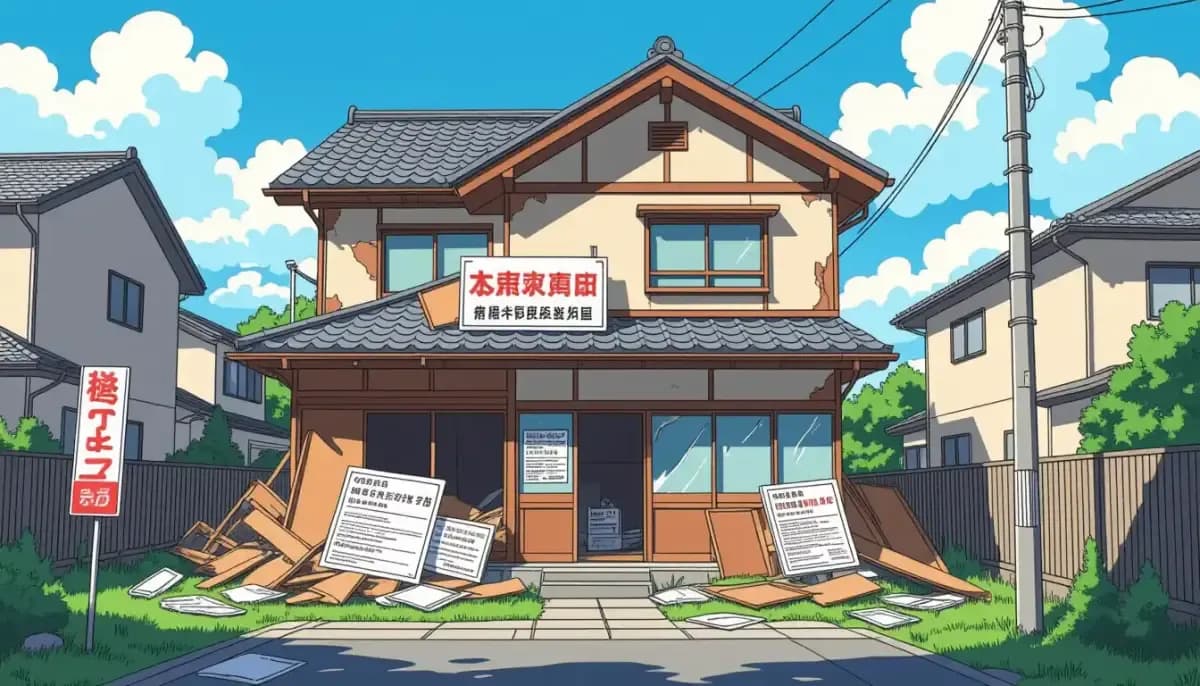
Discover dangerous coverage gaps in Japan's natural disaster insurance system — earthquake, flood, and typhoon risks foreign property owners frequently overlook, with practical steps to protect yourself.
Natural Disaster Insurance Coverage Gaps in Japan: What Every Foreign Property Owner Must Know
Japan is one of the most disaster-prone countries on Earth. Earthquakes, typhoons, flooding, landslides, and volcanic eruptions are not distant threats — they are recurring realities. Yet a surprising number of property owners in Japan, including many foreigners, carry insurance that leaves them severely underprotected. Understanding the coverage gaps in Japan's natural disaster insurance system is not optional: it could be the difference between financial recovery and financial ruin after a major event.
This guide explains how Japan's insurance system is structured, where the dangerous gaps lie, what foreign residents and property owners need to do to protect themselves, and how much they should expect to pay.
How Japan's Natural Disaster Insurance System Works
Japan does not offer a single all-hazard insurance policy. Instead, coverage is assembled from several separate products:
- Fire Insurance (Kasai Hoken) — Covers fire, explosion, wind damage, and often theft. This is the foundation.
- Earthquake Insurance (Jishin Hoken) — A government-backed add-on covering earthquake, volcanic eruption, and tsunami. Must be purchased alongside fire insurance.
- Water Disaster Rider (Suigai Tokuyaku) — An optional add-on to fire insurance covering flood, storm surge, mudslide, and heavy rain damage.
- Special Riders — For burglary, personal liability, and other specific risks.
The critical point is this: none of these automatically include the others. A homeowner who buys fire insurance alone has no earthquake coverage and may have no flood coverage. This modular structure creates dangerous gaps that are easy to overlook, especially for foreign buyers unfamiliar with Japanese insurance practices.
For a broader overview of insurance products available to property owners in Japan, see our guide on Insurance for Property Owners in Japan.
The Earthquake Insurance Gap: Japan's Biggest Risk
Why Earthquake Insurance Is Separate
Japan's insurers faced a fundamental problem: earthquake losses are so catastrophic and correlated — an entire region can be devastated simultaneously — that private insurers cannot bear the risk alone. The solution was a government-reinsurance backstop. Because of this special structure, earthquake insurance must be purchased as a separate add-on and cannot be bundled into a standard fire policy.
Key rule: Standard fire insurance in Japan explicitly and permanently excludes damage from earthquakes, volcanic eruptions, and tsunamis. There are no exceptions. If your house is destroyed in the next Nankai Trough earthquake and you only have fire insurance, you receive nothing for the structure.
How Low Is Earthquake Insurance Adoption?
Despite living in the world's most seismically active country, only approximately 35% of Japanese households carry earthquake insurance. This means roughly two-thirds of homeowners are financially exposed to a risk that is virtually certain to materialize somewhere in Japan within any given decade.
For foreign property owners, adoption rates are likely even lower, partly due to unfamiliarity with the separate enrollment requirement and partly due to language barriers in understanding policy documents.
What Earthquake Insurance Actually Covers (and Does Not)
Earthquake insurance pays out based on fixed damage categories:
| Damage Category | Payout Rate | Example Scenario |
|---|---|---|
| Total Loss (Zengai) | 100% of sum insured | House is destroyed or must be demolished |
| Large Half-Loss (Dai Hanzai) | 60% of sum insured | Main structure damaged >50% or flooded >1m deep |
| Small Half-Loss (Sho Hanzai) | 30% of sum insured | Main structure damaged 20–50% |
| Partial Loss (Ichibu Sonshitsu) | 5% of sum insured | Structure damaged 3–20% |
Critical limitation: Payouts are capped at 30–50% of the fire insurance sum insured, with absolute maximums of ¥50 million for buildings and ¥10 million for household contents. If your house costs ¥80 million to rebuild, your earthquake payout maximum is ¥40 million. The remaining ¥40 million comes out of your pocket.
This means earthquake insurance is designed to provide emergency recovery funds, not full reconstruction cost coverage. Foreign buyers who assume full replacement coverage are in for a devastating surprise.
Earthquake Insurance Premium Rates
Premiums vary significantly by location and building construction type:
| Region | Wood Building (per ¥1M insured/year) | Non-Wood Building (per ¥1M insured/year) |
|---|---|---|
| Tokyo / Kanagawa / Shizuoka | ¥27,500 | ¥17,000 |
| Osaka / Aichi / Fukuoka | ¥15,000 | ¥9,500 |
| Hokkaido / Tohoku | ¥7,300 | ¥4,500 |
| Okinawa | ¥6,000 | ¥3,700 |
Discounts of up to 50% are available for seismically isolated buildings, and up to 30% for Grade 2 earthquake-resistant construction. A national tax deduction of up to ¥50,000 per year also applies to earthquake insurance premiums.
For a complete understanding of annual property ownership costs including insurance, see Property Taxes and Annual Costs of Owning Property in Japan.
The Flood and Typhoon Coverage Gap
Wind Damage vs. Water Damage: A Critical Distinction
Here is a fact that confuses many property owners: wind and typhoon damage is almost universally covered by standard fire insurance policies in Japan — it has traditionally been auto-bundled. However, flood and water intrusion damage is not. This is a distinction that catches homeowners completely off guard after typhoon events.
When Typhoon Hagibis caused catastrophic flooding across central Honshu in 2019, thousands of homeowners discovered that while their wind damage was covered, the flooding that inundated their ground floors was not — because they had not opted into the water disaster rider.
The Declining Rate of Flood Coverage
Japan receives double the global average annual rainfall — approximately 1,718mm per year versus the global average of 880mm. Despite this, flood insurance coverage rates have been declining:
- 2013: ~80% of households had flood coverage
- 2022: ~60% of households had flood coverage
Many homeowners have been opting out based on perceived local flood risk — often a mistake given how dramatically typhoon patterns and rainfall intensity have increased due to climate change.
Flood Coverage Claim Requirements
Even when you have a water disaster rider, claims are not automatically approved for any water damage. You must meet threshold requirements:
- Inundation must reach floor level (or exceed 45cm above ground level), AND
- The damage must exceed 30% of the property's replacement cost
Minor flooding that enters crawl spaces without reaching habitable floor levels, or that causes damage below the 30% threshold, may not be claimable at all. Since August 2020, flood hazard map disclosures are legally required before any property purchase or lease, so buyers have been on notice.
For insights on disaster preparedness beyond insurance, see our guide on Natural Disaster Preparedness for Homeowners in Japan.
Landslides, Soil Liquefaction, and Other Uncovered Perils
What Standard Policies Routinely Exclude
Several common disaster types fall into coverage gaps that neither fire insurance nor earthquake insurance standard policies address:
Landslides triggered by rain: Soil liquefaction and landslides caused by heavy rainfall are not covered by standard fire insurance. They may be covered under an earthquake policy only if triggered by seismic activity. Japan's mountainous terrain makes this a serious risk in rural and hillside areas.
Soil liquefaction: During earthquakes, waterlogged soil can liquefy, causing houses to sink or tilt. This phenomenon affected thousands of homes in reclaimed coastal land after the 2011 Tohoku earthquake. Whether liquefaction damage is covered depends heavily on specific policy wording and the extent of structural damage.
Ash fall from volcanic eruptions: Ash fall that damages rooftops or clogs ventilation is typically not covered by fire insurance and may only be partially covered under earthquake insurance since volcanic eruption triggers that policy.
Repeated flooding: Some insurers have begun excluding repeated flood claims on properties in high-risk zones, particularly after multiple payouts on the same property.
The Underinsurance Problem
A critical and widespread mistake in Japan is insuring a property for less than its actual replacement value — a practice called underinsurance. Industry guidance strongly recommends insuring at a minimum of 80% of actual replacement cost. Properties insured for less than this may face proportional payout reductions even when fully covered damage occurs.
The problem arises when:
- Property values or construction costs have risen since the policy was written
- The insured sum was set based on purchase price rather than replacement cost
- Earthquake insurance coverage (capped at 30–50% of fire insurance sum) is calculated from an already underinsured fire policy
For a ¥50 million house insured at ¥30 million under fire insurance, the maximum earthquake payout would be ¥15 million — leaving a ¥35 million gap on total loss.
What Foreign Residents and Property Owners Should Do
Step 1: Build a Complete Coverage Stack
Do not rely on a single product. At minimum, foreign property owners in Japan should have:
- Fire insurance — covering wind damage, explosions, and general property damage
- Earthquake insurance — added on at enrollment (cannot be added later without a new policy)
- Water disaster rider — especially critical in river flood zones, coastal areas, and typhoon-prone prefectures
For properties in rural, mountainous, or coastal areas, consult with an insurer about additional riders for landslide and storm surge.
Step 2: Set Insured Amounts at Replacement Cost
Always calculate coverage based on current construction replacement cost, not purchase price. Construction costs in Japan have risen sharply since 2020, meaning older policies may now significantly underinsure newer construction.
Step 3: Coordinate Your Earthquake and Fire Policy Terms
As of September 2025, new earthquake insurance policies must match the fire insurance policy term and no longer auto-renew. Mark renewal dates in your calendar and coordinate both products carefully to avoid a gap between policy periods.
Step 4: Use English-Speaking Brokers
Major insurers — Sompo Japan, Tokio Marine, and Mitsui Sumitomo Insurance — all offer earthquake and fire insurance, but policy documents are primarily in Japanese. English-speaking agents and brokers exist in major cities (Tokyo, Osaka, Nagoya) and can help foreign buyers understand what they are and are not covered for. Some smaller international brokers also specialize in expat property coverage.
For additional context on living and disaster preparedness in Japan, Living in Nihon offers practical emergency planning guidance for foreign residents.
Step 5: Review Coverage After Major Renovations
Home renovation, structural upgrades, or seismic retrofitting can affect both your insurance premiums and your eligibility for discounts. After completing a major renovation project, contact your insurer to update your coverage sum and potentially claim construction-grade discounts. See Home Renovation and Remodeling in Japan for Foreign Owners for renovation guidance.
Financial Scale: Why the Stakes Are High
The financial magnitude of natural disasters in Japan makes insurance gaps genuinely life-altering:
- 2018–2019 typhoon season: Four major typhoons generated over $30 billion in insured losses combined
- Typhoon Jebi (2018): ¥1.07 trillion in insurance claims — the single largest typhoon payout in Japanese history
- Average annual typhoon payouts since 1991: ¥217 billion
- 2024 premium increases: 15% for commercial policies, 10% for household policies — reflecting a 45% increase in industry payouts over the prior decade
The government's earthquake insurance system has a reinsurance backstop capping total payouts per event at ¥12 trillion, but in a scenario like a Nankai Trough mega-earthquake (estimated probability: 70–80% within 30 years), individual policyholders still face the gap between the capped payout and actual reconstruction cost.
For perspective on investment risk in Japan property including disaster considerations, see Japan Real Estate Investment Guide for Foreigners.
Resources for Foreign Property Owners
Several excellent English-language resources can help you navigate Japan's insurance landscape:
- GaijinBuyHouse Home Insurance Guide — Comprehensive breakdown of Japan's home insurance and warranty system for foreign buyers, including earthquake premium tables by region
- Japan Ministry of Finance Earthquake Insurance Overview — Official English-language outline of Japan's earthquake insurance system and government reinsurance structure
- A-Realty Fire and Earthquake Insurance Guide — Practical expat-focused guide to fire and earthquake insurance enrollment
- For Work in Japan — Broader resource for foreign residents navigating life in Japan including financial and housing matters
- AkiyaHub Home Insurance Guide — In-depth walkthrough of the full insurance stack for property owners in Japan
Conclusion
Japan's natural disaster insurance system is not designed to be simple — it reflects the genuine complexity of insuring against catastrophic, correlated risks in one of the world's most hazard-prone countries. For foreign property owners, the gaps are especially dangerous because they are easy to miss without fluency in Japanese insurance terminology and practice.
The core principle is this: assume nothing is covered unless you have verified it in writing. Earthquake damage is not in your fire insurance. Flooding may not be either. A policy that looks comprehensive on paper may pay out a fraction of what you need to rebuild.
Take the time to build a complete coverage stack, set realistic insured amounts, engage an English-speaking broker if needed, and review your coverage after any significant life or property change. Japan is worth living in and investing in — but only if you have protected yourself against the disasters that will, statistically, occur during your ownership tenure.
For a complete overview of owning property in Japan as a foreigner including all costs and risks, see our Complete Guide to Buying Property in Japan as a Foreigner.

Originally from Vietnam, living in Japan for 16+ years. Graduated from Nagoya University, with 11 years of professional experience at Japanese and international companies. Sharing information about buying property in Japan for foreigners.
View Profile →Related Articles
Japan Property Insurance Renewal and Annual Review Guide
A complete guide to reviewing and renewing property insurance in Japan as a foreign owner. Covers fire insurance, earthquake insurance, the 2025 policy term changes, costs, and annual review checklists.
Read more →
Insurance for Vacant Properties and Akiya in Japan
Learn how to insure your akiya or vacant property in Japan as a foreigner. Covers fire insurance, earthquake coverage, costs, providers, and tips for non-residents.
Read more →
Japan Property Insurance Exclusions and Limitations to Know
Learn what Japan property insurance does NOT cover: earthquake damage, flood exclusions, basement flooding, commercial use limits, and more. Essential guide for foreign buyers.
Read more →
Japan Property Insurance Companies: Comparison for Foreigners
Compare Japan's top property insurance companies for foreigners. Learn about fire insurance, earthquake insurance costs, English-friendly providers, and how to apply as an expat.
Read more →
How to File an Insurance Claim in Japan: Property Owner Guide
Step-by-step guide to filing property insurance claims in Japan for foreigners. Learn Japan's three-tier damage system, required documents, language tips, and non-resident claim strategies.
Read more →
Japan Property Insurance Premium Costs and Comparison
Complete guide to Japan property insurance premium costs for foreigners. Compare fire insurance and earthquake insurance costs, providers, and tips for foreign buyers in Japan.
Read more →