
Fire and Earthquake Insurance Costs in Japan

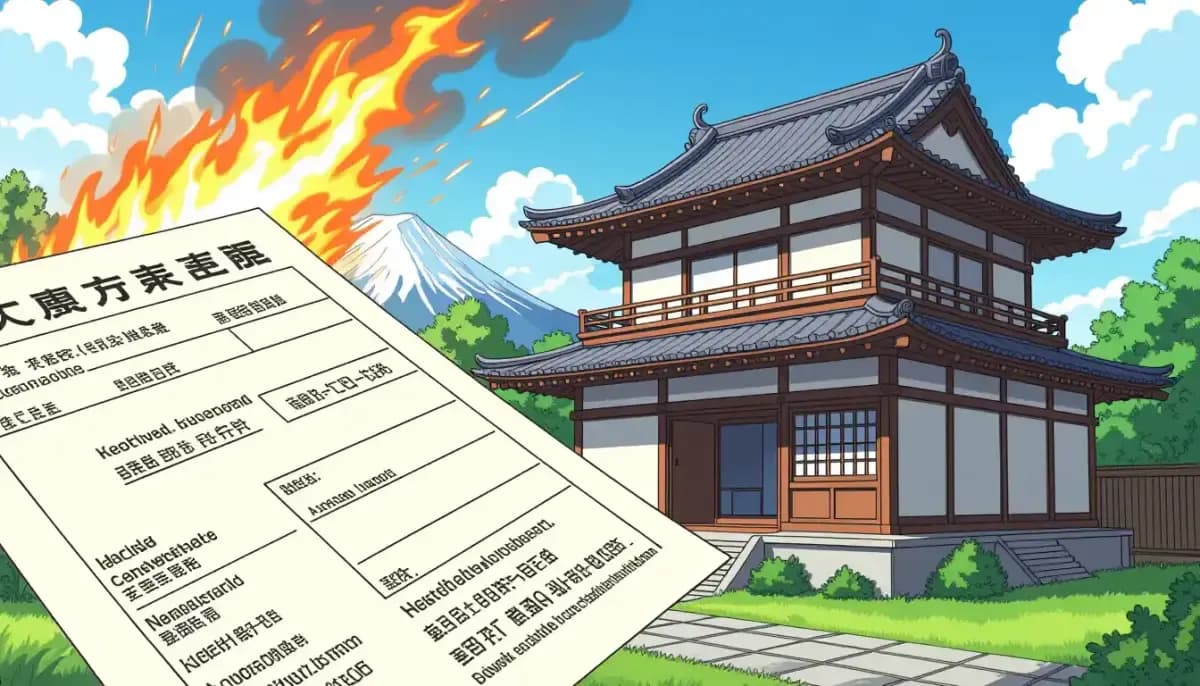
Complete guide to fire insurance (kasai hoken) and earthquake insurance (jishin hoken) costs in Japan for foreign property owners. Premiums, coverage, providers, and tips for expats.
Fire and Earthquake Insurance Costs in Japan: A Complete Guide for Foreign Property Owners
If you're buying property in Japan — one of the world's most seismically active countries — understanding fire and earthquake insurance is not optional. It's a fundamental part of responsible homeownership. Japan experiences thousands of earthquakes each year, and its wooden housing stock is historically vulnerable to fire. Whether you're purchasing a city condo in Tokyo or a rural akiya farmhouse in Hokkaido, knowing how much insurance costs and what it covers can make the difference between financial security and devastating loss.
This guide breaks down everything you need to know about kasai hoken (fire insurance) and jishin hoken (earthquake insurance) in Japan, including current premium costs, coverage details, how foreigners can obtain policies, and which providers offer English support.
What Are Kasai Hoken and Jishin Hoken?
Kasai Hoken (火災保険) — Fire Insurance is the foundation of property insurance in Japan. Despite its name, it covers far more than fire damage. A standard kasai hoken policy protects against:
- Fire, lightning, and explosions
- Typhoon and wind damage
- Hail and snow damage
- Water damage from burst pipes or flooding (optional add-on)
- Theft and vandalism
- External impacts (falling objects, vehicle collisions)
However, there is one critical exclusion: earthquake damage. Standard fire insurance in Japan explicitly does NOT cover damage caused by earthquakes, volcanic eruptions, or tsunamis — even if a fire breaks out as a direct result of an earthquake.
Jishin Hoken (地震保険) — Earthquake Insurance is the solution to this gap. It is a government-backed, nationally standardized product that must be purchased as a rider attached to a fire insurance policy. It cannot be bought as a standalone policy. Jishin hoken covers:
- Damage from earthquakes and aftershocks
- Volcanic eruptions and tsunamis
- Fires caused by earthquakes
- Floods triggered by seismic activity
Given that Japan sits at the intersection of four tectonic plates and experiences roughly 1,500 earthquakes per year that humans can feel, earthquake insurance is considered essential — not optional — for homeowners.
For a broader look at the full costs involved in Japanese property ownership, see our guide on property taxes and annual costs in Japan and our overview of hidden costs when buying property in Japan.
Fire Insurance (Kasai Hoken) Costs and Premiums
Fire insurance premiums in Japan are not fixed — they vary significantly based on several factors:
Key Factors That Affect Your Premium
1. Building Structure Type This is the single most important cost driver. Japanese insurance companies classify structures into three categories:
- M-structure (マンション構造): Reinforced concrete condominiums — lowest fire risk, lowest premiums
- T-structure (T構造): Fire-resistant steel frame or mixed construction — moderate premiums
- H-structure (H構造): Wooden construction — highest fire risk, highest premiums
2. Location Properties in typhoon-prone regions (Okinawa, Pacific coast) or flood-risk zones face higher premiums. Checking your local hazard map (ハザードマップ) before purchasing helps estimate your risk category.
3. Coverage Scope You can insure the building only, contents only, or both. Adding flood coverage or theft coverage increases the premium.
4. Policy Term Japanese fire insurance policies can be purchased for 1–5 years (as of recent regulatory changes). Longer-term contracts offer meaningful discounts — committing to a multi-year contract can reduce annual costs by up to 20% compared to renewing annually.
Typical Fire Insurance Premium Ranges
| Property Type | Structure | Approx. Annual Premium |
|---|---|---|
| Tokyo condo (70m²) | M-structure | ¥4,450–¥15,000/year |
| Suburban wooden house (120m²) | H-structure | ¥30,000–¥80,000/year |
| Fire-resistant detached home | T-structure | ¥15,000–¥40,000/year |
| Rural wooden akiya (old house) | H-structure | ¥40,000–¥120,000/year |
Note: These are approximate ranges. Your actual premium will depend on insured amount, location, and selected coverages.
For a 70 m² Tokyo condo built in 2021, one simulation showed annual premiums ranging from ¥4,450 to ¥39,200 depending on coverage options selected. For a typical wooden two-story home, expect to pay ¥20,000–¥50,000 per year for fire insurance alone.
For more on what to budget when buying property, see the step-by-step home buying process in Japan.
Earthquake Insurance (Jishin Hoken) Costs by Region
Earthquake insurance premiums are set by Japan's non-life insurance industry under government supervision, making rates largely standardized across providers. The key variables are:
- Prefecture (seismic risk zone) — the biggest factor
- Building structure (wooden vs. non-wooden)
- Insured amount (must be 30–50% of the fire insurance sum)
Earthquake Insurance Premium Table by Region
The following rates are approximate annual premiums per ¥10 million in coverage:
| Risk Zone | Prefecture Examples | Wooden Structure | Non-Wooden |
|---|---|---|---|
| Highest Risk | Tokyo, Kanagawa, Shizuoka, Chiba | ¥27,500/year | ¥17,000/year |
| High Risk | Osaka, Aichi, Ibaraki, Miyagi | ¥18,800–¥20,000/year | ¥11,800–¥12,500/year |
| Medium Risk | Fukuoka, Hiroshima, Nagano | ¥9,900–¥14,500/year | ¥6,300–¥9,100/year |
| Lower Risk | Hokkaido, Akita, Aomori | ¥7,300/year | ¥4,500/year |
Source: Approximations based on industry rate tables; verify current rates with your insurer.
The Ministry of Finance provides a detailed outline of the earthquake insurance system in Japan, including rate calculations: Ministry of Finance Earthquake Insurance Overview.
Coverage Limits for Earthquake Insurance
- Maximum insured amount: ¥50 million for the building, ¥10 million for contents
- Coverage must be set at 30–50% of the fire insurance sum — you cannot insure the full replacement value through earthquake insurance alone
- Claims are paid in tiers: Total Loss (100%), Major Damage (60%), Partial Damage (30%), or Minor Damage (5%)
Discounts Available
Japan's earthquake insurance system offers meaningful discounts for earthquake-resistant construction:
| Discount Type | Discount Rate |
|---|---|
| Earthquake-resistant structure (新耐震) | 10% |
| Earthquake isolation system (免震) | 50% |
| Earthquake-resistant reinforcement (耐震等級3) | 50% |
| New construction (built after 2000 standards) | 10% |
Note: Discounts cannot be stacked — only the highest applicable discount applies.
Important 2025 Regulatory Change
Starting September 2025, new earthquake insurance policies must match the term of the associated fire insurance policy. Previously, earthquake coverage could be set for shorter periods with auto-renewal options. This change means you need to plan your coverage terms carefully when purchasing or renewing your policy. If you have existing policies, review them with your insurer before your next renewal date.
How Foreigners Can Get Insurance in Japan
Many foreigners worry that Japanese bureaucracy will make obtaining property insurance difficult. The good news: foreigners can purchase fire and earthquake insurance in Japan without a Japanese guarantor.
Basic Requirements
- Valid Japanese residence status (not tourist visa)
- Japanese address (the insured property)
- Japanese bank account for premium payments
- Property registration documents (登記簿謄本)
Permanent residents, long-term visa holders, and those with spouse visas are all eligible. Some companies may require a Japanese speaker to assist with paperwork, though English-support providers have eliminated this barrier.
English-Friendly Insurance Providers
| Provider | English Support | Notes |
|---|---|---|
| Tokio Marine Nichido | Partial (online tools) | Japan's largest non-life insurer |
| Sompo Japan | Partial | Major provider, good network |
| AIG Japan | Full | Global insurer, multilingual staff |
| Chubb Insurance Japan | Full | Specializes in high-value properties |
| TRINITY Inc. | Full (dedicated expat service) | Full English fire, property & casualty |
For expats unfamiliar with the Japanese insurance market, working with an insurance broker who specializes in foreign residents can simplify the process considerably.
For insights on related financial requirements when buying Japanese property, see our guide on mortgages and home loans for foreigners in Japan.
Also see the complete guide on home insurance and warranty systems in Japan at Gaijin Buy House, which covers warranty protections alongside insurance coverage.
Is Earthquake Insurance Worth It?
This is the most common question among foreign buyers. The short answer: yes, especially in high-risk prefectures.
Consider the following:
- Japan has experienced multiple magnitude 7.0+ earthquakes in major urban areas within the past 30 years — the 1995 Kobe earthquake, the 2011 Tōhoku earthquake, the 2024 Noto Peninsula earthquake
- The earthquake insurance payout rate after the 2011 disaster helped stabilize thousands of households financially
- The coverage limit (30–50% of fire insurance value) means it won't fully rebuild your home — but it significantly reduces financial devastation
- For wooden houses in high-risk zones, the additional annual cost of earthquake insurance is ¥10,000–¥30,000 — a manageable expense compared to the risk
The counterargument most often made is for concrete condominiums in lower-risk regions — where structural earthquake damage is statistically less likely. Even so, many financial advisors and real estate professionals in Japan recommend carrying earthquake insurance as a baseline for any property ownership.
For more on how location affects insurance and other ownership costs, read our area-specific guides on buying property in Tokyo and buying property in Osaka.
Tips for Getting the Best Coverage at the Right Price
1. Use the Hazard Map Before Buying Japan's government provides detailed hazard maps (ハザードマップポータルサイト) showing flood risk, landslide risk, and tsunami inundation zones by address. Choosing a property in a lower-risk zone reduces both your premiums and your actual risk exposure.
2. Match Your Insured Amount to Replacement Cost Insure your property at its replacement cost — not its purchase price. Land value is excluded; only the building structure is insured.
3. Consider Longer Policy Terms Multi-year contracts (currently up to 5 years) typically offer discounts. Locking in a rate can also protect against premium increases driven by increasing disaster frequencies.
4. Don't Skip Earthquake Coverage Even in lower-risk areas, a moderate earthquake can cause cracks, structural damage, and contents loss. The marginal cost of adding earthquake insurance to a fire policy is small relative to the risk.
5. Check for Seismic Certification Discounts If your property has been earthquake-retrofitted (耐震改修) or was built to post-2000 standards, you may qualify for substantial discounts. Ask your agent specifically about these.
For additional guidance on navigating Japanese real estate as a foreigner, visit Living in Nihon's guide to insurance and benefits and the For Work in Japan housing infrastructure guide.
Putting It All Together: Estimated Annual Insurance Costs
Here is a summary of what you can expect to pay annually for combined fire and earthquake insurance across different property types:
| Property Type | Location | Fire Insurance | Earthquake Add-on | Total/Year |
|---|---|---|---|---|
| 70m² concrete condo | Tokyo | ¥5,000–¥15,000 | ¥8,000–¥17,000 | ¥13,000–¥32,000 |
| 120m² wooden house | Tokyo | ¥30,000–¥60,000 | ¥20,000–¥27,500 | ¥50,000–¥87,500 |
| 100m² wooden house | Osaka | ¥20,000–¥40,000 | ¥12,000–¥18,800 | ¥32,000–¥58,800 |
| 150m² wooden house | Hokkaido | ¥25,000–¥50,000 | ¥5,000–¥7,300 | ¥30,000–¥57,300 |
| Old akiya wooden house | Rural area | ¥40,000–¥100,000 | ¥7,000–¥20,000 | ¥47,000–¥120,000 |
These figures are estimates. Actual premiums vary based on insured amount, coverage scope, and building age/condition.
For a detailed breakdown of all annual ownership costs beyond insurance, including property taxes, management fees, and maintenance reserves, see our full guide on property taxes and annual costs of owning property in Japan.
Conclusion
Fire and earthquake insurance in Japan is well-structured, reasonably priced, and accessible to foreign residents. Understanding the distinction between kasai hoken and jishin hoken, knowing how premiums are calculated, and selecting an English-friendly provider makes the process manageable even for first-time buyers in Japan.
The key takeaways:
- Fire insurance is mandatory for mortgaged properties and covers most natural disasters except earthquakes
- Earthquake insurance must be added as a rider — it cannot be purchased alone
- Premiums depend most heavily on prefecture (seismic risk) and building structure (wooden vs. concrete)
- Foreigners are fully eligible to purchase insurance with a valid residence status
- English-language support is available through multiple major providers
Protecting your Japanese property investment with appropriate insurance is not just prudent — it is one of the most important financial decisions you'll make as a property owner in this seismically active country.
For more comprehensive information on homeownership in Japan, explore our complete guide to buying property in Japan as a foreigner and learn about your legal rights as a foreign property buyer.
Additional resources:
- Homeowners Insurance in Japan: Fire and Flood Insurance Explained — Real Estate Japan
- Japanese Fire & Earthquake Insurance for Expats Guide — A-Realty

Originally from Vietnam, living in Japan for 16+ years. Graduated from Nagoya University, with 11 years of professional experience at Japanese and international companies. Sharing information about buying property in Japan for foreigners.
View Profile →Related Articles

Currency Exchange Costs for Foreign Buyers Purchasing Japan Property
A complete guide to currency exchange costs when buying property in Japan as a foreigner. Learn about bank markups, wire transfer fees, AML requirements, and how to save thousands using specialist FX services.
Read more →
Repair Reserve Fund (Shuuzen Tsumitate Kin) in Japan Condos
Everything foreigners need to know about Japan's condo repair reserve fund (shuuzen tsumitatekin): monthly costs, red flags, due diligence checklist, and what happens if you don't pay.
Read more →
Condo Management and Maintenance Fees in Japan
Understand Japan condo management fees and repair reserve fund fees. Learn average costs, what they cover, payment methods for foreigners, and how to evaluate fees before buying.
Read more →
Renovation Costs for Used Properties in Japan
Complete guide to renovation costs for used properties in Japan. Room-by-room cost breakdowns, real-world examples, government subsidies, and budgeting tips for foreign buyers.
Read more →
Furniture and Appliance Costs for Your New Home in Japan
Complete guide to furniture and appliance costs when setting up a new home in Japan. Realistic budgets, where to buy, rental options, and tips for foreigners.
Read more →
Moving Costs When Relocating to a New Home in Japan
Complete guide to moving costs in Japan for foreigners: domestic moving company fees, furniture costs, utility setup, neighbor gifts, international relocation expenses, and money-saving tips.
Read more →