
Japan Real Estate Agent License System Explained

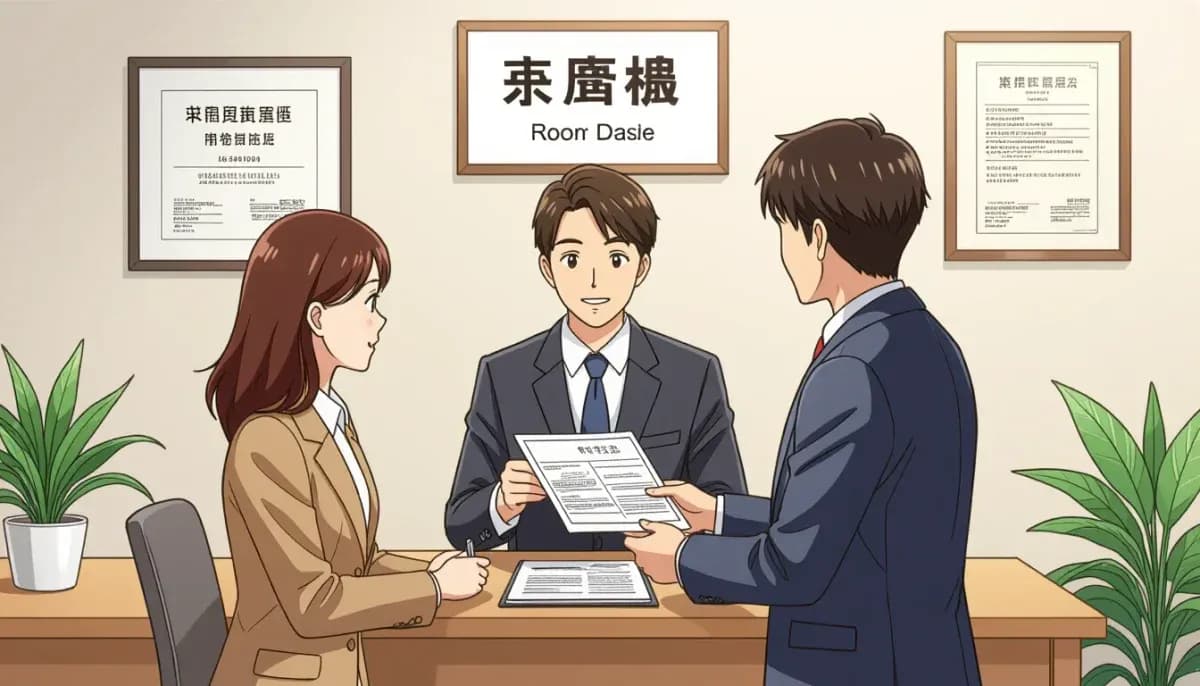
Understand Japan's real estate agent license system (Takken/宅建). Learn about licensing requirements, agent credentials, commission rules, and how the system protects foreign property buyers.
Japan Real Estate Agent License System Explained
If you're buying, selling, or renting property in Japan, you'll be working with professionals bound by one of the strictest real estate licensing systems in the world. Japan's Real Estate Transaction Specialist License — known as the Takken (宅建) — is a nationally recognized credential that every legitimate real estate agent must hold or work under. Understanding this system protects you as a buyer, helps you identify qualified professionals, and even opens doors if you're considering a career in Japanese real estate.
This guide explains the complete Japan real estate agent license system: what the Takken license is, how agents earn it, what it means for buyers and renters, and what foreigners need to know about working with or becoming a licensed professional.
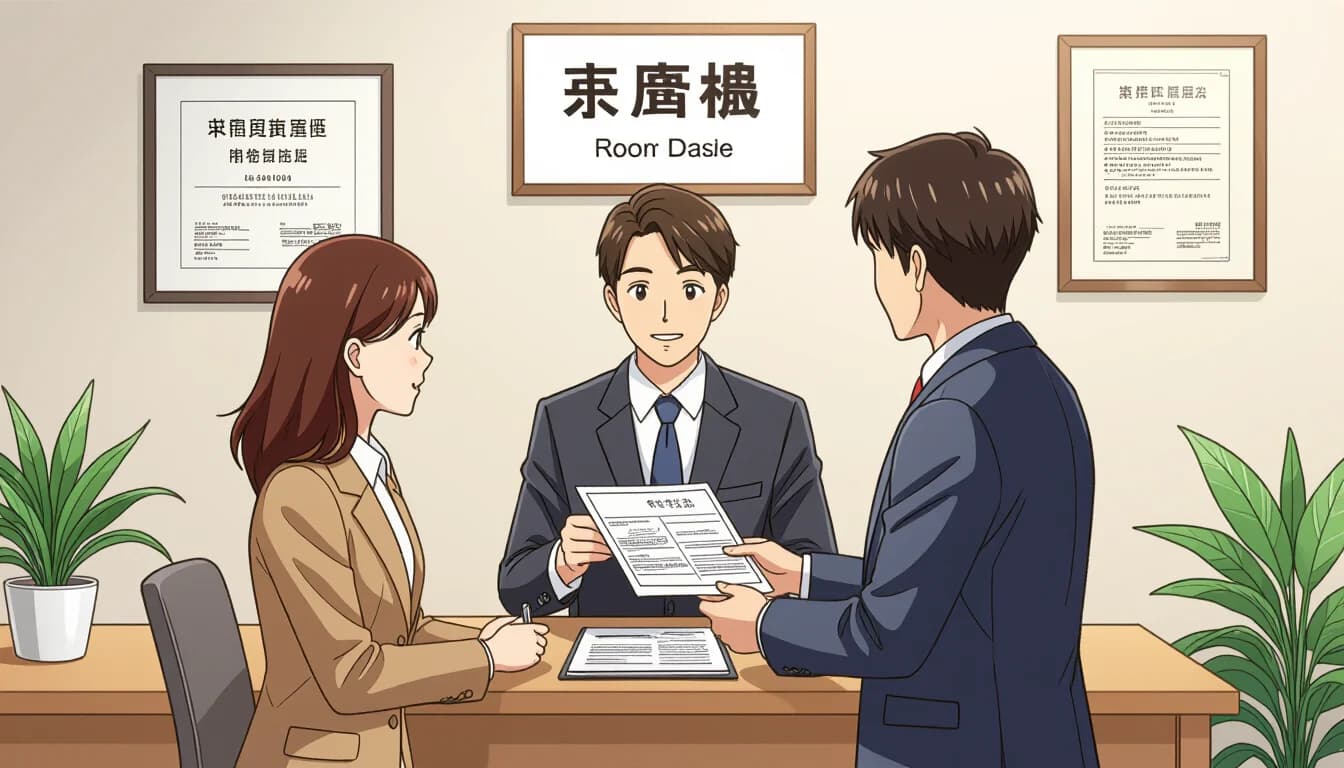
What Is the Takken License? Japan's Real Estate Credential Explained
The Takuchi Tatemono Torihiki-shi (宅地建物取引士), commonly shortened to Takken-shi or just Takken (宅建), is Japan's national real estate transaction specialist license. It has been a mandatory qualification since the system was established in 1958 under the Building Lots and Buildings Transaction Business Act.
Any company acting as an intermediary for real estate sales, purchases, or leases must employ licensed Takken holders. More specifically, the law requires at least one licensed agent for every five employees — the so-called 1-in-5 ratio. This means if a real estate office has 10 staff members, at least 2 must hold the Takken license.
The license is not optional or a mere formality. Licensed agents have three core legal duties only they can perform:
- Delivering the Important Matters Explanation (重要事項説明書) — a mandatory disclosure document before any real estate contract is signed
- Signing the Important Matters document with their official license seal
- Signing the real estate contract (売買契約書) on behalf of the brokerage
If a real estate transaction in Japan lacks these steps performed by a licensed Takken holder, the deal is legally incomplete. This is the most important protection you have as a buyer or renter.
How the Takken Exam Works: Japan's Most Competitive Professional Test
The Takken exam is one of Japan's most widely taken professional qualification tests, with approximately 210,000 candidates sitting each year. Despite its popularity, the exam is notoriously difficult, with a pass rate of only 15–16%.
The exam is held once a year, on the third Sunday of October. Applications open around July each year. There are no prerequisites — no minimum age, no education requirement, and no citizenship restriction — meaning anyone can sit the exam.
The test consists of 50 multiple-choice questions across four main domains:
| Domain | Content | Approximate Questions |
|---|---|---|
| Civil Law & Property Rights | Contracts, ownership, mortgages, consumer protection | 14–16 |
| Legal Restrictions on Land Use | Zoning laws, construction regulations, urban planning | 8 |
| Building Lots and Buildings Transaction Business Act | The core licensing law, agent duties, contract rules | 20 |
| Taxation & Property Valuation | Acquisition tax, registration tax, inheritance tax, appraisals | 8 |
A passing score typically requires getting around 35 out of 50 questions correct, though the cutoff shifts slightly each year depending on exam difficulty.
The exam is conducted entirely in Japanese and involves comprehension of dense legal texts. For foreigners considering taking this exam, strong Japanese reading ability — at least JLPT N2 level — is essential. That said, many Chinese speakers find the exam somewhat more approachable due to the significant overlap between kanji and Chinese characters used in Japanese legal terminology.
Registering as a Licensed Agent: What Happens After You Pass
Passing the Takken exam alone does not make you a licensed real estate agent. Successful candidates must then complete a separate registration process with the prefectural governor's office where they intend to work.
To register, you must:
- Have at least 2 years of practical work experience in real estate, OR complete an approved substitute training course
- Have no disqualifying factors: no criminal convictions for certain offenses, no history of fraudulent real estate business practices, no current adult guardianship status
- Submit required documentation to the prefectural governor's office, including proof of work experience and identification
Once registered, you receive an official Takken license card that includes your name, license number, and registration date. This card must be presented to clients during transactions. The license is valid for 5 years and must be renewed with mandatory continuing education.
For foreign nationals who pass the exam, work authorization is a key consideration. You must hold valid status of residence that permits employment to register and practice. Typically this means a work visa, permanent residence, or Japanese citizenship.
Two Types of Real Estate Business Licenses in Japan
Beyond the individual Takken license, real estate businesses themselves must obtain a business operating license under the Building Lots and Buildings Transaction Business Act. There are two types based on how many prefectures the company operates in:
| License Type | Issued By | Scope |
|---|---|---|
| Governor-Authorized License (知事免許) | Prefectural Governor | Agency operating in one prefecture only |
| Minister-Authorized License (大臣免許) | Ministry of Land, Infrastructure, Transport and Tourism (MLIT) | Agency with offices in two or more prefectures |
As of FY2023, approximately 1.18 million real estate transaction agents were registered in Japan. Most agencies hold prefectural governor licenses. Only large nationwide firms operating across multiple prefectures hold the ministerial license. When checking an agency's credentials, look for their license number displayed in their office or on their website — it's legally required to be visible.
Commission Rates and Fee Regulations for Japanese Real Estate Agents
One area where Japan's licensing system directly protects buyers and renters is in legally capped commission rates. Unlike many countries where commissions are negotiable and opaque, Japanese law sets maximum limits on what agents can charge:
| Property Price | Maximum Commission Rate |
|---|---|
| Up to ¥2,000,000 | 5% + consumption tax |
| ¥2,000,001 – ¥4,000,000 | 4% + ¥20,000 + consumption tax |
| Over ¥4,000,000 | 3% + ¥60,000 + consumption tax |
For property rentals, the combined commission charged to landlord and tenant together cannot exceed one month's rent plus consumption tax. It is common practice for agents to charge the tenant the full one month's rent as commission, though this requires the tenant's consent. Some agents charge only half a month's rent to each party.
These limits are enforced. An agency charging above these maximums is violating the law and can lose their license.
Can Foreigners Become Licensed Real Estate Agents in Japan?
Yes — and it's entirely legal. The Takken exam has no citizenship or nationality requirement. Foreigners living in Japan can sit the exam and, if they pass and meet registration requirements, become licensed real estate transaction specialists.
The key practical requirements for foreign nationals:
- Resident registration: You must be registered as a resident in Japan at the location where you sit the exam. This requirement effectively means you need to live in Japan, not simply visit for the exam.
- Japanese language ability: The exam is in Japanese with no accommodations for non-Japanese speakers. Professional-level reading comprehension of legal Japanese is a must.
- Valid work authorization: To practice after passing, you need a visa that permits work — typically an Engineer/Specialist in Humanities/International Services visa, Business Manager visa, or permanent residence.
For expats already living in Japan and working in international business, real estate, or finance, the Takken license can be a significant career asset. It demonstrates a command of Japanese business law and real estate practice that very few foreigners achieve.
If you're interested in working in Japan's real estate sector or setting up a real estate business, resources like Living in Nihon and For Work in Japan offer broader guidance on working and living as a foreigner in Japan.
Understanding Agent Credentials When Buying Property in Japan

When you work with a real estate agent in Japan as a foreign buyer, understanding their credentials protects you. Here's what to look for:
Check the business license display: By law, every real estate office must display their business license number prominently. The license number format indicates who issued it (governor or minister) and the renewal number (e.g., a higher number means longer-established).
The Important Matters Explanation: Before signing any contract, a licensed Takken holder must personally explain the Important Matters (重要事項) document to you. This document covers the property's legal status, any restrictions, infrastructure details, contract terms, and potential risks. This explanation is your single most important protection as a buyer.
Ask for the agent's license card: Every licensed Takken holder carries an official license card (宅地建物取引士証). You have the right to ask to see it before entering a transaction.
Work with reputable agencies: Established agencies that have operated for many years (higher renewal numbers on their license) and those affiliated with major industry bodies like the All Japan Real Estate Association (全国宅地建物取引業協会連合会) or the Japan Federation of Real Estate Transaction Organizations (不動産流通機構) offer additional accountability.
For more guidance on choosing the right agent and navigating the property purchase process as a foreigner, see our Complete Guide to Buying Property in Japan and our article on Legal Procedures and Documentation for Japan Property Purchase.
The Gaijin Buy House resource is also specifically oriented toward foreigners purchasing property in Japan and covers how to navigate the agent relationship effectively.
The Japan Real Estate Industry Today: Key Trends
Japan's real estate licensing system faces some significant structural challenges that are worth understanding as a buyer:
Aging workforce: As of the most recent data, more than one-third of licensed individual real estate brokers running their own businesses are aged 70–79. The industry is aging, and there is growing concern about succession and maintaining service quality as experienced agents retire.
Industry consolidation: Smaller independent agencies are consolidating or closing, while large national networks and online platforms are growing. For foreign buyers, large national agencies with dedicated English-speaking international desks are often the most accessible.
Growing international demand: Demand for English-language real estate services has grown significantly as foreign investment in Japanese property has increased. This has led more agencies in major cities — particularly Tokyo, Osaka, Kyoto, and Niseko — to hire bilingual staff with Takken licenses.
Digital transactions: Japan is gradually moving toward digitizing parts of the real estate transaction process, including allowing electronic delivery of the Important Matters document (which previously required in-person delivery). This benefits foreign buyers who may not always be physically present in Japan.
For more context on the broader market, see our Japan Real Estate Market Overview and Trends guide.
Key Resources and Further Reading
Understanding Japan's licensing system is just one piece of the puzzle for foreign property buyers. The following resources provide deeper guidance:
- PLAZA HOMES - Real Estate Notary in Japan — Explains the Takken license and its role in transactions
- Company Formation Japan - Set Up a Real Estate Agency — For those considering starting a real estate business in Japan
- Housing Japan - Choosing the Right Real Estate Agent — Practical tips for foreign buyers working with agents
- Samurai Law - Business License Registration — Legal perspective on real estate business licensing
Also explore our related guides on Mortgages and Home Loans for Foreigners in Japan, Hidden Costs and Fees When Buying Property in Japan, and Visa and Residency Considerations for Property Buyers for a complete picture of the purchase process.
Summary: Japan's Real Estate License System at a Glance
Japan's Takken license system is rigorous, transparent, and designed to protect property buyers and renters. For foreigners navigating the Japanese property market, knowing the basics of this system empowers you to work confidently with agents, verify credentials, understand your rights, and ensure transactions are handled correctly.
The key takeaways:
- Every legitimate real estate transaction in Japan must involve a licensed Takken holder
- The Important Matters Explanation is your legal right before signing any contract
- Commission rates are legally capped — agents cannot charge more than the legal maximum
- Foreigners can obtain the Takken license, though strong Japanese is essential
- The industry is aging and changing, making reputable established agencies your safest choice
Whether you're buying a home in Tokyo, investing in an Osaka apartment, or exploring rural property opportunities, working with a properly licensed agent under Japan's strict real estate framework gives you significant legal protection that many other countries' buyers simply don't have.

Originally from Vietnam, living in Japan for 16+ years. Graduated from Nagoya University, with 11 years of professional experience at Japanese and international companies. Sharing information about buying property in Japan for foreigners.
View Profile →Related Articles

Overcoming Language Barriers with Japan Real Estate Agents
Learn how to overcome language barriers when working with real estate agents in Japan. Bilingual agent tips, English platforms, contract translation advice, and cultural insights for foreigners.
Read more →
Real Estate Agents Specialized in Investment Property in Japan
Find the best real estate agents specialized in investment property in Japan. Learn how to evaluate agents, understand fee structures, compare top agencies, and avoid costly mistakes as a foreign investor.
Read more →
Buying Japan Property Directly Without an Agent: Is It Possible?
Can you buy property in Japan directly without a real estate agent? Learn what's legally possible, where it works, how much you save on commission, and the real risks foreigners face when going it alone.
Read more →
Top Foreigner-Friendly Real Estate Companies in Japan
Find the best foreigner-friendly real estate companies in Japan. Compare English-speaking agencies like Blackship Realty, Real Estate Japan, Mitsui Fudosan, and more to buy property as a foreigner.
Read more →
Types of Real Estate Agency Contracts in Japan
Learn the 3 types of real estate agency contracts in Japan (ippan, sennin, senzoku sennin baikai). Understand REINS, commission fees, enclosure risk, and which contract is right for foreign buyers and sellers.
Read more →
Negotiation Tips When Working with Japan Real Estate Agents
Learn how to negotiate property prices with Japanese real estate agents as a foreigner. Discover timing strategies, cultural tips, and how to get the best deal in Japan's property market.
Read more →