
Setting Up Utilities in Japan: Electricity, Gas and Water Guide

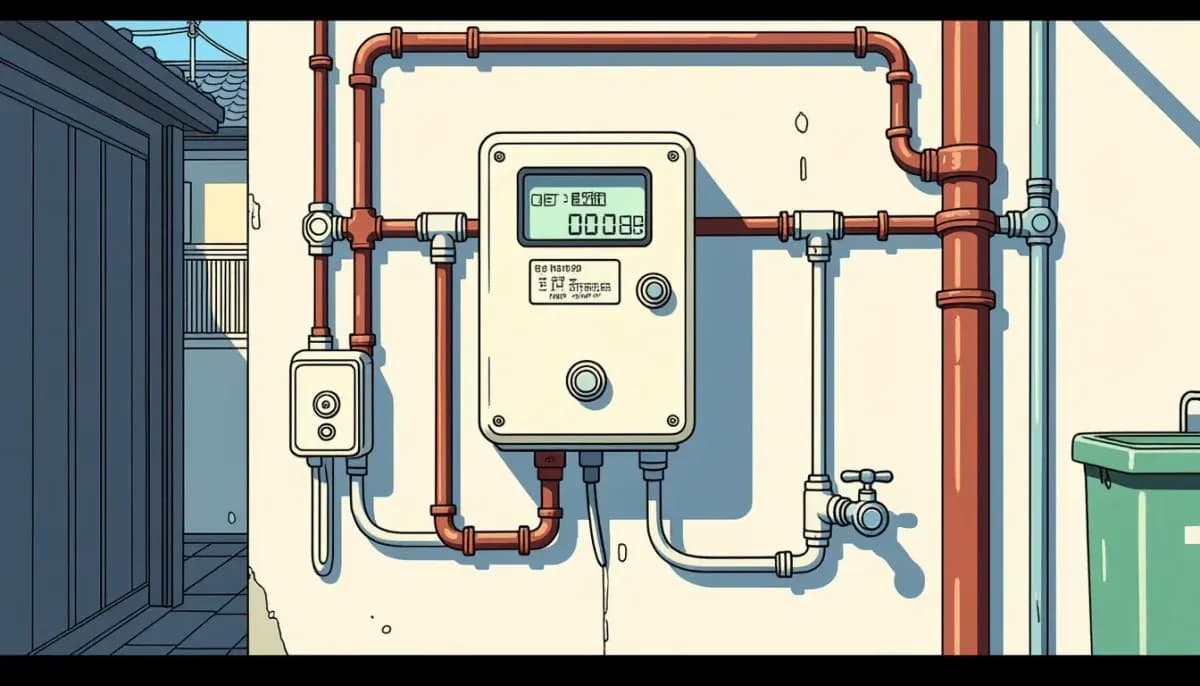
Complete guide to setting up electricity, gas, and water in Japan as a foreigner. Learn how to apply, schedule gas inspection, understand costs, and pay bills in English.
Setting Up Utilities in Japan: Electricity, Gas and Water Guide for Foreigners
Moving into your new home in Japan is an exciting milestone — but before you can settle in comfortably, you need to set up your essential utilities: electricity, gas, and water. For foreigners unfamiliar with Japan's utility system, this process can feel confusing at first. Each service is managed by a separate company or authority, requires different procedures, and comes with its own timeline. This comprehensive guide walks you through everything you need to know to get your lights on, hot water running, and gas flowing as smoothly as possible.
Before your move-in day, make sure you have already completed your address registration. See our guide on Registering Your Address After Buying Property in Japan for the full process, and refer to our Moving to Japan Checklist for New Homeowners to stay organized throughout your transition.
Overview: Japan's Three Core Home Utilities
In Japan, home utilities are divided into three independent services — electricity, gas, and water. Unlike some countries where a single provider bundles these services, Japan historically required residents to contact each separately. Since deregulation began in 2016, electricity and gas markets have opened to competition, giving consumers more choice. Water, however, remains exclusively managed by local municipalities with no private alternatives.
Here is a quick overview of the three main utilities:
| Utility | Provider Type | Application Method | Technician Visit Required? | Bill Frequency |
|---|---|---|---|---|
| Electricity | Regional or alternative provider | Phone or online | No | Monthly |
| Gas (City Gas) | Regional provider (e.g. Tokyo Gas) | Phone | Yes - mandatory safety check | Monthly |
| Gas (LP Gas) | Landlord-arranged supplier | Contact via landlord | Yes - mandatory safety check | Monthly |
| Water | Local municipal bureau | Phone or online | Sometimes | Every 2 months |
Understanding these differences upfront saves you from scheduling surprises on move-in day — especially the gas technician visit, which requires you to be home.
Step 1: Setting Up Electricity
Who Provides Electricity in Japan?
Japan's electricity market is divided into regional providers, each historically serving a specific geographic area:
- TEPCO (東京電力) — Tokyo and the Kanto region
- KEPCO (関西電力) — Osaka, Kyoto, Hyogo (Kansai region)
- Chubu Electric Power Miraiz — Nagoya and the Chubu region
- KYUDEN (九州電力) — Fukuoka and Kyushu
- Hokkaido Electric Power — Sapporo and Hokkaido
- Tohoku Electric Power — Sendai and Tohoku
- Chugoku Electric Power — Hiroshima and Chugoku
- Shikoku Electric Power — Matsuyama and Shikoku
- Okinawa Electric Power — Okinawa
Since the electricity market was deregulated in April 2016, you can also choose from dozens of alternative electricity suppliers, many of which offer bundled electricity and gas contracts at discounted rates. If you want the simplest setup, however, sticking with your regional provider requires the least paperwork.
How to Apply for Electricity
- Contact the provider 1–2 weeks before your move-in date. Most providers offer online application forms and English-language websites. TEPCO, for example, has an English application portal. You will need your new address, planned move-in date, and preferred contract amperage (usually 30A for a standard apartment).
- On move-in day, flip the circuit breaker. Unlike gas, electricity activation requires no technician visit. Simply locate the breaker panel (分電盤) in your new home and flip the main switch to the "入" (on) position. Power will flow immediately.
- Confirm your amperage setting. Standard apartments come set at 30 amperes. If you plan to run multiple high-consumption appliances simultaneously (air conditioning, electric stove, washing machine), you may want to request an upgrade to 40A or 60A. This can be done when you apply or later by contacting your provider.
Important: Japan's Dual Voltage Zones
Japan runs on 100V electricity, which differs from most other countries. Additionally, Japan is split into two frequency zones:
- Eastern Japan (Tokyo, Tohoku, Hokkaido): 50 Hz
- Western Japan (Osaka, Kyoto, Nagoya, Fukuoka, Okinawa): 60 Hz
Most modern electronics are dual-frequency and work fine, but older or region-specific appliances (particularly washing machines, microwaves, and certain kitchen equipment) may not function correctly if used in the wrong frequency zone. Always check the label on your appliances before plugging them in.
Step 2: Setting Up Gas
City Gas vs. LP Gas
Japan uses two types of gas:
- City Gas (都市ガス): Piped natural gas delivered via underground mains. Cheaper and more widely available in urban areas. Managed by providers like Tokyo Gas (Tokyo/Kanto), Osaka Gas (Kansai), Toho Gas (Nagoya), and Saibu Gas (Fukuoka).
- LP Gas (プロパンガス / Liquefied Petroleum Gas): Delivered in tanks, typically used in rural areas or older buildings not connected to city gas mains. LP gas costs approximately 1.5–2 times more than city gas per unit of energy.
Your home's gas type is determined by its location and building infrastructure — you cannot choose between them. Check with your real estate agent or building management to confirm which type your new home uses.
How to Apply for Gas
- Identify your gas provider. For city gas users, your real estate agent will typically tell you which company services your area. For LP gas, the tank supplier may already be arranged through the landlord.
- Schedule a technician visit. Unlike electricity, gas activation always requires a mandatory on-site safety inspection by a certified technician. This is non-negotiable. Call to schedule at least 1 week before your move-in date.
- Be home for the inspection. The technician visit takes approximately 10–30 minutes. The technician will check all gas connections, appliances (stove, water heater), and pipe integrity before activating the supply. You will be asked to sign a form confirming the inspection.
- Confirm appliance compatibility. If you are bringing gas appliances from abroad, be aware that Japanese gas ports and pressure standards differ from other countries. Most imported appliances will not connect directly.
For more details on payment methods once your utilities are running, see our partner resource at For Work in Japan's Utility Setup and Payment Methods Guide.
Step 3: Setting Up Water
How Water Services Work in Japan
Water services in Japan are managed entirely by local municipal water bureaus (水道局). There is no competition or provider choice — your service provider is determined by your city or ward of residence. The quality of Japan's tap water is exceptionally high by international standards and is safe to drink directly from the tap in virtually all areas.
How to Apply for Water
- Contact your local water bureau. Find the contact information for your city or ward's water bureau (水道局). Most now offer online applications and some have English-language options.
- Register the account in your name. In many homes, especially newer properties, the water may already be flowing. However, you still need to register the service in your name so that bills are addressed to you.
- Locate the main water valve. The main shutoff valve is usually in a small box on the exterior of the building or in a utility cupboard. To turn water on, rotate the valve counter-clockwise. This may be relevant if you are moving into a property that has been vacant.
Water Bill Schedule
Unlike electricity and gas bills, water and sewage bills are issued every two months. The average monthly cost for a single-person household is approximately ¥2,000–3,000, making it the least expensive of the three core utilities.
For a helpful overview of how to handle mail and utility bills once you are settled in, explore our guide on Japan Postal and Mail System Setup for New Homes.
Utility Costs: What to Budget Each Month
Understanding typical utility costs helps you plan your household budget effectively. The following figures are averages for a single person or couple in a standard apartment; costs will vary by season, property size, and lifestyle.
| Utility | Average Monthly Cost (Single Person) | Average Monthly Cost (Family) | Notes |
|---|---|---|---|
| Electricity | ¥5,000–8,000 | ¥10,000–18,000 | Highest in summer (A/C) and winter (heating) |
| City Gas | ¥2,900–5,000 | ¥5,000–9,000 | LP gas costs 1.5–2x more |
| Water & Sewage | ¥2,000–3,000 | ¥3,000–5,000 | Billed every 2 months |
| Total | ¥10,000–16,000 | ¥18,000–32,000 | Government avg all households: ¥27,334/month |
TEPCO's tiered electricity pricing: ¥29.80/kWh for the first 120 kWh, rising to ¥36.40/kWh for 120–300 kWh, and ¥40.49/kWh over 300 kWh (2024 rates, subject to fuel adjustment surcharges).
To reduce your electricity bill, consider switching to one of the many alternative electricity suppliers available since deregulation. Bundled electricity and gas plans from providers like ENEOS Electric, Looop Denki, or SoftBank Denki can offer 5–15% savings compared to the standard regional tariff.
Paying Your Utility Bills
Payment Methods Available in Japan
Once your utilities are running, you need to set up a payment method. Japan offers several options, each with different levels of convenience:
1. Automatic Bank Transfer (口座振替 / Koza Furikae) This is the most popular and convenient method. After opening a Japanese bank account (at Japan Post Bank, SMBC, Mizuho, MUFG, or others), register your account with each utility provider. Bills are deducted automatically each month. Many providers offer a ¥55/month discount for this method.
2. Convenience Store Payment Bills include a barcode that can be scanned and paid at any Japanese convenience store — 7-Eleven, Lawson, or FamilyMart. This is ideal for newcomers who have not yet opened a Japanese bank account. Payment is accepted 24/7.
3. Credit Card Some utility providers accept credit card payment directly or through third-party payment services. This earns rewards points (typically 0.5–1.0% cashback) on utility spending.
4. Direct Online Payment Most major providers now offer online account portals where you can view usage, manage your contract, and make direct payments by credit card or bank transfer.
For foreigners who have not yet opened a bank account, the convenience store payment option is your best starting point. See Living in Nihon's practical guide for tips on everyday life in Japan, including banking and bill payment.
English-Language Support From Utility Companies
One of the most reassuring aspects of setting up utilities in Japan is that multilingual support has improved significantly in recent years, especially from major providers in urban areas:
- TEPCO offers a fully English-language online application portal and billing website
- Tokyo Gas provides telephone interpretation services in English, Chinese, Korean, Spanish, and Portuguese via three-way calls with their customer service team
- Osaka Gas has English-language customer service options
- Many municipal water bureaus in Tokyo (Tokyo Metropolitan Bureau of Waterworks) and Osaka offer English-language online registration forms
If your Japanese language skills are limited, don't hesitate to ask a Japanese-speaking friend or real estate agent to assist with the initial setup calls. Some relocation services will handle utility registration on your behalf as part of their package.
For additional guidance from the expat community, Wagaya Japan's utility setup guide covers the application process for each utility in detail from a foreigner's perspective. The MailMate Japan utility guide is also an excellent resource for first-timers.
Managing Utilities When Moving Out
When you eventually move out of your property, you must formally cancel each utility service. Failure to do so can result in ongoing charges and complications for the next resident.
Cancellation timeline:
- Contact each provider at least 3–5 days before your move-out date
- For gas, schedule a disconnection visit (same as connection — a technician must come to shut off the line)
- For electricity and water, cancellation can often be done online or by phone
Consequences of not cancelling:
- Gas: disconnected after approximately 50 days of non-payment
- Electricity: disconnected after approximately 2 months of non-payment
- Water: disconnected after approximately 2–3 months
When you sign up for a new property, the same registration process applies — apply early, schedule the gas technician visit in advance, and confirm your move-in date with each provider.
Getting Everything Else Set Up
Once your electricity, gas, and water are running, the next priority is internet connectivity. Japan offers world-class broadband at competitive prices. See our guide on Home Internet Setup for Foreigners in Japan for a full comparison of fiber optic, home Wi-Fi, and mobile hotspot options.
You will also want to familiarize yourself with Japan's strict garbage disposal and recycling rules, which are managed at the local level and can be quite different from what you are used to. Our article on Japan Garbage Disposal and Recycling Rules for Homeowners explains the system in detail.
For more resources on navigating life as a foreign property owner in Japan, visit Gaijin Buy House — a comprehensive resource dedicated to foreigners purchasing and living in Japanese real estate.
Quick Reference: Utility Setup Checklist
Here is a summary checklist to use as you set up your new home's utilities:
| Task | Timing | Notes |
|---|---|---|
| Identify electricity provider | 2+ weeks before move-in | Check regional provider or explore alternatives |
| Apply for electricity | 1–2 weeks before move-in | Online or phone; no visit required |
| Identify gas type (city or LP) | ASAP | Ask real estate agent |
| Schedule gas technician visit | 1–2 weeks before move-in | You MUST be home |
| Contact water bureau | 1–2 weeks before move-in | Register account in your name |
| Set up payment method | Within first week | Bank transfer or convenience store |
| Register for online bill management | After move-in | TEPCO and others have English portals |
| Plan move-out cancellations | 3–5 days before departure | All three utilities must be cancelled separately |
Setting up utilities in Japan is straightforward once you understand the separate processes for each service. The key is to start early, schedule the mandatory gas inspection in advance, and take advantage of the English-language support available from major providers. With your electricity, gas, and water running smoothly, you can focus on making your new Japanese home truly your own.

Originally from Vietnam, living in Japan for 16+ years. Graduated from Nagoya University, with 11 years of professional experience at Japanese and international companies. Sharing information about buying property in Japan for foreigners.
View Profile →Related Articles
Joining the Community Association (Jichikai/Chonaikai) in Japan
Learn how to join Japan's neighborhood association (jichikai or chonaikai) as a foreigner. Covers fees, activities, practical tips, and how to integrate into your local Japanese community.
Read more →
Local Government Services for New Residents in Japan
Complete guide to local government services for new foreign residents in Japan: address registration, health insurance, national pension, My Number, and multilingual support at city hall.
Read more →
Japan Home Maintenance Seasonal Calendar and Guide
Complete seasonal home maintenance calendar for foreign homeowners in Japan. Covers rainy season mold prevention, typhoon prep, winter condensation, osoji deep cleaning, and long-term repair budgeting.
Read more →
Japan Postal and Mail System Setup Guide for New Homes
Complete guide to setting up mail at your new Japanese home: Tenkyo Todoke forwarding, mailbox setup, missed deliveries, and notifying important institutions as a foreign resident.
Read more →
Juuminhyou (Resident Registration) Guide for Property Owners in Japan
Complete guide to juuminhyou (juminhyo) for foreign property owners in Japan. Learn how to register, obtain copies, and meet the April 2024 name registration requirements for property transactions.
Read more →
Home Security System Options in Japan for Foreign Owners
Complete guide to home security systems in Japan for foreign owners and expats. Compare SECOM, ALSOK, Leafee, Secual, and DIY options with costs and rental rules.
Read more →