
Moving to Japan Checklist for New Homeowners

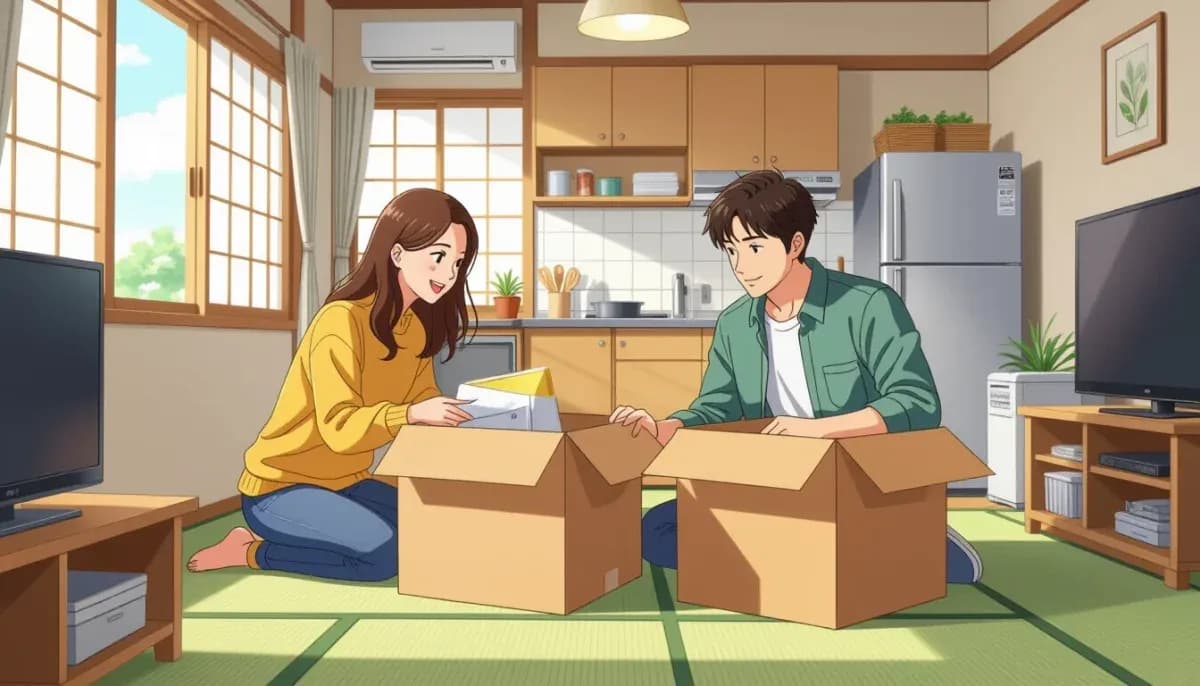
Complete moving to Japan checklist for new homeowners and foreign buyers. Step-by-step guide covering registration, utilities, taxes, and settlement tasks in your first 90 days.
Moving to Japan Checklist for New Homeowners: Your Complete Settlement Guide
Congratulations — you've bought your home in Japan! Now comes the part nobody warns you about: the mountain of administrative tasks, utility setups, and cultural rituals that separate a smooth move-in from a chaotic one. Japan is wonderfully organized, but only if you know the rules. This checklist walks you through everything a new foreign homeowner must do, from day one to month three, so nothing slips through the cracks.
Japan is home to approximately 3.96 million foreign residents as of 2025, and that number keeps growing as more foreigners purchase property here. The good news: Japan's systems are thorough and reliable. The challenging news: those same systems come with strict deadlines, required documentation, and procedures that differ significantly from what you may be used to back home. Follow this guide and you'll navigate it all with confidence.
Before Moving Day: Preparation Checklist
The week or two before you physically move into your new Japanese home is arguably the most important period. Lining up these tasks in advance prevents scrambling on move-in day.
Hire a Moving Company Early
Japan's moving industry is professional and efficient, but demand surges dramatically during March and April — the national peak moving season when students and new employees relocate en masse. During this window, prices spike and availability shrinks fast.
- Get quotes from at least 3 companies (Yamato Transport, Nippon Express, Art Moving are popular)
- Book 4–6 weeks ahead if moving in peak season
- Arrange disposal of large items like old furniture — Japan requires municipal pre-approval and fee-based pickup for oversized waste
- Submit a postal forwarding request to Japan Post — this redirects mail to your new address for one year
Arrange Utility Contracts in Advance
Do not wait until move-in day to set up utilities. Contact providers at least one week before your move date:
- Electricity: Apply online or by phone; many companies can activate remotely the day you move in. Just ensure all breakers are switched on. Japan's 2016 deregulation means you can choose from multiple providers.
- Gas: This is the one utility you cannot self-activate. City gas requires a technician visit, and you must be physically present — typically takes under 20 minutes, but slots book up fast. Without this, you have no hot water. Reserve your appointment well in advance.
- Water: Handled by your local municipality. Apply by phone or online; same-day activation is often possible, sometimes requiring a manual valve opening.
- Internet: Fiber optic installation typically takes 2–4 weeks due to building owner approval processes. Order it immediately. Use a mobile Wi-Fi hotspot as a bridge.
Prepare Your Documents Package
Have these ready in a dedicated folder before move-in:
- Residence Card (在留カード / Zairyu Card) — carry this at all times; fine up to ¥200,000 for not having it
- Passport
- Property deed or purchase contract
- Personal seal (hanko/inkan) or signature capability
- Bank account details
- Emergency contact information
Day 1–14: The Critical Administrative Window
Japan runs on deadlines, and the most important one starts the moment you move in. Within 14 days of establishing your new address, you must complete residency registration. Missing this can result in fines up to ¥50,000 and complications with your visa status.
Residency Registration at the Municipal Office
Go to your local City Hall (市役所 / Shiyakusho) or Ward Office (区役所 / Kuyakusho) with:
- Your Residence Card
- Passport
- Transfer certificate (転出証明書) from your previous address in Japan, or your Certificate of Eligibility if arriving from abroad
At the same visit, update your Residence Card address — the staff can usually handle both at the same counter. This single visit unlocks almost everything else: bank accounts, school enrollment, insurance, and tax registration all depend on your registered address.
For a deeper walkthrough of how Japan's paperwork systems work for foreigners, see the Japanese paperwork navigation guide at Living in Nihon.
Enroll in National Health Insurance
Unless your employer provides corporate health insurance, you must enroll in National Health Insurance (国民健康保険 / Kokumin Kenko Hoken) at the same municipal office visit. Japan's health coverage is universal — skipping enrollment doesn't exempt you, it just means you pay full medical bills and may owe retroactive premiums when you eventually register.
Bring your Residence Card and new address registration confirmation.
National Pension Registration
Nearly all foreign residents of working age must enroll in Japan's national pension system (国民年金 / Kokumin Nenkin). If you're employed, your company handles this through payroll. If you're self-employed or freelance, register at city hall alongside your other day-one tasks.
Week 1–2: Setting Up Daily Life Infrastructure
Once the legal obligations are handled, focus on building the practical infrastructure of daily life in your new Japanese home.
Garbage Rules: Non-Negotiable and Hyper-Local
Japan's garbage separation system is among the most rigorous in the world, and the rules vary significantly by municipality. Getting this wrong will result in your trash being left uncollected with a rejection tag — an embarrassing situation in a culture that prizes neighborhood harmony.
Pick up your garbage calendar and bag guidelines from your municipal office or building management:
- Combustible waste (燃えるゴミ): Usually 2 times per week
- Non-combustible waste (燃えないゴミ): Once every 1–2 weeks
- Recyclables (資源ゴミ): Glass, cans, plastic, paper on designated days
- Large item pickup (粗大ごみ): Must be pre-registered and fee paid in advance
Critical rule: Place garbage bags at the collection point on the morning of collection day only — never the night before. Use only the municipality-prescribed bags where required.
Greet Your Neighbors (Hikkoshi Aisatsu)
This cultural step is expected and genuinely important for your ongoing peace of mind. The 引越し挨拶 (hikkoshi aisatsu) — move-in greeting — signals respect and establishes goodwill before you ever have a noise complaint or need a favor.
- For detached houses: Visit the 3 homes directly facing your property plus the homes on either side
- For apartments: Visit your direct neighbors on both sides, plus the units above and below
- Timing: Move-in day or the following morning
- Gift: A modest item valued at ¥500–1,000 (soba noodles, hand towels, or sweets are traditional), presented in proper gift wrapping
- A simple "Yoroshiku onegaishimasu" (よろしくお願いします) is sufficient even with minimal Japanese
For a comprehensive guide to housing culture and neighborhood norms, For Work in Japan's housing and living infrastructure guide covers this in detail.
Month 1: Financial and Legal Updates
Update Your Address Everywhere
Japan's administrative ecosystem requires you to notify multiple institutions separately. There is no central "address change" system that propagates automatically. Work through this list:
| Institution | How to Update | Deadline |
|---|---|---|
| Driver's license | Visit local police station or license center | Within 14 days |
| Bank accounts | Online banking portal or branch visit | Within reasonable time |
| Credit cards | Each card's app or customer service | Within 30 days |
| Mobile phone carrier | Carrier app or store visit | Within 30 days |
| Employer HR department | Internal form or email | Immediately |
| Insurance policies (health, fire, earthquake) | Policy provider by phone or online | Within 30 days |
| Japan Post (mail forwarding) | Post office or website | Before moving |
| Children's schools | Direct contact with school office | Immediately |
| Tax authority (確定申告 / municipal tax) | Handled automatically via municipal registration | Via city hall |
Fire and Earthquake Insurance
If you've purchased your home with a mortgage, fire insurance (火災保険 / Kasai Hoken) was almost certainly required as a loan condition. If you haven't already arranged it, do so now. Japan's seismic reality makes earthquake insurance (地震保険 / Jishin Hoken) equally essential — note that earthquake damage is typically not covered under standard fire insurance and requires a separate rider or policy.
Annual fire insurance typically runs ¥15,000–20,000 for a standard property. Earthquake insurance adds roughly 50–100% to that cost.
Open a Local Bank Account (If Not Yet Done)
A Japanese bank account registered to your new address unlocks automatic utility payments, salary deposit, and countless daily transactions. Required documents:
- Residence Card with your new address
- Passport
- Phone number registered to a Japanese carrier
- Personal seal (hanko) — though many banks now accept a signature
For a detailed breakdown of the full buying process and financial setup, see our guide on buying property in Japan step-by-step.
Month 1–3: Property Maintenance and Long-Term Setup
Document Your Home's Condition
If you haven't already done this, photograph and document every room thoroughly:
- All wall scuffs, scratches, and stains
- Floor damage and wear
- Condition of all windows, doors, locks, and screens
- Kitchen and bathroom fixtures
- Electrical outlets, switches, and lighting
- Air conditioning units (note model numbers and filter condition)
- Smoke detectors and fire extinguishers
Even as an owner rather than renter, this documentation is invaluable for insurance claims, future sale negotiations, and identifying pre-existing issues to address. The Gaijin Buy House moving and settling guide provides an excellent property inspection framework.
Understand Property Tax Timelines
As a homeowner in Japan, you will receive a Fixed Asset Tax (固定資産税 / Kotei Shisan Zei) bill, typically in April or May, covering the calendar year. This is an annual obligation calculated based on assessed land and building value.
New homeowners often benefit from:
- New construction reductions: Buildings under 3 years old may qualify for reduced rates on the structural portion
- Small residential land exemptions: Land under 200 sqm may qualify for 1/6 reduction on land value assessment
For full details on ongoing costs and taxes, see our guide on property taxes and annual costs in Japan.
Plan for Seasonal Home Maintenance
Japanese homes require seasonal attention:
- Spring: Air conditioning filter cleaning, check ventilation fans
- Summer: Inspect weatherproofing around windows and doors; check drainage
- Autumn: Gutter clearing (especially near trees), prepare heating systems
- Winter: Pipe insulation check in colder regions; snow load awareness for Hokkaido and Tohoku properties
Checklist Summary: Your 90-Day Timeline
Here is a consolidated master checklist to track your progress:
| Timeframe | Task | Status |
|---|---|---|
| Before move | Book moving company (4–6 weeks ahead) | ☐ |
| Before move | Set up electricity contract | ☐ |
| Before move | Book gas technician appointment | ☐ |
| Before move | Apply for water service | ☐ |
| Before move | Order internet (fiber takes 2–4 weeks) | ☐ |
| Before move | Submit Japan Post forwarding request | ☐ |
| Day 1–14 | Register address at municipal office | ☐ |
| Day 1–14 | Update Residence Card address | ☐ |
| Day 1–14 | Enroll in National Health Insurance | ☐ |
| Day 1–14 | Enroll in National Pension (if not employer-covered) | ☐ |
| Week 1 | Do hikkoshi aisatsu (neighbor greeting) | ☐ |
| Week 1 | Get garbage calendar and rules | ☐ |
| Week 1–2 | Notify employer HR of new address | ☐ |
| Month 1 | Update driver's license address | ☐ |
| Month 1 | Update bank accounts | ☐ |
| Month 1 | Update credit cards | ☐ |
| Month 1 | Update mobile carrier | ☐ |
| Month 1 | Confirm/arrange fire and earthquake insurance | ☐ |
| Month 1–3 | Document home condition with photos | ☐ |
| Month 1–3 | Understand fixed asset tax schedule | ☐ |
Additional Resources for New Homeowners in Japan
Japan's government and expat community offer substantial support for navigating all of this:
- Your municipal office provides free settlement guides in up to 14 languages
- Japan Housing Finance Agency (JHF) offers English resources for new homeowners with mortgages
- Japan Handbook's Moving to Japan Checklist 2025 is a well-maintained general reference
- E-Housing's first 90 days guide focuses on avoiding costly mistakes early on
For everything related to the property purchase itself, our complete guide to buying property in Japan covers the entire acquisition process from search to closing.
If you're weighing costs before or after your purchase, the hidden costs and fees article will help you understand the financial landscape of Japanese property ownership.
And if you're still evaluating visa options alongside your property purchase, our visa and residency guide for property buyers in Japan addresses exactly how ownership interacts with your immigration status.
Moving into your Japanese home is just the beginning of a rewarding chapter. Tackle the administrative tasks systematically in the first two weeks, establish your community ties early, and the rest of the settlement process falls naturally into place.

Originally from Vietnam, living in Japan for 16+ years. Graduated from Nagoya University, with 11 years of professional experience at Japanese and international companies. Sharing information about buying property in Japan for foreigners.
View Profile →Related Articles
Joining the Community Association (Jichikai/Chonaikai) in Japan
Learn how to join Japan's neighborhood association (jichikai or chonaikai) as a foreigner. Covers fees, activities, practical tips, and how to integrate into your local Japanese community.
Read more →
Local Government Services for New Residents in Japan
Complete guide to local government services for new foreign residents in Japan: address registration, health insurance, national pension, My Number, and multilingual support at city hall.
Read more →
Japan Home Maintenance Seasonal Calendar and Guide
Complete seasonal home maintenance calendar for foreign homeowners in Japan. Covers rainy season mold prevention, typhoon prep, winter condensation, osoji deep cleaning, and long-term repair budgeting.
Read more →
Japan Postal and Mail System Setup Guide for New Homes
Complete guide to setting up mail at your new Japanese home: Tenkyo Todoke forwarding, mailbox setup, missed deliveries, and notifying important institutions as a foreign resident.
Read more →
Juuminhyou (Resident Registration) Guide for Property Owners in Japan
Complete guide to juuminhyou (juminhyo) for foreign property owners in Japan. Learn how to register, obtain copies, and meet the April 2024 name registration requirements for property transactions.
Read more →
Home Security System Options in Japan for Foreign Owners
Complete guide to home security systems in Japan for foreign owners and expats. Compare SECOM, ALSOK, Leafee, Secual, and DIY options with costs and rental rules.
Read more →