
Japan Postal and Mail System Setup Guide for New Homes

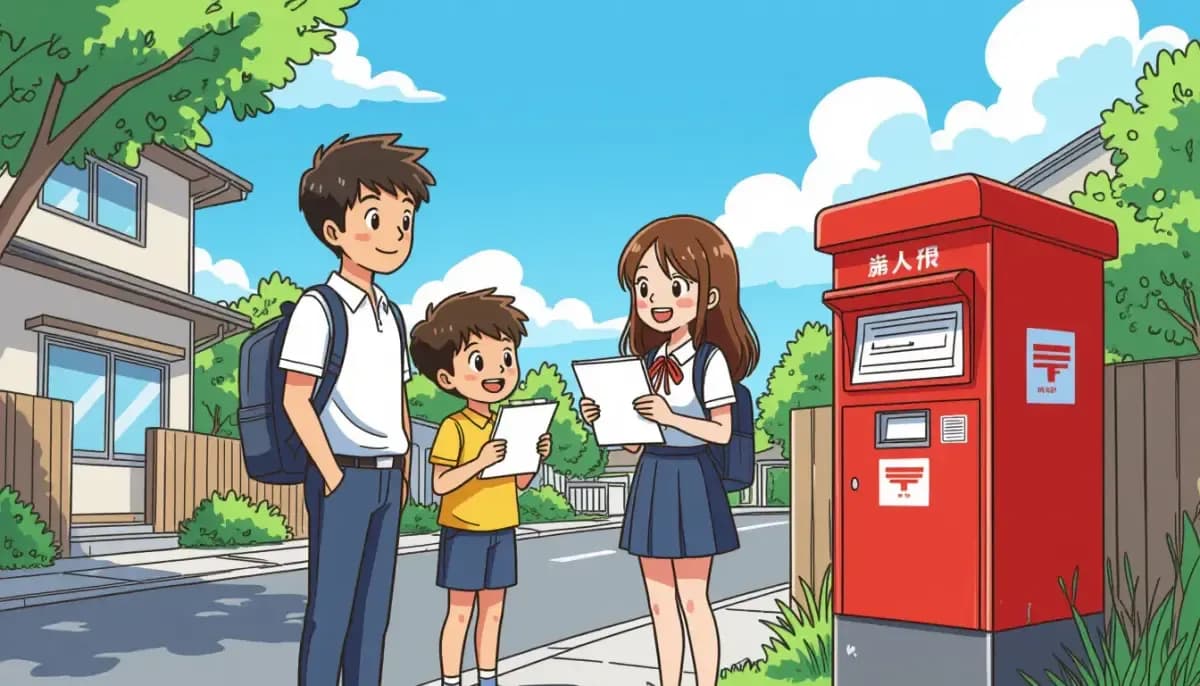
Complete guide to setting up mail at your new Japanese home: Tenkyo Todoke forwarding, mailbox setup, missed deliveries, and notifying important institutions as a foreign resident.
Japan Postal and Mail System Setup Guide for New Homes
Moving into a new home in Japan is exciting — but getting your mail set up correctly is one of those essential administrative tasks that can easily be overlooked. Japan's postal system, run primarily by Japan Post (日本郵便), is highly reliable and efficient, with approximately 24,000 post offices across the country. However, navigating the system as a foreign resident requires understanding key procedures, forms, and potential pitfalls that even many long-term expats miss.
This guide walks you through everything you need to know about setting up your postal and mail service at your new Japanese home — from mail forwarding and address changes to understanding your mailbox and handling missed deliveries.
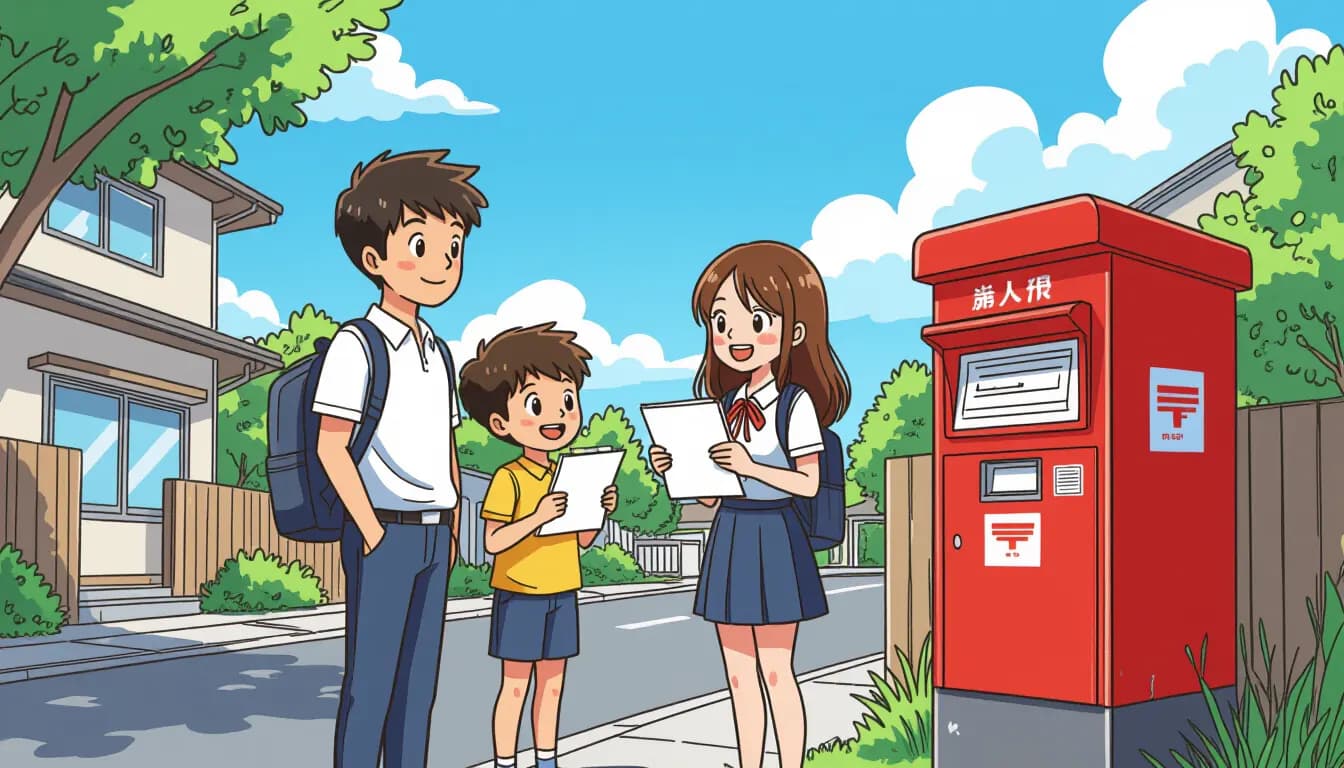
What is Japan Post and How Does It Work?
Japan Post (日本郵便) is the country's primary postal service, operating both mail delivery and financial services through post offices nationwide. It handles an enormous volume — approximately 169 billion mail items in fiscal 2024 — making it one of the world's most active postal systems.
As a new homeowner, you'll interact with Japan Post for:
- Receiving government documents, utility bills, and financial mail
- Forwarding mail from your old address
- Sending letters and packages
- Receiving parcel deliveries
Post Office Hours
- Standard branches: Monday–Friday, 09:00–17:00
- Larger main post offices: Open until 19:00 on weekdays; some offer limited weekend hours
Stamps are available at post offices and at convenience stores (コンビニ) such as 7-Eleven, FamilyMart, and Lawson — though convenience stores cannot weigh items for postage calculation.
Setting Up Mail Forwarding: The Tenkyo Todoke (転居届)
The most important step when moving is submitting a Tenkyo Todoke (転居届) — Japan Post's free mail forwarding service. This form redirects all mail sent to your old address to your new address for exactly one year from the date of submission.
Key Details About Tenkyo Todoke
- Duration: Exactly 1 year from submission (not from your move date)
- Processing time: 3–7 business days — submit at least one week before moving
- Scope: Domestic moves only; no international forwarding
- Renewal: The service does NOT auto-renew — you must resubmit annually if needed
- Cost: Free
Three Ways to Submit
| Method | Requirements | Notes |
|---|---|---|
| In-person at post office | Government-issued ID | Staff can assist with form completion |
| By mail | Photocopy of ID (front and back) | Drop in any post box — no postage needed |
| Online (e転居) | Verified Yu-ID account | Japanese-only; requires Japanese mobile number (070/080/090) |
The in-person method is recommended for foreign residents who are not fluent in Japanese, as post office staff can assist with the form.
For detailed guidance on the forwarding process, MailMate's Tenkyo Todoke guide provides step-by-step instructions in English.
The Critical Warning: Mail Marked 転送不要
Here is one of the most important things every foreign resident must understand: not all mail will be forwarded.
Many senders — particularly banks, credit card companies, telecommunications providers, and government agencies — mark their envelopes with the stamp 転送不要 (tenkyo fuyou), which means "Do Not Forward." When mail is stamped this way, it is returned directly to the sender rather than being forwarded to your new address.
What this means for you:
- Your bank statements and credit card bills may be returned to the issuer
- Government notifications from city hall or tax authorities may not reach you
- Your telecom provider's notices (NTT, SoftBank, docomo, etc.) will likely be returned
Solution: You must notify these senders directly and update your address with each institution individually. Do not assume the Tenkyo Todoke covers everything.
For guidance on dealing with Japanese bureaucracy as a new homeowner, see our Legal Procedures and Documentation for Japan Property Purchase guide.
What Gets Forwarded and What Doesn't
Understanding the scope of Japan Post's forwarding service is essential for ensuring nothing important falls through the cracks.
| Item Type | Forwarded? | Notes |
|---|---|---|
| Standard letters and bills | ✅ Yes | Unless stamped 転送不要 |
| Postcards (官製はがき) | ✅ Yes | Unless stamped 転送不要 |
| Small packages | ✅ Yes | Standard Japan Post parcels |
| Cash-on-delivery items | ❌ No | Must update shipper directly |
| Registered mail (書留) | ❌ No | Requires signature at delivery address |
| Yu-Pack parcels | ❌ No | Must update shipper directly |
| Yamato Transport (ヤマト運輸) | ❌ No | Private courier — separate forwarding needed |
| Sagawa Express (佐川急便) | ❌ No | Private courier — separate forwarding needed |
Private couriers (takkyubin services) operated by Yamato, Sagawa, and similar companies are entirely separate from Japan Post's forwarding system. You must contact each of these services individually to update your delivery address.
Setting Up Your Mailbox Correctly
Your physical mailbox setup matters more than you might think. Japan Post carriers follow specific rules that can result in mail being returned if your mailbox is not configured properly.
Name on the Mailbox
Always display your name on your mailbox. If the name on the envelope does not match the name on the mailbox, the carrier may return the mail to the sender. For foreign residents:
- Write your name in both Roman characters (English) AND Japanese katakana if possible
- Ask your real estate agent or city hall staff to help with the katakana transliteration
Postal Code
Always use the full 7-digit postal code (〒XXXXX-XXXX format) on all outgoing mail. Japan's postal sorting is largely automated based on postal codes, and incorrect or missing codes can cause significant delays.
Delivery Lockers (宅配ボックス)
Many newer residential buildings and condominiums are equipped with delivery lockers (宅配ボックス). These allow carriers to deposit packages even when you're not home. The carrier leaves a notification slip with the locker number and PIN code for retrieval.
If your building has delivery lockers, register your name/unit in the building management system to ensure you receive notifications properly. For more information on modern apartment amenities in Japan, see our guide on Types of Properties Available in Japan.
Handling Missed Deliveries
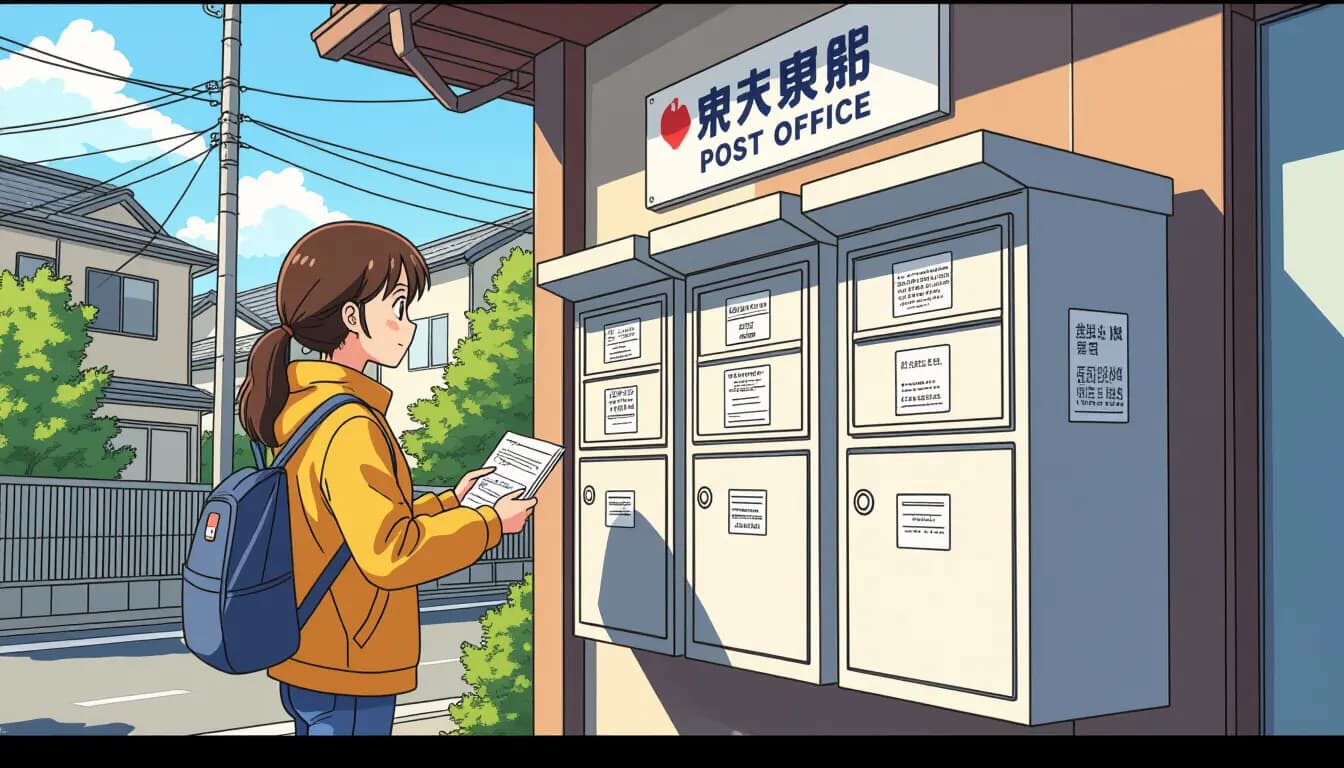
When a carrier attempts delivery and no one is home, they leave a yellow absence notice (不在票, fuzai-hyo). This is an important document — do not discard it.
What to Do with a Fuzai-hyo
- QR Code Method (Recommended): Scan the QR code on the slip using your smartphone. This takes you directly to Japan Post's redelivery scheduling system where you can choose a convenient time and date.
- Online at Japan Post Website: Visit the Japan Post redelivery page and enter the tracking number printed on the slip.
- Phone: Call the number printed on the slip (available in Japanese only).
- App: The Japan Post app and Yu-ID app allow you to manage redeliveries digitally.
Important timing notes:
- Japan Post typically stores undelivered packages for 7 days before returning them to sender
- You can often request same-day redelivery if you contact them early enough in the day
- Delivery time slots typically run: morning (AM), 12–14:00, 14–16:00, 16–18:00, 18–20:00, 19–21:00
Additional Japan Post Services for New Residents
Yuubin Kyokudomari (郵便局留) — Hold at Post Office
If you're not yet settled or anticipate being absent, you can have mail held at any post office for up to 10 days. Simply address mail as:
〒[Post Office Postal Code]
[Post Office Name] 郵便局留
[Your Name]
Pick up with valid ID. This is particularly useful during the initial weeks after moving when you may not be reliably home.
Fuzai Todoke (不在届) — Temporary Hold
If you're traveling internationally or will be absent for an extended period, submit a Fuzai Todoke to have all your mail held at the post office for up to 30 days. This is ideal for long business trips or vacations.
Current Postage Rates (as of October 2024)
| Mail Type | Weight | Rate |
|---|---|---|
| Standard letter | Up to 25g | ¥110 |
| Standard letter | 26–50g | ¥110 |
| Postcard | — | ¥85 |
| Large letter (定形外) | Up to 50g | ¥140 |
| Large letter | Up to 100g | ¥180 |
| Large letter | Up to 150g | ¥270 |
Note: These rates apply to domestic mail. International postage rates vary significantly by destination and weight.
Notifying Important Parties of Your New Address
Submitting the Tenkyo Todoke handles Japan Post forwarding, but you should also proactively notify all important institutions directly. Here is a checklist:
Government and Legal:
- [ ] City Hall (役所) — Update your Jyuminhyo (住民票, resident registration)
- [ ] Japan Pension Service (年金)
- [ ] Tax office (税務署) if self-employed
Financial:
- [ ] Your bank(s) — All Japanese bank accounts
- [ ] Credit card companies
- [ ] Life insurance provider
- [ ] Car insurance provider
Utilities and Services:
- [ ] Electricity provider (Tokyo Electric, Kansai Electric, etc.)
- [ ] Gas provider
- [ ] Water department (through city hall in most cases)
- [ ] Internet service provider
- [ ] Mobile phone carrier
Other:
- [ ] Employer's HR department
- [ ] Subscription services (Amazon Japan, etc.)
- [ ] Gym memberships and recurring services
For a full overview of administrative tasks when settling into a new Japanese home, see our Complete Guide to Buying Property in Japan as a Foreigner.
Resources for Foreign Residents
Setting up your postal service in Japan is just one part of building your life as a new homeowner. Several communities and resources offer practical guidance for foreign residents navigating Japanese bureaucracy:
- Living in Nihon — Practical guides for expat life in Japan covering housing, admin, and daily living
- For Work in Japan — Resources for foreigners working and living in Japan
- Gaijin Buy House — Specialized guidance on buying property and settling in as a foreign homeowner in Japan
- Japan Post Official English Page — Official forwarding service information
- MailMate — English guides for Japan Post services
- Japan Handbook: Mail Forwarding Guide — Comprehensive English explanation of the Tenkyo Todoke process
Final Checklist: Postal Setup for Your New Japanese Home
| Task | Timing | Status |
|---|---|---|
| Submit Tenkyo Todoke at Japan Post | 1 week before move | |
| Update city hall (jyuminhyo) | Within 14 days of move | |
| Notify bank(s) of new address | Before or immediately after move | |
| Notify credit card companies | Before or immediately after move | |
| Update all utility providers | At move date | |
| Add name (romaji + katakana) to mailbox | On move day | |
| Register for Yu-ID app | Any time after move | |
| Notify employer HR | Before move if possible |
Getting your postal setup right from the start protects you from missing important government notices, bills, and financial correspondence. Japan's postal system is excellent — but it works best when you work with it proactively.
For more guidance on the full process of settling into your new Japanese property, explore our Step-by-Step Home Buying Process in Japan for Foreigners guide.

Originally from Vietnam, living in Japan for 16+ years. Graduated from Nagoya University, with 11 years of professional experience at Japanese and international companies. Sharing information about buying property in Japan for foreigners.
View Profile →Related Articles
Joining the Community Association (Jichikai/Chonaikai) in Japan
Learn how to join Japan's neighborhood association (jichikai or chonaikai) as a foreigner. Covers fees, activities, practical tips, and how to integrate into your local Japanese community.
Read more →
Local Government Services for New Residents in Japan
Complete guide to local government services for new foreign residents in Japan: address registration, health insurance, national pension, My Number, and multilingual support at city hall.
Read more →
Japan Home Maintenance Seasonal Calendar and Guide
Complete seasonal home maintenance calendar for foreign homeowners in Japan. Covers rainy season mold prevention, typhoon prep, winter condensation, osoji deep cleaning, and long-term repair budgeting.
Read more →
Juuminhyou (Resident Registration) Guide for Property Owners in Japan
Complete guide to juuminhyou (juminhyo) for foreign property owners in Japan. Learn how to register, obtain copies, and meet the April 2024 name registration requirements for property transactions.
Read more →
Home Security System Options in Japan for Foreign Owners
Complete guide to home security systems in Japan for foreign owners and expats. Compare SECOM, ALSOK, Leafee, Secual, and DIY options with costs and rental rules.
Read more →
Japan Garbage Disposal and Recycling Rules for Homeowners
Complete guide to Japan's garbage disposal and recycling rules for foreign homeowners. Learn waste categories, collection schedules, oversized item disposal, appliance recycling law, and how to avoid fines and neighbor disputes.
Read more →