
Osaka vs Tokyo Property Investment: Which Is Better?

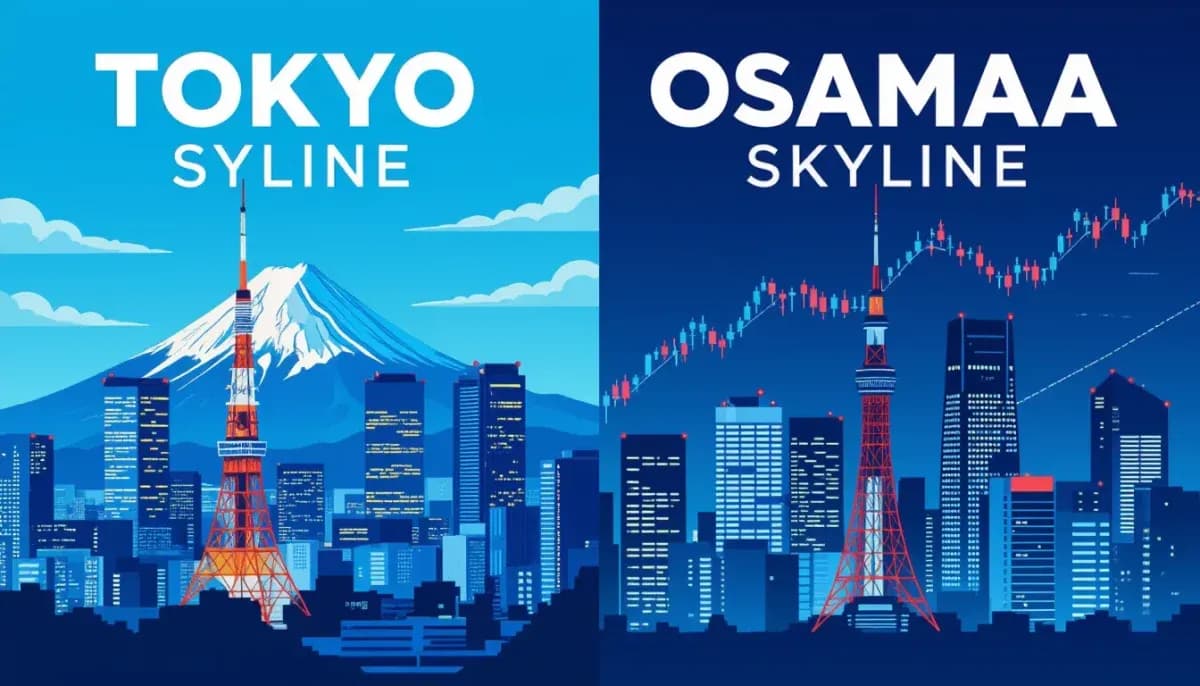
Compare Osaka vs Tokyo for property investment as a foreigner. Rental yields, prices, appreciation, and upcoming catalysts analyzed — find which city suits your strategy.
Osaka vs Tokyo Property Investment: Which Is Better for Foreigners?
When foreign investors look at Japanese real estate, two cities dominate the conversation: Tokyo and Osaka. Both cities have delivered outstanding returns in recent years — in fact, they tied for #1 globally in new apartment price growth in April 2024. But they offer very different investment profiles. Tokyo delivers stronger capital appreciation and an enormous rental market, while Osaka offers higher rental yields, lower entry costs, and exciting upcoming catalysts like the 2030 Integrated Resort (casino) project.
This guide breaks down the key differences between Osaka and Tokyo property investment to help you decide which city better fits your goals as a foreign buyer.
Key Differences at a Glance: Osaka vs Tokyo
Before diving into detail, here is a side-by-side comparison of the two cities across the most important investment metrics:
| Factor | Tokyo | Osaka |
|---|---|---|
| Average new condo price | ¥93,960,000 | ¥58,130,000 |
| Average pre-owned condo | ¥56,780,000 | ¥30,520,000 |
| Average pre-owned house | ¥53,380,000 | ¥22,260,000 |
| Gross rental yield | ~3.4–3.6% | ~4.3–4.5% |
| Price appreciation (2021–2024) | +22.9% | +17.3% |
| Monthly rent (single, avg) | ¥69,202 | ¥54,836 |
| Population trend | Growing (14.4M by 2030) | Declining (households stable) |
| Major upcoming catalyst | Stable, limited supply | IR casino, Expo legacy, maglev |
| Best for | Capital appreciation | Cash flow, lower entry |
Both cities are equally accessible to foreign buyers. Japan imposes no nationality restrictions on property ownership — foreigners have the same rights as Japanese citizens to own freehold land and buildings.
For a broader introduction to buying property in Japan as a foreigner, see Japan Real Estate Investment Guide for Foreigners.
Rental Yields: Osaka Consistently Outperforms
If you are focused on rental income and cash flow, Osaka has a clear advantage. As of Q3 2025, Osaka delivers a gross rental yield of approximately 4.26–4.47%, compared to Tokyo's 3.44–3.59%. That persistent ~1% gap makes a significant difference in monthly cash flow, especially on smaller investment units.
The reason comes down to entry price. Osaka properties cost roughly 38–58% less than comparable Tokyo properties, but rents are only 18–21% lower. This creates a more favorable price-to-rent ratio in Osaka.
For example, a ¥30 million pre-owned condo in Osaka might generate ¥120,000–130,000 per month in rent, giving a gross yield near 5% in popular areas like Namba or Tennoji. A similarly located Tokyo property at ¥50–60 million would need to rent for around ¥200,000/month to match that yield — and many don't.
Osaka's best neighborhoods for rental yields include:
- Namba and Shinsaibashi — High demand from tourists and young professionals; strong short-term rental potential
- Tennoji and Abeno — Emerging area with improving infrastructure; see Tennoji and Abeno Area Property Guide for Foreigners
- Umeda — Osaka's business hub; premium rents from corporate tenants; see Osaka Umeda and Namba Property Guide for Foreigners
For dedicated analysis of rental property investment in Osaka, visit Osaka Rental Property Investment for Foreign Investors.
More detailed yield data and property price comparisons by neighborhood are available at Nippon Tradings: Tokyo vs Osaka Rental Yields.
Capital Appreciation: Tokyo Leads in Long-Term Growth
If your primary goal is capital gains rather than income, Tokyo has historically offered stronger price growth. Between December 2021 and December 2024:
- Tokyo residential property price index rose from 139.1 to 170.9 — a gain of +22.9%
- Osaka residential property price index rose from 127.5 to 149.6 — a gain of +17.3%
Tokyo benefits from structural advantages that support long-term price growth:
- Population growth — Tokyo's population is projected to reach 14.4 million by 2030, with continued household formation
- Chronic undersupply — New condo supply in Tokyo fell 14.4% in 2024, tightening an already constrained market
- Global demand — Tokyo consistently attracts foreign institutional capital and high-net-worth buyers
- Rent growth — Tokyo rents rose +6.4% year-on-year in Q4 2024 in central wards; occupancy exceeds 96.6%
Areas like Shibuya (near the new Sakura Stage development, land prices up +32.7%) and Nakano (+16.3%) have seen exceptional appreciation. For buyers focused on premium areas, Tokyo's central wards have outpaced nearly all other Japanese markets.
That said, Tokyo's higher entry price means you need more capital to participate, and yields are compressed. Many foreign investors find Tokyo hard to justify on a cash-flow basis without a very long holding horizon.
For more on buying in Tokyo, see the Complete Guide to Buying Property in Tokyo as a Foreigner.
Osaka's Upcoming Catalysts: The IR Casino and Beyond
One of the most compelling arguments for Osaka right now is the pipeline of major urban development projects that could drive significant price appreciation in the coming decade.
2030 Integrated Resort (IR/Casino) — Yumeshima Island Japan approved Osaka's IR casino project, slated to open in the late 2020s on Yumeshima island (near the 2025 World Expo site). This will be Japan's first legal casino resort, modeled on Singapore's Marina Bay Sands. Expected to attract tens of millions of visitors annually, it is the single largest upcoming catalyst for Osaka property values.
Post-Expo 2025 Legacy The 2025 Osaka-Kansai World Expo has already boosted commercial land values. Osaka's commercial land prices rose +7.6% year-on-year — one of the strongest gains in Japan — driven by the Expo's international attention and infrastructure upgrades around the waterfront.
2034 Linear Maglev Railway Connection Japan's Linear Chuo Shinkansen maglev will eventually connect Osaka to Nagoya and Tokyo at speeds exceeding 500 km/h. While full completion extends to 2037, the Osaka connection will significantly strengthen the city's position as a business hub.
Osaka Seven Major Regeneration Projects The city has identified seven strategic urban redevelopment zones, including Umeda North, Nanko Port, and Yumeshima. These government-backed projects are drawing both domestic and foreign developer capital.
For buyers interested in these growth zones, see Osaka New Development Projects and Growth Areas for 2026 and Post-Expo 2025 Impact on Osaka Property Market.
RE/MAX APEX offers detailed insight into current Osaka investment trends at Buying Real Estate in Osaka: Tips, Trends, and Investment Insights.
Entry Costs and Financing for Foreign Buyers
Purchase Costs Both cities follow the same transaction cost structure. Expect to pay approximately 8–12% of the property value in one-time buying costs, including:
- Real estate agent commission (3% + ¥60,000 + tax)
- Registration fees and stamp duties (~2–3%)
- Judicial scrivener (shiho shoshi) fees (¥100,000–300,000)
- Property acquisition tax (payable ~6 months after purchase)
This means a ¥30 million Osaka property carries ¥2.4–3.6 million in transaction costs, while a ¥90 million Tokyo property could cost ¥7.2–10.8 million just to close. The lower absolute cost in Osaka reduces the barrier significantly.
Financing Mortgages remain the most challenging aspect for foreign buyers. Most major Japanese banks require permanent residency (PR) status for home loans. However, some regional banks and international lenders offer solutions for non-PR holders with stable employment in Japan.
Many foreign investors — especially those purchasing smaller investment units under ¥20–30 million — purchase with cash. Cash buyers can also negotiate more effectively and close faster.
For guidance on mortgages, see Mortgages and Home Loans for Foreigners in Japan.
The Living in Nihon resource hub provides additional practical guidance for foreigners navigating life and investments in Japan: livinginnihon.com.
Short-Term Rentals: Osaka's Tourism Edge
Osaka has a distinct advantage for investors interested in short-term rental (Airbnb/minpaku) income. The city is one of Japan's top tourist destinations — ranked higher than Tokyo in some international visitor surveys for its food culture, Dotonbori, and nightlife.
Key points for short-term rental investors:
- Japan's Minpaku Law limits short-term rentals to 180 nights per year for standard properties
- Osaka allows short-term rentals in designated areas; the tourism district around Minami (Namba, Shinsaibashi, Dotonbori) is particularly strong
- Foreign visitor demand to Osaka has surged post-COVID, supporting strong occupancy in well-located units
- Gross returns on STR-permitted properties in Osaka can reach 7–10%, well above long-term rental yields
See Osaka Tourism Area Property Investment (Minami, Dotonbori) and Osaka Short-Term Rental Investment Guide for Foreign Owners for detailed strategies.
Bamboo Routes provides useful analysis on the Osaka STR opportunity at Is it worth buying property in Osaka?.
Which City Is Right for You?
Choose Tokyo if you:
- Have significant capital (¥50M+) and prioritize long-term appreciation
- Want the deepest, most liquid real estate market in Asia
- Prefer a larger, more stable rental market with low vacancy risk
- Are interested in premium neighborhoods with global name recognition
Choose Osaka if you:
- Want higher rental yields and better cash flow from day one
- Have a lower entry budget (¥20–40M for a decent investment property)
- Want to benefit from upcoming catalysts: IR casino, Expo legacy, maglev
- Are interested in tourism-driven short-term rental strategies
- Want geographic diversification beyond Tokyo
Consider both cities if you:
- Are building a property portfolio in Japan
- Want to balance appreciation (Tokyo) with yield (Osaka)
- Are using an asset manager to handle remote ownership
For Japanese property owners managing assets from overseas, Property Management for Overseas Owners in Japan covers everything you need.
For Work in Japan provides useful context on the financial and practical side of living and investing in Japan: forworkinjapan.com.
Practical Steps for Foreign Investors
Regardless of which city you choose, the buying process follows the same steps:
- Set your budget — Include 8–12% for transaction costs on top of the property price
- Choose a neighborhood — Research yield, appreciation, and vacancy rates in target areas
- Find a bilingual agent — Essential for navigating Japanese-language contracts and procedures
- Do due diligence — Building inspection, earthquake risk assessment, management fee review
- Sign the Purchase Agreement — Binding contract with typically 10% deposit
- Complete at the notary — Final payment, title registration, and key handover
The entire process typically takes 2–4 months from initial offer to completion.
Gaijin Buy House offers a community-focused perspective on the foreign buyer experience in Japan: gaijinbuyhouse.com.
For the broader process overview, see Step-by-Step Home Buying Process in Japan for Foreigners.
Conclusion
Both Osaka and Tokyo are exceptional markets for foreign property investors, but they serve different strategies. Osaka wins on yield, affordability, and upcoming catalysts — making it ideal for cash-flow-focused investors and those with moderate budgets. Tokyo wins on capital appreciation, market depth, and long-term stability — making it the choice for buyers prioritizing growth and liquidity.
The good news: Japan is one of the most foreigner-friendly property markets in Asia, and both cities continue to attract record levels of international investment. Whether you choose Osaka, Tokyo, or both, the Japanese property market in 2025 and beyond offers compelling opportunities for patient, informed investors.
For area-specific research in Osaka, explore Best Neighborhoods in Osaka for Foreign Property Buyers and Osaka Property Prices Comparison Guide by Area.

Originally from Vietnam, living in Japan for 16+ years. Graduated from Nagoya University, with 11 years of professional experience at Japanese and international companies. Sharing information about buying property in Japan for foreigners.
View Profile →Related Articles
Osaka Short-Term Rental Investment Guide for Foreign Owners
Complete guide to Osaka short-term rental investment for foreigners: Minpaku licensing, best neighborhoods, financial projections, yields up to 4.47%, and step-by-step setup for non-resident foreign owners.
Read more →
Sakai City: Affordable Property Near Osaka for Foreigners
Discover why Sakai City is one of the most affordable property options near Osaka for foreigners. Learn about neighborhoods, prices, transport links, and the buying process for expats.
Read more →
Tennoji and Abeno Area Property Guide for Foreigners
Complete guide to buying property in Tennoji and Abeno, Osaka as a foreigner. Property prices, rental yields, mortgage options, and investment analysis for 2025.
Read more →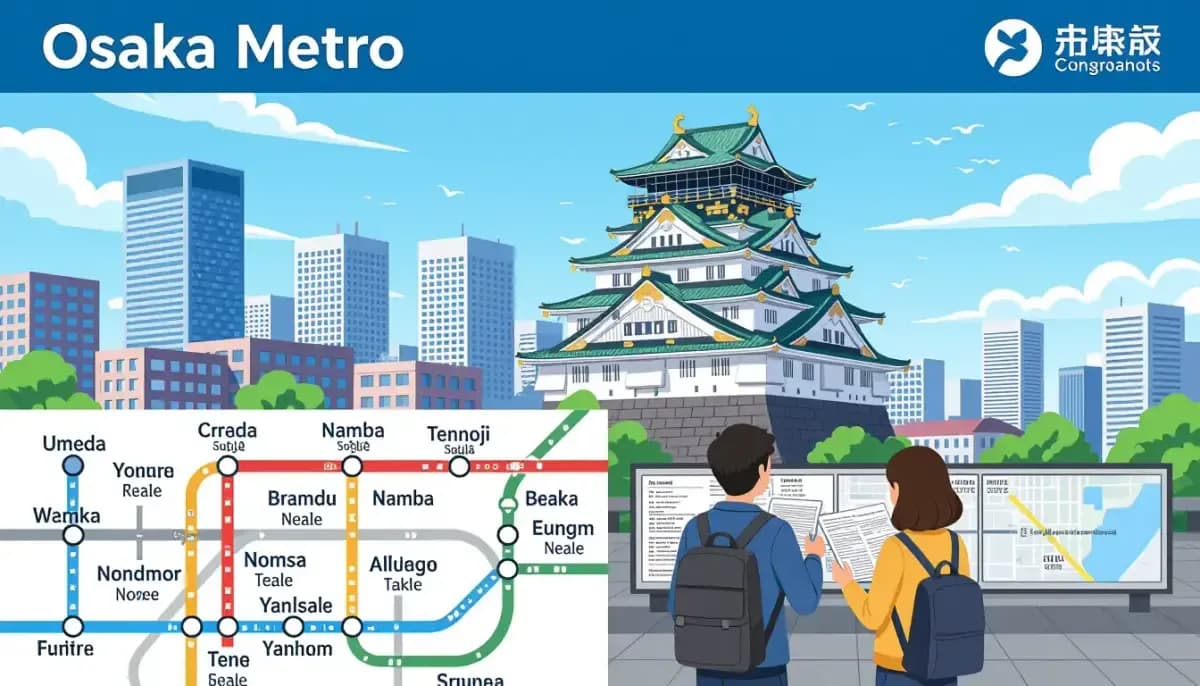
Osaka Subway and Transit Accessibility Property Guide
Complete guide to Osaka subway and transit accessibility for property buyers. Compare prices by metro line, find the best neighborhoods, and learn how transit proximity affects property values in Osaka.
Read more →
Post-Expo 2025 Impact on Osaka Property Market
Expo 2025 reshaped Osaka real estate with record land price gains and a 2.9 trillion yen economic boost. Discover what the post-Expo market means for foreign buyers and investors in 2026 and beyond.
Read more →
Osaka New Development Projects and Growth Areas for 2026
Discover Osaka's biggest development projects in 2026 — Grand Green Osaka, the ¥1.27 trillion Yumeshima IR, and the top growth neighborhoods for foreign property buyers.
Read more →