
Osaka Subway and Transit Accessibility Property Guide

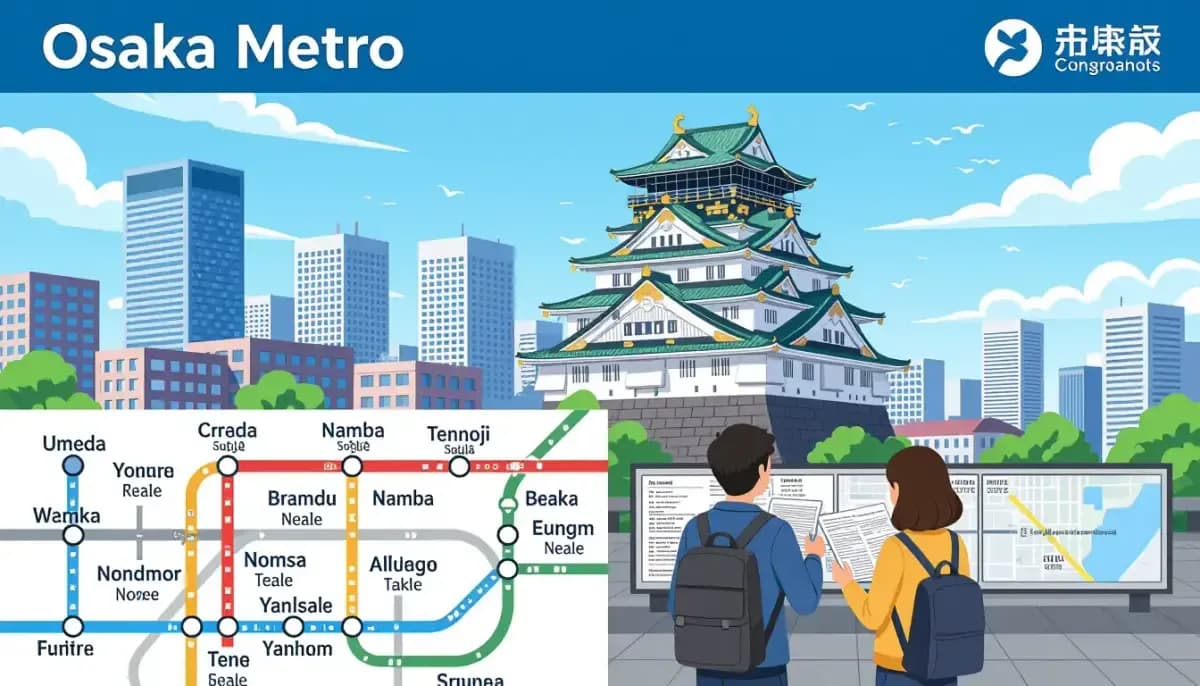
Complete guide to Osaka subway and transit accessibility for property buyers. Compare prices by metro line, find the best neighborhoods, and learn how transit proximity affects property values in Osaka.
Osaka Subway and Transit Accessibility Property Guide for Foreigners
If you are a foreigner looking to buy property in Osaka, one of the most important factors to consider is transit accessibility. Osaka boasts one of Asia's most efficient subway and rail networks, and where you live relative to that network has a direct impact on both your quality of life and your property's long-term value. This guide breaks down Osaka's transit system, explains how each major line affects property prices, and helps you identify the best neighborhoods for your lifestyle and budget.
Understanding Osaka's Subway Network
Osaka Metro operates 8 subway lines covering 133 stations across 137.8 km of track, carrying approximately 2.29 million passengers every day. This makes it one of Japan's largest urban rail systems by route length, comparable in scale to the Tokyo Metro.
The network is structured around two main commercial hubs:
- Kita (North): Centered on Umeda/Osaka Station, the business and shopping core
- Minami (South): Centered on Namba and Shinsaibashi, the entertainment and dining hub
Most of Osaka's major subway lines run north-south or east-west through these two districts, creating a grid-like network with excellent cross-city connectivity. In addition to Osaka Metro, the city is served by JR lines, Hankyu, Hanshin, Kintetsu, and Nankai private railways — each serving different suburban corridors.
For foreigners buying property, understanding which line serves your target neighborhood is essential. Properties near multi-line interchange stations command premium prices, while single-line stations further from the center offer significantly better affordability.
For a broader overview of property buying in Osaka, see our Complete Guide to Buying Property in Osaka as a Foreigner.
The Midosuji Line: Osaka's Most Valuable Transit Corridor
The Midosuji Line is the backbone of Osaka's subway system and the single biggest driver of property values in the city. Running north to south, it connects Esaka in the north to Nakamozu in the south, passing through virtually every major commercial district: Shin-Osaka (shinkansen hub), Umeda, Shinsaibashi, Namba, and Tennoji.
The line carries approximately 1.12 million passengers per day (FY2023), representing nearly half of the entire Osaka Metro's daily ridership. This extraordinary usage level translates directly into premium property prices along the corridor.
Midosuji Line Property Price Guide:
| Station/Area | Ward | Property Type | Price Range (per sqm) | Commute to Umeda |
|---|---|---|---|---|
| Umeda/Shinsaibashi | Kita/Chuo | New condo | ¥1,200,000–1,500,000 | 0–8 min |
| Namba | Chuo/Naniwa | New condo | ¥1,000,000–1,300,000 | 10 min |
| Tennoji | Abeno | New condo | ¥900,000–1,100,000 | 18 min |
| Namba | Naniwa | Resale condo | ¥800,000–1,000,000 | 10 min |
| Esaka | Suita | Resale condo | ¥600,000–800,000 | 15 min |
| Nakamozu | Sakai | Resale condo | ¥350,000–550,000 | 45 min |
Properties directly on the Midosuji Line within 20 minutes of Umeda or Namba are the most expensive in Osaka. If your budget allows, these locations offer the best long-term value retention and resale potential.
For information on getting a mortgage as a foreigner, see our guide on Mortgages and Home Loans for Foreigners in Japan.
Best Value Transit Zones: Tanimachi and Chuo Lines
While the Midosuji Line dominates Osaka's property market, the Tanimachi Line and Chuo Line offer excellent transit access at lower price points — making them particularly popular with foreign buyers who want central living without paying top-of-market prices.
The Tanimachi Line runs north-south through the eastern part of central Osaka, serving neighborhoods like Tanimachi 4-chome, Tanimachi 6-chome, and Tennoji. These areas combine good subway access with a more residential, quieter feel compared to the Namba or Umeda corridors. Properties here typically run 15-25% cheaper than equivalent Midosuji Line properties.
The Chuo Line runs east-west through the heart of the city, connecting Cosmosquare (bay area) in the west to Nagata in the east, passing through Hommachi (Osaka's financial district) and Tanimachi 4-chome. This makes it especially attractive for those working in finance or international business.
Recommended stations on the Tanimachi and Chuo Lines for foreign buyers:
- Tanimachi 4-chome: Multi-line interchange (Tanimachi + Chuo), walkable to both Hommachi and Namba business districts
- Tanimachi 6-chome: Quieter residential feel, 3 stops from Tennoji, often overlooked and underpriced
- Hommachi: Three lines meet here (Midosuji, Chuo, Yotsubashi) — one of Osaka's best-connected stations, ideal for business travelers
Tennoji and the Southern Osaka Hub
Tennoji is experiencing rapid transformation and has become one of the most interesting property zones for foreign buyers in Osaka. Nine train and subway lines converge here — including Osaka Metro Midosuji, Tanimachi, and Nagahori Tsurumi-ryokuchi lines, plus JR Osaka Loop Line, Kintetsu, and others.
The Abeno Harukas skyscraper (Japan's tallest building at 300m) serves as a visual anchor for the neighborhood's upscale redevelopment. Shopping, dining, and international schools have followed, making Tennoji increasingly liveable for expat families.
Property prices in Tennoji remain more affordable than Umeda or Chuo, typically in the ¥700,000–1,100,000 per sqm range for new condos. For foreigners prioritizing transit access combined with a sense of community, Tennoji is one of Osaka's top picks.
For more on Osaka's best neighborhoods, see our Complete Guide to Buying Property in Osaka as a Foreigner.
Suburban Osaka: Where Transit Still Works for You
Not every foreign buyer wants or can afford central Osaka. Fortunately, Osaka's rail network extends well into the suburbs, and several suburban areas offer strong transit access with significantly lower property prices.
Top Suburban Transit Options:
| Area | Train/Line | Time to Umeda | Avg. Property Price (per sqm) | Notes |
|---|---|---|---|---|
| Senri New Town | Osaka Metro Midosuji | ~20 min | ¥350,000–500,000 | Planned community, international schools |
| Toyonaka | Hankyu Takarazuka | ~10 min | ¥400,000–600,000 | Quiet residential, excellent schools |
| Minoo | New Kita-Osaka Kyuko | ~25 min | ¥300,000–450,000 | Nature nearby, popular with families |
| Takatsuki | JR Kyoto Line / Hankyu | 15–20 min (to Osaka) | ¥250,000–400,000 | Between Osaka and Kyoto, commutable to both |
| Neyagawa | Keihan Line | ~25 min | ¥200,000–350,000 | Most affordable with decent transit access |
Suburban properties near express or semi-express stops (not all stations have fast service) offer the best balance of price and commute time. The key is to check whether your target station has express service — some local-only stations add 10-15 minutes to what looks like a short commute on a map.
For context on Japan's wider real estate market, see our Japan Real Estate Market Overview and Trends.
How Transit Accessibility Affects Property Values
The relationship between train stations and property values in Osaka is well-documented and consistently observed by real estate professionals. Here is what foreigners should understand:
Walk time to station matters enormously. Properties within 5 minutes walk (徒歩5分) of a station command a premium of 10-20% over equivalent properties 10-15 minutes away. In Japanese real estate listings, walk time to the nearest station is always listed, and it is one of the primary search criteria on platforms like SUUMO and HOME'S.
Multi-line interchange stations are worth more. A property near a station served by two or three lines offers better connectivity and therefore commands a higher price. Hommachi (3 lines), Tennoji (9 lines), and Namba (5 lines) are examples of interchange stations with strong price premiums.
Future infrastructure matters. Osaka is investing heavily in transit infrastructure ahead of the planned Yumeshima integrated resort opening in the late 2020s. The Osaka Metro Chuo Line extension to Yumeshima Island is already complete, and property values along that corridor have risen in anticipation. Buying near planned transit improvements can be a strategic move.
The average commute context: The average one-way commute for Osaka-area workers is approximately 63 minutes. Properties within 20-35 minutes of central business districts via fast lines are considered the prime commuter sweet spot — long enough to find affordable housing, short enough to remain practical.
What Foreigners Need to Know About Buying Near Osaka Train Stations
Japan places no legal restrictions on foreigners purchasing property — you have the same rights as Japanese buyers to own both buildings and land. However, transit-accessible properties near central stations are competitive, and the buying process moves fast.
Key points for foreign buyers targeting transit-accessible properties:
- Financing is the main hurdle. Most Japanese banks require permanent residency (永住権) or a long-term work visa before approving a home loan. Without PR, your options are limited to a handful of banks with foreign buyer programs or paying cash. See our Mortgage Guide for Foreigners in Japan for details.
- Budget for transaction costs. Total transaction costs in Japan typically run 8-12% of property value, including agent fees (buyer typically pays 3%+), registration taxes, stamp duty, and legal fees. See our guide on Hidden Costs and Fees When Buying Property in Japan.
- Understand Japanese property types. Condominiums (マンション) are by far the most common property type in central and near-central Osaka. Detached houses (一戸建て) become more common in the suburbs. Each has different management fee structures and resale considerations. See our Types of Properties in Japan Guide.
- Work with agents experienced with foreign buyers. Not all Japanese real estate agents are comfortable working with foreign buyers. Specialist agencies in Osaka include English-speaking services through international platforms.
For more on transit and expat living resources, check out Living in Nihon for lifestyle guides, For Work in Japan for employment context, and Gaijin Buy House for foreign buyer-focused real estate information.
Market Outlook: Transit Corridors and Long-Term Value
Osaka's property market has strengthened significantly in recent years, with resale condos in prime areas averaging around ¥38 million as of late 2025. The combination of Expo 2025 legacy effects and the Yumeshima integrated resort development pipeline continues to support values in Kita, Chuo, and the bay area corridor.
For foreign buyers, transit-accessible properties offer the best combination of:
- Rental income potential (high demand from both local and international tenants)
- Liquidity on resale (more buyers means faster sales)
- Appreciation upside (infrastructure investment tends to drive long-term price gains)
Real estate professionals generally recommend a 7-10 year minimum holding period for Osaka properties to achieve realistic profit after accounting for transaction costs and market cycles.
For additional research, the following resources provide useful market data and neighborhood analysis:
- Is It Worth It Buying Property in Osaka? – Bamboo Routes
- Best Places to Live in Osaka for Foreigners – Property Access
- Buying Real Estate in Osaka: Tips and Investment Insights – RE/MAX APEX
Conclusion
Osaka's subway and rail network is one of its greatest assets for foreign buyers. Choosing a property with strong transit access — whether in the central wards near the Midosuji Line or in well-connected suburbs like Toyonaka or Senri — gives you daily convenience, long-term value stability, and a competitive advantage when it comes time to rent or sell.
The key is to match your budget to the right transit zone: central Midosuji Line stations for maximum connectivity and premium prices, Tanimachi/Chuo Line neighborhoods for a balance of access and affordability, and well-served suburbs for families who want more space without sacrificing commute quality.
Start your Osaka property search by identifying your workplace or lifestyle anchor point, then work outward along the transit map to find the station-neighborhood combination that fits your needs. For a full overview of the Osaka property market, visit our Complete Guide to Buying Property in Osaka as a Foreigner.

Originally from Vietnam, living in Japan for 16+ years. Graduated from Nagoya University, with 11 years of professional experience at Japanese and international companies. Sharing information about buying property in Japan for foreigners.
View Profile →Related Articles
Osaka Short-Term Rental Investment Guide for Foreign Owners
Complete guide to Osaka short-term rental investment for foreigners: Minpaku licensing, best neighborhoods, financial projections, yields up to 4.47%, and step-by-step setup for non-resident foreign owners.
Read more →
Sakai City: Affordable Property Near Osaka for Foreigners
Discover why Sakai City is one of the most affordable property options near Osaka for foreigners. Learn about neighborhoods, prices, transport links, and the buying process for expats.
Read more →
Tennoji and Abeno Area Property Guide for Foreigners
Complete guide to buying property in Tennoji and Abeno, Osaka as a foreigner. Property prices, rental yields, mortgage options, and investment analysis for 2025.
Read more →
Post-Expo 2025 Impact on Osaka Property Market
Expo 2025 reshaped Osaka real estate with record land price gains and a 2.9 trillion yen economic boost. Discover what the post-Expo market means for foreign buyers and investors in 2026 and beyond.
Read more →
Osaka New Development Projects and Growth Areas for 2026
Discover Osaka's biggest development projects in 2026 — Grand Green Osaka, the ¥1.27 trillion Yumeshima IR, and the top growth neighborhoods for foreign property buyers.
Read more →
Osaka Rental Property Investment for Foreign Investors
Complete guide to Osaka rental property investment for foreigners. Learn about rental yields (4.47%), best neighborhoods, taxes, mortgages, and how to buy as a non-Japanese investor in 2025.
Read more →