
Osaka New Development Projects and Growth Areas for 2026

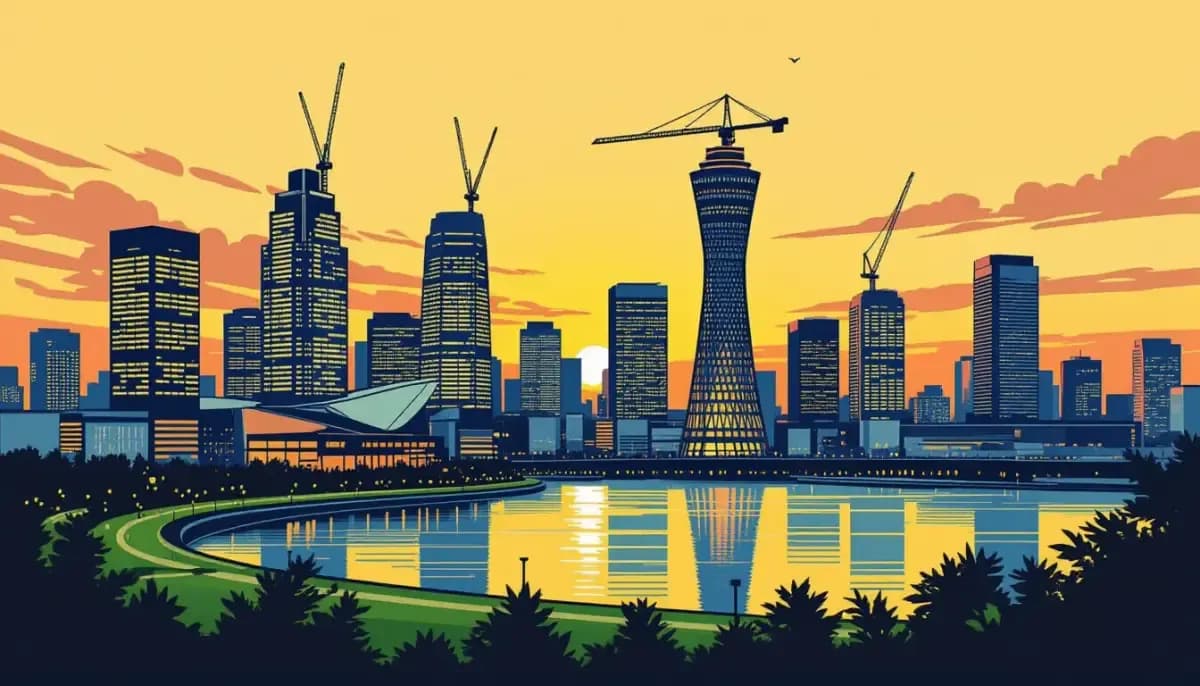
Discover Osaka's biggest development projects in 2026 — Grand Green Osaka, the ¥1.27 trillion Yumeshima IR, and the top growth neighborhoods for foreign property buyers.
Osaka New Development Projects and Growth Areas for 2026
Osaka is undergoing one of the most transformative periods in its modern history. With the Expo 2025 Osaka legacy still reshaping the city, a record-breaking integrated resort on the horizon, and trillions of yen pouring into urban redevelopment, 2026 marks a pivotal year for anyone considering buying property in Japan's second-largest city. Whether you're a foreign investor eyeing capital gains or an expat looking to settle in an up-and-coming neighborhood, understanding where Osaka is growing — and why — is essential before making any purchase decision.
This guide breaks down the most significant development projects shaping Osaka through 2026 and beyond, highlights the neighborhoods that stand to benefit most, and provides practical insights for foreigners navigating this fast-moving market.
Why Osaka's Development Boom Matters for Property Buyers
Osaka's redevelopment story is driven by several converging forces: the Expo 2025 Osaka Kansai legacy infrastructure, the upcoming ¥1.27 trillion Integrated Resort (IR) at Yumeshima, and massive private-sector investment in mixed-use hubs like Grand Green Osaka. Together, these projects are redefining the city's geography of value.
Key market indicators confirm the momentum. In 2024, residential land values in Kita-ku (Osaka's northern business core) exceeded +10% year-on-year growth — one of the highest rates in all of Japan. The city's price-to-income ratio sits around 9–10x, compared to Tokyo's ~15x, meaning Osaka still offers relative affordability with strong appreciation potential. In the first half of 2023 alone, real estate investment in Osaka surged 52% year-on-year, reflecting explosive institutional and foreign capital inflows.
For foreign buyers, the fundamentals are solid: no restrictions on foreign ownership, improving English-language real estate services, and a pipeline of projects that will keep demand elevated for the next decade.
Grand Green Osaka / Umekita Phase 2: The Flagship Project
The most significant single development in Osaka right now is Grand Green Osaka, the centerpiece of the Umekita Phase 2 redevelopment just north of JR Osaka Station.
- Location: Former Umeda Freight Station site, Kita-ku
- Site area: 9 hectares (approximately 1.2x the size of Koshien Stadium)
- Total investment: ~¥600 billion
- Developers: JR West, Mitsubishi Estate, Osaka Gas Urban Development, ORIX Real Estate, Sekisui House, and others
- Timeline: Partial opening September 2024; Grand South Building March 2025; full completion FY2027
Grand Green Osaka combines a ~4.5-hectare urban park — the largest new park built in central Osaka in decades — with luxury residences, high-end retail, hotels, and innovation office space. The development is designed to attract global tech companies and startups, positioning it as a "fusion center of greenery and innovation."
For property buyers, the residential component stands out. Ultra-luxury condominium units in the project have been priced at up to ¥2.5 billion per unit, signaling the caliber of development. Even adjacent properties in Fukushima-ku and northern Namba corridors have benefited from spillover demand. If you're buying in Kita-ku or within a 10-minute walk of JR Osaka Station, the Umekita development is a direct tailwind for your investment.
| Development Component | Status | Key Feature |
|---|---|---|
| South Park (Urban Park) | Open (Sept 2024) | 4.5 ha green space, open to public |
| Grand South Building | Open (Mar 2025) | Retail, offices, luxury residences |
| KITTE Osaka (JP Tower) | Open (Jul 2024) | 38-story, 114 stores |
| Innogate Osaka | Open (Jul 2024) | 27-story innovation hub |
| Full Umekita Phase 2 | FY2027 target | Complete integration of all buildings |
| THE GATE HOTEL Osaka | Opening Jun 2026 | Floors 16–28, Shinsaibashi area |
| LUCUA SOUTH expansion | Opening Apr 2026 | Pokémon Center, Nintendo Osaka |
The Yumeshima IR and Bay Area: The Long-Term Growth Catalyst
For investors with a 5–10 year horizon, the Yumeshima Integrated Resort (IR) represents the single largest development catalyst in Osaka's history.
- Location: Yumeshima man-made island, Osaka Bay (Konohana-ku)
- Operators: MGM Resorts International + ORIX Corporation
- Investment: ~¥1.27 trillion
- Groundbreaking: April 24, 2025
- Projected opening: Fall 2030
- Expected annual visitors: 20 million
- Annual economic impact: ¥1 trillion ripple effect; ¥57 billion in tax revenue; ~90,000 jobs
The IR will include a casino (470+ gaming tables, 6,400+ machines), 2,500 hotel rooms across three brands, and over 730,000 square feet of MICE (meetings, incentives, conferences, exhibitions) space. This is not a local amenity — it's a global destination facility designed to compete with Singapore's Marina Bay Sands.
The Osaka Metro Chuo Line was extended to Yumeshima Station in January 2025, providing direct rail access. Port Ward (Minato-ku and surroundings) land values already grew +7.1% year-on-year in the pre-Expo period, and analysts project continued appreciation as the IR construction creates construction employment, then operates at scale from 2030.
Cosmosquare Station area (near Sakishima island) and the broader bay corridor have been designated as part of the Kansai Innovation International Strategic Comprehensive Special Zone, designed to attract foreign businesses and investment. For buyers interested in early-stage appreciation, bay-area properties purchased in 2026 sit at a strategic window: construction momentum is building, but the full IR premium has not yet been priced in.
For a full picture of the Osaka property market, the Gaijin Buy House Osaka/Kansai Real Estate Guide is an excellent English-language resource covering neighborhoods, price ranges, and foreign buyer practicalities.
Key Growth Neighborhoods in 2026
Beyond the headline projects, several Osaka neighborhoods are experiencing structural improvement driven by proximity to development, transit upgrades, and demographic shifts.
Fukushima-ku is the clearest Umekita spillover zone. Situated immediately west of Umeda, it has seen rapid café, restaurant, and boutique development over the past three years. Smaller pre-war apartment buildings are being replaced by modern condominiums. Prices remain below Kita-ku levels but the gap is narrowing.
Nakazaki-cho, just east of Umeda, is Osaka's equivalent of a creative district. Low-rise townhouses converted into independent boutiques and galleries have made it one of Osaka's most photographed neighborhoods. Young professional demand is strong, and proximity to Umekita supports long-term price growth.
Tennoji–Abeno corridor continues its multi-year upswing. The area benefits from Tennoji Station's role as a major transit hub and the Harukas 300 skyscraper retail/hotel complex anchoring the district. Short-term rental occupancy in Tennoji reaches 75–85%, among the highest in the city.
Nakanoshima is emerging as a mixed-use innovation zone. The island between the Dojima and Tosabori rivers hosts new hotel developments, a redesigned park, and cultural institutions. The city has designated Nakanoshima as a strategic business district, and new high-rise projects are underway.
Nishinari-ku (select areas near major stations) remains the most speculative growth area. Historically overlooked, parts of the ward near Shin-Imamiya Station — which will be served by the planned Naniwasuji Line (targeted 2031) — are seeing early-stage gentrification. The risk/reward profile is higher here, but early-mover advantage is real.
For more context on Osaka's broader property market and buying process, see our Complete Guide to Buying Property in Osaka as a Foreigner and our Step-by-Step Home Buying Process in Japan.
The Naniwasuji Line: Infrastructure Unlocking Future Value
One of the most important near-term catalysts for Osaka real estate is the planned Naniwasuji Line, targeted for opening in 2031.
The line will connect Osaka Station through JR Namba Station to Shin-Imamiya, effectively creating a new spine through the city's core. It will also dramatically reduce travel time to Kansai International Airport — bringing the airport within approximately 40 minutes of central Osaka.
Historical data from comparable Japanese rail projects shows property values along the route appreciating 5–15% during construction and an additional 5–10% post-opening. Neighborhoods along the Naniwasuji corridor — including parts of Namba, Nishi Ward, and the Shin-Imamiya area — are benefiting from early anticipation of this infrastructure upgrade.
For investors, buying in these transit corridors before the line opens represents one of the clearest value propositions in Osaka's market today.
Expo 2025 Legacy: What It Means for Property in 2026
The Expo 2025 Osaka Kansai (April–October 2025) generated an estimated ¥2.9 trillion in national economic impact and ¥1.6 trillion locally. Over 28 million visitors attended from 160+ nations. While the event site itself (Yumeshima) transitions to IR development, the Expo's real legacy for property buyers is structural:
- Permanent infrastructure: The Chuo Line extension, road improvements, and bay-area connectivity are permanent additions that increase the long-term livability and investment case for western Osaka.
- Global brand elevation: Osaka's international profile has never been higher. Foreign direct investment into the city is at record levels, supporting demand for premium residential and commercial properties.
- Short-term rental demand: Tourist flows to Osaka remain elevated post-Expo. Short-term rental occupancy in Namba, Shinsaibashi, and Tennoji averaged 75–85% in 2025, supporting investment property yields.
One risk to monitor: analysts note potential price correction risk in 2026 for properties that were purchased primarily as Expo plays without long-term demand fundamentals. Focus on areas with multiple demand drivers — transit access, employment hubs, local amenity quality — rather than Expo proximity alone.
For further reading on Japan's broader real estate investment environment, InvestAsian's Osaka Real Estate Guide and Bamboo Routes' Osaka market statistics offer thorough data-driven analysis.
Financing New Developments as a Foreign Buyer
Access to financing is one of the most practical barriers for foreign buyers eyeing new Osaka developments. The landscape in 2026 looks like this:
- Foreign residents with PR or stable visa: Typically eligible for 70–90% LTV mortgages at 0.4–0.7% variable or 1.5–2.5% fixed rates. Japanese banks including SMBC, MUFG, and Japan Post Bank cover this segment.
- Non-resident foreign investors: Generally limited to 50–60% LTV, with higher rates and stricter income documentation requirements. Offshore financing or cash purchase is common.
- English-language support: SMBC Trust Bank PRESTIA offers dedicated English-language mortgage services specifically for foreign buyers — a practical starting point for many expats.
New-build properties often require a reservation deposit (手付金, tetsukekin) of 5–10% at contract signing, with the balance due on completion. For high-demand Umekita or bay-area developments, reservation queues can be competitive.
Our guide to Mortgages and Home Loans for Foreigners in Japan covers the financing landscape in detail, and the Living in Nihon and For Work in Japan resources offer supporting context on residency and working life in Japan for expats considering a long-term commitment to Osaka.
What Foreign Buyers Should Watch in 2026
If you're monitoring Osaka's market as a potential buyer in 2026, these are the key signals to track:
- Umekita Phase 2 completion progress: Each new building completion brings additional services and foot traffic, reinforcing property values in Kita-ku.
- IR construction milestones at Yumeshima: Groundbreaking was April 2025; visible construction progress will sustain investor interest in bay-area properties.
- Naniwasuji Line planning updates: Any official confirmation of station locations or route refinements will trigger price movements in affected areas.
- Minpaku (short-term rental) regulation changes: Osaka City suspended new licenses in late 2025. Monitor whether restrictions loosen or tighten, as this affects investment property yields.
- Yen exchange rate: With continued yen weakness relative to USD and EUR, international buyers retain significant purchasing power. A yen recovery would reduce that advantage.
For a comprehensive overview of the legal framework and processes involved in purchasing, see our guides on Legal Procedures and Documentation for Japan Property Purchase and Hidden Costs and Fees When Buying Property in Japan.
Final Thoughts
Osaka in 2026 is at an inflection point. The city's development pipeline — from Grand Green Osaka's urban park and luxury residences to the transformative Yumeshima IR to the future Naniwasuji Line — creates a 10-year runway of value creation for well-positioned property buyers. The key is to identify assets with multiple demand drivers: excellent transit connectivity, proximity to employment hubs, and quality of local amenity.
Foreign buyers willing to navigate the documentation and financing process will find a market that is simultaneously more affordable than Tokyo and more dynamic than most comparable Asian cities. The projects described in this guide represent the clearest near-term growth catalysts — use them to focus your search on Osaka's highest-potential areas.

Originally from Vietnam, living in Japan for 16+ years. Graduated from Nagoya University, with 11 years of professional experience at Japanese and international companies. Sharing information about buying property in Japan for foreigners.
View Profile →Related Articles
Osaka Short-Term Rental Investment Guide for Foreign Owners
Complete guide to Osaka short-term rental investment for foreigners: Minpaku licensing, best neighborhoods, financial projections, yields up to 4.47%, and step-by-step setup for non-resident foreign owners.
Read more →
Sakai City: Affordable Property Near Osaka for Foreigners
Discover why Sakai City is one of the most affordable property options near Osaka for foreigners. Learn about neighborhoods, prices, transport links, and the buying process for expats.
Read more →
Tennoji and Abeno Area Property Guide for Foreigners
Complete guide to buying property in Tennoji and Abeno, Osaka as a foreigner. Property prices, rental yields, mortgage options, and investment analysis for 2025.
Read more →
Osaka Subway and Transit Accessibility Property Guide
Complete guide to Osaka subway and transit accessibility for property buyers. Compare prices by metro line, find the best neighborhoods, and learn how transit proximity affects property values in Osaka.
Read more →
Post-Expo 2025 Impact on Osaka Property Market
Expo 2025 reshaped Osaka real estate with record land price gains and a 2.9 trillion yen economic boost. Discover what the post-Expo market means for foreign buyers and investors in 2026 and beyond.
Read more →
Osaka Rental Property Investment for Foreign Investors
Complete guide to Osaka rental property investment for foreigners. Learn about rental yields (4.47%), best neighborhoods, taxes, mortgages, and how to buy as a non-Japanese investor in 2025.
Read more →