
Osaka Tourism Area Property Investment (Minami, Dotonbori)

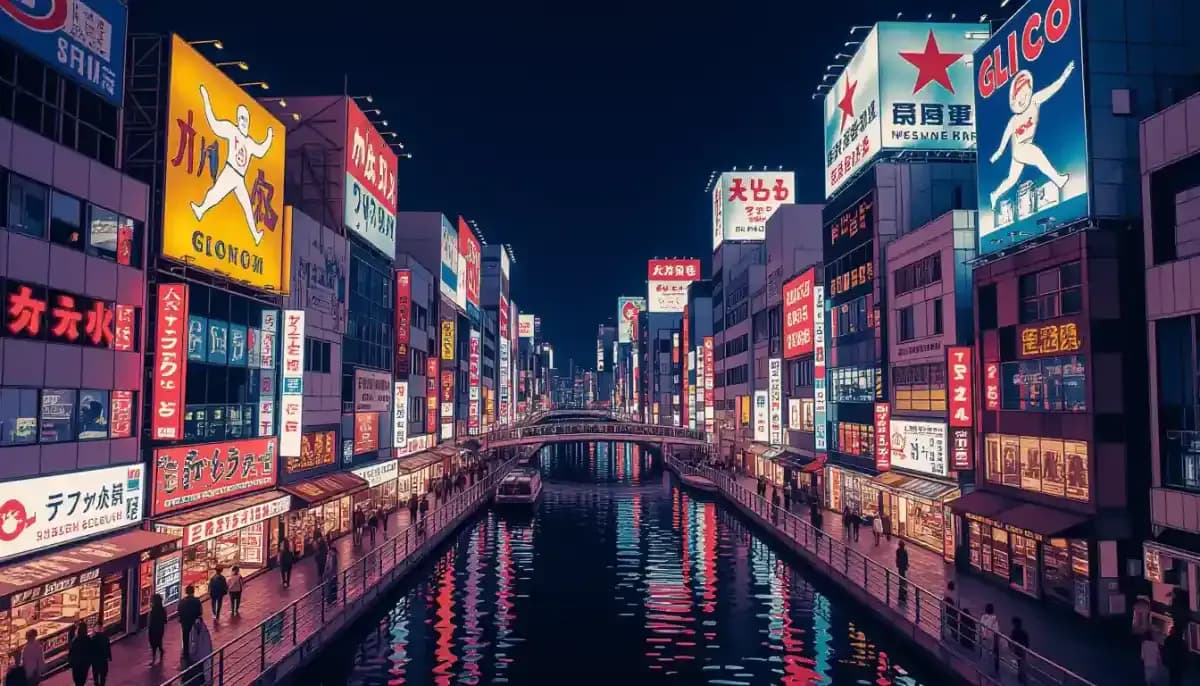
Complete guide to buying investment property in Osaka's Minami tourism area — Dotonbori, Namba, and Shinsaibashi. Yields, regulations, legal rights, and market data for foreign investors in Japan.
Osaka Tourism Area Property Investment: The Complete Guide to Minami and Dotonbori
Osaka's Minami district — encompassing the neon-lit streets of Dotonbori, the shopping corridors of Shinsaibashi, and the entertainment hub of Namba — has become one of the most sought-after real estate investment destinations in Japan. For foreign investors, this tourism-driven pocket of Osaka's Chuo Ward offers a rare combination of strong rental yields, robust capital appreciation, and an international visitor base that keeps occupancy rates consistently high. This guide walks you through everything you need to know about investing in Osaka's tourism areas as a foreigner.
Why Minami and Dotonbori Are Attracting Foreign Property Investors
The numbers tell a compelling story. In 2025 official land price data, Dotonbori (Chuo Ward) recorded a 22.6% year-on-year commercial land value increase — the highest in all of Osaka. Residential land in the same ward grew 7.4% year-on-year, and commercial land climbed 13.6% overall in the ward.
Underpinning this growth is relentless tourism demand. Osaka welcomed 14.58 million international tourists in 2024, an 18% jump above pre-pandemic 2019 levels, generating ¥1.1 trillion in tourism revenue. In Q1 2025 alone, international arrivals surged another 35% year-over-year to 4.17 million visitors. This isn't a temporary rebound — it's structural growth driven by Japan's weak yen, expanded global air routes into Kansai International Airport, and Osaka's rising profile as a culinary and cultural destination.
For property investors, this means one thing: sustained, high-density demand for short-term and mid-term rental accommodation in the heart of the city.
For a broader overview of the Japanese property market context, see Japan Real Estate Market Overview and Trends and Buying Property in Osaka as a Foreigner.
Understanding the Minami Investment Landscape: Key Sub-Districts
The Minami area is not monolithic — each sub-district has distinct investment characteristics:
| Sub-District | Character | Best For | Avg. Price (¥/m²) | Est. Gross Yield |
|---|---|---|---|---|
| Dotonbori | Canal-front entertainment | Short-term vacation rental | ¥740,000–¥780,000 | 5.5–7.0% |
| Namba | Transit hub, retail, hotels | Long-term rental / mixed-use | ¥700,000–¥760,000 | 5.0–6.5% |
| Shinsaibashi | Luxury retail, fashion | High-end short-term rental | ¥720,000–¥770,000 | 4.8–6.0% |
| Nipponbashi | Electronics, anime/manga culture | Niche tourism accommodation | ¥640,000–¥700,000 | 5.0–6.5% |
| Tengachaya | Residential fringe, up-and-coming | Long-term rental, value plays | ¥380,000–¥440,000 | 5.5–7.5% |
Recent Namba condominium transactions ranged from ¥738,000 to ¥778,000/m² in Q1–Q3 2025, with over 320 deals recorded in 2024. Entry-level compact units (20–40 m²) are priced 50–60% below comparable properties in central Tokyo — a significant advantage for investors with limited capital.
Rental Yield Analysis: Long-Term vs. Short-Term Strategies
Osaka's citywide average rental yield of 4.47% already exceeds Tokyo's 3.44%, making it Japan's leading major city for yield. In Minami's core tourism zones, yields push higher:
Long-Term Residential Rental
Standard one-room and 1LDK units targeting workers in the hospitality and retail sectors yield approximately 5.5–7.0% gross. Vacancy risk is low given the area's employment density, and management is simpler than short-term rentals. This is the preferred strategy for hands-off overseas investors.
Short-Term Vacation Rental (Minpaku)
One-room vacation rentals in central Osaka report 80% annual occupancy rates with average nightly rates of ¥18,000. Peak-season nightly rates have roughly doubled compared to pre-pandemic levels. On paper, the income potential is higher than long-term rental — but regulatory compliance adds complexity (see below).
The Minpaku Regulation Reality
Osaka's city government enforces strict short-term rental ordinances. Key constraints include:
- Operating day caps (Osaka-city: 180 days per year maximum under the national Minpaku Law; city ordinances may impose further limits by zone)
- Neighbor notification and consent requirements in residential buildings
- Zoning restrictions — not all Minami properties are in zones permitting short-term rental
- Fire safety and facility standards inspections required before registration
Non-compliance is the most common and costly mistake foreign investors make. Always verify zoning and obtain proper registration before purchasing with short-term rental income assumptions.
For more detail on costs and legal procedures, see Hidden Costs and Fees When Buying Property in Japan and Legal Procedures and Documentation for Japan Property Purchase.
Can Foreigners Buy Property in Minami? Legal Rights Explained
Japan imposes no restrictions on foreign property ownership. Foreigners hold identical legal rights to Japanese nationals when purchasing real estate — no visa requirement, no residency requirement, no nationality-based restrictions. You can legally purchase a Dotonbori-area condominium on a tourist visa.
The practical requirements are:
- A Japanese bank account (or a notarized power of attorney arrangement if you cannot open one easily)
- A registered seal (hanko) or alternative verification method
- A Japanese Individual Number (My Number) — obtainable if you have any form of residence registration, or via alternative tax identification for non-residents
For a full breakdown of what foreigners can and cannot do, see Can Foreigners Buy Property in Japan? Legal Rights and Restrictions and check Living in Nihon's guide for foreign residents in Japan.
Financing Your Osaka Tourism Area Investment
The financing landscape for non-resident foreign buyers is the biggest practical hurdle:
Japanese domestic banks: Most major Japanese banks require permanent residency (PR) or a long-term work contract in Japan. Without these, domestic mortgage access is very limited.
Options for foreign investors without PR:
- International lenders with Japan operations (some Hong Kong, Singapore, and European private banks offer Japanese property-backed loans)
- Developer financing: Some large Osaka developers offer instalment plans for off-plan purchases
- Cash purchase: The most straightforward route for most overseas investors — Japan's relatively lower entry prices compared to global cities like Hong Kong or Sydney make all-cash acquisition viable for compact units
- Using a Japan-based co-applicant: A Japanese national or PR holder as co-borrower can unlock domestic lending
For detailed guidance on financing, see Mortgages and Home Loans for Foreigners in Japan.
Transaction Costs and Investment Horizon
Round-trip transaction costs (purchase + eventual sale) in Osaka run approximately 8–12% of property value. Breaking these down:
- Real estate agent commission: 3% + ¥60,000 + consumption tax (capped by law)
- Registration and license tax: ~2% of assessed value
- Stamp duty: ¥10,000–¥600,000 depending on transaction value
- Judicial scrivener (touki shiho shoshi) fee: ¥100,000–¥200,000
- Annual property tax and city planning tax: ~1.4–1.7% of assessed value combined
Given these entry and exit costs, analysts recommend a minimum 7–10 year holding period to realize net profit. This aligns well with Osaka's long-term structural outlook — the Yumeshima Integrated Resort (casino resort, expected late 2020s delivery) and the legacy of Expo 2025 Osaka are expected to sustain and amplify demand in central wards for the foreseeable future.
For a complete breakdown of ongoing costs, see Property Taxes and Annual Costs of Owning Property in Japan.
Macro Drivers: Why Minami's Outlook Is Strong
Several structural factors reinforce the Minami investment case beyond current tourism numbers:
Demographics of visitors: China (40% of Osaka arrivals), South Korea (22%), Taiwan (12%), USA (8%), and Hong Kong (6%) are the top source markets. The dominance of East Asian visitors — who tend to have high repeat-visit rates to Osaka — provides stability.
Yumeshima IR: Osaka's integrated resort (backed by Orix), targeting a late-2020s opening on the manmade Yumeshima island (accessible by the extended Osaka Metro Chuo Line), is expected to add millions of additional annual visitors and create significant hospitality and residential demand spillover.
Constrained supply: New condominium supply in central Chuo Ward remains limited due to high land costs and zoning constraints. This supply-demand imbalance is a structural price support.
Osaka's economic base: The city drives a ¥43.1 trillion economy (7.6% of Japan's GDP) and added over 17,000 new foreign residents in 2023 — supporting long-term rental demand well beyond the tourist segment.
For insights on finding properties in this area, resources like For Work in Japan and Gaijin Buy House provide useful starting points for foreign buyers navigating the Japanese market. For more detailed analysis of Osaka real estate, this Osaka property guide and RE/MAX Apex's Osaka investment insights are worth reading alongside your research.
Key Risks to Assess Before Investing
No investment is without risk. The most significant factors to evaluate for Minami tourism-area property:
- Regulatory risk: Japanese short-term rental regulations have tightened and may tighten further. A property that qualifies for minpaku today may face new restrictions in the future.
- Currency risk: Yen weakness has made Japanese assets cheap for foreign buyers — but it cuts both ways on repatriation of proceeds.
- Management complexity: Remote management of a short-term rental in Japan requires a reliable local property management company. Management fees (typically 10–25% of gross rental income for full-service minpaku management) materially reduce net yield.
- Building age and maintenance: Many attractively priced Minami-area units are in buildings from the 1980s–1990s. Verify repair reserve fund (shuzen tsumitate-kin) adequacy before purchase.
- Tourism concentration risk: While Osaka's tourism base is diversified, a major external shock (pandemic, geopolitical disruption) would disproportionately affect short-term rental income in tourism-heavy sub-districts versus more residential neighborhoods.
For help navigating the buying process from start to finish, the Step-by-Step Home Buying Process in Japan for Foreigners and Complete Guide to Buying Property in Japan as a Foreigner are essential reading.
Is Osaka Minami Right for Your Investment Strategy?
Osaka's Minami tourism area — Dotonbori, Namba, and Shinsaibashi — offers a compelling combination of high yields, strong capital appreciation, legal accessibility for foreign buyers, and structural demand drivers that extend well beyond a single catalyst. Entry prices remain significantly more accessible than Tokyo, while yields are higher.
The ideal investor profile for this market: someone with a 7–10 year horizon, comfortable with either long-term rental management simplicity or the higher-yield-but-higher-complexity short-term rental route, and willing to conduct thorough due diligence on zoning, building condition, and property management arrangements before committing.
For foreign buyers new to the Japanese market, partnering with a bilingual real estate agent experienced in the Minami area and engaging a judicial scrivener for legal documentation is strongly recommended. The market rewards informed investors — and Osaka's tourism-area fundamentals make it one of the most investable urban real estate markets in Asia right now.

Originally from Vietnam, living in Japan for 16+ years. Graduated from Nagoya University, with 11 years of professional experience at Japanese and international companies. Sharing information about buying property in Japan for foreigners.
View Profile →Related Articles
Osaka Short-Term Rental Investment Guide for Foreign Owners
Complete guide to Osaka short-term rental investment for foreigners: Minpaku licensing, best neighborhoods, financial projections, yields up to 4.47%, and step-by-step setup for non-resident foreign owners.
Read more →
Sakai City: Affordable Property Near Osaka for Foreigners
Discover why Sakai City is one of the most affordable property options near Osaka for foreigners. Learn about neighborhoods, prices, transport links, and the buying process for expats.
Read more →
Tennoji and Abeno Area Property Guide for Foreigners
Complete guide to buying property in Tennoji and Abeno, Osaka as a foreigner. Property prices, rental yields, mortgage options, and investment analysis for 2025.
Read more →
Osaka Subway and Transit Accessibility Property Guide
Complete guide to Osaka subway and transit accessibility for property buyers. Compare prices by metro line, find the best neighborhoods, and learn how transit proximity affects property values in Osaka.
Read more →
Post-Expo 2025 Impact on Osaka Property Market
Expo 2025 reshaped Osaka real estate with record land price gains and a 2.9 trillion yen economic boost. Discover what the post-Expo market means for foreign buyers and investors in 2026 and beyond.
Read more →
Osaka New Development Projects and Growth Areas for 2026
Discover Osaka's biggest development projects in 2026 — Grand Green Osaka, the ¥1.27 trillion Yumeshima IR, and the top growth neighborhoods for foreign property buyers.
Read more →