
Nagoya vs Tokyo and Osaka: Property Investment Comparison

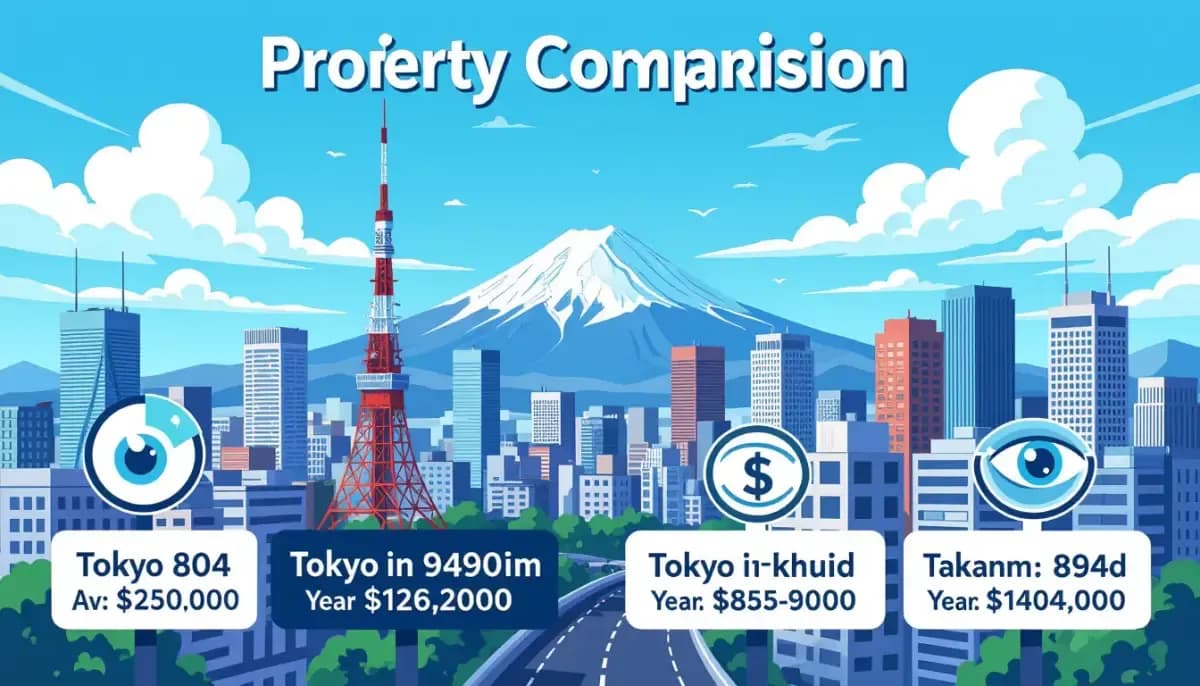
Compare Nagoya, Tokyo, and Osaka real estate for foreign buyers. Rental yields, prices, appreciation rates, and which city matches your investment goals.
Nagoya vs Tokyo and Osaka: Property Investment Comparison for Foreigners
If you're considering buying property in Japan as a foreigner, you've probably already heard the usual pitch for Tokyo. But Nagoya and Osaka offer compelling alternatives — and in some cases, a better deal. This guide breaks down the key differences between Nagoya, Tokyo, and Osaka property markets so you can make an informed decision based on your goals, budget, and lifestyle.
Whether you're chasing capital appreciation, rental yields, or simply a place to live without Tokyo's price tag, this comparison covers everything you need to know.
Price Comparison: What Does Property Actually Cost?
The biggest difference between these three cities is entry price. Tokyo's central wards have become eye-wateringly expensive, with average residential land prices in the 23 wards hitting ¥771,600 per sqm in 2025. In prestige areas like Chuo Ward, land alone can exceed ¥3.28 million per sqm.
Osaka sits in the middle ground. Central Osaka (Namba, Shinsaibashi, Umeda area) commands ¥850,000–1.5 million per sqm, with strong demand driven by both domestic buyers and international investors drawn in by tourism growth.
Nagoya, by contrast, offers significantly more affordable entry points. Average resale condos in Nagoya City trade around ¥29 million, and central land prices are in the range of ¥260,000–500,000 per sqm depending on the neighborhood. That's roughly 40–60% cheaper than central Tokyo and more competitive than Osaka city centre.
| Metric | Nagoya | Osaka | Tokyo (Central) |
|---|---|---|---|
| Avg resale condo price | ~¥29 million | ¥40–60 million | ¥65–75 million |
| Land price per sqm (centre) | ¥260,000–500,000 | ¥850,000–1.5M | ¥771,600 avg (up to ¥3.28M) |
| Residential land growth (2024) | +2.8% | Steady growth | +7.9% |
| Price-to-income ratio | 3.5–4.5x | ~8–9x | 10x+ |
| Entry-level 1BR apartment | ¥15–25 million | ¥20–35 million | ¥35–60 million |
For cash buyers or those with limited borrowing capacity in Japan, Nagoya's lower floor makes meaningful property ownership far more accessible.
Rental Yields: Where Do Investors Earn More?
Here's where Nagoya surprises most people. Despite — or because of — its lower prices, Nagoya delivers some of the strongest rental yields among Japan's major cities.
According to Numbeo data, Nagoya's gross rental yield in the city centre is approximately 8.26%, with outside-centre areas yielding around 7.67%. The price-to-rent ratio sits at just 12.1 in central Nagoya, meaning properties pay back their purchase price through rent faster than in most comparable markets.
Compare that with Tokyo, where rental yields typically compress to 3–5% due to the high asset prices. Osaka performs better than Tokyo on yields, generally in the 4–6% range, with certain areas like Namba and Shin-Osaka benefiting from strong short-term rental demand.
| Yield Metric | Nagoya | Osaka | Tokyo |
|---|---|---|---|
| Gross yield (city centre) | ~8.26% | ~5–6% | ~3–5% |
| Gross yield (outside centre) | ~7.67% | ~4–5% | ~3–4% |
| Price-to-rent ratio (centre) | 12.1 | ~16–18 | ~22–30 |
| Best for yield investing | ✅ Yes | Moderate | ❌ Compressed |
For investors prioritizing cash flow over capital gains, Nagoya is the clear leader among Japan's big three cities.
Monthly rent in Nagoya gives you a sense of the market: a 1-bedroom apartment in the city centre averages around ¥82,920/month (with a range of ¥70,000–¥120,000), while expat-oriented properties in western Nagoya (Shidami, Moriyama) typically run ¥150,000–¥200,000/month for a 50 sqm unit.
Capital Appreciation: Which City Grows Faster?
If your primary goal is long-term capital appreciation, Tokyo wins — and it's not particularly close.
Tokyo residential land values rose +7.9% year-on-year in 2024, with commercial land jumping +11.8%. Certain wards experienced double-digit residential growth. Tokyo benefits from continued domestic migration, limited land supply in the 23 wards, and strong foreign investor demand.
Osaka has positioned itself strongly with Expo 2025 driving tourism investment and infrastructure spending, making certain central and bay-area neighborhoods attractive for medium-term capital plays. The development pipeline around Yumeshima and Namba is notable.
Nagoya's residential land grew at a more measured +2.8% in 2024. The 12-month forecast as of early 2025 points to flat to modest growth of 0–3%. Infrastructure projects — particularly the Linear Chuo Shinkansen maglev line connecting Nagoya to Tokyo in approximately 40 minutes — could provide meaningful price appreciation in neighborhoods near future stations, though completion timelines have shifted.
Historical volatility context matters too: during Japan's 2008–2012 downturn, Nagoya saw 10–15% price declines with a 4–6 year recovery period, comparable to other major cities.
Buying as a Foreigner: Rules Are the Same Nationwide
One important point that surprises many new buyers: the legal rules for foreigners buying property in Japan are identical across all three cities. Japan imposes no nationality-based restrictions on property ownership. Foreigners can purchase freehold land, condominiums, and detached houses outright — no visa requirement to purchase, and no foreign-ownership caps.
That said, practical factors differ:
- Tokyo has the most English-language real estate services, international agents, and multilingual legal support
- Osaka has growing English-language services, particularly targeting overseas investors post-Expo
- Nagoya has the least English-language real estate infrastructure of the three — you'll likely need a bilingual agent or translator for most transactions
From April 2026, Japan is expanding foreign buyer tracking and reporting requirements. This moves toward greater transparency but does not restrict ownership.
Closing costs run 6–12% of purchase price in all three cities: broker fees (~3% + ¥60,000), registration taxes, stamp duty, and agent administrative fees. Annual property tax typically runs ¥100,000–¥300,000 depending on property value and location.
For more detail on the legal process, see our guide to legal procedures and documentation for Japan property purchase.
Financing: Getting a Mortgage in Each City
Mortgage access as a foreigner depends on your residency status and income source more than which city you're buying in, but city choice can affect lender availability.
Foreign-friendly lenders — including SMBC Trust Bank PRESTIA, Suruga Bank, and Mizuho Bank — operate across all three cities. Variable rates for well-qualified residents currently sit around 0.4–1.4%, while non-residents without Japanese income typically face 1.5–3.5%+.
Loan-to-value ratios:
- Residents with stable Japanese income: 70–90% LTV
- Non-residents or those without Japanese income: 50–70% LTV
- Many foreign buyers without Japan-based income purchase cash
Nagoya's lower prices make cash purchases significantly more viable. A ¥29 million Nagoya condo is reachable for more buyers than a ¥65 million Tokyo apartment.
See our comprehensive guide to mortgages and home loans for foreigners in Japan for lender details and application requirements.
Which City Is Right for You?
The right choice depends on your primary goal:
Choose Nagoya if:
- You want strong rental yields (8%+) and positive cash flow
- Your budget is under ¥40 million
- You're planning to live there for 3+ years (expat/work relocation)
- You work in manufacturing, automotive, or aerospace sectors
- You're comfortable with less English-language support
Choose Tokyo if:
- Capital appreciation is your primary goal
- You need the liquidity of Japan's largest market
- You want the widest range of English-language services
- You can access a budget of ¥50 million+
Choose Osaka if:
- You want a balance of yield and appreciation
- You're interested in short-term rentals (tourism demand is strong)
- You want city-centre lifestyle at somewhat lower prices than Tokyo
- You're positioned to benefit from post-Expo 2025 infrastructure investment
For a detailed look at Nagoya specifically, see our guide to buying property in Nagoya and Chubu Region as a foreigner. For Tokyo comparisons, read our complete guide to buying property in Tokyo as a foreigner.
Neighborhood Spotlight: Best Areas by City
Top Nagoya neighborhoods for foreign buyers:
- Naka-ku / Sakae: Central business district, highest liquidity, new condos ¥50–70M
- Nakamura-ku: Near Nagoya Station, strong rental demand, bidding-war activity on new units
- Moriyama / Shidami: Western expat areas, preferred by international-school families
- Meito-ku: Suburban, good schools, Toyota supplier commute belt
Top Osaka neighborhoods:
- Namba / Shinsaibashi: Tourism-driven demand, strong short-term rental potential
- Shin-Osaka: Business district near shinkansen hub, long-term rental demand
- Umeda / Kita: Premium central living, institutional-grade assets
Top Tokyo neighborhoods (entry-level for foreign buyers):
- Koto-ku / Sumida-ku: East side, lower prices than Minato/Shibuya, improving infrastructure
- Nerima-ku / Suginami-ku: Western residential wards, family-friendly, below-average Tokyo pricing
- Minato-ku / Shibuya-ku: Premium, high liquidity, 10x+ price-to-income ratio
External Resources and Further Reading
For general expat life and housing information in Japan:
- Living in Nihon — Expat Life and Housing in Japan
- For Work in Japan — Employment and Relocation Guide
- Gaijin Buy House — Foreigner Property Buying in Japan
For market data and investment analysis:
- Nagoya real estate market statistics (Bamboo Routes)
- Property prices in Nagoya (Numbeo)
- Japan land prices 2025 (Hokushin Fudosan)
Also useful from our blog:
- Japan real estate market overview and trends
- Hidden costs and fees when buying property in Japan
- Visa and residency considerations for property buyers
Summary: Nagoya vs Tokyo vs Osaka at a Glance
| Factor | Nagoya | Osaka | Tokyo |
|---|---|---|---|
| Entry price | ✅ Lowest | Mid | ❌ Highest |
| Rental yield | ✅ Highest (8%+) | Mid (4–6%) | ❌ Lowest (3–5%) |
| Capital appreciation | Low-mid | Mid | ✅ Highest |
| Market liquidity | Moderate | High | ✅ Highest |
| English-language support | Limited | Growing | ✅ Best |
| Foreigner mortgage access | Same nationwide | Same | Same |
| Best for | Yield investors, expat residents | Balanced, tourism | Capital growth |
Nagoya won't appear on international real estate investment glossy covers the way Tokyo does. But for foreigners who want genuine rental income, affordable entry points, and a livable city with a strong economic base, it deserves serious consideration — and the numbers back that up.

Originally from Vietnam, living in Japan for 16+ years. Graduated from Nagoya University, with 11 years of professional experience at Japanese and international companies. Sharing information about buying property in Japan for foreigners.
View Profile →Related Articles

Chubu Region New Development and Infrastructure Projects
Explore Chubu region's major infrastructure projects including the maglev Chuo Shinkansen, Meitetsu Nagoya Station redevelopment, and smart city initiatives. Essential guide for foreign property buyers in Nagoya and the Chubu region.
Read more →
Toyota City and Industrial Area Property Near Nagoya
Complete guide to buying property in Toyota City and industrial areas near Nagoya. Prices, zoning rules, mortgages, and tips for foreign buyers in Aichi Prefecture.
Read more →
Nagoya Rental Property Investment Guide for Foreigners
A complete guide to investing in Nagoya rental property as a foreigner: yields 4-8%, neighborhoods, taxes, mortgages, and property management tips for 2025.
Read more →
Chubu Region Rural Property: Affordable Options for Foreigners
Discover affordable rural property options in Japan's Chubu region. Complete guide for foreigners on buying homes in Nagano, Gifu, Toyama, and Shizuoka — including prices, akiya banks, and the purchase process.
Read more →
Gifu and Takayama Property Guide for Foreign Buyers
Complete guide to buying property in Gifu and Takayama as a foreigner. Covers legal rights, market prices, akiya/kominka opportunities, buying process, and costs for international buyers.
Read more →
Karuizawa Resort Property Investment Guide for Foreigners
Complete guide to buying resort property in Karuizawa as a foreigner: market overview, price ranges by area, buying process, annual costs, rental income potential, and legal considerations.
Read more →