
Kyoto Property Prices and Market Trends Analysis

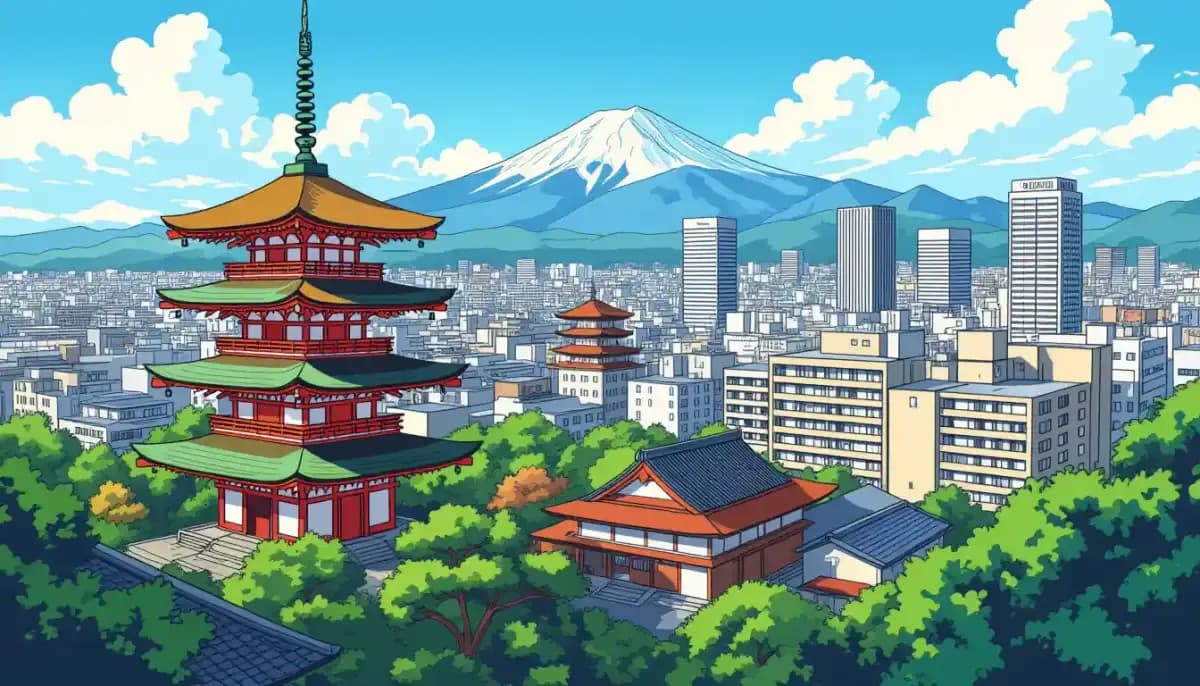
Complete analysis of Kyoto property prices, ward-by-ward breakdowns, rental yields (6.5-11%), and 5-10 year price forecasts. Essential data for foreign buyers and investors in 2025-2026.
Kyoto Property Prices and Market Trends Analysis
Kyoto's real estate market has captured the attention of foreign investors and lifestyle buyers alike. As one of Japan's most iconic cities — home to 17 UNESCO World Heritage Sites and more than 1,600 Buddhist temples — Kyoto offers something no other Japanese city can replicate: an irreplaceable blend of ancient culture, strict heritage preservation, and a booming tourism economy. For foreigners, understanding where prices stand today, how they've moved, and where they're headed is the essential first step before committing to a purchase.
This guide delivers a data-driven analysis of Kyoto property prices, neighborhood-by-neighborhood breakdowns, rental yield potential, and the market forces that will shape values through 2031 and beyond.
Kyoto Property Price Overview: 2025 Snapshot
Kyoto's residential real estate market has experienced dramatic appreciation over the past five years. As of 2025, the average mainstream residential property in Kyoto sits at approximately 58 million yen (roughly $380,000 USD), with roughly 80% of all transactions falling within the 25–120 million yen range.
On a per-square-meter basis, the city-wide average is approximately 650,000 yen/sqm (~$4,300). However, this figure conceals enormous variation: luxury condominiums in Gion and Higashiyama regularly exceed 2,000,000 yen/sqm, while outer-ward detached houses in areas like Yamashina or Fushimi can be found for 430,000–520,000 yen/sqm.
Key pricing benchmarks for 2025:
| Property Type | Average Price | Notes |
|---|---|---|
| Resale condominium (city-wide) | 15.62 million yen | Per Pearl Property data |
| Detached house (100 sqm, city avg.) | 27.8 million yen | Based on realestate.co.jp data |
| Premium central condo (Nakagyo/Higashiyama) | 850,000–1,250,000 yen/sqm | High demand area |
| Luxury condo (Gion/Higashiyama core) | 2,000,000+ yen/sqm | Heritage tourist zone |
| Outer-ward house (Fushimi, Yamashina) | 430,000–520,000 yen/sqm | More affordable |
| New construction (where available) | 15–20% premium | Heritage rules limit supply |
Price-to-income ratios for central condominiums now sit at 8–10x median household income, while price-to-rent ratios of 25–30 signal that Kyoto is firmly in "elevated" valuation territory — which also reflects genuine scarcity driven by heritage restrictions on new construction.
For a broader perspective on the national picture, see the Japan Real Estate Market Overview and Trends.
Ward-by-Ward Price Breakdown
Kyoto's 11 administrative wards offer dramatically different price points. The table below shows average resale house prices for a 100 sqm property across each ward.
| Ward | Average Price (JPY) | Character |
|---|---|---|
| Higashiyama | 41,770,000 | Historic temples, tourist center |
| Shimogyo | 37,090,000 | Kyoto Station, commercial hub |
| Sakyo | 34,600,000 | Universities, quiet residential |
| Kamigyo | 34,580,000 | Traditional machiya streetscapes |
| Nakagyo | 32,400,000 | Financial district, best transport |
| Kita | 24,740,000 | Kinkakuji, suburban north |
| Nishikyo | 24,660,000 | Arashiyama, suburban west |
| Ukyo | 22,560,000 | Arashiyama district, bamboo groves |
| Minami | 21,790,000 | Industrial south, improving |
| Fushimi | 18,310,000 | Fushimi Inari, budget-friendly |
| Yamashina | 13,110,000 | Commuter zone, most affordable |
The inner wards — Higashiyama, Shimogyo, Nakagyo, Kamigyo, and Sakyo — command premiums due to walkability, cultural prestige, tourism income potential, and limited new supply. The outer wards offer more space for less money, often with good train access to central Kyoto and Osaka.
For a complete neighborhood guide, see Buying Property in Kyoto as a Foreigner: Complete Area Guide.
Price Trends: How Fast Has Kyoto Appreciated?
Kyoto's property market has been one of the strongest performers in Japan over the past decade, driven by tourism growth, limited supply, and increasing foreign buyer interest.
Price growth since 2020: Residential property prices across Kyoto have risen an estimated 25–40% since 2020, making it one of the top-appreciating markets in the country. For context, Japan's broader urban market gained 15–25% over the same period.
Recent 12-month performance (2025):
- City-wide average growth: ~4%
- Central condominiums (Nakagyo, Higashiyama): 5–6% growth
- Outer-ward detached homes: 2–3% growth
- Gentrifying corridors (Nishijin, Umekoji, Demachiyanagi): 5–10% above city average over 2–3 years
Hottest micro-markets in 2026:
- Nakagyo-ku (Karasuma-Oike, Shijo-Karasuma): 4–6% projected appreciation
- Shimogyo-ku (Kyoto Station area): 4–5% projected
- Sakyo-ku (Demachiyanagi, Hyakumanben): 4–5% projected
According to Bamboo Routes' 2025 Kyoto market analysis, the structural factors driving this growth — namely restricted supply from heritage zoning and relentless tourism demand — are not short-term. New construction accounts for only 15–20% of all inventory, an unusually low figure that consistently supports prices for quality existing stock.
Foreign investment in Japanese residential real estate reached 740 billion yen in 2024, up 18% year-on-year, with Kyoto receiving a disproportionate share relative to its size thanks to its cultural cachet and short-term rental income potential.
Rental Yields: What Investors Can Expect
Kyoto is one of the few Japanese cities where investors can credibly target both stable long-term rental income and premium short-term (tourism) revenue — though regulations on short-term rentals add an important layer of complexity.
Long-term rental yields by property type:
- Individual condominium: 6.54% average
- Entire apartment building: 7.75% average
Yield by area (long-term rental):
- Sakyo-ku (Hyakumanben, Demachiyanagi, Ichijoji): 4.0–5.5% — strong student/professional demand (Kyoto University catchment)
- Fushimi-ku (Tambabashi, Rokujizo): 4.0–5.5% — growing commuter suburb
- Prime core (Nakagyo, Higashiyama): 2.5–4.0% — low yield relative to price, but capital gains potential is highest
| Monthly rents by ward: | Ward | Average Monthly Rent |
|---|---|---|
| Higashiyama | 113,500 yen | |
| 103,600 yen | Shimogyo | |
| Sakyo | ~85,000 yen |
Short-term rental (Airbnb / Minpaku) potential: Properties in the best short-term rental corridors — Kyoto Station/Shichijo, Kawaramachi-Sanjo, Gion-Shijo, and Arashiyama — can generate 300,000–750,000 yen/month in revenue, with daily rates of 20,000–25,000 yen and occupancy rates of 75–85%. Annualized, this suggests potential gross yields of up to 11.1%.
Critical short-term rental restriction: Under Japan's Minpaku Law and Kyoto's local regulations, properties in residential zones can only legally operate short-term rentals for approximately 2 months per year (essentially the January 15–March 15 window). This dramatically limits most properties' ability to operate as full-time short-term rentals. Dedicated hotel districts have different rules. Also note: Kyoto introduced a new lodging tax effective March 2026 — up to 10,000 yen per night — which will affect revenue calculations for higher-end rentals.
For more on Japan's mortgage options as a foreign buyer, see Mortgages and Home Loans for Foreigners in Japan. For guidance on the full purchase process, see Step-by-Step Home Buying Process in Japan for Foreigners.
You can also find useful context on buying in the wider Kansai region at Gaijin Buy House's Osaka/Kansai Guide.
Price Forecasts: Where Is Kyoto Headed?
Based on structural fundamentals and analyst projections, here is a realistic forward view:
| Timeframe | Projected Appreciation | Notes |
|---|---|---|
| 2025–2026 | 4–6% central; 2–3% outer | Hot micro-markets may exceed 6% |
| 5-year (through 2031) | 13–20% cumulative (base ~16%) | Dependent on tourism recovery, yen |
| 10-year (through 2036) | 25–40% cumulative (base ~32%) | Assumes continued heritage restrictions |
According to Bamboo Routes' price forecast analysis, the base case for Kyoto through 2036 is approximately 32% total appreciation, driven by:
- Structural supply constraints: Heritage zoning effectively caps new construction. There is no "building boom" coming that will flood the market with new supply.
- Tourism demand: Kyoto hosted 56+ million visitors annually. Even as Japan's overall tourism growth moderates, Kyoto's cultural status as a global heritage destination remains sticky.
- Foreign investor demand: The yen's relative weakness through 2024–2025 made Japanese real estate unusually affordable for USD, EUR, and AUD buyers, attracting a new wave of international capital.
- University population: Multiple top universities — Kyoto University, Doshisha, Ritsumeikan — create consistent rental demand regardless of tourism cycles.
Downside risks to watch:
- Bank of Japan rate normalization: The BOJ policy rate is currently 0.75% (as of early 2026), but further hikes will increase borrowing costs.
- Yen appreciation: A significantly stronger yen reduces the relative affordability for foreign buyers, potentially cooling international demand.
- Regulatory risk: Stricter Minpaku regulations or additional lodging taxes could compress investment yields further.
Transaction Dynamics: What to Expect When Buying
Understanding Kyoto's market mechanics helps set realistic expectations:
- Days on market: 70–140 days overall (condos 70–110 days; houses 90–140 days)
- Typical discount: 5–13% below asking price
- Success rate: 75–85% of properties sell at or below asking price
- Market composition: Condos account for 55–60% of central transactions; detached houses 30–35%; new builds only 15–20%
Foreigners face no legal restrictions on property ownership in Japan, which is an important and often misunderstood fact. You can purchase any type of property — condo, house, kominka, or commercial — regardless of nationality or visa status. However, owning property does NOT grant any visa or right of residency. For a full breakdown of the legal framework, see Can Foreigners Buy Property in Japan? Legal Rights and Restrictions.
Financing for foreigners:
- Typical LTV: 70–80% (20–30% down payment required)
- Interest rates: 0.5–1.5% for permanent residents; higher (or unavailable) for short-stay visa holders
- Common lender requirements: stable income of 5M+ yen/year, 1–3 years continuous Japan employment, Japanese tax certificates, valid residence card
- Total transaction costs: roughly 8–12% of property value (including agent fees, registration taxes, stamp duty)
For full cost breakdowns, see Hidden Costs and Fees When Buying Property in Japan and Property Taxes and Annual Costs of Owning Property in Japan.
Additional guidance for foreign buyers working with Japanese agents is available at Living in Nihon's Foreigner Buying Guide and Heritage Homes Japan's Kyoto Investment Guide.
Is Now a Good Time to Buy in Kyoto?
Kyoto is not a cheap market, and it hasn't been for some time. With price-to-rent ratios of 25–30 and price-to-income ratios of 8–10x, buyers are paying a meaningful premium for Kyoto's cultural cachet and scarcity value. That said, several factors support the "buy now rather than later" thesis:
Arguments for buying now:
- Supply constraints are structural and permanent; prices are unlikely to correct significantly
- Yen remains historically weak relative to USD and EUR, reducing effective cost for foreign-currency earners
- Rising rents are slowly improving yield profiles
- Strong 5- and 10-year appreciation forecasts (base case 16% / 32%)
Arguments for caution:
- BOJ rate increases could raise borrowing costs materially
- Short-term rental regulatory environment continues to tighten
- Entry costs (8–12% total transaction costs) mean short holding periods are expensive
- Outer wards offer better yields but lower appreciation potential
For most foreign buyers, Kyoto makes most sense as either a long-term hold (10+ years) that benefits from capital appreciation and Japan's chronic shortage of quality housing stock, or as a primary residence / lifestyle purchase where the non-financial value of living in one of the world's great cultural cities is part of the equation. Pure short-term traders should look elsewhere — transaction costs are too high for sub-5-year flipping strategies.
For a deep dive into Kyoto's neighborhoods and buying process, visit Buying Property in Kyoto as a Foreigner: Complete Area Guide or explore the Complete Guide to Buying Property in Japan as a Foreigner for the national framework.
You can also find detailed Kansai region data at For Work in Japan's resource hub and the Japan Real Estate data at realestate.co.jp for ward-level pricing breakdowns.

Originally from Vietnam, living in Japan for 16+ years. Graduated from Nagoya University, with 11 years of professional experience at Japanese and international companies. Sharing information about buying property in Japan for foreigners.
View Profile →Related Articles
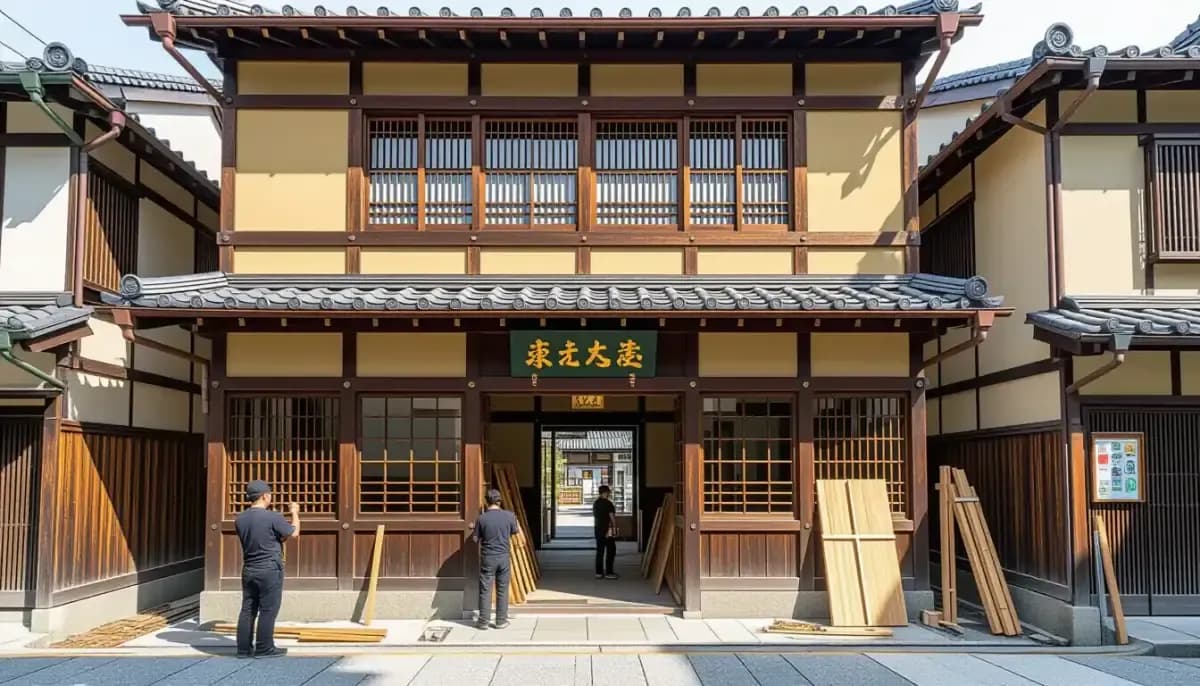
Renovating a Traditional House in Kyoto: Guide for Foreign Owners
Complete guide for foreigners renovating a traditional kyo-machiya townhouse in Kyoto. Covers costs (¥2M–¥20M+), preservation regulations, subsidies, financing, and how to find specialist contractors.
Read more →
Northern Kyoto: Affordable Property Options for Foreigners
Discover affordable property options in northern Kyoto for foreigners. Kita Ward machiya from ¥20.8M, Sakyo Ward university rentals, akiya properties, and buying tips for expats.
Read more →
Higashiyama Area Property Guide for Foreign Buyers
Complete guide to buying property in Higashiyama, Kyoto as a foreigner. Covers price ranges (¥12.8M–¥250M+), machiya townhouses, preservation regulations, investment yields, and step-by-step buying process.
Read more →
Arashiyama Area Property Guide for Foreign Buyers
Complete guide to buying property in Arashiyama as a foreigner. Covers property prices (¥5M–¥500M+), short-term rental rules, machiya ownership, mortgage access, and the full purchase process in Kyoto's iconic bamboo grove district.
Read more →
Kyoto vs Osaka Property Investment Comparison
Compare Kyoto and Osaka property investment for foreign buyers. Rental yields (4.26% vs 3-4%), prices, regulations, capital growth, and which city suits your investment goals.
Read more →
Kyoto Student Rental Investment Near Universities
Complete guide to investing in Kyoto student rental properties near universities for foreigners. Covers best areas, rental yields of 4-6%, legal requirements, financing, and management tips.
Read more →