
Japan Airbnb Income Potential and Revenue Analysis

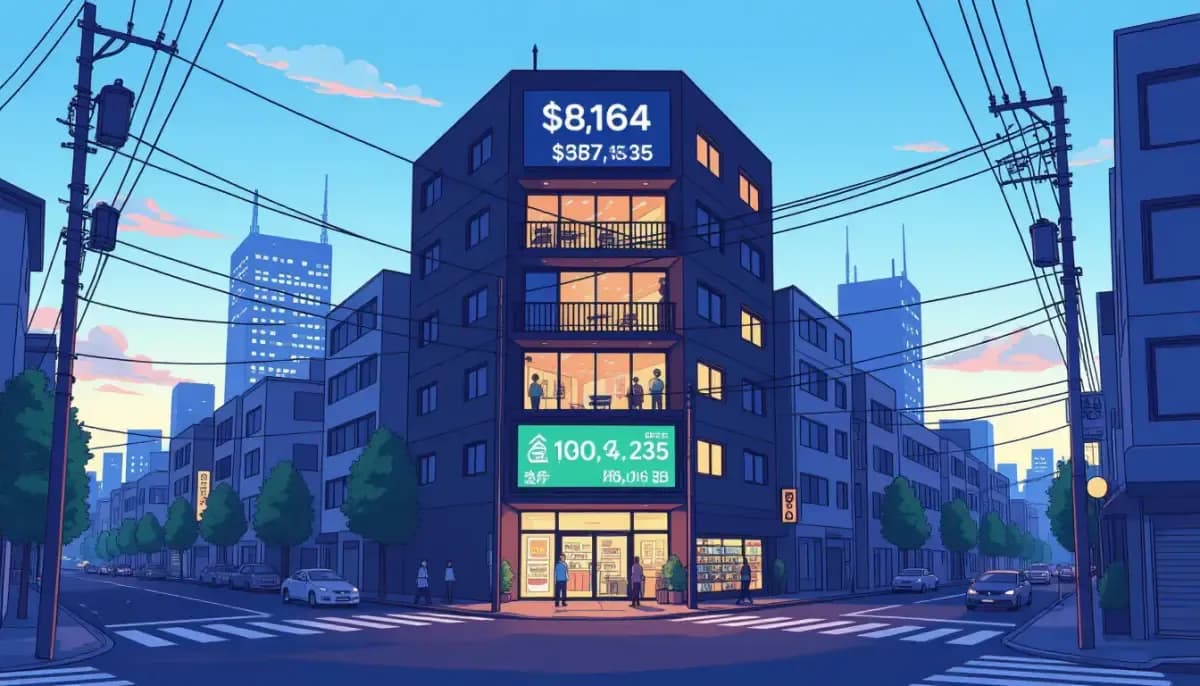
How much can you earn from Airbnb in Japan? Detailed revenue analysis by city: Tokyo earns ¥6.3M/year, Osaka ¥4.4M/year. Income projections, cost breakdowns, and ROI data for foreign owners.
Japan Airbnb Income Potential and Revenue Analysis
Japan has become one of the most sought-after destinations for short-term rental investment in Asia. With over 36 million inbound tourists in 2025 and a booming demand for unique accommodation experiences, foreign property owners are discovering that Airbnb — known locally as minpaku — can generate substantially higher returns than traditional long-term rentals. If you're considering investing in Japanese real estate for short-term rental income, this guide provides a comprehensive breakdown of what you can realistically earn, city by city.
How Much Can You Earn from Airbnb in Japan?
The income potential from Japan Airbnb properties varies widely depending on location, property type, and how you manage operations. However, the numbers are compelling across the board.
Nationally, the average Airbnb host in Japan earns approximately ¥360,000 per month ($2,340), with 80% of active hosts falling in the ¥220,000–¥500,000 monthly range. Top-performing properties — particularly those in prime tourist areas or with unique features — can earn ¥600,000–¥900,000 per month.
After deducting operating costs (typically 25–45% of gross revenue), the average self-managed property nets around ¥240,000 per month ($1,560). Profit margins generally run between 40% and 65% of gross revenue, depending on how actively you control costs.
Key income benchmarks at a glance:
| Metric | National Average | Tokyo | Osaka |
|---|---|---|---|
| Monthly Revenue | ¥360,000 | ¥529,583 (annual ÷12) | ¥364,750 (annual ÷12) |
| Annual Revenue | ~¥4,320,000 | ¥6,355,000 | ¥4,377,000 |
| Nightly Rate (ADR) | ¥18,000–¥23,000 | ¥19,288 | ¥13,643 |
| Median Occupancy | 55% | 89% | 86% |
| Profit Margin | 40–65% | 40–65% | 40–65% |
Data sources: Airbtics Tokyo Data, Airbtics Osaka Data
These figures compare favorably to long-term rentals, which typically yield just 4–6% annually. Short-term rentals regularly deliver 10–15%+ annual gross yield, with over 40% of minpaku operators reporting annual yields exceeding 20% according to a survey of 30,000 hosts by e-housing.jp.
For an in-depth overview of Japan's short-term rental regulations, see our guide to Short-Term Rentals and Airbnb (Minpaku) in Japan for Foreign Owners.
City-by-City Revenue Breakdown
Not all Japanese cities are created equal for Airbnb income. While Tokyo and Osaka dominate in raw revenue, smaller cities often outperform on gross yield due to lower property acquisition costs.
Tokyo
Tokyo is Japan's largest Airbnb market with approximately 34,000 active listings and median occupancy of 89% — among the highest globally. The average nightly rate (ADR) stands at ¥19,288 ($123), generating annual revenues averaging ¥6,355,000 (~$41,000) per active listing.
However, Tokyo ranks poorly on gross yield (investment grade E+, among the lowest 8% nationally) because property prices are extremely high. Neighborhoods like Shinjuku (4,254 listings) offer volume, while Shibuya commands the highest ADR at ¥28,698. Approximately 65.4% of Tokyo's guests are international, with the largest share coming from the USA.
For city-specific investment details, see Buying Property in Tokyo as a Foreigner.
Osaka
Osaka is Japan's second-largest Airbnb market, with 12,056 active listings and strong occupancy at 86% (up +6.1% year-over-year). Average ADR is ¥13,643 ($87), generating annual revenues averaging ¥4,377,000 (~$28,000) per listing. Osaka ranks better than Tokyo on investment metrics (grade C+) thanks to more affordable property prices.
Peak months are April, May, and October, with December being the weakest (-24% below average). See our Osaka Short-Term Rental Investment Guide for more.
Best Cities for Gross Yield
If maximizing return on investment is your priority, consider smaller regional cities where property prices are lower:
| City | Occupancy | Annual Revenue | Gross Yield |
|---|---|---|---|
| Matsue | 56% | ¥2,143,995 | 11.6% |
| Matsuyama | 47% | ¥1,264,705 | 8.2% |
| Hakone | 46% | ¥2,342,249 | 6.8% |
| Sendai | 50% | ¥1,443,904 | 6.0% |
| Saitama | 46% | ¥1,384,780 | ~5.3% |
| Tokyo | 39% | ¥1,536,310 | 2.5% |
Source: Airbtics Japan Occupancy Data
Matsue's 11.6% gross yield stands out as a compelling opportunity for investors focused on ROI rather than raw revenue. Hakone, a popular Mt. Fuji gateway destination, combines strong nightly rates with consistent tourist demand.
For top investment location analysis, see our guide on Best Locations for Airbnb Investment in Japan.
Understanding the 180-Day Rule and Its Impact on Income
Japan's Minpaku Law (enacted 2018) restricts standard minpaku registrations to a maximum of 180 nights per year (roughly 49% occupancy ceiling). This fundamentally caps your income potential under standard registration.
At the national average ADR of ¥18,000, a property operating at the maximum 180 nights earns gross revenue of ¥3,240,000 per year (~$21,000). After costs, net income would be approximately ¥1,300,000–¥2,100,000 annually under standard registration.
Workarounds that allow higher occupancy include:
- Special Zone Registration (Tokku) — Available in designated areas (certain parts of Osaka, Tokyo, Chiba, etc.) with no 180-night cap
- Hotel/Ryokan License — Full commercial license allowing unlimited operation
- Property Management Company — Some managers hold licenses enabling unrestricted operation
For a full explanation of how the rule works and legal workarounds, see Japan's 180-Day Rule for Minpaku Explained and Special Zone Minpaku (Tokku) in Japan Explained.
Key Costs That Affect Your Net Income
Understanding expenses is critical to accurately projecting your Airbnb income. Japan's short-term rental market has several unique cost categories:
Operating Costs Breakdown
| Cost Category | Typical Range | Notes |
|---|---|---|
| Platform fee (Airbnb) | ~3% of bookings | Charged to host |
| Cleaning fee | ¥3,000–¥8,000 per turnover | Passed to guests or absorbed |
| Property management | 20–30% of gross | If using a management company |
| Compliance modifications | ¥50,000–¥150,000 (one-time) | Fire safety, signage, etc. |
| Property tax | Varies by location | See property tax guide |
| Income tax | 15–55% depending on structure | Filing required even for non-residents |
Total operating costs typically run 25–45% of gross revenue if self-managing. Using a professional management company can push this to 50–60% of gross revenue, significantly reducing net income.
For detailed tax planning, see Tax Obligations for Minpaku Operators in Japan and Rental Income Tax Obligations for Foreign Property Owners.
Self-Management vs. Property Management
A suburban Tokyo example illustrates the income gap clearly:
- Long-term rental: ¥80,000/month
- Self-managed Airbnb (¥9,000/night × 18 nights at 60% occupancy): ¥162,000/month — double the income
- Management-company-run Airbnb: Same gross ¥162,000 minus 25% fee = ¥121,500/month — still ~50% better than long-term rental
For more on working with management companies, see Hiring a Minpaku Management Company in Japan.
Seasonal Patterns and Revenue Optimization
Japan's Airbnb market is highly seasonal. Revenue can be up to 85% higher in peak months compared to low season. Understanding these patterns is essential for projecting realistic annual income.
Peak demand periods:
- Spring (March–May): Cherry blossom season drives massive tourism; April is consistently the strongest month in most cities
- Autumn (October–November): Fall foliage season brings strong demand, especially Kyoto, Nikko, and Hakone
- Golden Week (late April–early May): Domestic tourism surges; book out weeks in advance
- Major events and festivals: Osaka Expo 2025, Tokyo events, local matsuri
Shoulder season strategies:
- Price down 15–25% in June–August and December–February
- Target long-stay guests (weekly/monthly discounts) to maintain occupancy
- List on multiple platforms (Booking.com, VRBO) alongside Airbnb to capture demand
For insights into Japan's broader rental market trends, see Japan Rental Market Trends and Forecast for Investors.
Realistic Income Scenarios for Foreign Owners
Let's look at three realistic income projections based on property type and location:
| Scenario | Property | Location | Annual Gross | Annual Net |
|---|---|---|---|---|
| Conservative | 1LDK apartment, self-managed | Osaka suburbs | ¥2,400,000 | ¥1,440,000 |
| Moderate | 2LDK apartment, management company | Tokyo central | ¥5,000,000 | ¥2,500,000 |
| Optimistic | Traditional machiya, self-managed | Kyoto tourist area | ¥7,200,000 | ¥4,320,000 |
| Rural/Akiya | Renovated farmhouse | Regional city | ¥1,800,000 | ¥1,170,000 |
These are illustrative projections. Actual results depend heavily on property quality, listing optimization, guest review scores, and local competition.
Learn more about starting your Airbnb business as a foreigner and the minpaku registration process.
Resources for Further Research
For more detailed market data and analysis, these external resources are invaluable:
- Living in Nihon — Practical guide to life in Japan for expats, including housing and business setup tips
- For Work in Japan — Resources for foreigners working and building businesses in Japan
- Gaijin Buy House — Dedicated resource for foreigners purchasing property in Japan
- Airbtics Japan Market Data — Live occupancy, ADR, and revenue data by city
- Bamboo Routes: Japan Airbnb Analysis — Comprehensive profitability breakdown for 2025–2026
- E-Housing: Truth About Making Money on Airbnb in Japan — Survey insights from 30,000+ minpaku hosts
Is Japan Airbnb Investment Worth It?
The data strongly supports Japan Airbnb as a viable investment strategy for foreign property owners — particularly in high-tourism areas with favorable regulatory environments. The key advantages are:
- 2–3x income potential vs. long-term rental — Even with the 180-day cap, many properties double or triple traditional rental income
- Strong and growing tourist demand — 36 million visitors in 2025, with continued growth expected
- Foreign ownership is permitted — No restrictions on foreigners owning and operating minpaku
- High occupancy in major cities — Tokyo at 89% and Osaka at 86% median occupancy are exceptional global benchmarks
- Special zones allow unlimited operation — Tokku properties face no 180-night restriction
The main challenges are regulatory compliance (fire safety, noise rules, registration requirements), management complexity from abroad, and the 180-day cap for standard registrations. Pairing with a professional management company solves the distance problem at the cost of 20–30% of gross revenue.
For a complete investment framework, start with our Short-Term Rentals and Airbnb Pillar Guide and explore How to Calculate Rental Yield on Japan Properties to model your specific investment scenario.

Originally from Vietnam, living in Japan for 16+ years. Graduated from Nagoya University, with 11 years of professional experience at Japanese and international companies. Sharing information about buying property in Japan for foreigners.
View Profile →Related Articles
Minpaku Penalties and Non-Compliance Risks in Japan
Learn about minpaku penalties in Japan including fines up to ¥1,000,000, real enforcement cases, and how to avoid non-compliance risks as a foreign property owner.
Read more →
Minpaku Insurance and Liability Guide for Japan Property Owners
Essential insurance and liability guide for minpaku operators in Japan. Covers fire insurance, earthquake coverage, personal liability, Airbnb Host Insurance, and compliance requirements under Japan's minpaku law.
Read more →
How to Set Up and Furnish a Minpaku Property in Japan
Complete guide to setting up and furnishing a minpaku short-term rental property in Japan. Covers legal requirements, mandatory furnishings, city restrictions, registration steps, and financial realities for foreign owners.
Read more →
Tax Obligations for Minpaku Operators in Japan
Complete guide to tax obligations for minpaku (short-term rental) operators in Japan. Covers income tax rates, deductible expenses, non-resident rules, local taxes, and filing requirements for foreign property owners.
Read more →
Special Zone Minpaku (Tokku) in Japan Explained
Learn how Special Zone Minpaku (Tokku Minpaku) works in Japan. Covers eligible zones, certification process, stay rules, and whether foreign owners can operate year-round Airbnb properties.
Read more →
Ryokan and Hotel License vs Minpaku in Japan: Which to Choose?
Compare Japan's Ryokan/Hotel Business License and Minpaku Law for short-term rentals. Learn requirements, costs, operating day limits, and which license suits foreign property investors.
Read more →