
Tax Obligations for Minpaku Operators in Japan

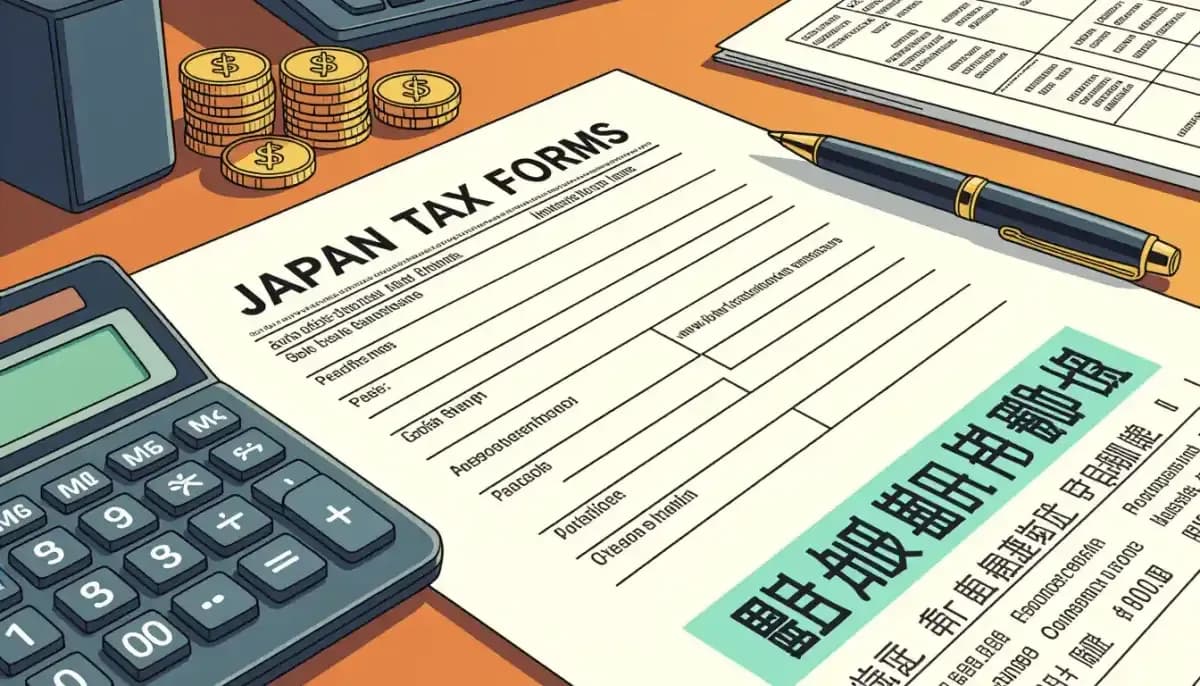
Complete guide to tax obligations for minpaku (short-term rental) operators in Japan. Covers income tax rates, deductible expenses, non-resident rules, local taxes, and filing requirements for foreign property owners.
Tax Obligations for Minpaku Operators in Japan
Running a short-term rental (minpaku) property in Japan can be highly rewarding — with average yields of 8–18%, roughly 2–3 times higher than conventional long-term rentals. But with that income comes a set of tax obligations that every operator must understand to stay compliant. Whether you're a resident foreigner renting out a spare room or a non-resident owner managing a property remotely, Japan's tax rules apply to you. This guide breaks down everything you need to know about tax obligations for minpaku operators in Japan.
Understanding How Minpaku Income Is Classified
Before calculating your taxes, you need to understand how Japan classifies your minpaku income. The category determines your applicable deductions, filing requirements, and overall tax treatment.
1. Miscellaneous Income (Zatsu Shotoku) If you occasionally rent out your home while traveling and it's clearly a side activity, the Japan National Tax Agency (NTA) typically classifies your earnings as miscellaneous income. This is the simplest category but offers the fewest deduction options.
2. Real Estate Income (Fudosan Shotoku) If you rent out a separate vacation home or investment property as a minpaku, your income is generally classified as real estate income. This is the most common category for foreign property investors. Real estate income can be offset by property-related expenses and depreciation.
3. Business Income (Jigyo Shotoku) If minpaku is your primary or continuous business — for example, managing multiple properties full-time — the NTA may classify it as business income. This offers the most favorable tax treatment, including the Blue Form (Aoiro Shinkoku) deduction of up to ¥650,000.
Choosing the wrong classification, or failing to classify correctly, can result in underpayment penalties. If you're uncertain, consulting a tax accountant (zeirishi) familiar with minpaku is strongly recommended.
For more background on the legal framework surrounding minpaku operations, see our guide to Japan Minpaku Law and Regulations Explained for Property Owners.
Japan's Progressive Income Tax Rates for Minpaku Earnings
Minpaku income is subject to Japan's national income tax under a progressive rate system. In addition to the base rates, a 2.1% Reconstruction Special Income Tax surtax applies to the calculated tax figure — a levy that has been in place since 2013 to help fund recovery from the Great East Japan Earthquake.
| Taxable Income (Annual) | National Income Tax Rate | Effective Rate with 2.1% Surtax |
|---|---|---|
| Up to ¥1,950,000 | 5% | ~5.1% |
| ¥1,950,001 – ¥3,300,000 | 10% | ~10.2% |
| ¥3,300,001 – ¥6,950,000 | 20% | ~20.4% |
| ¥6,950,001 – ¥9,000,000 | 23% | ~23.5% |
| ¥9,000,001 – ¥18,000,000 | 33% | ~33.7% |
| ¥18,000,001 – ¥40,000,000 | 40% | ~40.8% |
| Over ¥40,000,000 | 45% | ~45.9% |
On top of national income tax, residents of Japan also pay local inhabitant tax (住民税), which adds approximately 10% to your total tax burden. This means effective combined rates for mid-to-high earners can approach 30–55%.
You must file a tax return if your minpaku net income (revenue minus deductible expenses) exceeds:
- ¥200,000 if minpaku is a side business alongside regular employment
- ¥380,000 if you are self-employed and minpaku is your primary business
The annual tax filing period runs February 16 to March 15 each year for income earned in the prior calendar year.
For a broader overview of property ownership costs, our article on Property Taxes and Annual Costs of Owning Property in Japan is a helpful companion resource.
Deductible Expenses: What You Can Write Off
One of the most important aspects of minpaku tax planning is knowing which expenses you can deduct from your gross rental income. Proper documentation of these expenses can significantly reduce your taxable income.
Fully Deductible Expenses (when used exclusively for minpaku):
- Professional cleaning fees (typically ¥3,000–¥8,000 per cleaning session)
- Minpaku management company fees (typically 20–30% of gross booking revenue)
- Platform fees (Airbnb service fees, listing fees)
- Insurance premiums (minpaku-specific insurance)
- Repairs and maintenance directly related to minpaku use
- Advertising and photography costs
- Transportation costs for property management
- Communications (phone/internet costs for managing operations)
- Accounting and legal fees for tax preparation
Partially Deductible Expenses (when property is also personally used): If you rent out part of your personal residence, expenses must be allocated proportionally based on the area used for minpaku as a percentage of total floor space, combined with the frequency of rental use versus personal use. For example, if 30% of your home is used as a guest room and it is rented 50% of the year, roughly 15% of shared utility costs may be deductible.
Depreciation: The building structure (not land) can be depreciated over its useful life under Japanese accounting rules. Typical depreciation periods range from 22 years (wooden construction) to 47 years (reinforced concrete). Depreciation is one of the most powerful tools for reducing real estate income on paper — even while cash flow remains positive.
Retention requirement: All receipts and supporting documentation must be kept for 7 years from the date of filing.
For details on the minpaku registration process that precedes tax compliance, see our Minpaku Registration Process in Japan: Step by Step.
Blue Form vs. White Form Filing
Japan's tax system offers two filing methods for self-employed individuals and business income earners:
White Form (Shiro Shinkoku) The white form uses single-entry (simple) bookkeeping. It's easier to complete but provides fewer tax benefits. Most basic expense deductions are still available, but the special income deduction is not.
Blue Form (Ao Shinkoku) The blue form requires double-entry bookkeeping but comes with significant advantages:
- ¥650,000 special deduction (or ¥550,000 if filing electronically without e-Tax)
- Ability to carry forward net operating losses for up to 3 years
- Enhanced credibility with the tax authority
To file using the blue form, you must apply for blue form status by March 15 of the year in which you want to use it (or within 2 months of starting your business). Most professional minpaku operators who treat it as a business should strongly consider the blue form.
For small-scale or occasional operators, the white form is often sufficient. An accounting tool or tax advisor can help you determine which is more advantageous given your income level.
For additional guidance on running a minpaku business, including the business decision-making process, see our Starting an Airbnb Business in Japan as a Foreigner guide.
Local Accommodation Taxes and Consumption Tax
Local Lodging Taxes
On top of national income tax, minpaku operators in many Japanese cities must collect local accommodation taxes from guests and remit them to local authorities. These are not income taxes — they are passed through to guests but require diligent collection and reporting.
| City | Per-Night Lodging Tax Rate |
|---|---|
| Tokyo | ¥100/night (rooms ¥10,000–¥14,999); ¥200/night (¥15,000+) |
| Osaka | ¥100–¥300 per person/night (tiered by room price) |
| Kyoto | ¥200–¥1,000 per person/night (tiered by room price) |
| Other cities | Varies; check with local municipality |
Airbnb automatically collects and remits some local taxes in designated cities, but operators should verify the current status for their specific location since rules change.
Consumption Tax (JCT)
Japan's Consumption Tax rate is 10% as of 2024. However, minpaku operators only become liable for consumption tax collection and remittance when their annual taxable revenue exceeds ¥10 million (approximately USD $67,000). The vast majority of individual minpaku hosts fall well below this threshold and are effectively exempt.
If you are a non-resident running a significant property portfolio through a Japanese entity, you may want to track this threshold carefully. Starting April 2023, Japan also implemented a new Invoice System (Qualified Invoice System), which affects consumption tax credits for registered businesses. Most individual minpaku operators are not affected, but business operators dealing with taxable transactions should be aware.
For an in-depth look at lodging taxes and their impact on pricing strategy, check the Tokyo Portfolio's guide to Airbnb laws in Tokyo.
Special Rules for Non-Resident Foreign Owners
If you live outside Japan but own a minpaku property there, different tax rules apply to you.
Withholding Tax Non-resident owners are subject to a flat 20.42% withholding tax on net rental income (20% income tax + 2.1% reconstruction surtax). This is withheld at the source, meaning your management company or property agent in Japan is typically responsible for withholding and remitting the tax.
Mandatory Tax Representative Non-residents must appoint a tax representative (zeirishi or gyoseishoshi) in Japan who:
- Receives tax notices on your behalf
- Files your annual income tax return
- Handles communications with the NTA
Failure to appoint a tax representative can result in the NTA directly contacting and penalizing your Japanese management company.
Tax Treaties Japan has tax treaties with many countries (including the US, UK, Australia, Canada, Germany, and others) to avoid double taxation. Under these treaties, income earned from Japanese property is generally taxable in Japan first. The tax paid in Japan can often be credited against your home country tax liability. Check your country's specific treaty with Japan and consider consulting a tax advisor in both jurisdictions.
Bimonthly Reporting All minpaku operators — including non-residents — must submit reports to their local authority every two months (by the 15th of every even month: February, April, June, August, October, December). Reports must include:
- Number of operating days in the period
- Number of guests by nationality
- Total overnight stays
These reports are required even if you had zero operating days in the reporting period.
You can learn more about the challenges and opportunities of managing a property remotely in our Hiring a Minpaku Management Company in Japan guide.
For additional context on navigating Japan as a foreigner property owner, Living in Nihon provides helpful background on life and regulations in Japan, and Gaijin Buy House covers the property ownership journey for foreigners. For employment and business-related guidance, For Work in Japan is another useful reference.
Record-Keeping and Filing Best Practices
Staying organized year-round is far easier than scrambling to gather documents in February. Here are practical best practices for minpaku tax compliance:
1. Use accounting software Tools like freee, MoneyForward, or even a well-organized spreadsheet can automate expense tracking, categorize transactions, and generate reports for your tax accountant.
2. Maintain a dedicated bank account Keep your minpaku income and expenses in a separate bank account. This makes reconciliation straightforward and protects you in case of an audit.
3. Keep digital copies of all receipts Japan's NTA allows digital storage of receipts under e-Tax rules. Scan or photograph every receipt and back it up in cloud storage.
4. Work with a bilingual tax accountant The intersection of minpaku law, income tax, local taxes, and non-resident rules is complex. A bilingual zeirishi familiar with both minpaku operations and international tax situations is worth the investment — fees are also tax-deductible.
5. Track your 180-day limit carefully Exceeding the 180-day annual operating cap (or your local municipality's stricter limit) is not just a legal violation — it can trigger scrutiny of your tax filings as well. See our full guide on Japan's 180-Day Rule for Minpaku for detailed tracking strategies.
For the official NTA guidance on non-resident real estate income, see the Japan National Tax Agency's English-language guide. The Airbnb Japan Tax Guide 2025 is also an excellent starting resource.
Penalties for Tax Non-Compliance
Failing to meet tax obligations carries real financial consequences in Japan. Key penalties include:
- Negligence penalty (mukoze kasan-zei): 10–15% of underpaid tax
- Willful fraud penalty: 35–40% of underpaid tax
- Late filing penalty: 5% of the tax due (increases to 15% after 2 months)
- Late payment interest: Currently approximately 8.7% per year on overdue amounts (rate varies annually)
Separate from tax penalties, violating the Minpaku Business Act itself (e.g., operating without registration, exceeding operating day limits) can result in fines of up to ¥1 million and potential removal from Airbnb and other platforms. Proper compliance with both the minpaku law and tax law are two sides of the same coin.
To understand the full scope of legal risks, read our guide on Minpaku Penalties and Non-Compliance Risks in Japan.
Summary: Tax Obligations at a Glance
Understanding and meeting your tax obligations as a minpaku operator in Japan is not optional — but it is manageable with the right knowledge and professional support. Key takeaways:
- Minpaku income is taxable in Japan regardless of your residency status
- Income classification (miscellaneous, real estate, or business) affects your deductions and filing approach
- National income tax rates are progressive (5–45%), plus 2.1% surtax and ~10% local inhabitant tax for residents
- Non-residents pay a flat 20.42% withholding rate
- Most operators are exempt from consumption tax unless revenue exceeds ¥10 million annually
- Local accommodation taxes must be collected from guests in many cities
- Blue Form filing offers significant advantages for serious operators
- Bimonthly reporting to local authorities is mandatory, even for non-residents
- Working with a qualified bilingual tax accountant is strongly recommended
For more detailed guidance on the Airbnb host tax declaration process in Japan, AirHost's 2025 Minpaku Tax Declaration Guide offers practical filing walkthroughs. And for a foreigner's comprehensive perspective on tax and legal issues, Tokyo Advisory's Tax Guide for Minpaku Operators is highly recommended.
With the right preparation, transparent accounting, and qualified professional support, your minpaku venture can remain both profitable and fully compliant with Japan's tax requirements.

Originally from Vietnam, living in Japan for 16+ years. Graduated from Nagoya University, with 11 years of professional experience at Japanese and international companies. Sharing information about buying property in Japan for foreigners.
View Profile →Related Articles
Minpaku Penalties and Non-Compliance Risks in Japan
Learn about minpaku penalties in Japan including fines up to ¥1,000,000, real enforcement cases, and how to avoid non-compliance risks as a foreign property owner.
Read more →
Minpaku Insurance and Liability Guide for Japan Property Owners
Essential insurance and liability guide for minpaku operators in Japan. Covers fire insurance, earthquake coverage, personal liability, Airbnb Host Insurance, and compliance requirements under Japan's minpaku law.
Read more →
How to Set Up and Furnish a Minpaku Property in Japan
Complete guide to setting up and furnishing a minpaku short-term rental property in Japan. Covers legal requirements, mandatory furnishings, city restrictions, registration steps, and financial realities for foreign owners.
Read more →
Special Zone Minpaku (Tokku) in Japan Explained
Learn how Special Zone Minpaku (Tokku Minpaku) works in Japan. Covers eligible zones, certification process, stay rules, and whether foreign owners can operate year-round Airbnb properties.
Read more →
Japan Airbnb Income Potential and Revenue Analysis
How much can you earn from Airbnb in Japan? Detailed revenue analysis by city: Tokyo earns ¥6.3M/year, Osaka ¥4.4M/year. Income projections, cost breakdowns, and ROI data for foreign owners.
Read more →
Ryokan and Hotel License vs Minpaku in Japan: Which to Choose?
Compare Japan's Ryokan/Hotel Business License and Minpaku Law for short-term rentals. Learn requirements, costs, operating day limits, and which license suits foreign property investors.
Read more →