
Minpaku Penalties and Non-Compliance Risks in Japan

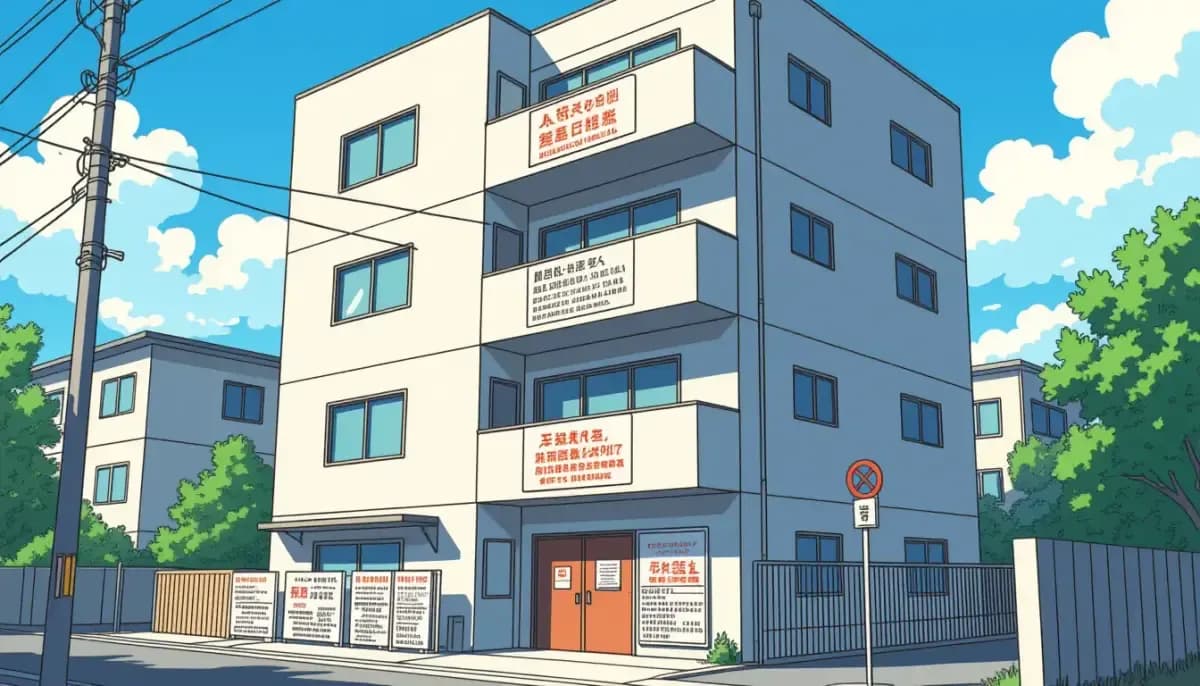
Learn about minpaku penalties in Japan including fines up to ¥1,000,000, real enforcement cases, and how to avoid non-compliance risks as a foreign property owner.
Minpaku Penalties and Non-Compliance Risks in Japan: What Every Host Must Know
Japan's minpaku (民泊) law has been in force since June 2018, creating a regulated framework for short-term rental operations. While the market continues to grow — with over 30,318 active units as of March 2025 — the risks of non-compliance are serious and increasingly enforced. Whether you're a foreign property owner running an Airbnb or a long-term investor considering short-term rentals, understanding minpaku penalties is critical to protecting your investment and avoiding legal trouble.
This guide covers the full spectrum of minpaku penalties, real enforcement cases, and practical strategies to stay compliant.
Understanding the Legal Framework: Minpaku New Law vs. Ryokan Business Law
Before diving into penalties, it's important to understand that short-term rental operators in Japan operate under one of two legal frameworks:
- Minpaku New Law (住宅宿泊事業法) — Allows residential property owners to rent out their homes for up to 180 days per year. Governed by local municipalities and the Ministry of Land, Infrastructure, Transport and Tourism.
- Ryokan Business Law (旅館業法) — Applies to commercial lodging businesses with no annual day limit, but requires a hotel/inn operating license (旅館業許可).
Operating without a proper registration or license under either framework is illegal. The Minpaku New Law is most relevant for individual property owners and foreign investors.
For a broader picture of owning property in Japan, see our Complete Guide to Buying Property in Japan as a Foreigner and our overview of Property Taxes and Annual Costs in Japan.
Minpaku Penalty Schedule: What the Law Actually Says
The penalties for violating the Minpaku New Law are specified in the legislation and enforced by local prefectural governments. Here is a breakdown of the major violation categories and their associated penalties:
| Violation Type | Maximum Penalty |
|---|---|
| Operating without notification or filing false notification | 6 months imprisonment OR ¥1,000,000 fine (~$9,000 USD) |
| Violating management/intermediary entrustment rules | ¥500,000 fine (~$4,500 USD) |
| Failure to report business changes to authorities | ¥300,000 fine (~$2,700 USD) |
| Incomplete or missing guest registry | ¥300,000 fine (~$2,700 USD) |
| Failure to display required signage at the property | ¥300,000 fine (~$2,700 USD) |
| Failure to submit bi-monthly usage reports | ¥300,000 fine (~$2,700 USD) |
| Exceeding the 180-day annual operating limit | Administrative orders, potential fines |
| Ignoring a prefectural improvement order | Enhanced penalties including criminal referral |
Source: Minpaku in Japan: Complete Legal Guide
The most serious outcome is criminal referral to prosecutors, which can result in imprisonment and/or significant fines — and reputational damage that affects future real estate transactions.
Five Ways Minpaku Operations Become Illegal
Understanding how violations occur is the first step to avoiding them. There are five primary ways minpaku operations become illegal in Japan:
1. No Valid Registration or License
The most fundamental violation is operating without filing a notification under the Minpaku New Law or obtaining a hotel business license under the Ryokan Business Law. Every property must be registered with the local public health center (保健所, hokenjo) before accepting a single guest. Operating on a platform like Airbnb without this registration is illegal regardless of how few nights you host.
2. Exceeding the 180-Day Annual Operating Limit
Under the Minpaku New Law, residential properties may only be rented out as minpaku for a maximum of 180 days per calendar year. Exceeding this limit — even by a single day — triggers administrative orders and potential fines. Some municipalities set even stricter limits (see geographic restrictions below).
3. Safety Code Violations
Minpaku properties must comply with fire safety requirements, including:
- Functional smoke detectors in each room
- Fire extinguishers on each floor
- Clearly marked emergency exits
- A valid Fire Law Conformity Certificate (消防法令適合通知書)
Failing inspections or operating without this certificate is an independent violation, separate from registration requirements.
4. Condo Association (管理組合) and HOA Rule Breaches
Many condominium buildings in Japan explicitly prohibit minpaku operations in their management rules (管理規約). Violating these rules can result in legal action from the condo association — and in some cases, orders to cease operations entirely. Always check the building's management rules before starting any short-term rental activity. See our guide on Types of Properties Available in Japan for details on condo ownership structures.
5. Immigration and Visa Law Violations
Using a minpaku operation as a cover for a "Business Manager" visa (経営・管理ビザ) without legitimate business intent is illegal. Foreign investors must ensure that their visa status and business structure comply with immigration law. For more on this topic, see our article on Visa and Residency Considerations for Property Buyers in Japan.
Real Enforcement Cases: What Actually Happens to Violators
The penalties above are not theoretical. Enforcement is real and increasing.
The K-carve Life Case (Tokyo, 2026)
In January 2026, K-carve Life, a minpaku operator in Shinjuku, Tokyo, and two associated Chinese nationals were referred to prosecutors for illegal operations. The company had been operating on weekdays in violation of Tokyo's Special Zone restrictions — which in Shinjuku limit minpaku to non-weekdays — and had continued after receiving an improvement order from authorities. The company's defense: "Our competitors were doing the same."
This case illustrates that:
- Local restriction violations (not just national law violations) lead to criminal referral
- Ignoring improvement orders dramatically escalates consequences
- "Everyone else does it" is not a defense
Source: Japan Times — Tokyo minpaku firm referred to prosecutors
Increased Enforcement Focus in 2025–2026
Japan's Tourism Agency announced in January 2026 that it is revising administrative penalty guidelines specifically targeting operators whose guests generate noise complaints, garbage issues, and neighborhood disruption. The revisions are planned for fiscal 2026 and will give local authorities stronger tools to act against problem operators.
Meanwhile, Osaka City suspended new Special Zone applications — which had allowed 365-day operations in designated areas — following 399 official neighbor complaints filed in FY2023. This demonstrates how community pressure directly shapes enforcement policy.
Geographic Restrictions That Create Non-Compliance Risk
One of the most complex aspects of minpaku compliance is that restrictions vary dramatically by location. Operating according to national standards is not enough — you must comply with your specific municipality's rules.
| Location | Key Restrictions |
|---|---|
| Kyoto (residential zones) | ~60 days/year; only January 16 – March 15 allowed |
| Tokyo (many wards) | Restricted to weekends and school holidays; some wards ban minpaku entirely |
| Osaka Special Zones | 365-day operation allowed, but new Special Zone designations suspended as of late 2025 |
| Rural areas | Generally more permissive; check with local hokenjo |
| National parks / protected areas | May have additional environmental restrictions |
For city-specific details, see our guides on Buying Property in Tokyo, Buying Property in Osaka, and Buying Property in Kyoto.
Ongoing Compliance Obligations for Foreign Hosts
Registration is just the beginning. Ongoing compliance requirements create multiple opportunities for inadvertent violations:
Guest Registry Requirements
- Must record the name, address, nationality, and passport number of all foreign guests who do not have a Japanese address
- Registry must be retained for 3 years
- Failure to maintain or present the registry when requested by authorities is a violation
Bi-Monthly Usage Reports
- Operators must submit usage reports by the 15th of every even month (6 reports per year)
- Reports cover the preceding two months of operation
- Failure to submit on time incurs fines up to ¥300,000
Mandatory Signage
- A compliant sign must be posted at the property entrance listing the registration number, operator's name, and emergency contact
- Missing or incorrect signage is an independent violation
Non-Resident Foreign Owners
- Foreign nationals who do not reside in Japan must appoint a local representative (住宅宿泊管理業者 or 管理業者) to manage compliance
- This representative is legally responsible for ensuring all obligations are met
For more on property management considerations as a foreign owner, see Legal Procedures and Documentation for Japan Property Purchase.
Practical Risk Mitigation: Staying Compliant
Given the complexity of the rules and the severity of penalties, here are the most effective risk mitigation strategies:
1. Hire a Licensed Minpaku Management Company (住宅宿泊管理業者) These companies handle registration, reporting, guest management, and compliance monitoring. For foreign owners especially, using a licensed manager is strongly recommended and legally required if you are non-resident.
2. Verify Building Rules Before Purchase If you're buying a property with minpaku income potential, confirm the condo association rules allow it before signing. This should be a due diligence checklist item — not an afterthought.
3. Track Operating Days Carefully Use property management software that automatically tracks your remaining operating days. Running over 180 days — even accidentally — is a violation.
4. Respond to Improvement Orders Immediately If authorities issue an improvement order (改善命令), compliance is mandatory. Ignoring it — as the K-carve Life case shows — escalates consequences from fines to criminal prosecution.
5. Stay Updated on Municipal Rule Changes Local rules change frequently. Subscribe to updates from your local municipality and check the Osaka Language Solutions minpaku guide for updated 2026-2027 regulations.
For expat-focused advice on navigating daily life and compliance in Japan, Living in Nihon and For Work in Japan offer useful resources. For property investment and minpaku-specific guidance, Gaijin Buy House covers practical steps for foreign buyers.
Market Context: Is Minpaku Still Worth It?
Despite the regulatory complexity, the minpaku market continues to grow. Japan's inbound tourism hit record levels in 2024-2025, and short-term rental demand remains strong — particularly in Tokyo, Osaka, and Kyoto. According to data from a study of over 30,000 Airbnb hosts in Japan, lodging days under the Minpaku New Law grew approximately 28% year-on-year in late 2023/early 2024, with guest numbers growing ~30% in the same period. Approximately 54% of operators are corporate; 46% are individual hosts.
The key insight: the market rewards compliant operators who can operate consistently, and penalizes those who cut corners. Non-compliance doesn't just risk fines — it risks permanent de-registration and loss of the income stream entirely.
For broader context on investment returns and property values, see our Japan Real Estate Market Overview and Trends.
Frequently Asked Questions
Q: Can I lose my property if I violate minpaku rules? A: You cannot lose ownership of the property, but your minpaku registration can be revoked, and criminal convictions can affect your ability to conduct business in Japan.
Q: What happens if my guests violate rules (noise, garbage)? A: As the host, you are responsible for guest behavior. Repeated complaints can lead to improvement orders, and Japan's Tourism Agency is specifically targeting this in its 2026 guideline revisions.
Q: Does Airbnb handle compliance for me? A: No. Airbnb requires hosts to confirm they have a valid minpaku registration number before listing, but compliance is entirely the host's responsibility. Airbnb will delist properties flagged by Japanese authorities.
Q: As a non-resident foreigner, can I still operate minpaku legally? A: Yes, but you must appoint a licensed local management company. Operating without a local representative as a non-resident is itself a violation. See our guide on Mortgages and Home Loans for Foreigners in Japan and consider the management cost structure.
Minpaku in Japan offers genuine income potential for foreign property owners, but the regulatory environment demands careful attention. The penalties are real, enforcement is increasing, and the complexity of local rules creates multiple traps for the unwary. With proper registration, ongoing compliance, and professional management support, operators can participate in Japan's booming short-term rental market safely and profitably.
For a comprehensive look at all the costs associated with property ownership in Japan, don't miss our guide on Hidden Costs and Fees When Buying Property in Japan.

Originally from Vietnam, living in Japan for 16+ years. Graduated from Nagoya University, with 11 years of professional experience at Japanese and international companies. Sharing information about buying property in Japan for foreigners.
View Profile →Related Articles

Minpaku Insurance and Liability Guide for Japan Property Owners
Essential insurance and liability guide for minpaku operators in Japan. Covers fire insurance, earthquake coverage, personal liability, Airbnb Host Insurance, and compliance requirements under Japan's minpaku law.
Read more →
How to Set Up and Furnish a Minpaku Property in Japan
Complete guide to setting up and furnishing a minpaku short-term rental property in Japan. Covers legal requirements, mandatory furnishings, city restrictions, registration steps, and financial realities for foreign owners.
Read more →
Tax Obligations for Minpaku Operators in Japan
Complete guide to tax obligations for minpaku (short-term rental) operators in Japan. Covers income tax rates, deductible expenses, non-resident rules, local taxes, and filing requirements for foreign property owners.
Read more →
Special Zone Minpaku (Tokku) in Japan Explained
Learn how Special Zone Minpaku (Tokku Minpaku) works in Japan. Covers eligible zones, certification process, stay rules, and whether foreign owners can operate year-round Airbnb properties.
Read more →
Japan Airbnb Income Potential and Revenue Analysis
How much can you earn from Airbnb in Japan? Detailed revenue analysis by city: Tokyo earns ¥6.3M/year, Osaka ¥4.4M/year. Income projections, cost breakdowns, and ROI data for foreign owners.
Read more →
Ryokan and Hotel License vs Minpaku in Japan: Which to Choose?
Compare Japan's Ryokan/Hotel Business License and Minpaku Law for short-term rentals. Learn requirements, costs, operating day limits, and which license suits foreign property investors.
Read more →