
Earthquake Retrofit and Reinforcement for Older Japan Homes

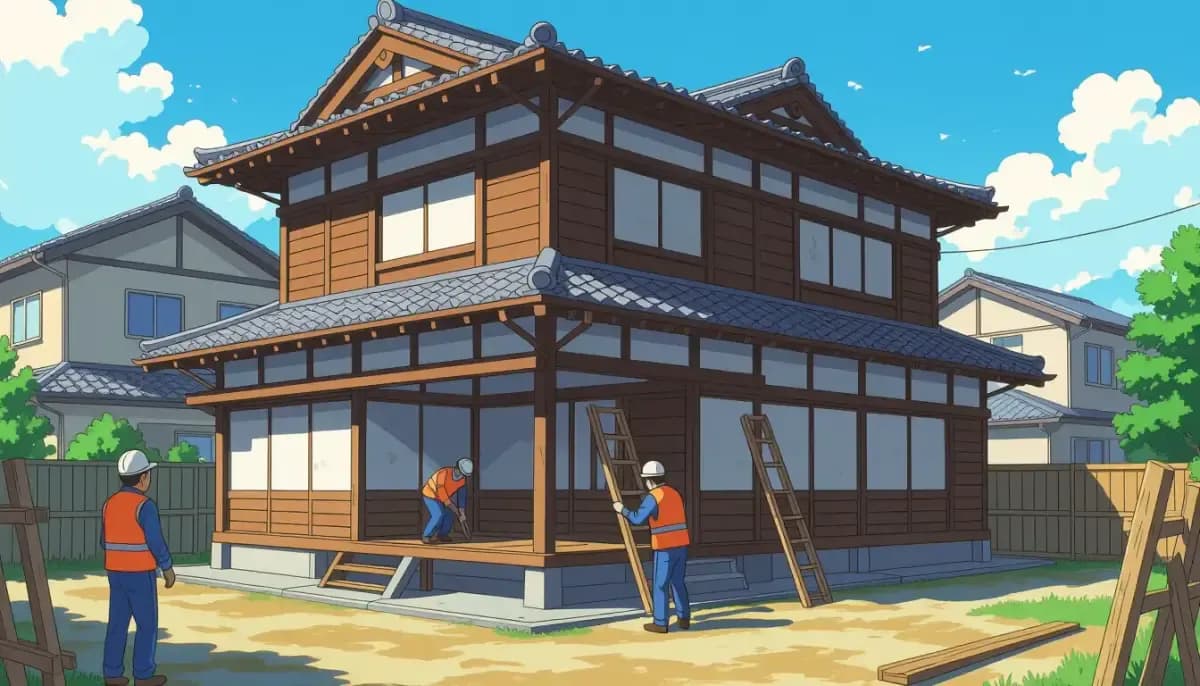
Complete guide to earthquake retrofitting for older Japanese homes. Learn about seismic standards, costs (¥1–3M+), government subsidies up to 50%, and how foreigners can navigate the process safely.
Earthquake Retrofit and Reinforcement for Older Japan Homes
Japan is one of the most seismically active countries in the world, and owning an older home here comes with a critical responsibility: ensuring your property can withstand the inevitable earthquake. If you have purchased — or are considering purchasing — a home built before 1981, understanding earthquake retrofit and reinforcement is not optional. It could literally save your life, and it will certainly protect your investment.
This guide explains everything foreign homeowners need to know about seismic retrofitting for older Japanese homes, including building code history, assessment processes, retrofit methods, government subsidies, and what to expect in terms of cost and timeline.
Understanding Japan's Seismic Building Code History
Japan has updated its earthquake resistance building codes multiple times over the decades. As a homeowner or buyer, knowing which era your property belongs to is the essential first step.
The Three Seismic Standard Eras
| Era | Build Period | Standard Name (JP) | Key Characteristics |
|---|---|---|---|
| Old Standard | Before June 1, 1981 | 旧耐震基準 (kyu-taishin) | Designed for moderate quakes only; high collapse risk in major earthquakes |
| New Standard | June 1, 1981 – May 31, 2000 | 新耐震基準 (shin-taishin) | Must withstand shindo 6-upper to 7 without collapse; still gaps in foundation design |
| Enhanced Standard | June 1, 2000 onward | 2000年基準 | Stricter foundation design, improved wall connections, current benchmark |
The most vulnerable category is kyu-taishin homes — those built before June 1, 1981. These were designed only to survive moderate earthquakes and may not survive a major event without significant structural reinforcement. Out of approximately 13.1 million buildings constructed under old earthquake resistance standards in Japan, about 6.1 million have since been verified as adequate or have undergone retrofitting — meaning millions remain at risk.
Importantly, even homes built between 1981 and 2000 are not entirely safe. Studies suggest approximately 80% of wooden houses from this period do not fully meet the latest seismic criteria and may also benefit from reinforcement work.
Why Retrofitting Matters: Real Earthquake Lessons
Japan's modern retrofitting culture was shaped by tragedy. The 1995 Great Hanshin Earthquake (Kobe) killed over 6,400 people, with the majority of deaths caused by building collapse — primarily in pre-1981 structures. Similarly, the 2024 Noto Peninsula earthquake caused devastating damage concentrated in older wooden homes in rural areas.
These events have repeatedly proven that seismic retrofitting is not a bureaucratic formality — it is genuine life-safety infrastructure. For foreign buyers considering older or akiya (vacant) homes, this is particularly important because these properties are disproportionately from older eras with no documented retrofit history.
For more context on buying older properties in Japan, see our guide on Akiya (Vacant and Abandoned Houses) in Japan for Foreigners and Natural Disaster Preparedness for Homeowners in Japan.
How to Assess Your Home's Earthquake Safety
Before retrofitting, you need a professional assessment. In Japan, this is called a seismic diagnosis (耐震診断, taishin shindan).
Step 1: Check the Construction Date
The first and simplest check is confirming when your home received its construction confirmation certificate (建築確認済証, kenchiku kakunin saizumi-sho). This is part of your property documents. If the date is before June 1, 1981, your home is classified as kyu-taishin and professional assessment is strongly recommended.
Step 2: Request a Seismic Diagnosis
A licensed structural engineer or qualified inspector will evaluate:
- Foundation type and condition
- Wall arrangement and bracing
- Roof weight (heavy tiled roofs add seismic load)
- Beam and column connections
- Past renovation or reinforcement history
The diagnosis typically costs ¥50,000–¥200,000, though many municipalities subsidize this cost partially or fully for pre-1981 homes.
Step 3: Visual Warning Signs
While waiting for a professional assessment, look for these red flags:
- Large or zigzag cracks in walls or foundation
- Uneven floors or doors and windows that stick
- Tilting or visible settlement of the structure
- Heavy tile roofs without documented reinforcement
- No visible bracing in crawlspaces or attic areas
If you notice several of these signs in a home you're considering buying, factor significant retrofit costs into your budget from the outset. Our guide on Home Renovation and Remodeling in Japan for Foreign Owners covers how to plan and budget for renovation projects.
Types of Earthquake Retrofit and Reinforcement Methods
Once a seismic diagnosis confirms that work is needed, there are several approaches to retrofitting, ranging from partial fixes to comprehensive structural overhauls.
1. Wall Reinforcement (耐震壁の補強)
The most common retrofit method involves adding or strengthening seismic walls (taishin kabe). This includes installing diagonal bracing, reinforced panels, or shear walls at strategic points throughout the structure. Modern reinforced panels can often be installed from the exterior, minimizing disruption to daily living.
2. Foundation Repair and Anchoring (基礎補強)
Many older homes have inadequate foundations — either shallow concrete footings or no proper connection between the superstructure and the foundation. Retrofitting may involve:
- Adding anchor bolts to connect walls to foundation
- Reinforcing or widening the foundation with concrete
- Installing new drainage to prevent soil liquefaction around the foundation
3. Metal Connector Installation (金物補強)
Post-2000 standards introduced requirements for metal connectors at beam-column junctions. Retrofitting older homes often involves adding these metal hardware pieces at critical structural joints, dramatically improving the building's ability to resist racking forces during an earthquake.
4. Roof Weight Reduction (屋根の軽量化)
Heavy traditional ceramic tile roofs (kawara) significantly increase the seismic forces a building must resist. Replacing heavy tiles with lighter metal roofing or modern lightweight tiles is a highly cost-effective retrofit strategy that reduces the seismic load on the entire structure.
5. Full Seismic Reinforcement (全体的な耐震改修)
For severely under-standard homes, a comprehensive retrofit combines all the above methods. This is the most expensive option but brings the home fully up to current standards and is typically required to qualify for the maximum government subsidies.
Earthquake Retrofit Costs in Japan
Cost is one of the most common questions from foreign homeowners, and unfortunately the answer is: it varies considerably. Here is a practical breakdown.
| Retrofit Scope | Estimated Cost | Notes |
|---|---|---|
| Seismic diagnosis only | ¥50,000 – ¥200,000 | Often subsidized to zero by municipalities |
| Partial reinforcement (walls/connectors) | ¥500,000 – ¥1,500,000 | Good for homes that are close to standard |
| Full seismic reinforcement | ¥1,000,000 – ¥3,000,000+ | Required for most kyu-taishin homes |
| Roof weight reduction | ¥500,000 – ¥2,000,000 | Highly effective cost-to-benefit ratio |
| Foundation reinforcement | ¥500,000 – ¥1,500,000 | Often combined with full reinforcement |
| Comprehensive renovation | ¥3,000,000 – ¥8,000,000+ | Includes seismic + general renovation |
Construction for a full seismic reinforcement project typically takes 3 to 4 months from start to finish.
These costs can be partially offset by government subsidies (see below). Also factor in the impact on property value — a post-retrofit property with documented seismic certification is more saleable and mortgageable than an uncertified one.
Government Subsidies and Tax Incentives for Retrofitting
Japan's national and local governments offer meaningful financial support for seismic retrofitting, recognizing the public safety benefits of upgrading the country's older housing stock.
National Tax Incentives
Homeowners who complete qualifying seismic reinforcement work can claim:
- Income tax deduction: Up to 10% of construction costs, capped at ¥250,000 per year
- Property tax reduction: Temporary reduction in fixed asset tax for the year following completed work
Municipal Subsidy Programs
This is where the most significant support is found. Most cities, towns, and wards in Japan operate their own subsidy programs for seismic diagnosis and reinforcement. Key features:
- Subsidies typically cover up to 50% of retrofitting costs
- Maximum grants range from ¥1,000,000 to ¥3,000,000 depending on municipality and property
- Seismic diagnosis is often subsidized at up to 100% (free) for eligible properties
- As of 2025, Japan extended subsidy eligibility to include wooden homes built 1981–2000 with conventional frame construction, in addition to pre-1981 homes
To find subsidies available in your area:
- Visit your city or ward office (市区町村役場)
- Ask for the 住宅耐震改修補助 (housing seismic retrofit subsidy) department
- Confirm eligible work scope and required documentation
- Apply before starting work — subsidies generally cannot be claimed retroactively
For more guidance on navigating property costs as a foreign owner, see our article on Property Taxes and Annual Costs of Owning Property.
Impact on Mortgages and Insurance
Seismic retrofitting has direct financial implications beyond the construction costs themselves.
Mortgage Lending
Banks and financial institutions in Japan assess earthquake resistance as part of their property appraisal process. Pre-1981 homes without documented retrofitting may face:
- Higher down payment requirements
- Lower loan-to-value ratios
- Refusal of mortgage lending entirely by some lenders
After successful retrofitting with official certification (耐震適合証明書, taishin tekigo shomeisho), properties become significantly more financeable. For foreign buyers especially, ensuring your property meets lender requirements is critical — see our guide on Mortgages and Home Loans for Foreigners in Japan for more details.
Earthquake Insurance
Japan's earthquake insurance (地震保険, jishin hoken) is sold as a rider on standard fire insurance. For older homes:
- Earthquake insurance premiums are higher for pre-1981 structures
- Some insurers require seismic certification before issuing coverage
- Successfully retrofitted homes may qualify for premium discounts of up to 50%
Given that earthquake insurance is one of the most important protections for homeowners in Japan, the insurance cost savings from retrofitting can meaningfully contribute to the economic case for the investment. Read more in our Insurance for Property Owners in Japan guide.
Finding Contractors for Seismic Retrofitting
Choosing the right contractor is as important as understanding what work needs to be done. Here are key tips for foreign homeowners:
- Use certified contractors: Look for contractors registered with the Japan Housing Finance Agency (住宅金融支援機構) or listed on your municipality's approved contractor list for subsidy programs. Working with approved contractors is typically required to access subsidies.
- Request multiple quotes: Get at least 2–3 quotes from licensed structural contractors. Costs can vary significantly, and comparing quotes helps you identify outliers.
- Verify credentials: Contractors should hold a valid construction business license (建設業許可証). Ask for this before signing any contract.
- Insist on a written scope of work: The retrofit plan should specify which elements will be reinforced, the methods to be used, and the target seismic grade (耐震等級) that the work will achieve.
- English-speaking support: Some contractors in major cities and areas with significant foreign populations have English-speaking staff or can work through a bilingual real estate agent. For tips on navigating Japanese contractors, see Working with Japanese Real Estate Agents as a Foreigner.
Helpful resources:
- E-Housing: How to Tell if Your Japanese Home Will Survive the Next Big Earthquake
- Old Houses Japan: Grants and Subsidies for Renovating Old Homes in Japan (2025 Edition)
- Living in Nihon: Disaster Preparedness Guide for Japan
- Gaijin Buy House: Buying Older Properties in Japan
- For Work in Japan: Living and Working in Japan
The Retrofit Timeline: What to Expect
Understanding the process from start to finish helps foreign homeowners plan effectively.
| Phase | Duration | Key Actions |
|---|---|---|
| Research & planning | 1–4 weeks | Check construction date, find local subsidies |
| Seismic diagnosis | 1–2 weeks | Hire inspector, receive written report |
| Contractor selection | 2–4 weeks | Obtain quotes, verify credentials |
| Subsidy application | 4–8 weeks | Submit forms to municipality, await approval |
| Construction | 3–4 months | Reinforcement work completed |
| Certification | 1–2 weeks | Obtain official seismic certificate |
| Total (typical) | 6–12 months | From decision to certified completion |
Planning ahead is essential if you want to access subsidies — many programs have annual budget caps and close their applications once funds are exhausted. Apply early in the Japanese fiscal year (April onwards) for the best chance of securing funding.
Is Retrofitting Worth It?
For most owners of pre-1981 homes in Japan, the answer is a clear yes — especially when government subsidies can cover up to half the cost. Consider the full picture:
- Life safety: The primary and non-negotiable reason. Major earthquakes cause catastrophic damage to unreinforced older structures.
- Property value: Certified seismic compliance adds measurable market value and makes the home far easier to sell.
- Mortgage and insurance access: Opens up better financing options and reduces insurance premiums.
- Peace of mind: Living in Japan means accepting seismic risk is part of life — retrofitting reduces the anxiety that comes with every tremor.
Japan's government is committed to upgrading its housing stock, having set a national goal of 95% earthquake-resistant housing. Tokyo alone has budgeted ¥9.5 trillion (approximately US$71 billion) to bring all city homes up to current codes by the 2040s. As a foreign homeowner, aligning your property with this national priority is both practically smart and financially sound.
For a comprehensive overview of owning property safely in Japan, see our Complete Guide to Buying Property in Japan as a Foreigner.

Originally from Vietnam, living in Japan for 16+ years. Graduated from Nagoya University, with 11 years of professional experience at Japanese and international companies. Sharing information about buying property in Japan for foreigners.
View Profile →Related Articles
Renovation Financing and Loan Options in Japan
Complete guide to renovation loan options in Japan for foreign property owners. Covers reform loans, combined purchase loans, Flat 35, government subsidies, and eligibility requirements for expats.
Read more →
Smart Home Technology Renovation in Japan
Complete guide to smart home technology renovation in Japan for foreign property owners. Covers devices, costs, PSE certification, electrical rules, and top brands like Panasonic, Google, and Amazon Alexa.
Read more →
Barrier-Free and Accessibility Renovation in Japan
Complete guide to barrier-free accessibility renovation in Japan for foreign homeowners. Learn about kaigo hoken subsidies up to ¥200,000, common modifications, 2025 building code changes, and how to qualify as a foreigner.
Read more →
DIY Home Improvement in Japan: Guide for Foreign Homeowners
Complete guide to DIY home improvement in Japan for foreign homeowners. Learn what projects you can do yourself, home center tips, renovation costs, government subsidies, and step-by-step project guides.
Read more →
Japan Renovation Timeline: How Long Do Projects Take?
Complete guide to Japan renovation timelines for foreign homeowners. Learn how long each phase takes—from planning and permits to construction and move-in—including 2025 building code changes.
Read more →
Renovating a Traditional Japanese House for Modern Living
Complete guide to renovating traditional Japanese houses (kominka, machiya, akiya) for modern living. Costs, subsidies, contractors, permits, and design tips for foreign owners in Japan.
Read more →