
Cultural Preservation Rules for Kominka and Machiya Owners

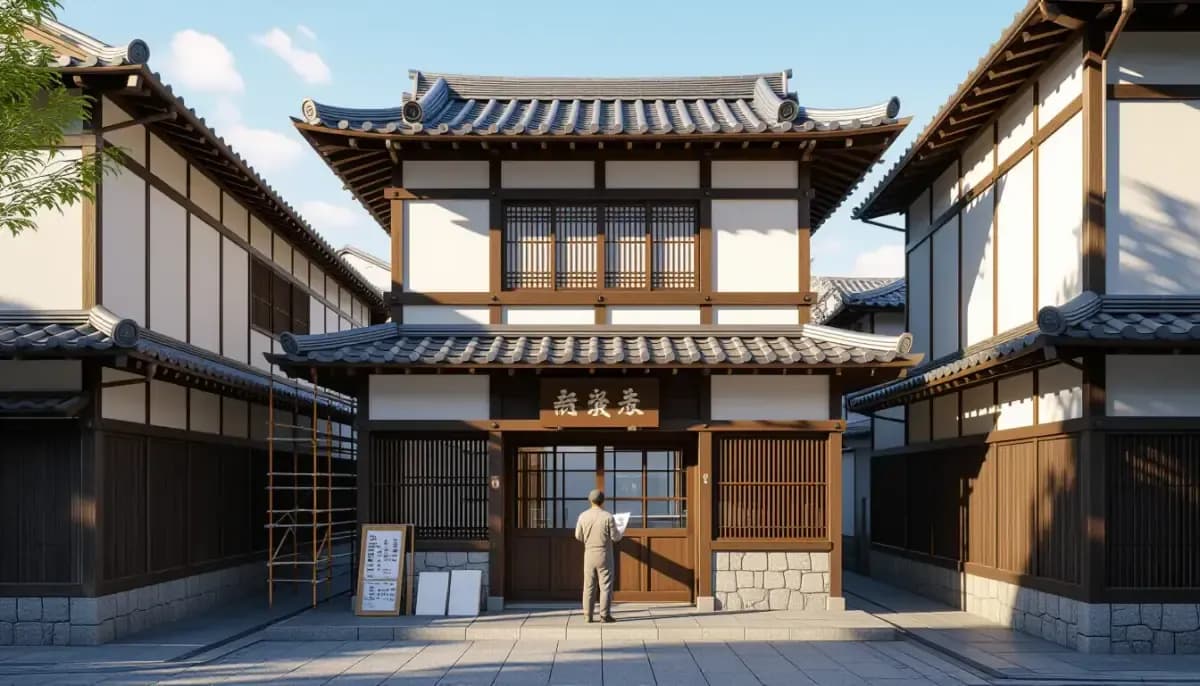
A complete guide to Japan's cultural preservation rules for kominka and machiya owners: designation tiers, renovation approval requirements, Kyoto's Machiya Ordinance, the 2023 Vacant Home Law, and practical steps for foreign property owners.
Cultural Preservation Rules for Kominka and Machiya Owners
Owning a traditional Japanese kominka farmhouse or machiya townhouse is a dream for many foreigners in Japan. These centuries-old structures carry irreplaceable historical and aesthetic value — but with that heritage comes a set of legal obligations and cultural preservation rules that every owner must understand. Whether you're planning to renovate, rent out, or simply maintain your property, knowing Japan's preservation framework will save you from costly surprises and ensure your home remains a proud part of Japan's living architectural legacy.
This guide breaks down the key regulations, government designation tiers, local ordinances, and practical renovation rules that apply to kominka and machiya owners in Japan.
Japan's Cultural Property Protection Law: The Foundation of Heritage Rules
Japan's cultural preservation framework is anchored by the Cultural Property Protection Law (文化財保護法), enacted in 1950. This law establishes a tiered national designation system that determines the level of protection — and the corresponding owner obligations — for historic structures.
The main designation tiers relevant to kominka and machiya owners are:
| Designation Tier | Description | Owner Obligations |
|---|---|---|
| National Treasure (国宝) | Highest designation; most architecturally and historically significant | Strict approval for any alteration; mandatory state notification for transfer, damage, or relocation |
| Important Cultural Property (重要文化財) | Significant national heritage; includes many prominent historic buildings | Government approval required before renovation or alteration |
| Registered Cultural Property (登録有形文化財) | Broader designation for notable buildings not at National Treasure level | Lighter touch: notification required for alterations, but outright approval not always mandatory |
| Prefectural/Municipal Designated Property | Designated by local governments rather than the national Agency for Cultural Affairs | Rules vary by prefecture and municipality; always check locally |
| Important Districts for Preservation of Traditional Buildings (重要伝統的建造物群保存地区, Jūdentsu) | Entire historic districts with strict group-level rules | All exterior alterations must conform to the district's traditional character |
The vast majority of kominka and machiya are not nationally designated — most are ordinary historic properties not officially classified under the Cultural Property Protection Law. However, properties in Jūdentsu districts — of which there are currently 126 across Japan — face strict district-wide rules regardless of individual designation status.
If you are unsure of your property's designation status, check with the Agency for Cultural Affairs (Agency for Cultural Affairs — bunka.go.jp) or contact your municipal board of education, which typically manages local cultural property records.
Renovation Rules: What You Can and Cannot Do
For most kominka and machiya owners, the most immediately relevant rules concern what changes you are allowed to make to your property.
Nationally Designated Properties
If your property is classified as a National Treasure or Important Cultural Property, you must:
- Obtain government approval from the Agency for Cultural Affairs before undertaking any structural alteration, addition, or major repair
- Notify authorities of any ownership transfer, damage, fire, or movement of the property
- Use traditional materials and craftsmanship where specified by preservation conditions
Government subsidies are available for maintenance and repair of Important Cultural Properties — but these are managed on a case-by-case basis and involve significant bureaucratic coordination.
Properties in Jūdentsu Historic Districts
If your kominka or machiya is located within one of Japan's 126 designated Important Districts for the Preservation of Traditional Buildings, you face the strictest group-level renovation rules:
- All exterior alterations (facade changes, roofing, exterior colors, fencing) must match the district's designated traditional character
- Approved materials are mandated — typically natural wood, clay plaster, traditional roof tiles, and paper screens
- Local preservation boards must review and approve renovation plans before work begins
- Interior renovations are generally less restricted, but consult your local board before making changes
Examples of well-known Jūdentsu districts include Kyoto's Gion Shinbashi area, Kanazawa's Higashi Chaya district, and many historic port towns and post-towns (宿場町) along old Edo-period routes.
Registered Cultural Properties and Ordinary Historic Houses
For properties holding Registered Cultural Property (登録有形文化財) status, alterations require notification but are generally less strictly controlled than National Treasures or Important Cultural Properties. Exterior facades should ideally be preserved, but some adaptation for modern use (plumbing, electrical, insulation) is typically permitted.
For the majority of kominka and machiya — those with no formal designation — there are no national-level preservation restrictions on renovation. Local municipality rules, city planning zoning, and neighborhood agreements may still apply, so always check with your local city or town office before starting major work.
For more on the renovation process, see our guide to Home Renovation and Remodeling in Japan for Foreign Owners.
Kyoto's Machiya Ordinance: A Local Model for Preservation
Kyoto City has gone further than most Japanese municipalities with its dedicated Machiya Ordinance (京町家の保全及び継承に関する条例), which legally defines a machiya as a wooden townhouse built before 1950 using traditional techniques and design. Properties meeting this definition may be classified as Kyoto City cultural assets, triggering specific preservation guidelines:
- Demolition restrictions: Owners wishing to demolish a designated machiya must first notify the city and engage in a mandatory consultation period
- Exterior alteration approval: Major changes to the facade, roof, or structural elements require prior approval
- Subsidies and support: Kyoto City offers financial support and technical assistance for owners who commit to preserving their machiya in its traditional form
Kyoto's approach is increasingly being studied as a model by other historic cities — including Kanazawa, Nara, and Osaka — as Japan grapples with the loss of its remaining traditional townhouse stock. Only about 2% of pre-war machiya remain in Tokyo, making surviving examples in Kyoto and other cities extremely culturally significant.
For resources on buying in Kyoto specifically, see our Buying Property in Kyoto as a Foreigner guide.
The 2023 Vacant Home Law: New Tax Pressures on Kominka Owners
A significant regulatory change affecting kominka and machiya owners came into effect in December 2023 with Japan's revised Vacant Home Law (空き家対策特別措置法). Previously, even vacant homes enjoyed a standard fixed-asset tax reduction — a holdover policy that inadvertently rewarded neglect. The 2023 reform changed this:
- Vacant properties that are classified by local governments as "problem properties" (危険空き家) or "management-deficient properties" (管理不全空き家) lose their fixed-asset tax reduction
- Annual property taxes can increase by as much as 6 times for negligently maintained vacant properties
- This creates strong financial pressure to actively maintain, renovate, rent, or sell traditional houses rather than leaving them to deteriorate
For foreign owners — particularly those living overseas — this makes active property management essential. Partnering with a reliable local property manager is strongly recommended. See our guide on Property Management for Overseas Owners in Japan for practical guidance.
On the positive side, the same law encourages municipalities to accelerate their akiya (vacant home) bank programs, making it easier to list and transfer historic properties. Japan currently has approximately 9 million akiya, representing 13.8% of all homes — a figure that underscores the urgency of preservation efforts.
Learn more about akiya properties and the opportunities they represent in our Akiya (Vacant and Abandoned Houses) in Japan for Foreign Buyers guide.
Financing Renovation of a Protected Property
Renovation costs for kominka and machiya are substantial. A standard full renovation of a 150 sqm kominka — covering roof, walls, flooring, bathrooms, kitchen, and utilities — costs a minimum of 10–15 million yen. For designated historic properties requiring authentic materials (hand-hewn timber, clay plaster, traditional tile), costs can be significantly higher.
Financing options include:
- Standard home renovation loans from major Japanese banks (available to permanent residents; limited for non-permanent residents)
- Kyoto Shinkin Bank machiya renovation loan: One of the very few specialist products designed specifically for traditional townhouse renovation in Kyoto, typically for owner-occupied properties
- Government subsidies: Available for National Treasures and Important Cultural Properties, managed through the Agency for Cultural Affairs on a case-by-case basis
- Municipal renovation grants: Many historic municipalities offer grants for preserving the exterior appearance of traditional buildings, even for ordinary (non-designated) properties
Despite the upfront investment, the economics can be favorable. A kominka purchased for 5–6 million yen and renovated for an additional 5 million yen can resell for 15–18 million yen. Kyoto machiya converted to vacation rentals (minpaku) have generated up to 8 million yen annually in rental income in strong tourism seasons.
For more on investment potential, see our Japan Real Estate Investment Guide for Foreigners.
Foreign Ownership: Rights and Practical Considerations
Foreign nationals face no legal restrictions on purchasing kominka or machiya in Japan. Ownership rights are legally identical to those of Japanese citizens, and there are no special restrictions, permits, or government approvals required simply by virtue of being a foreigner.
However, there are practical considerations to keep in mind:
- Mortgages: Standard Japanese home loans are generally unavailable to non-permanent residents. Most foreign buyers must purchase with cash or arrange financing through overseas lenders
- Agricultural land: Many rural kominka come with attached farmland (農地). Agricultural land requires separate permission from Japan's local Agricultural Committee (農業委員会) to transfer ownership — this is a separate process from purchasing the house itself
- Renovation coordination: Finding local craftsmen skilled in traditional construction (sukiya-daiku carpenters, clay plasterers, thatched roof specialists) can be challenging, particularly in rural areas where such tradespeople are aging out
- Administrative language: All documentation, permits, and government communications will be in Japanese. Working with a bilingual real estate agent or judicial scrivener (司法書士) is strongly advised
For a comprehensive introduction to the legal framework around foreign property ownership, visit Living in Nihon for practical guides on life and property in Japan, and For Work in Japan for resources on establishing yourself as a foreigner in Japan.
For practical guidance on navigating the traditional Japanese house market, Gaijin Buy House offers resources specifically tailored to foreign buyers in Japan.
Practical Steps for Kominka and Machiya Owners
Whether you are buying or already own a traditional Japanese property, here is a practical checklist for navigating the preservation framework:
- Confirm designation status: Contact your municipal board of education or check the Agency for Cultural Affairs database to determine if your property carries any national, prefectural, or municipal designation
- Check for Jūdentsu district inclusion: Confirm whether your property is located within one of Japan's 126 historic preservation districts
- Review local ordinances: Even non-designated properties may fall under local city or town preservation guidelines — always check with the city planning office
- Get renovation pre-approval: For any major work, submit plans to the relevant authority (Agency for Cultural Affairs for nationally designated properties; local preservation board for Jūdentsu districts) before signing contracts with contractors
- Document everything: Maintain records of all permits, approvals, renovation work, and material sourcing — this protects you legally and adds to the property's provenance history
- Consider professional help: Engage a certified architect (建築士) familiar with traditional construction and preservation requirements, as well as a judicial scrivener for ownership documentation
For more on the overall process of buying traditional properties in Japan, see our Traditional Japanese Houses (Kominka and Machiya) for Foreigners guide and our Complete Guide to Buying Property in Japan as a Foreigner.
Additional research and renovation economics data referenced in this article are drawn from the Renovating Traditional Japanese Houses for Preservation and Profit guide at Japan Real Estate, the Agency for Cultural Affairs Cultural Properties overview, the KORYOYA FAQ for traditional house buyers, and the E-Housing guide to traditional housing in Japan.

Originally from Vietnam, living in Japan for 16+ years. Graduated from Nagoya University, with 11 years of professional experience at Japanese and international companies. Sharing information about buying property in Japan for foreigners.
View Profile →Related Articles
Traditional vs Modern House in Japan: Lifestyle Comparison
Compare traditional Japanese houses (kominka, machiya) vs modern homes for foreign buyers. Costs, comfort, cultural experience, and practical buying advice for expats in Japan.
Read more →
Kominka Structural Assessment and Safety Guide Before Buying
Complete guide to kominka structural assessment before buying in Japan. Covers 12-point inspection checklist, seismic safety standards, termite risks, inspection costs, and critical red flags to help foreign buyers make informed decisions.
Read more →
Traditional Japanese House Interior Design and Decoration Ideas
Discover traditional Japanese house interior design ideas: tatami rooms, shoji screens, tokonoma alcoves, and low furniture. A practical guide for foreigners decorating a Japanese home.
Read more →
Where to Find Kominka for Sale in Japan: Resources and Platforms
Discover the best platforms and resources to find kominka for sale in Japan. From KORYOYA to akiya banks, this guide covers every tool foreigners need to buy a traditional Japanese farmhouse.
Read more →
Heating and Insulation Challenges in Traditional Japanese Houses
Traditional Japanese houses are notoriously cold in winter due to poor insulation and design for summer ventilation. Learn why, and how to fix it as a foreign buyer or renter with practical renovation tips and budget guides.
Read more →
Converting a Kominka into a Guesthouse Business in Japan
Complete guide to converting a traditional Japanese kominka into a profitable guesthouse business. Covers licensing, renovation costs, minpaku law, government subsidies, and business models for foreigners.
Read more →