
Commercial Property Tax Differences in Japan

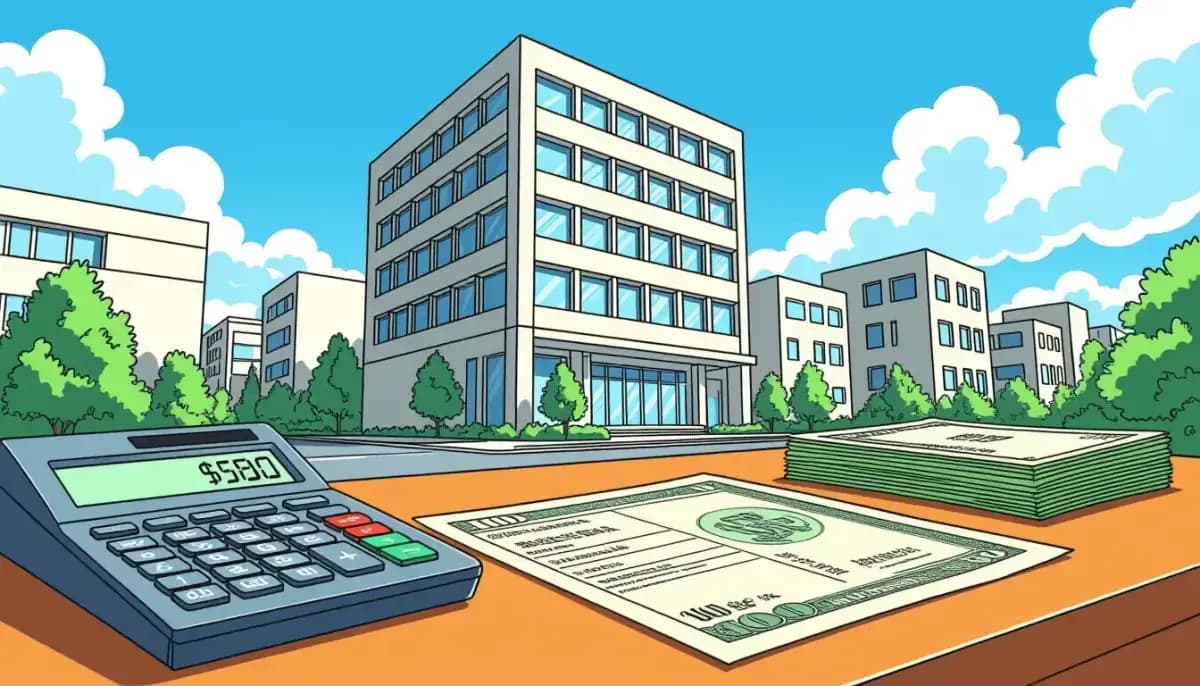
Learn how commercial property taxes in Japan differ from residential. Full guide covering acquisition tax (4% vs 3%), fixed asset tax, capital gains, and tips for foreign investors.
Commercial Property Tax Differences in Japan: A Complete Guide for Foreign Investors
If you're a foreigner considering buying commercial real estate in Japan, understanding the tax landscape is critical. Commercial properties are taxed differently from residential ones in several key ways — and the differences can significantly impact your investment returns. This guide breaks down everything you need to know about commercial property tax in Japan, from acquisition to annual ownership costs to capital gains.
Whether you're eyeing an office building in Tokyo, a retail space in Osaka, or a small warehouse in the suburbs, the tax rules here matter — and they're not always obvious to overseas buyers.
Key Differences: Commercial vs. Residential Property Taxes in Japan
Japan's property tax system applies to both commercial and residential real estate, but commercial properties lose out on many of the preferential rates and exemptions that residential buyers enjoy. Here's a high-level comparison:
| Tax Type | Residential Property | Commercial Property |
|---|---|---|
| Real Estate Acquisition Tax | 3% (reduced until March 2027) | 4% (standard rate) |
| Registration & License Tax | 0.1%–0.3% | 2% |
| Fixed Asset Tax (annual) | 1.4% of assessed value | 1.4% of assessed value |
| City Planning Tax (annual) | Up to 0.3% | Up to 0.3% |
| Land Value Reduction (Fixed Asset) | Up to 1/6 for small lots | Not applicable |
| New Building Reduction | 50% for 3–5 years | Not available |
| Capital Gains (Primary Residence) | ¥30M deduction available | Not available |
| Consumption Tax on Building | Exempt (residential use) | 10% on building value |
As you can see, commercial properties face higher tax rates at acquisition and miss out on significant annual exemptions. Over time, these differences compound into a meaningfully higher total tax burden.
Real Estate Acquisition Tax: The First Major Hit
When you purchase commercial property in Japan, you'll pay the Real Estate Acquisition Tax (不動産取得税, fudōsan shutoku-zei) as a one-time charge shortly after the transaction completes.
- Residential rate: 3% of assessed value (temporary reduction in effect until March 31, 2027)
- Commercial rate: 4% of assessed value (no reduction)
The assessed value used for this tax is the official appraised value (課税標準額, kazei hyōjun-gaku), which is typically 60–70% of the market price. Even so, on a commercial building worth ¥100 million, you're looking at roughly ¥2.4–2.8 million in acquisition tax alone.
For residential buyers, additional deductions can further reduce the tax base (e.g., up to ¥12 million deducted from the assessed value of a newly built home). These deductions are not available for commercial properties.
Payment is due within 30 to 60 days after receiving the tax notice from the local government.
Registration and License Tax: Another Commercial Disadvantage
When transferring ownership and registering the property with the Legal Affairs Bureau, you'll pay the Registration and License Tax (登録免許税, tōroku menkyozei):
- Residential transfers: 0.1%–0.3% (with reduced rates for qualified residential buildings)
- Commercial transfers: 2% of assessed value (standard rate, no reduction)
For a commercial property assessed at ¥80 million, this means ¥1.6 million in registration tax — compared to as little as ¥80,000–240,000 for an equivalent residential purchase. This is a significant upfront difference that savvy investors need to factor into their acquisition costs.
For a comprehensive overview of all buying costs in Japan, see our guide on Hidden Costs and Fees When Buying Property in Japan.
Fixed Asset Tax and City Planning Tax: Annual Obligations
Every year on January 1st, anyone who owns property in Japan — regardless of nationality or residency status — is liable for:
- Fixed Asset Tax (固定資産税, kotei shisan-zei): 1.4% of the assessed land and building value
- City Planning Tax (都市計画税, toshi keikaku-zei): Up to 0.3% of assessed value (only in urban planning zones)
These rates are the same for both commercial and residential properties. However, the key difference lies in the exemptions and reductions available:
Residential Land Reductions (Not Available for Commercial)
For residential land, Japan offers powerful fixed asset tax reductions:
- Small residential lots (up to 200m²): The taxable land value is reduced to 1/6 of the assessed value
- Land over 200m² (residential): Taxable value reduced to 1/3
- Newly built residential buildings: 50% reduction in fixed asset tax for 3 years (5 years for multi-story buildings)
Commercial properties receive none of these reductions. You pay the full 1.4% on the full assessed value of both land and building.
Example Calculation
Assume a commercial property with assessed land value of ¥50 million and building value of ¥30 million in an urban area:
- Fixed asset tax: (¥50M + ¥30M) × 1.4% = ¥1,120,000/year
- City planning tax: (¥50M + ¥30M) × 0.3% = ¥240,000/year
- Total annual property tax: ¥1,360,000/year
For a comparable residential property with a 200m² lot, the land portion could be reduced to 1/6, dramatically lowering the total bill.
For more detail on Japan's property tax system overall, check out Property Taxes and Annual Costs of Owning Property in Japan.
Consumption Tax: A Commercial-Only Burden
One unique disadvantage for commercial property buyers is Consumption Tax (消費税, shōhizei):
- Residential properties: Exempt from consumption tax (buying a home or apartment for residential use is not subject to consumption tax)
- Commercial properties: Subject to 10% consumption tax on the building portion of the sale price
Land is always exempt from consumption tax. But the building value of a commercial property attracts a 10% consumption tax, which can be substantial. On a building worth ¥60 million, that's ¥6 million in additional costs.
However, if you're purchasing as a registered business entity (a Japanese corporation, for example), you may be able to claim consumption tax back as an input tax credit — consult a qualified tax accountant for details.
Capital Gains Tax: Selling Commercial Property
When you eventually sell a commercial property in Japan, capital gains are taxed based on the holding period:
| Holding Period | Income Tax | Resident Tax | Total Rate |
|---|---|---|---|
| 5 years or less (short-term) | 30% | 9% | 39% (approx.) |
| More than 5 years (long-term) | 15% | 5% | 20% (approx.) |
These rates apply to both commercial and residential properties. However, a major benefit for residential sellers — the ¥30 million primary residence capital gains deduction — is not available for commercial properties.
Additionally, if you're a non-resident selling Japanese property, a 10.21% withholding tax on the gross sale price is deducted at source by the buyer (not the net gain — the entire sale price). You can then file a tax return to reconcile this against your actual capital gains tax liability.
For more on the legal and documentation aspects of property sales, see Legal Procedures and Documentation for Japan Property Purchase.
Rental Income Tax on Commercial Property
If you rent out commercial property in Japan as a foreigner, you'll be taxed on the rental income:
- Residents: Rental income is added to your overall income and taxed at the progressive rate (5%–45% + 10% resident tax)
- Non-residents: Subject to a 20.42% withholding tax on gross rental income
Non-residents must appoint a Tax Agent (納税管理人, nōzei kanrinin) in Japan to receive tax notices and handle payments on their behalf. Failure to do so can result in penalties and accumulated interest.
For commercial tenants, rents are typically quoted excluding consumption tax, and you (as the landlord) must charge and remit 10% consumption tax on rental income if your taxable turnover exceeds ¥10 million per year.
Depreciation Benefits for Commercial Property Investors
One area where commercial property can offer a tax advantage is depreciation:
- Commercial buildings can be depreciated over their useful life (e.g., 47 years for reinforced concrete structures, 22 years for wood-frame buildings)
- Depreciation expenses can be deducted from rental income, reducing taxable profit
- This is particularly useful for investors holding commercial property as a business asset through a Japanese entity
Residential investors can also claim depreciation, but the more active business nature of commercial leasing often makes this deduction more significant.
Practical Tips for Foreign Commercial Property Buyers
- Work with a bilingual tax accountant (税理士, zeirishi): Japan's property tax system is complex, and the rules differ for residents vs. non-residents and individuals vs. corporations.
- Appoint a Tax Agent before you buy: Non-residents must have a Japanese representative to receive and pay tax bills. Without one, you risk penalties.
- Consider buying through a Japanese corporation: This can offer consumption tax reclaim opportunities and may simplify annual tax filings for rental income.
- Factor in the full acquisition cost: Commercial properties have higher acquisition tax (4%) and registration tax (2%) — budget 8–12% of the purchase price for total transaction costs.
- Plan your exit strategy early: Holding commercial property for more than 5 years nearly halves the capital gains tax rate.
- Reassessment cycle: Assessed property values in Japan are reassessed every 3 years. Track these changes as they directly affect your annual tax bill.
For guidance on the overall buying process as a foreigner, see our complete guide: Step-by-Step Home Buying Process in Japan for Foreigners.
How to Pay Property Taxes in Japan
Annual property taxes (fixed asset tax and city planning tax) are paid in four installments throughout the year. You'll receive a tax notice (納税通知書, nōzei tsūchisho) from your local municipality, typically in May or June.
Payment options include:
- Bank transfer
- Convenience store payment (with the attached payment slip)
- Online banking (varies by municipality)
- Through your appointed Tax Agent (for non-residents)
Missing payments results in penalties and interest, and unpaid taxes can eventually result in a lien on the property.
Additional Resources for Foreign Buyers
If you're navigating Japan's property market as a foreigner, you'll find helpful guidance at these resources:
- Living in Nihon — Comprehensive guides on living and investing in Japan as a foreigner, including finance and property topics
- For Work in Japan — Resources on working and settling in Japan, including financial and visa considerations
- Gaijin Buy House – Real Estate Tax Guide for Foreigners — Dedicated property tax guide for foreign buyers in Japan
- Housing Japan – Property Taxes 2025 — Updated 2025 guide to Japan property taxes and costs
- MailMate – Japan Property Tax Guide — Easy-to-follow breakdown of Japan property taxes for foreigners
Also explore our related guides: Japan Real Estate Market Overview and Trends and Types of Properties Available in Japan.
Conclusion
Commercial property in Japan comes with a notably higher tax burden than residential property, especially at the point of acquisition. The 4% acquisition tax (vs. 3% for residential), 2% registration tax (vs. 0.1–0.3%), lack of fixed asset tax reductions, 10% consumption tax on the building, and absence of the primary residence capital gains deduction all add up.
That said, Japan's commercial real estate market remains attractive to foreign investors thanks to stable yields, transparent legal frameworks, and the weakened yen. The key is going in with a clear understanding of all costs — including taxes — before you sign.
Work with qualified bilingual professionals, factor the full tax burden into your investment model, and you'll be well positioned to make the most of Japan's commercial property opportunities.

Originally from Vietnam, living in Japan for 16+ years. Graduated from Nagoya University, with 11 years of professional experience at Japanese and international companies. Sharing information about buying property in Japan for foreigners.
View Profile →Related Articles
Japan Commercial Property Zoning Regulations Explained
Learn how Japan's 13 land use zones affect commercial property purchases. Understand FAR limits, permitted uses, environmental rules, and what foreign buyers need to know before investing.
Read more →
Financing Options for Commercial Property in Japan
Complete guide to financing commercial property in Japan as a foreigner. Learn about investment loan types, lender options, corporate structure routes, and eligibility requirements for expats and non-residents.
Read more →
Managing Commercial Property in Japan as a Foreign Owner
Complete guide to managing commercial property in Japan as a foreign owner. Covers legal requirements, property management, taxes, tenant relations, and overseas remittance tips.
Read more →
Commercial Property Due Diligence in Japan
Master commercial property due diligence in Japan with this complete guide for foreign investors. Covers title checks, seismic compliance, environmental assessments, lease review, tax costs, and regulatory obligations.
Read more →
Japan Mixed-Use Building Investment Guide
Complete guide to investing in Japan mixed-use buildings as a foreigner. Covers yields, financing, due diligence, taxes, and the buying process for retail-residential properties.
Read more →
Japan Commercial Property Lease Structure and Terms
Complete guide to Japan commercial property lease structure for foreign investors. Covers ordinary vs fixed-term leases, costs, deposits, tenant rights, and foreigner-specific requirements.
Read more →