
Japan Commercial Property Lease Structure and Terms

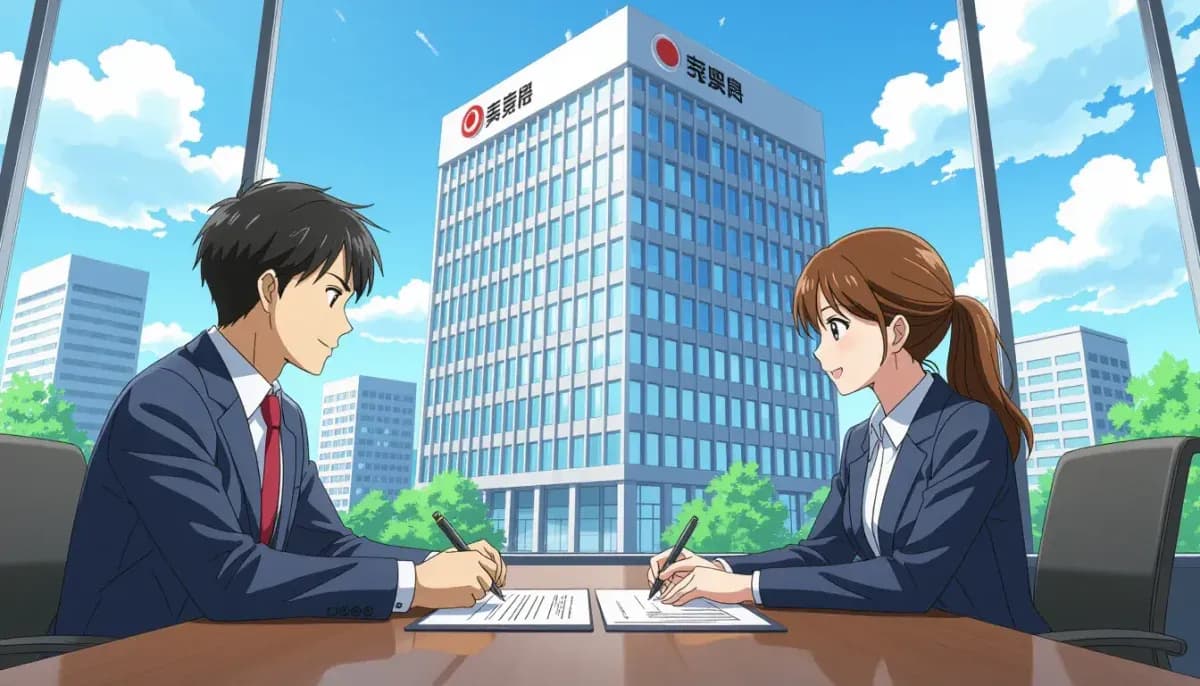
Complete guide to Japan commercial property lease structure for foreign investors. Covers ordinary vs fixed-term leases, costs, deposits, tenant rights, and foreigner-specific requirements.
Japan Commercial Property Lease Structure and Terms: A Complete Guide for Foreign Investors
Whether you are setting up a business in Tokyo, opening a retail outlet in Osaka, or investing in a commercial building in Fukuoka, understanding Japan's commercial property lease structure is essential. Japan's leasing framework is unique, heavily tenant-protective, and differs substantially from Western systems. This guide explains everything foreign investors and business owners need to know about commercial property leases in Japan — from lease types and financial costs to tenant rights and restoration obligations.
!Japan commercial office building exterior in a major city
Understanding the Two Main Types of Commercial Leases in Japan
Japan's Act on Land and Building Leases (Shakuchi-Shakka-hō, ALBL) governs all lease agreements and provides robust tenant protections. Under this law, there are two primary commercial lease structures available to tenants and landlords.
Ordinary Lease (普通借家契約 – Futsū Shakka Keiyaku)
The ordinary lease is the most common type for commercial properties. Its defining characteristic is the tenant's right to renew the lease indefinitely unless the landlord has a "justifiable reason" (seito na jiyu) to refuse renewal. This makes it highly protective for tenants.
Key features of the ordinary lease:
- Typical term: 2 years (commercial leases may be longer)
- Renewal: Automatic unless landlord provides 6 months' notice with justifiable cause
- Tenant protection: Very strong; courts have historically sided with tenants
- Termination by tenant: 1 to 3 months' advance notice required
- Termination by landlord: Must demonstrate genuine necessity, such as personal use of the property, significant deterioration, or offer substantial compensation
The justifiable cause standard is interpreted strictly by Japanese courts. A single missed payment is typically insufficient for termination. Landlords must show genuine need, a history of relationship issues, and often must offer compensation to the tenant before courts will allow eviction.
Fixed-Term Lease (定期借家契約 – Teiki Shakka Keiyaku)
Fixed-term leases became available in 2000 and offer landlords more control over lease duration. These leases terminate at the end of the agreed term with no automatic renewal right.
Key features of the fixed-term lease:
- Typical term: 2 to 10 years; commercial leases often 5 to 10 years
- Renewal: No automatic renewal; the lease ends at expiry
- Notice to vacate: Landlord must provide 6 to 12 months' notice before expiry
- Tenant flexibility: Early exit is generally possible per specific contract terms
- Negotiation: More negotiable terms including rental reductions and tenant improvement allowances
Many major landlords in central Tokyo and other business districts now offer fixed-term commercial leases. While tenants have fewer protections at renewal, these agreements often come with more flexible initial terms and sometimes lower rents.
| Feature | Ordinary Lease | Fixed-Term Lease |
|---|---|---|
| Automatic renewal | Yes | No |
| Tenant protection | Very strong | Limited at end of term |
| Typical commercial term | 2–5 years | 5–10 years |
| Landlord notice required | 6 months + justifiable cause | 6–12 months before expiry |
| Tenant exit notice | 1–3 months | Per contract terms |
| Rent negotiation flexibility | Lower | Higher |
| Key money (礼金) typical | May apply | Often negotiable away |
Ground Leases for Commercial Land in Japan
If you are investing in commercial real estate at a deeper level — specifically leasing land to construct a building — Japan has specific ground lease rules under the ALBL.
Ordinary Ground Lease for building ownership: Minimum term of 30 years. After the initial term, subsequent renewals are 20 years (first renewal) and 10 years (subsequent renewals).
Fixed-term ground lease for building ownership (Teiki Shakchi Ken): Minimum term of 50 years. No renewal; the tenant must demolish the building and return bare land at expiry.
Fixed-term business ground lease (Jigyō-yo Teiki Shakchi Ken): Term of 10 to 50 years, used specifically for non-residential structures. No renewal right.
Ground leases are commonly used for large retail complexes, hotels, and industrial facilities where the building owner wants long-term tenure on land owned by someone else. For foreign investors, these structures require careful legal review as they significantly affect asset valuation and exit strategies.
Financial Structure: Upfront Costs and Ongoing Fees
Japan's commercial lease cost structure differs markedly from Western markets and includes several upfront payments that foreign investors are often unfamiliar with.
!Commercial property financial cost breakdown diagram
Security Deposit (敷金 – Shikikin)
The security deposit is the largest upfront cost in most commercial leases. Unlike residential leases, commercial deposits in Japan are substantially higher:
- Standard commercial/office: 6 to 12 months' rent
- Prestigious central Tokyo buildings: Up to 20 months' rent
- Industrial/warehouse: Typically 3 to 6 months' rent
The deposit is held by the landlord and returned minus any deductions for unpaid rent, damage, or restoration costs at the end of the tenancy. The refund timeline is typically 1 to 3 months after vacating.
Key Money (礼金 – Reikin)
Key money is a traditional non-refundable payment to the landlord, primarily a residential custom. In commercial leases, its presence varies:
- Where applicable: 1 to 2 months' rent, non-refundable
- Trend: Many commercial landlords in major cities negotiate away key money, especially on fixed-term leases or for stable, creditworthy tenants
- Negotiation tip: Always attempt to negotiate reikin to zero; it has no legal basis and landlords of commercial space are increasingly willing to waive it
Agent Commission (仲介手数料 – Chūkai Tesūryō)
A real estate agent commission equivalent to 1 month's rent is standard and is paid by the tenant (lessee) at contract signing. Unlike in some Western markets, the agent typically represents both parties, and the commission is legally capped at 1 month's rent for each side.
Guarantee Company Fee (保証会社手数料)
Foreign individuals and many foreign-incorporated companies leasing commercial space must use a Japanese guarantee company (hoshō gaisha) in place of or in addition to a personal Japanese guarantor. Typical costs:
- Initial setup fee: 50% to 100% of one month's rent
- Annual renewal fee: Approximately ¥10,000 per year
Corporate lessees should ensure their Japanese entity is properly registered before applying, as guarantee companies review corporate registration documents carefully.
Lease Guarantee Insurance
Some landlords require lease guarantee insurance rather than or in addition to a traditional security deposit, particularly for newer developments. Premium is approximately 1 month's rent upfront.
Renewal Fee (更新料 – Kōshin-ryō)
The renewal fee is an entrenched custom, particularly in the Tokyo metropolitan area. At each 2-year renewal of an ordinary lease, tenants typically pay 1 month's rent as a renewal fee. This is separate from the security deposit and is non-refundable. It is not legally mandatory but is contractually standard in many agreements.
Consumption Tax (消費税)
10% consumption tax is applied to commercial building leases. This is a critical distinction from residential leases, which are consumption tax-exempt. Budget accordingly when calculating your total occupancy cost. Land leases are also tax-exempt — only building leases attract the tax.
Tenant Rights and Landlord Obligations
Japan's leasing law is significantly more tenant-favorable than many foreign investors expect, especially for ordinary leases.
Strong Renewal Rights
Under an ordinary lease, a landlord cannot refuse renewal simply because the term has ended. They must:
- Provide written notice 6 months before expiry stating intent not to renew
- Demonstrate a justifiable cause accepted by courts
- Typically offer financial compensation to the tenant to support eviction
Japanese courts assess justifiable cause by weighing: the landlord's necessity of use, the tenant's history and dependency on the location, the economic impact on the tenant, property conditions, and compensation offered. This process can take months or years if disputed.
Rent Review Rights
Either party may request a rent review if circumstances change significantly — such as major tax increases, economic shifts, or significant changes in surrounding market rents. This is allowed under the ALBL and applies to both lease types. Fixed-term leases may include specific rent review schedules in the contract.
Assignment and Subletting
Subletting or assigning a commercial lease requires written consent from the landlord. Unauthorized subletting is grounds for lease termination. For corporate tenants undergoing mergers, acquisitions, or reorganizations, transfer restrictions are commonly embedded in commercial lease agreements — always check these clauses carefully before corporate restructuring.
Restoration Obligations: A Critical Cost for Tenants
One of the most significant financial risks for commercial tenants in Japan is the restoration obligation (原状回復 – Genjō Kaifuku), which requires returning the property to its original condition upon vacating.
For commercial leases, the restoration standard is typically stricter than residential:
- Tenants bear costs for ordinary wear and tear (unlike residential, where the landlord often bears this)
- All tenant improvements must be reversed using landlord-approved contractors
- Costs are deducted from the security deposit; if restoration exceeds the deposit, the tenant must pay the difference
- Major tenants in large buildings can face restoration bills of tens of millions of yen
Practical advice: Before signing any commercial lease, negotiate a clear definition of the restoration scope. Request a list of approved contractors, clarify which improvements are exempt from restoration, and consider negotiating a fixed-fee restoration clause to avoid cost surprises at exit.
The Lease Application Process for Foreigners
Securing a commercial lease as a foreigner in Japan involves additional steps compared to domestic applicants. The process typically takes 2 to 3 weeks from application to signing.
Required documents typically include:
- Corporate registration certificate (法人登記簿謄本) if leasing as a company
- Financial statements for the past 1 to 2 years
- Business plan or purpose of use
- Guarantor information or guarantee company approval
- Representative's identification documents
Mandatory disclosure: Before signing, a licensed real estate agent must provide and explain a formal "Important Points Explanation" (重要事項説明 – Jūyō Jikō Setsumeisho). This document outlines key lease terms, building condition, zoning, and any encumbrances. Foreign lessees should request a bilingual version or have this explained by a bilingual agent.
For practical guidance on working with Japanese real estate agents, see our guide on working with Japanese real estate agents as a foreigner.
Foreign-Specific Considerations
There are no legal restrictions preventing non-residents or foreign nationals from leasing commercial property in Japan. However, practical barriers exist:
Guarantor requirement: A personal guarantor who is a Japanese resident is the standard. Foreigners who cannot provide one must use an approved Japanese guarantee company — this adds cost but is a viable and common solution.
Foreign Exchange Reporting: Certain large transactions involving non-residents may require reporting under Japan's Foreign Exchange and Foreign Trade Law (Gaikoku Kawase-hō). Consult a tax or legal advisor if your lease or property acquisition involves substantial capital movements from overseas.
Tax implications: Commercial lease income earned by non-resident foreign investors is subject to Japanese withholding tax. Tenants paying rent to non-resident landlords must withhold 20.42% at source and remit to tax authorities. Understanding this mechanism is essential before structuring any investment. For more details, see our commercial property investment guide for foreigners.
Language barrier: Commercial lease agreements in Japan are almost always in Japanese only. Budget for bilingual legal review — having a qualified bilingual attorney or licensed judicial scrivener (shihō shoshi) review the contract before signing is strongly recommended.
For information on related property investment structures, see our guide on J-REITs and indirect real estate investment for foreigners.
Key Market Context
Japan's commercial real estate market is large and active. The industry comprises 368,000+ companies generating approximately ¥48.6 trillion in annual sales revenue. Commercial property transaction volume reached ¥663 billion in Q2 2024, reflecting sustained institutional and foreign investor interest despite broader economic uncertainties.
Major commercial markets include:
- Tokyo: Largest market globally; Marunouchi, Shinjuku, and Shibuya are premier office districts
- Osaka: Largest business hub in western Japan; Umeda and Namba are key commercial zones
- Nagoya: Strong industrial and automotive sector commercial demand
- Fukuoka: Fastest-growing business city in Japan; attractive entry prices
Tokyo, Osaka, and Nagoya together account for roughly 50% of all office floor space in Japan.
Practical Resources for Foreign Investors
For expats navigating life in Japan alongside business operations, Living in Nihon provides practical guides on daily life, residency, and navigating Japanese systems as a foreigner. For employment and work-related matters that often intersect with business lease needs, For Work in Japan covers the professional side of life in Japan. For direct residential investment guidance alongside commercial interests, Gaijin Buy House offers insights specifically for foreign property buyers.
For a detailed legal framework overview of commercial leases in Japan, the Baker McKenzie Global Corporate Real Estate Guide – Japan is an authoritative reference. For practical office leasing specifics for foreign businesses, Venture Japan's office lease guide covers the commercial lease process step by step.
Summary: Key Takeaways for Foreign Investors
Understanding Japan's commercial lease structure takes time, but the key principles are clear:
- Choose your lease type carefully — ordinary leases offer strong protection but limit flexibility; fixed-term leases offer predictability for both parties
- Budget for high upfront costs — expect to pay 6 to 12 months' security deposit plus agent fees, guarantee company fees, and possibly key money
- Factor in 10% consumption tax on your monthly rent calculations
- Negotiate restoration scope before signing — this is one of the biggest financial risks at lease exit
- Use a guarantee company if you lack a Japanese personal guarantor
- Always get bilingual legal review of the contract before signing
- Understand your renewal rights — ordinary leases give you very strong protection; use it as leverage in negotiations
With proper preparation and the right professional support, foreigners can successfully lease commercial property across Japan's major cities. The market is open, the legal framework is clear, and the opportunities are substantial for well-informed investors.
For a broader overview of investing in Japanese property, see our complete guide to buying property in Japan as a foreigner and our dedicated rental property investment guide.

Originally from Vietnam, living in Japan for 16+ years. Graduated from Nagoya University, with 11 years of professional experience at Japanese and international companies. Sharing information about buying property in Japan for foreigners.
View Profile →Related Articles
Japan Commercial Property Zoning Regulations Explained
Learn how Japan's 13 land use zones affect commercial property purchases. Understand FAR limits, permitted uses, environmental rules, and what foreign buyers need to know before investing.
Read more →
Financing Options for Commercial Property in Japan
Complete guide to financing commercial property in Japan as a foreigner. Learn about investment loan types, lender options, corporate structure routes, and eligibility requirements for expats and non-residents.
Read more →
Managing Commercial Property in Japan as a Foreign Owner
Complete guide to managing commercial property in Japan as a foreign owner. Covers legal requirements, property management, taxes, tenant relations, and overseas remittance tips.
Read more →
Commercial Property Due Diligence in Japan
Master commercial property due diligence in Japan with this complete guide for foreign investors. Covers title checks, seismic compliance, environmental assessments, lease review, tax costs, and regulatory obligations.
Read more →
Japan Mixed-Use Building Investment Guide
Complete guide to investing in Japan mixed-use buildings as a foreigner. Covers yields, financing, due diligence, taxes, and the buying process for retail-residential properties.
Read more →
Commercial Property Tax Differences in Japan
Learn how commercial property taxes in Japan differ from residential. Full guide covering acquisition tax (4% vs 3%), fixed asset tax, capital gains, and tips for foreign investors.
Read more →