
Japan Mixed-Use Building Investment Guide

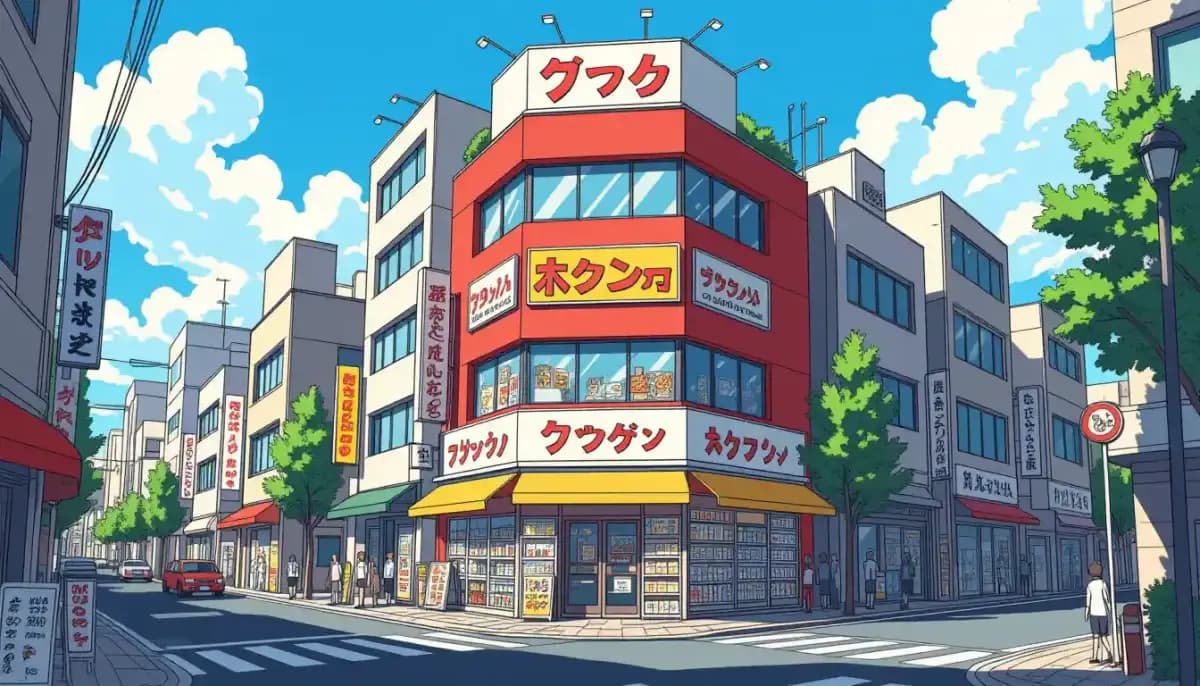
Complete guide to investing in Japan mixed-use buildings as a foreigner. Covers yields, financing, due diligence, taxes, and the buying process for retail-residential properties.
Japan Mixed-Use Building Investment Guide: Everything Foreign Investors Need to Know
Mixed-use buildings in Japan offer a compelling investment opportunity that combines commercial and residential income streams under one roof. For foreign investors, these properties represent a unique way to participate in Japan's booming real estate market while diversifying risk across multiple tenant types. Whether you're looking at a small shophouse with an apartment upstairs in Osaka or a modern urban complex with retail on the ground floor and offices above, this guide covers what you need to know before making your move.
Japan's real estate market has never been more attractive to international buyers. Foreign investment in Japanese real estate reached $10.2 billion in 2024, with foreigners now accounting for 27% of all property transactions — up from 21% five years ago. Within this growing trend, mixed-use buildings stand out as particularly resilient assets, offering multiple income sources and the kind of stability that single-use commercial or residential properties often can't match.
What Is a Mixed-Use Building in Japan?
A mixed-use building (複合用途建物, fukugo yōto tatemono) combines two or more property uses within a single structure. In Japan, the most common configurations are:
- Retail + Residential: Ground-floor shops with apartments above (extremely common in older neighborhoods)
- Office + Residential: Lower floors as office space, upper floors as condominiums
- Retail + Office + Residential: A full stack combining all three use types
- Hotel + Commercial: Increasingly popular in tourist-heavy cities like Kyoto and Osaka
The appeal for investors lies in income diversification. If retail tenants struggle during an economic downturn, residential rents often remain stable. If residential vacancy rises in a particular area, commercial tenants tied to foot traffic may continue paying reliably.
According to the Japan Real Estate Institute, properties near major mixed-use developments see property values rise by approximately 20% on average — a premium reflecting the amenity value and economic vitality these buildings bring to surrounding areas.
Why Mixed-Use Buildings Appeal to Foreign Investors
Japan's commercial real estate sector is uniquely accessible to foreigners. Unlike many countries, Japan imposes no legal restrictions on foreign ownership of real estate, including commercial and mixed-use buildings. You simply need to notify the Ministry of Finance within 20 days of purchase — a straightforward administrative requirement, not a barrier.
Several factors make mixed-use buildings particularly attractive right now:
Favorable currency dynamics: The yen depreciated approximately 35% against the USD between 1994 and 2024. For dollar, euro, or Australian dollar-holding investors, Japanese assets are meaningfully cheaper in real terms than a decade ago.
Strong occupancy rates: Tokyo's commercial occupancy rate sits at 96.6% as of 2025, with commercial land prices rising 11.8% year-over-year. These figures reflect a fundamentally undersupplied urban real estate market.
World-class retail market: Japan has the world's second-largest retail market, valued at over $1.3 trillion. The commercial tenants populating mixed-use ground floors operate in one of the most developed retail ecosystems on the planet.
Simpler management than pure commercial: As Plaza Homes explains in their commercial investment guide, ground-floor commercial units in mixed-use buildings can often be purchased and managed similarly to residential properties — far simpler than owning a standalone shopping center that requires staff, utilities management, and security.
For foreigners new to Japan property, mixed-use buildings offer a middle path: more yield potential than a simple condo, but less operational complexity than a full commercial building.
Rental Yields and Return Expectations
Understanding realistic returns is critical before committing capital. Mixed-use building yields in Japan vary significantly by location and asset type:
| Location | Residential Yield | Commercial Yield | Mixed-Use Blended Estimate |
|---|---|---|---|
| Tokyo (central) | 3.0–3.5% | 3.5–4.5% | 3.5–4.5% |
| Osaka | 4.0–5.5% | 4.0–5.5% | 4.0–5.5% |
| Fukuoka | 4.5–5.5% | 4.5–5.5% | 4.72–5.5% |
| Sapporo | 5.0–6.0% | 4.5–5.5% | 5.0–6.0% |
| Secondary cities | 5.5–8.0% | 5.0–7.0% | 5.5–8.0% |
These yields represent gross returns. After accounting for property tax (1.4% + 0.3% city planning tax), management fees, maintenance reserves, and vacancy periods, net yields typically run 1–2 percentage points lower.
The key advantage of mixed-use is yield blending. A building with commercial tenants on floors 1–2 and residential on floors 3–6 might achieve a higher blended yield than either property type alone, especially if commercial tenants sign longer leases (common in Japan's business leasing culture).
Financing Mixed-Use Buildings as a Foreign Investor
Financing is where most foreign investors encounter their biggest hurdle. Japanese banks traditionally require permanent residency for standard mortgage products. Non-residents typically face:
- Minimum 30% down payment (often 40–50% in practice for mixed-use commercial assets)
- Higher interest rates than resident borrowers
- Shorter loan terms (20 years rather than 35)
- Some banks may require a Japanese guarantor
Variable rate mortgages currently run 0.7–1.0%, while 10-year fixed rates are approximately 2.2%. For commercial-heavy mixed-use properties, rates can be higher, and some lenders categorize these under commercial loan products with stricter criteria.
Alternative financing routes that foreign investors use:
- Cash purchase: Avoids all financing complexity; many foreign investors in the ¥30–100M range pay cash
- Foreign bank loans: Some international banks with Japanese operations offer property-backed loans
- Seller financing: Rare but possible in private transactions, particularly for smaller buildings
- Japanese company structure: Some investors form a KK (株式会社) or GK (合同会社) to access business lending, though this adds setup costs
For comprehensive guidance on financing options, see our full guide on Financing Options for Commercial Property in Japan.
Due Diligence: What to Check Before Buying
Mixed-use buildings require more thorough due diligence than simple residential condos. Key areas to investigate:
Zoning verification: Japan's zoning laws (用途地域, yōto chiiki) dictate what uses are permitted in each area. Confirm the building's current uses are fully compliant with zoning. An illegally modified commercial space could create liability or forced conversion costs. See our guide on Japan Commercial Property Zoning Regulations for the full picture.
Existing tenant leases: Japan's commercial lease law (借地借家法, shakuchi shakka hō) strongly protects tenants. Review all existing leases carefully — lease terms, renewal conditions, and any special provisions. Long-term commercial tenants in Japan can be difficult to remove even for legitimate business reasons.
Building age and earthquake compliance: Buildings constructed before 1981 may not comply with Japan's modern earthquake standards (新耐震基準, shin taishin kijun). Post-1981 compliance is considered baseline; post-2000 compliance with the revised Building Standards Act is preferred. This affects both safety and future resale value.
Repair and maintenance history: Mixed-use buildings with aging infrastructure (plumbing, electrical, HVAC for commercial spaces) can require significant capital expenditure. Request full maintenance records and commission an independent building inspection.
Fire code compliance for commercial spaces: Commercial tenants trigger different fire safety requirements than purely residential buildings. Verify sprinkler systems, emergency exits, and fire compartmentalization meet current standards.
For a complete framework, refer to our Commercial Property Due Diligence in Japan guide.
The Buying Process: Step by Step
The acquisition process for a mixed-use building follows Japan's standard property purchase flow, but with additional commercial considerations:
- Market research and agent selection (1–2 months): Engage a licensed real estate agent (fudōsansha) with commercial experience. Tokyo-based agencies with English-speaking staff include firms like Ken Corporation, Plaza Homes, and Mitsui Fudosan Realty.
- Property shortlisting and inspection (2–4 weeks): Visit candidate properties, review rent rolls, inspect common areas and individual units/spaces.
- Letter of Intent and price negotiation (1–2 weeks): Submit a formal offer. Commercial negotiations in Japan are often less aggressive than Western markets — unreasonably low offers can offend sellers and stall negotiations.
- Due diligence period (2–4 weeks): Commission building inspection, legal review of title, lease review, and zoning verification.
- Sales contract signing (重要事項説明書, jūyō jikō setsumei-sho)**: The licensed agent must explain all material facts in writing before contracts are signed. Budget 1–2% of purchase price for legal and agent fees at this stage.
- Final settlement and registration (1–2 weeks): Pay the remaining purchase price; the judicial scrivener (shihō shoshi) registers the ownership transfer with the Legal Affairs Bureau.
Total timeline from initial search to possession: 5–9 months is typical.
Purchase costs beyond the property price include: registration tax (2% of estimated value), acquisition tax (3% residential, 4% commercial portions), stamp duty (¥10,000–¥480,000 depending on purchase price), and agent commission (3% + ¥60,000 + consumption tax).
Notable Mixed-Use Development Trends in Japan
Japan's major developers are investing heavily in large-scale mixed-use urban projects that are reshaping neighborhoods and creating investment opportunities in their vicinity:
Tokyo Midtown Yaesu (completed March 2023): Connected directly to Tokyo Station, this development combines 4,000 m² office floors, 57 retail stores, a Bulgari Hotel, an elementary school, and an underground bus terminal — exemplifying Japan's approach to truly integrated urban development.
TOKYO TORCH / Torch Tower (completion 2027): Set to become Japan's tallest building at 390 meters, incorporating a 2,000-seat cultural hall, residential units, an eco-designed hotel, and 5G-enabled coworking spaces. Properties within walking distance are already seeing price appreciation.
Azabudai Hills (opened November 2023): Developed by Mori Building, this project includes over 24,000 m² of green space, the British School in Tokyo, wellness facilities, and retail — targeting premium international residents and tenants.
These major developments signal where Japan's urban development policy is heading: toward high-density, multi-use complexes that combine live-work-play functions. Savvy investors are looking at smaller mixed-use buildings in the immediate surroundings of such mega-projects, anticipating continued value appreciation.
Tax Considerations for Foreign Investors
Owning a mixed-use building as a foreign investor creates specific tax obligations:
Ongoing taxes: Property tax (固定資産税) at 1.4% of assessed value plus city planning tax (都市計画税) at 0.3% annually. Commercial portions are assessed differently than residential — generally at higher assessed values.
Rental income tax: Foreign non-residents pay withholding tax on Japanese-source rental income. The standard withholding rate is 20.42%. Japan has tax treaties with many countries that may reduce this rate; consult a Japanese tax accountant (zeirishi) familiar with international tax.
Capital gains on sale: Non-residents face a 10.21% withholding tax on proceeds at the point of sale, with the buyer or their agent typically responsible for withholding. Long-term capital gains (property held over 5 years) may qualify for preferential treatment depending on your home country's tax treaty with Japan.
Consumption tax (JCT): Commercial leases are subject to 10% consumption tax; residential leases are exempt. In a mixed-use building, this creates a partial JCT recovery situation that a Japanese accountant can optimize.
For a complete breakdown, see our guide on Commercial Property Tax Differences in Japan.
Managing Your Investment Remotely
Most foreign investors in Japanese mixed-use buildings manage their properties remotely through professional property management companies. This is practical given Japan's developed property management industry and the cultural expectation of professional building management.
A typical property management contract covers:
- Tenant recruitment and screening
- Lease renewal negotiations
- Rent collection and remittance
- Maintenance coordination
- Financial reporting (monthly or quarterly)
Management fees for mixed-use buildings typically run 5–8% of gross rental income — higher than pure residential due to the complexity of managing commercial tenants alongside residential units.
Key considerations for remote management: ensure your management company has experience with both commercial and residential tenancies, can communicate in your language (or has English-speaking staff), and has a transparent system for maintenance approval and expenditure.
For more on this topic, see Managing Commercial Property in Japan as a Foreign Owner.
Getting Started: Resources for Foreign Investors
Building your knowledge base before making any purchase commitment is essential. Several resources can help:
- Living in Nihon covers the practical aspects of life and investment in Japan from an expat perspective
- For Work in Japan provides guidance for foreigners navigating Japanese systems including property and business
- Gaijin Buy House specializes in property purchase guidance for foreign buyers in Japan
- E-Housing's guide to Tokyo mixed-use developments provides detailed analysis of major urban projects
- NipponTradings' 2026 investment guide covers market statistics and financing in depth
For the legal framework, our Foreign Investor Guide to Commercial Property in Japan and Types of Commercial Property in Japan articles provide essential context.
Mixed-use building investment in Japan is not without complexity, but for patient, well-prepared foreign investors, it offers a compelling combination of yield, appreciation potential, and exposure to one of the world's most stable and sophisticated real estate markets. The key is doing thorough due diligence, understanding the legal and tax framework, and building a reliable local support team before committing capital.

Originally from Vietnam, living in Japan for 16+ years. Graduated from Nagoya University, with 11 years of professional experience at Japanese and international companies. Sharing information about buying property in Japan for foreigners.
View Profile →Related Articles
Japan Commercial Property Zoning Regulations Explained
Learn how Japan's 13 land use zones affect commercial property purchases. Understand FAR limits, permitted uses, environmental rules, and what foreign buyers need to know before investing.
Read more →
Financing Options for Commercial Property in Japan
Complete guide to financing commercial property in Japan as a foreigner. Learn about investment loan types, lender options, corporate structure routes, and eligibility requirements for expats and non-residents.
Read more →
Managing Commercial Property in Japan as a Foreign Owner
Complete guide to managing commercial property in Japan as a foreign owner. Covers legal requirements, property management, taxes, tenant relations, and overseas remittance tips.
Read more →
Commercial Property Due Diligence in Japan
Master commercial property due diligence in Japan with this complete guide for foreign investors. Covers title checks, seismic compliance, environmental assessments, lease review, tax costs, and regulatory obligations.
Read more →
Commercial Property Tax Differences in Japan
Learn how commercial property taxes in Japan differ from residential. Full guide covering acquisition tax (4% vs 3%), fixed asset tax, capital gains, and tips for foreign investors.
Read more →
Japan Commercial Property Lease Structure and Terms
Complete guide to Japan commercial property lease structure for foreign investors. Covers ordinary vs fixed-term leases, costs, deposits, tenant rights, and foreigner-specific requirements.
Read more →