
Japan Landlord-Tenant Law Explained for Foreign Property Owners

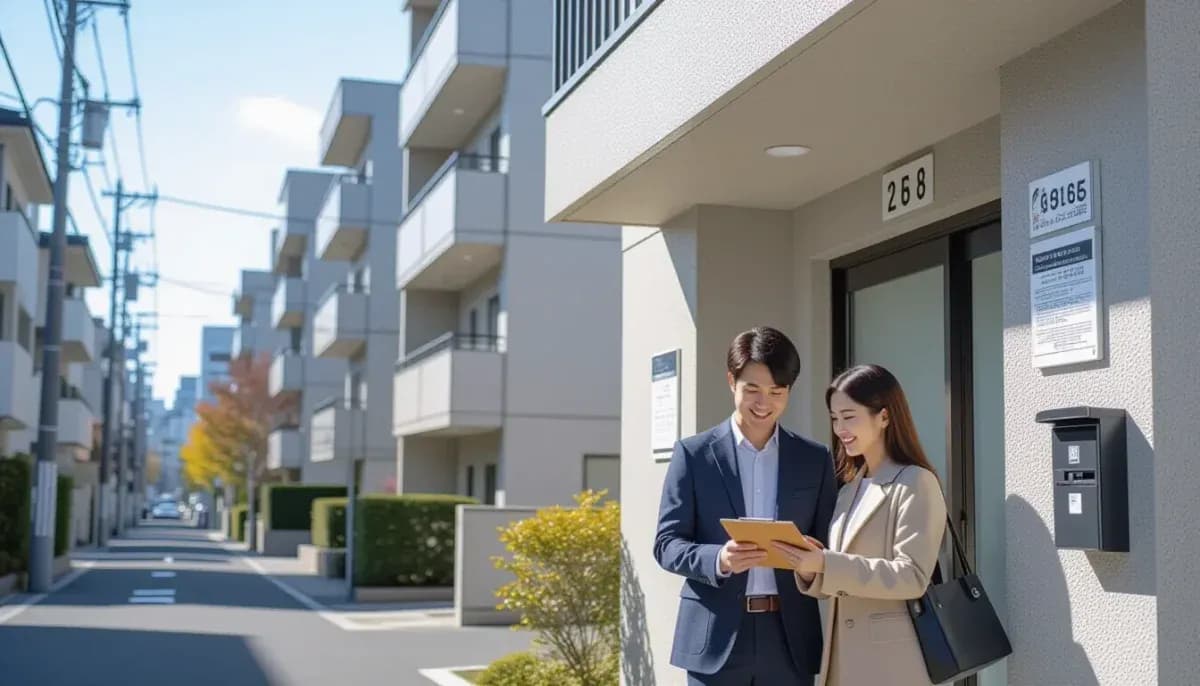
Complete guide to Japan landlord-tenant law for foreign property owners. Learn about lease types, deposit rules, eviction procedures, non-resident obligations, and how to manage rental property from abroad.
Japan Landlord-Tenant Law Explained for Foreign Property Owners
If you own rental property in Japan as a foreigner, understanding the legal framework that governs landlord-tenant relationships is not optional — it is essential. Japan's rental laws are among the most tenant-protective in the developed world, and unfamiliarity with these rules can leave foreign landlords exposed to significant financial and legal risk. This guide breaks down everything you need to know about Japan landlord-tenant law, from lease types and deposit rules to eviction procedures and your obligations as a non-resident property owner.
For a broader overview of owning property in Japan, see our guide on property taxes and annual costs in Japan.
The Legal Framework: Act on Land and Building Leases
Japan's landlord-tenant relationships are primarily governed by the Act on Land and Building Leases (借地借家法, ALBL), enacted in 1991, supplemented by the Civil Code. The ALBL is widely recognized as strongly pro-tenant. Its core principles are:
- Tenants cannot be forced out without "just cause" (正当事由, seito jiyu). A landlord who wants to refuse lease renewal or reclaim possession must demonstrate a compelling reason — for example, that they need the property for their own use. Financial motivations alone are not sufficient.
- Tenants can exit with one month's notice and no stated reason, at any time.
- Rent increases must be reasonable and grounded in market conditions or property improvements. A landlord cannot raise rent unilaterally; tenants have the legal right to challenge increases through mediation or the courts.
This asymmetry surprises many foreign investors. Unlike markets in the US, UK, or Australia where landlords retain significant control over their assets, Japanese property owners who choose to rent out must accept that their tenants have strong legal protections that courts will enforce.
For more on the legal side of property ownership in Japan, see legal procedures and documentation for Japan property purchase.
Ordinary Lease vs. Fixed-Term Lease: Which Should You Use?
The single most important decision you will make as a landlord is which type of lease contract to use. The two options have fundamentally different implications for your ability to manage and eventually reclaim your property.
| Feature | Ordinary Lease (普通借家契約) | Fixed-Term Lease (定期借家契約) |
|---|---|---|
| Standard term | 2 years | Flexible (6 months to 10+ years) |
| Auto-renewal | Yes — very difficult to stop | No — lease ends at expiration |
| Landlord's right to refuse renewal | Only with "just cause" | None needed — lease simply ends |
| Tenant's right to exit early | Yes, with 1 month's notice | Conditional on lease terms |
| Market prevalence (Tokyo) | ~70% | ~30% and growing |
| Best for | Long-term stable income | Landlords wanting future flexibility |
For most foreign property owners, the fixed-term lease (定期借家契約) is the safer choice. It eliminates the legal ambiguity around renewal refusals and gives you a clear date on which the property will be vacated — essential if you plan to sell, return to Japan, or make major renovations in the future.
The ordinary lease is simpler to explain to tenants and may attract a broader pool of applicants, but once a tenant is established under an ordinary lease, removing them without their cooperation can take years.
Living in Nihon's detailed rental contract guide covers the fine print of both contract types in depth, including the clauses that catch foreign landlords off guard.
Security Deposits, Key Money, and Restoration Costs
Japan's deposit system (敷金, shikikin) is tightly regulated by Ministry of Land, Infrastructure, Transport and Tourism (MLIT) guidelines. Here is what the law requires:
What you can deduct from the deposit:
- Damage caused by the tenant's negligence, deliberate acts, or failure to maintain the property
- Cleaning costs if the tenant left the unit in an abnormal state of filth
What you cannot deduct:
- Normal wear-and-tear (通常損耗, tsujo sonmo) — scuffs, minor scratches, faded floors from sunlight
- Age-related deterioration — aging appliances, discolored grout, yellowing walls
- Wallpaper replacement, unless the tenant caused specific damage beyond normal use
Depreciation matters. MLIT guidelines assign a 6-year depreciation life to wallpaper and carpet. If a tenant lived in your unit for six years or more, their financial liability for wall restoration is close to zero, even if the wallpaper looks terrible. This is a legally recognized principle, and courts consistently uphold it.
The National Consumer Affairs Center receives approximately 13,000–14,000 deposit dispute complaints per year, representing roughly 40% of all rental complaints. Most disputes arise because landlords attempt to charge tenants for costs the law assigns to the landlord. As a foreign owner unfamiliar with these norms, working with a professional property manager who follows MLIT guidelines is strongly recommended.
Key money (礼金, reikin) — a non-refundable payment made by incoming tenants — has declined significantly in major cities but still exists in some markets. Key money goes to the landlord and is not subject to refund rules.
Eviction: The Process, the Timeline, and the Risks
Eviction in Japan is a serious legal undertaking. Self-help eviction — changing locks, removing a tenant's belongings, cutting off utilities — is illegal and exposes the landlord to civil and potentially criminal liability. Every eviction must proceed through the courts.
Grounds for eviction under Japanese law:
- Non-payment of rent (typically 3+ consecutive months)
- Unauthorized subletting
- Significant damage to the property
- Use of the property for illegal activities
- Unauthorized occupants (e.g., a subtenant the landlord never approved)
Typical eviction timeline:
- Written demand and negotiation: 1–2 months
- Filing for mediation (調停): 1–3 months (optional but required before some court actions)
- Court proceedings (unlawful detainer action): 3–6 months
- Enforcement of court order: 1–2 months
- Total: 6–12+ months in contested cases
Modern tenancies typically involve a rent guarantee company (家賃保証会社, yachin hosho gaisha). These companies act as co-signers and, crucially, compensate the landlord for unpaid rent (up to a cap) while simultaneously pursuing the tenant for recovery. They have also largely replaced the traditional personal guarantor (連帯保証人) system that once made it difficult for foreigners to rent at all.
For foreign landlords managing from abroad, using a rent guarantee company is not just standard practice — it is essential risk management. If your tenant stops paying rent and you are in another country, you need a local entity that can act quickly on your behalf.
See Japan Today's guide on eviction rights for tenant-side perspective, which is useful for understanding how courts interpret landlord obligations.
Non-Resident Foreign Property Owner Obligations
Owning rental property in Japan as a non-resident comes with specific legal obligations that were tightened significantly in April 2024 under reforms to the Real Estate Registration Act.
What you must do:
| Obligation | Details |
|---|---|
| Register a domestic contact person | Name and address must appear in the property registry |
| Appoint a tax agent (納税管理人) | Required to handle tax filings on your behalf |
| Withholding tax on rental income | Tenants or management companies must withhold 20.42% from rent payments to non-residents |
| Annual property tax (固定資産税) | Owed regardless of residency status, typically 1.4% of assessed value |
| Income tax filing | Annual filing required in Japan; foreign tax credits may apply in your home country |
The 20.42% withholding tax on rent is the rule that surprises non-residents most. If you have a Japanese management company collecting rent on your behalf, they should handle this withholding automatically. If you have a direct relationship with your tenant, the tenant is legally responsible for withholding this amount before remitting rent to you overseas. Failure to withhold creates tax liability for the tenant, not just the landlord — which means many tenants will refuse to rent directly from non-resident foreigners without a management intermediary.
For context on the full tax picture of owning property in Japan, see property taxes and annual costs in Japan and hidden costs and fees when buying property in Japan.
For Work in Japan's guide on housing and infrastructure covers the administrative side of property management in Japan for foreigners in practical terms.
Finding a Property Manager for Foreign-Owned Properties
Managing a rental property from overseas without local support is extraordinarily difficult. Beyond language barriers, there are practical challenges unique to foreign ownership:
- Anti-money laundering (AML) compliance: Japanese banks face increasing scrutiny for international remittances, and some property management firms are not set up to handle the documentation requirements for sending rent proceeds to foreign accounts.
- Tax agent coordination: A management company that handles the 20.42% withholding and files on your behalf saves significant complexity.
- Emergency response: Plumbing failures, noise complaints, and tenant disputes need local handling. Remote management is not viable for anything beyond minimal involvement.
What to look for in a property manager:
- Experience with non-resident foreign owner clients (ask directly)
- Multilingual staff or dedicated foreign owner services
- Clear process for remitting net proceeds to overseas accounts
- In-house or affiliated tax agent services
- Use of standard MLIT-compliant lease agreements and deposit procedures
Gaijin Buy House's analysis of renting vs. selling when leaving Japan is a useful read for foreign owners weighing the ongoing management burden against the alternative of selling.
Dispute Resolution and Tenant Mediation
Japan has a well-developed system for resolving landlord-tenant disputes outside of full court proceedings:
- Prefectural rental housing consultation offices (賃貸住宅トラブル防止ガイドライン相談窗口): Free consultation services available in every prefecture, often with interpreter access
- Consumer Affairs Center (国民生活センター): Handles deposit and move-out disputes; receives ~13,000–14,000 rental complaints per year
- Civil mediation (民事調停): Faster and cheaper than full litigation; court-supervised negotiation that produces enforceable agreements
For non-residents, the practical challenge of dispute resolution is that physical presence in Japan may be required for some proceedings. A well-drafted power of attorney in favor of your tax agent or property manager can authorize them to represent you in mediation.
According to Brookings research on Japan's rental housing market, Japan's rental market has distinctive structural features — including the large proportion of individually owned rental units (85% of private rentals) and the high national vacancy rate (13.6%, rising to 18.5% for rental housing) — that reflect the complexity of the legal framework deterring landlords from active management.
Practical Checklist for Foreign Landlords in Japan
Before renting out your Japanese property, verify you have addressed the following:
- [ ] Decided on fixed-term vs. ordinary lease contract
- [ ] Appointed a qualified tax agent (納税管理人) registered with tax authorities
- [ ] Registered a domestic contact person in the property registry
- [ ] Arranged for a licensed real estate agent to draft and manage the lease
- [ ] Confirmed the property manager's process for 20.42% withholding on rent
- [ ] Set up a Japanese bank account or confirmed overseas remittance process
- [ ] Understood deposit rules and MLIT guidelines for move-out restoration
- [ ] Enrolled with a rent guarantee company (家賃保証会社)
- [ ] Established a local point of contact for tenant emergencies
If you are still in the process of buying property in Japan, see our complete guides to buying property in Tokyo as a foreigner and mortgages and home loans for foreigners in Japan.
Conclusion
Japan's landlord-tenant law is sophisticated, tenant-protective, and demands careful attention from foreign property owners. The key takeaways are:
- Choose your lease type deliberately — the fixed-term lease gives you future flexibility that ordinary leases do not.
- Follow MLIT deposit guidelines strictly — attempting to over-charge tenants on move-out is the single most common source of legal disputes.
- Never attempt self-help eviction — it is illegal and will make a bad situation significantly worse.
- Comply with non-resident owner obligations — the April 2024 registry reforms have real teeth.
- Use a professional property manager — the complexities of remote management make local professional support essential, not optional.
Japan remains an attractive market for foreign property investors, but success depends on understanding and respecting the legal framework. With the right professional support and a clear understanding of these rules, foreign ownership of rental property in Japan is entirely achievable.

Originally from Vietnam, living in Japan for 16+ years. Graduated from Nagoya University, with 11 years of professional experience at Japanese and international companies. Sharing information about buying property in Japan for foreigners.
View Profile →Related Articles

Japan Rental Market Trends and Forecast for Investors
Comprehensive analysis of Japan rental market trends for foreign investors: occupancy rates, rental yields by city, 2025-2026 forecasts, and investment strategies for foreign landlords.
Read more →
Insurance Guide for Rental Property Owners in Japan
Complete insurance guide for rental property owners in Japan. Learn about fire insurance, earthquake coverage, landlord liability, and how to protect your investment as a foreign landlord.
Read more →
Share House Investment in Japan: Opportunity and Guide
Learn how to invest in Japanese share houses as a foreigner. Covers yields (4–6% net), legal framework, buying process, management, and key risks — with 2025 market data.
Read more →
Corporate Rental Demand in Japan: A Strategy for Investors
Discover how corporate rental demand in Japan creates stable, high-yield investment opportunities. Learn where demand concentrates, realistic yields, and how to attract corporate tenants.
Read more →
Rental Property Maintenance Obligations for Japan Landlords
A complete guide to landlord maintenance obligations in Japan, covering the Civil Code, Genjyo Kaifuku rules, tenant vs landlord responsibilities, and practical tips for foreign property owners.
Read more →
Japan Rental Property Vacancy Rate Analysis by Area
Comprehensive analysis of Japan's rental property vacancy rates by region. Compare Tokyo's 3% vacancy vs rural Japan's 21%. Essential data for foreign renters and investors in 2025.
Read more →