
Types of Commercial Property in Japan: Office, Retail and More

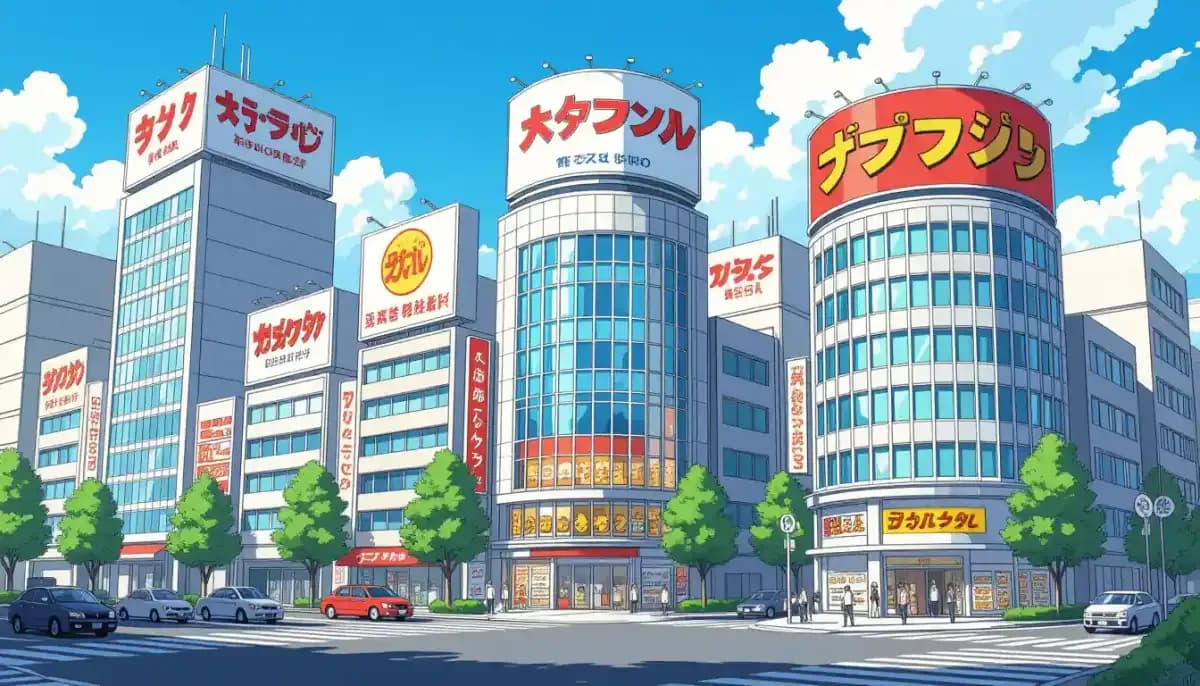
Explore the main types of commercial property in Japan — office buildings, retail shops, warehouses, hotels and mixed-use developments — and what foreigners need to know before investing.
Types of Commercial Property in Japan: Office, Retail and More
Japan's commercial real estate market is one of the most dynamic and resilient in Asia. Whether you are a foreign investor seeking stable returns, an entrepreneur searching for business premises, or simply trying to understand how Japan's property landscape works, knowing the different types of commercial property available is an essential first step. From gleaming Grade A office towers in Tokyo's business districts to neighborhood retail shops and cutting-edge logistics centers, Japan offers a diverse range of commercial assets — and foreigners can legally own most of them.
This guide covers every major category of commercial property in Japan, explains how each type works, and highlights what foreign buyers should know before entering the market.
Overview of Japan's Commercial Real Estate Market
Japan's commercial real estate sector is vast and globally significant. The market reached USD 25.21 billion in 2024 and is projected to grow to USD 40.68 billion by 2033, representing a compound annual growth rate (CAGR) of approximately 4.9%. Investment activity has been particularly strong in recent years: commercial real estate investment volume hit a new quarterly record of JPY 2.092 trillion in Q3 2025, a 68% year-on-year increase.
Foreign investors have taken notice. Cross-border investment surged 45% in the first half of 2023, driven by Japan's stable economy, relatively low interest rates compared to Western markets, and a weakened yen that made assets more affordable for overseas buyers. Industrial and logistics properties alone attract roughly 40% of all foreign real estate investment, with offices and hotels also drawing significant capital.
For an introduction to the broader property market in Japan and what foreigners can legally buy, see our Complete Guide to Buying Property in Japan as a Foreigner.
Office Properties
Office buildings represent the single largest category of commercial real estate in Japan. The Japan office market was estimated at USD 21.36 billion in 2025 and is expected to grow to USD 24.96 billion by 2030 at a CAGR of 3.17%.
Office Grades in Japan
Japanese office buildings are typically classified into three tiers:
| Grade | Description | Typical Tenant | Average Vacancy Rate |
|---|---|---|---|
| Grade A | Large-scale, premium buildings in prime locations | Major corporations, global firms | ~2.3% (Q1 2025) |
| Grade B | Mid-size, well-maintained buildings | SMEs, regional companies | 5–10% |
| Grade C | Older or smaller buildings, secondary locations | Startups, small businesses | 10%+ |
Grade A office vacancy in Tokyo fell to just 2.3% in Q1 2025 — the tightest figure in four years — reflecting strong demand from both domestic companies expanding operations and multinational firms establishing or growing their Japan presence. Office investment volume surged 58% year-on-year in Q1 2025.
Key Office Districts
Tokyo's primary office clusters include Marunouchi/Otemachi (Japan's most prestigious business address), Shinjuku, Shibuya, Minato (Toranomon/Roppongi), and the emerging Toranomon Hills area. Osaka's business core centers on Umeda, Honmachi, and Namba, while Nagoya focuses on Meieki and Fushimi.
For investors or business owners, smaller office buildings and strata-titled office suites can be purchased outright. Larger single-tenant towers are generally held by institutional investors or J-REITs.
Retail Properties
Japan maintains the world's second-largest retail market, valued at over USD 1.3 trillion. Retail real estate spans an enormous range of formats, from ultra-luxury flagship stores to neighborhood convenience shops.
Types of Retail Property
Street-Level Shops (路面店, Romen-ten) Ground-floor units in mixed-use buildings are the most accessible retail asset for individual investors. They can be purchased and leased much like residential units, require minimal on-site management, and offer portfolio diversification at lower price points than whole shopping centers.
Department Stores (百貨店, Hyakkaten) Iconic to Japan's retail culture, department stores occupy prime real estate in major train station areas. Ownership of these large-format assets is typically held by the operating company itself.
Shopping Centers and Malls Suburban and urban shopping centers differ from street-level shops in a critical way: owning an entire shopping center means operating the infrastructure — utilities, security, cleaning, and tenant coordination. This is a business operation, not passive real estate investment.
Convenience Store Units (コンビニ物件) Japan's roughly 55,000 convenience stores are often operated on long-term lease agreements. Owning a building with a convenience store tenant provides highly stable, creditworthy rental income.
Restaurant and F&B Spaces Food and beverage tenants occupy a large share of Japan's commercial floor space. Key locations near stations or in entertainment districts command premium rents.
Major shopping districts like Ginza, Omotesando, and Shibuya in Tokyo attract luxury brands and international retailers, while 35% of Asian tourists cite shopping as their primary reason for visiting Japan — a fact that supports long-term retail demand.
For a broader look at property types available to foreigners, see our guide on Types of Properties Available in Japan.
Industrial and Logistics Properties
The rapid growth of e-commerce in Japan has made industrial and logistics real estate one of the hottest sectors. Modern fulfillment centers, last-mile delivery hubs, and temperature-controlled warehouses are in strong demand from major logistics operators like Yamato, Sagawa, and Amazon Japan.
Types of Industrial Property
- Distribution Centers / Fulfillment Centers: Large-scale automated facilities near major highways or ports (common in Greater Tokyo, Osaka, and Nagoya)
- Warehouses: Traditional storage facilities; older stock being renovated or redeveloped
- Factories and Manufacturing Plants: Owner-occupied or leased industrial premises
- Cold Chain Facilities: Temperature-controlled storage for food and pharmaceutical products
- Last-Mile Delivery Depots: Smaller urban logistics points serving dense residential areas
Industrial and logistics properties are particularly attractive to foreign investors because of long lease terms (often 3–5 years with renewal options), creditworthy tenants (major logistics companies), and the tailwind from e-commerce growth. Acquiring and redeveloping older properties on larger land parcels near transport hubs is a popular value-add strategy.
Hotel and Hospitality Properties
Japan's tourism boom — with international visitor numbers recovering strongly post-pandemic — has made hospitality real estate a compelling investment category. Kyoto, Osaka, Tokyo, and Okinawa all offer strong occupancy fundamentals.
Types of Hospitality Property
- Luxury Hotels: High-barrier-to-entry assets; examples include JW Marriott Nara and Park Hyatt Tokyo
- Business Hotels (ビジネスホテル): Mid-scale, high-occupancy urban hotels catering to domestic business travelers
- Ryokan (旅館): Traditional Japanese inns, increasingly sought by lifestyle investors and boutique operators
- Capsule Hotels: Compact, low-cost accommodations popular in urban entertainment districts
- Serviced Apartments and Aparthotels: Hybrid residential-hospitality products appealing to medium-term corporate travelers
- Minpaku (民泊) / Short-Stay Rentals: Registered short-term rental units (Airbnb-style); subject to the Minpaku Law
Hotel investment volume in Japan increased significantly in 2025, buoyed by record inbound tourism and a structural shortage of quality accommodation in secondary cities.
For information on short-term rental regulations and investment, see our guide on Visa and Residency Considerations for Property Buyers in Japan.
Mixed-Use Developments
Mixed-use properties combine two or more uses — typically office, retail, and residential — within a single structure or complex. They have become increasingly common in Japan's major urban redevelopment projects.
Examples include the Mori Hills complex in Roppongi, the Toranomon Hills development, and numerous station-area redevelopment projects (ekimae saikai) across Japan. Mori Trust alone has announced plans to invest JPY 1.2 trillion in commercial real estate by 2031.
For investors, mixed-use buildings can offer diversified income streams: retail tenants on lower floors, office occupants in the middle, and residential or serviced apartment units higher up. Individual units within these buildings are sometimes available for strata-title purchase.
Can Foreigners Buy Commercial Property in Japan?
The short answer is yes. Japan imposes no legal restrictions on foreign ownership of land or commercial buildings. Foreigners acquire commercial property under the same legal framework as Japanese citizens. Key points include:
- No requirement for Japanese residency or visa to own property
- Purchase process and title registration follow the same procedures as residential property (see our Step-by-Step Home Buying Process guide)
- Commercial mortgages from Japanese banks are possible but typically require more documentation for non-residents
- Property taxes (固定資産税, Kotei Shisan-zei) and urban planning taxes apply to commercial property just as they do to residential (see our Property Taxes and Annual Costs guide)
For a detailed breakdown of all fees and hidden costs involved in a commercial purchase, see our Hidden Costs and Fees guide.
For further reading on property investment in Japan, Plaza Homes offers an overview of commercial and retail investment for foreigners, and E-Housing provides a commercial real estate overview for Tokyo.
For guidance on living in Japan as a foreigner and related property matters, Living in Nihon's property buying guide is a useful resource. If you are relocating for work and considering commercial or office space in Japan, For Work in Japan covers employment and business setup topics. For foreigners specifically exploring real estate investment, Gaijin Buy House's investment guide provides additional context.
Summary: Choosing the Right Commercial Property Type
| Property Type | Risk Level | Typical Yield | Best For |
|---|---|---|---|
| Grade A Office | Low–Medium | 3–4% | Institutional investors |
| Street-Level Retail | Medium | 4–6% | Individual investors |
| Convenience Store Unit | Low | 4–5% | Passive income seekers |
| Logistics/Warehouse | Low–Medium | 4–5.5% | Growth-oriented investors |
| Business Hotel | Medium | 5–7% | Active investors |
| Ryokan/Boutique Hotel | Medium–High | Variable | Lifestyle investors |
| Mixed-Use Building | Medium | 4–6% | Diversification seekers |
Japan's commercial property market rewards investors who take the time to understand its nuances: the differences between building grades, the legal distinctions between strata-title and whole-building ownership, and the regional dynamics between Tokyo, Osaka, and secondary cities. Whether your interest is a single street-level shop or a multi-floor office building, Japan offers genuine opportunity — and foreigners are fully welcome to participate.
For the next step in your investment journey, explore our Japan Real Estate Market Overview and Trends and our guide on Legal Procedures and Documentation for Japan Property Purchase.

Originally from Vietnam, living in Japan for 16+ years. Graduated from Nagoya University, with 11 years of professional experience at Japanese and international companies. Sharing information about buying property in Japan for foreigners.
View Profile →Related Articles
Japan Commercial Property Zoning Regulations Explained
Learn how Japan's 13 land use zones affect commercial property purchases. Understand FAR limits, permitted uses, environmental rules, and what foreign buyers need to know before investing.
Read more →
Financing Options for Commercial Property in Japan
Complete guide to financing commercial property in Japan as a foreigner. Learn about investment loan types, lender options, corporate structure routes, and eligibility requirements for expats and non-residents.
Read more →
Managing Commercial Property in Japan as a Foreign Owner
Complete guide to managing commercial property in Japan as a foreign owner. Covers legal requirements, property management, taxes, tenant relations, and overseas remittance tips.
Read more →
Commercial Property Due Diligence in Japan
Master commercial property due diligence in Japan with this complete guide for foreign investors. Covers title checks, seismic compliance, environmental assessments, lease review, tax costs, and regulatory obligations.
Read more →
Japan Mixed-Use Building Investment Guide
Complete guide to investing in Japan mixed-use buildings as a foreigner. Covers yields, financing, due diligence, taxes, and the buying process for retail-residential properties.
Read more →
Commercial Property Tax Differences in Japan
Learn how commercial property taxes in Japan differ from residential. Full guide covering acquisition tax (4% vs 3%), fixed asset tax, capital gains, and tips for foreign investors.
Read more →