
Tokyo Property Investment Yield Analysis by Area

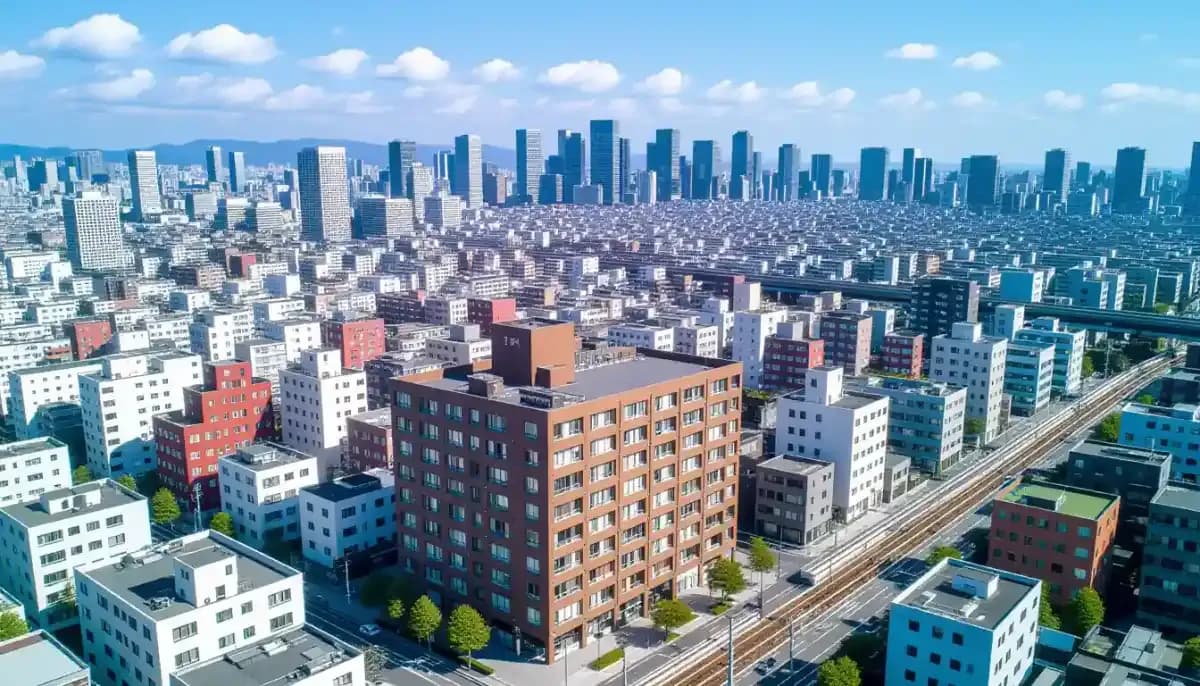
Compare rental yields across Tokyo's 23 wards. Eastern wards like Edogawa (5.17%) and Adachi (5.03%) deliver the highest returns, while Minato and Shibuya yield 3–3.6%. Full area-by-area breakdown for foreign investors.
Tokyo Property Investment Yield Analysis by Area: A Complete Guide for Foreign Investors
Tokyo real estate has long attracted foreign investors seeking stable returns, strong occupancy rates, and freehold ownership rights in one of the world's most dynamic cities. But not all areas of Tokyo are created equal when it comes to rental yields. Understanding how yields vary by ward — from the high-performing eastern districts to the prestigious but lower-yielding central neighborhoods — is essential before committing capital.
This guide breaks down Tokyo property investment yields by area, helping you identify where the numbers work best for your investment strategy.
Understanding Rental Yields in Tokyo
Before diving into ward-by-ward analysis, it's important to understand what the numbers mean. Gross rental yield is calculated as annual rent divided by purchase price. Net yield subtracts all ownership costs — management fees, property tax, repairs, and vacancy.
In Tokyo, the citywide gross rental yield average sits at approximately 3.8% (as of early 2026), with a range of 3.3% to 4.6% depending on ward and property type. Net yields typically run 1.0–1.5 percentage points below gross, averaging around 2.6% after all costs.
What makes Tokyo uniquely attractive despite these moderate yields is its occupancy rate: Tokyo's 23 wards consistently maintain occupancy rates of 96.1%–96.6%, meaning vacancy risk is extremely low. Coupled with year-on-year rent growth of +7.99% (Q2 2025) for newly listed units, the income stability is hard to find elsewhere.
For foreign investors, there are no legal restrictions on purchasing freehold property in Japan — both the land and building can be owned outright. For a full overview of legal rights, see our guide on Can Foreigners Buy Property in Japan?.
The Eastern Wards: Highest Yields in Tokyo
The eastern wards of Tokyo — collectively known as 城東 (Jōtō) — consistently deliver the highest rental yields in the city. These areas feature more affordable property prices relative to rent levels, creating better income ratios for investors.
Edogawa Ward tops the yield ranking with an average gross yield of 5.17%, followed closely by Adachi Ward at 5.03% and Katsushika Ward at 4.84%. These wards are served by major rail lines (including the Joban, Keisei, and Musashino lines), providing solid tenant demand from workers commuting to central Tokyo.
In Adachi Ward specifically, older properties (20+ years) can deliver ROI figures approaching 6.7% gross, as purchase prices are significantly lower for aging stock while rents remain competitive. Katsushika Ward's price per square meter ranges from ¥380,000 to ¥550,000 — a fraction of what you'd pay in Minato or Shibuya.
Key micro-locations to research in the eastern zone:
- Kita-Senju (Adachi): Major transit hub with strong rental demand
- Kanamachi (Katsushika): Quieter residential area with solid yields
- Kamata (Ota): Good transport links and active rental market
For investors willing to look beyond the central postcode, these wards offer compelling risk-adjusted returns.
Central and Premium Wards: Lower Yields, Higher Capital Appreciation Potential
The central wards — Minato, Shibuya, Chiyoda, and Shinjuku — attract premium prices that compress rental yields significantly.
Minato Ward (home to Roppongi, Azabu, and Shirokane) delivers gross yields of just 3.0%–3.6%, with price per square meter often exceeding ¥2,000,000. Similarly, Shibuya Ward yields sit at 3.2%–3.8%, and Chiyoda Ward can fall as low as 2.8%–3.5% gross.
However, this yield compression comes with trade-offs worth considering:
- Capital appreciation potential is highest in premium central wards
- Tenant quality and occupancy stability tend to be excellent
- Liquidity is higher — premium properties in desirable areas sell faster
- Foreign buyer demand is strongest here (foreign buyers represent 20%–40% of new apartment purchases in key luxury wards as of 2025)
Shinjuku Ward is an interesting outlier among central wards — its yield of 4.75% for 10-year-old properties (rising to 5.3% for 20-year-old stock) makes it one of the more attractive central options. Its vast transit connections and mix of residential and commercial use drive solid rental demand.
Ward-by-Ward Yield Comparison Table
Here is a comprehensive breakdown of rental yields across Tokyo's key wards:
| Ward | Gross Yield Range | Price/sqm Range | Area Type | Notes |
|---|---|---|---|---|
| Edogawa | 4.8%–5.5% | ¥300,000–¥500,000 | Eastern | Top yield ward overall |
| Adachi | 5.0%–6.0% | ¥280,000–¥480,000 | Eastern | Older stock can hit 6.7% |
| Katsushika | 5.0%–5.8% | ¥380,000–¥550,000 | Eastern | Quieter residential feel |
| Itabashi | 4.3%–4.7% | ¥400,000–¥650,000 | Northern | Good family rental demand |
| Arakawa | 4.2%–4.8% | ¥420,000–¥680,000 | Eastern | Near Nippori, solid links |
| Koto | 4.2%–4.8% | ¥500,000–¥800,000 | Eastern | Bayside regeneration area |
| Sumida | 4.0%–4.5% | ¥480,000–¥750,000 | Eastern | Asakusa area appeal |
| Setagaya | 3.5%–4.4% | ¥700,000–¥1,100,000 | Southern | Large, diverse ward |
| Shinjuku | 4.5%–5.3% | ¥795,000–¥1,175,000 | Central | Best-yielding central ward |
| Shibuya | 3.2%–3.8% | ¥1,200,000–¥1,800,000 | Central/West | Premium, low yield |
| Minato | 3.0%–3.6% | ¥1,500,000–¥2,500,000 | Central | Luxury, lowest yields |
| Chiyoda | 2.8%–3.5% | ¥1,400,000–¥2,200,000 | Central | Mostly commercial/govt |
Data represents typical gross yields for existing properties. Yields for new construction are generally lower due to higher purchase prices.
Property Type and Its Impact on Yield
Beyond location, the type and size of property dramatically affects yield:
Studios and 1K apartments (under 30 sqm) consistently deliver the highest yields, typically 4.0%–5.5% gross. Rent per square meter does not scale linearly with unit size — a studio commands high rent relative to its floor area, pushing yields up. These units also appeal to Tokyo's large single-occupant population and are easiest to keep tenanted.
1LDK and 2LDK apartments (30–60 sqm) yield 3.0%–4.0% gross — solid middle-ground options that attract longer-term tenants, including couples and young families.
Family-sized units (2LDK/3LDK) typically yield only 2.8%–3.5% gross as purchase prices scale faster than achievable rents in the family segment.
For maximum yield, smaller units in eastern wards represent the clear sweet spot. For capital preservation with lower yield, larger units in western or central wards are more appropriate.
The property age also matters: older buildings (20+ years post-earthquake code revision in 1981) can offer significantly higher yields as purchase prices are discounted. Always verify compliance with the 1981 new seismic standard (新耐震基準) when considering older stock. Learn more about property types and their characteristics in our Complete Guide to Types of Properties in Japan.
Cost Structure: From Gross to Net Yield
Calculating gross yield is only the starting point. To understand real returns, account for these recurring ownership costs:
- Condo management fees (管理費): Approximately ¥25,000/month for a typical apartment
- Repair reserve fund (修繕積立金): ¥5,000–¥15,000/month, can increase significantly in older buildings
- Property tax (固定資産税): ¥50,000–¥150,000/year depending on assessed value
- Property management fee: 3%–5% of monthly rent (if using an agent)
- Building service charges: 7%–8% of rent approximately
- Vacancy/rental income tax: 20%–30% national and local income tax on rental profits (deductions available)
A property generating 5% gross yield in Adachi Ward might net out at 3.0%–3.5% after all costs — still meaningfully above the citywide average and well above comparable real estate returns in most major global cities.
For a full breakdown of ownership costs, see our dedicated article on Property Taxes and Annual Costs in Japan.
Financing and Mortgage Considerations for Foreign Investors
Accessing Japanese mortgages without permanent residency is the biggest practical hurdle for foreign buyers. Most major Japanese banks require PR status, though some regional banks and specialized lenders offer products to long-term visa holders.
Cash buyers sidestep this issue entirely, and the absence of leverage actually simplifies yield calculations. For those who can access financing, leveraged returns on net equity can be substantially higher than the unlevered gross figures quoted above.
Our comprehensive guide to Mortgages and Home Loans for Foreigners in Japan covers available options, typical LTV ratios, and strategies for buyers without PR.
Short-Term vs. Long-Term Rental Strategies
Some investors consider short-term rentals (民泊, minpaku) to boost yields, particularly in tourist-heavy wards like Shinjuku, Taito (Asakusa), and Sumida. However, ward-level regulations are strict:
- Shinjuku Ward: Short-term rentals only permitted Friday–Monday in residential zones
- Most residential wards: Effectively restrict minpaku to 180 nights/year
- Central commercial zones: More permissive but require registration
For foreign investors managing remotely, long-term residential leasing (普通借家契約 or 定期借家契約) is far simpler to manage and delivers predictable, stable income. With Tokyo's vacancy rate at 3.5% and occupancy above 96%, long-term tenants are not difficult to attract.
Getting Started: Next Steps for Foreign Investors
If you're ready to explore Tokyo property investment, here are the recommended steps:
- Understand your legal standing: Review our guide on buying property in Tokyo as a foreigner for a complete area breakdown.
- Clarify visa and residency impact: Your residency status affects financing options. See Visa and Residency Considerations for Property Buyers.
- Budget for hidden costs: Transaction costs in Japan typically add 6%–8% to purchase price. Review our Hidden Costs and Fees guide.
- Engage a bilingual buyer's agent: Essential for navigating Japanese-language contracts and negotiation.
For broader context on the Japanese property market, the team at Living in Nihon provides useful resources for expats navigating life and property in Japan. For work-visa holders considering property investment alongside their career in Japan, For Work in Japan covers visa and employment considerations that affect your buyer profile. Additionally, Gaijin Buy House is a community resource specifically focused on foreigners purchasing property in Japan.
For detailed ward-by-ward yield data, E-Housing's rental yield analysis provides a comprehensive ward comparison, while Bamboo Routes' Tokyo yield guide offers regularly updated average figures across property types.
Key Takeaways:
- Eastern wards (Edogawa, Adachi, Katsushika) deliver the highest yields: 5%–6%+ gross
- Central premium wards (Minato, Shibuya) yield 3%–3.6% but offer capital appreciation potential
- Studios/1K units outperform larger apartments on yield in all wards
- Net yields run ~1.0–1.5% below gross after all ownership costs
- Tokyo's 96%+ occupancy rate makes it one of the world's most stable rental markets
- No restrictions on foreign freehold property ownership in Japan

Originally from Vietnam, living in Japan for 16+ years. Graduated from Nagoya University, with 11 years of professional experience at Japanese and international companies. Sharing information about buying property in Japan for foreigners.
View Profile →Related Articles

Tokyo Expat Neighborhoods and International Community Guide
A complete guide to the best Tokyo neighborhoods for expats and foreigners. Compare Minato, Shibuya, Shinjuku and more with rent costs, community info, and practical tips for living in Tokyo.
Read more →
Tokyo Waterfront and Bay Area Property Guide
Complete guide to buying property in Tokyo's waterfront and bay area for foreigners. Covers Toyosu, Kachidoki, Ariake, prices, legal rights, financing, and investment tips.
Read more →
How Train Station Proximity Affects Tokyo Property Value
Discover how walking distance to train stations drives Tokyo property prices. Learn the 10-minute rule, price tiers, Yamanote Line data, and key insights for foreign buyers investing in Tokyo real estate.
Read more →
Tokyo New Construction and Development Projects Guide
Complete guide to Tokyo's major new construction and development projects for foreign buyers in 2025. Covers Azabudai Hills, Takanawa Gateway, Blue Front Shibaura, investment zones, prices, and the buying process for expats.
Read more →
Tokyo Suburbs: Affordable Property Options for Foreign Buyers
Discover the most affordable Tokyo suburbs for foreign property buyers in 2025. Compare prices in Nakano, Edogawa, Kichijoji, and more — with buying tips for foreigners.
Read more →
Setagaya Ward Property Guide for Foreign Families
Complete guide to buying property in Setagaya Ward Tokyo as a foreigner. Neighborhoods, prices, schools, mortgage options, and practical tips for foreign families relocating to Setagaya.
Read more →