
How Train Station Proximity Affects Tokyo Property Value

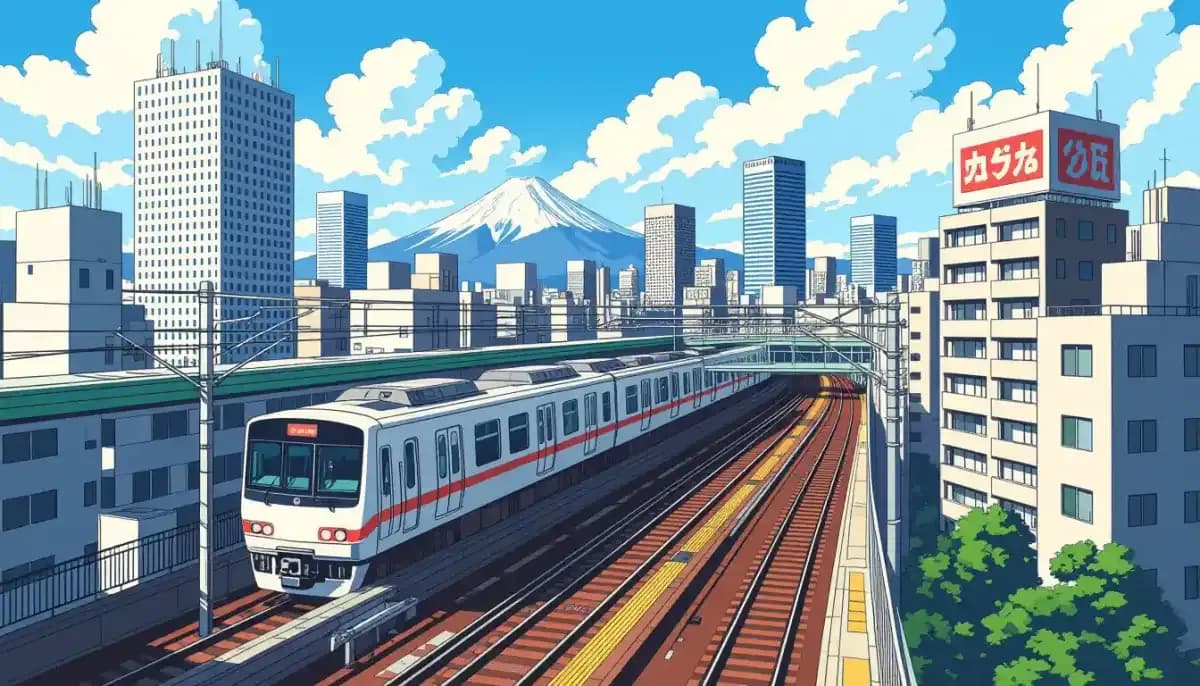
Discover how walking distance to train stations drives Tokyo property prices. Learn the 10-minute rule, price tiers, Yamanote Line data, and key insights for foreign buyers investing in Tokyo real estate.
How Train Station Proximity Affects Tokyo Property Value
When buying property in Tokyo, few factors matter more than how close you are to the nearest train station. Unlike most cities where car ownership is the norm, Tokyo runs on rail — and the consequences for property prices are dramatic, measurable, and remarkably consistent across decades of data. Whether you're purchasing a studio apartment as an investment or a family home for long-term residence, understanding the station proximity premium is essential to making a sound decision.
This guide breaks down exactly how walking distance to a station affects property values in Tokyo, which lines and stations command the highest premiums, and what the data says about optimal positioning for both buyers and investors.
The 10-Minute Rule: Japan's Most Important Property Benchmark
In Japan, "eki chika" (駅近, literally "near the station") is one of the most powerful selling points in any property listing. The benchmark that separates convenient from inconvenient is consistent across the country: 10 minutes walking distance.
Properties listed as within 10 minutes of a station are considered desirable. Beyond that threshold, buyer interest drops sharply, and so do prices. This isn't just anecdotal — research consistently shows that rents decrease by approximately 2.3% for each additional minute of walking time to the nearest train station.
The effect is even more pronounced at the premium end. Properties within a 5-minute walk of a major station command significant price premiums over those at 8–10 minutes. Buyers and tenants in Tokyo are acutely aware of these differences, and real estate listings always prominently display walking time to the station.
It's also worth noting that perceived difficulty matters, not just distance. A "12-minute walk uphill" is valued substantially worse than an "8-minute walk flat" — Tokyo buyers and tenants factor in gradient, street complexity, and weather comfort when evaluating walkability.
Walking Distance Tiers and Price Impacts
Not all "near station" properties are equal. Tokyo's market has effectively segmented into distinct tiers based on walking time:
| Walking Time | Category | Price Effect | Occupancy |
|---|---|---|---|
| 1–5 minutes | Premium zone | Highest prices, fastest sales | Near 100% for small units |
| 5–10 minutes | Standard convenient | Market baseline prices | 90–95% typical |
| 10–15 minutes | Borderline | 5–15% price discount | Can struggle in downturns |
| 15–20 minutes | Inconvenient | 15–30%+ below nearby market | Higher vacancy risk |
| 20+ minutes | Very inconvenient | Severe discount needed | Frequent vacancy issues |
A real-world example illustrates the risk of the lower tiers: a Fukuoka property marketed as a "9–10 minute walk" that turned out to be 17–19 minutes on foot received zero viewing inquiries for three months, accumulated a 28% building-wide vacancy rate, and ultimately required severe rent cuts before finally attracting tenants. The same dynamic plays out across Tokyo's outer wards with alarming consistency.
For investors specifically, the station proximity rule is almost non-negotiable for small 1R (studio) units. Buildings with studios within 5 minutes of a station historically achieve close to 100% occupancy — the highest of any property type. Move those same units 15 minutes from the station and occupancy can fall to 70–80%, dramatically affecting returns.
Price Spreads Along the Yamanote Line
Tokyo's JR Yamanote Line — the famous loop connecting all of central Tokyo's major hubs — provides the clearest illustration of how station identity and line quality drive prices. Data from Suumo (Japan's largest property portal) analyzed by Time Out Tokyo shows:
| Station | Solo Unit Price (20–50 sqm) | Family Unit Price (50–80 sqm) |
|---|---|---|
| Shimbashi | ¥64.8M | ¥118M |
| Ebisu | ~¥60M | ~¥110M |
| Meguro | ~¥58M | ~¥108M |
| Shibuya | ~¥57M | ~¥105M |
| Nippori | ¥28.7M | ¥48.8M |
| Tabata | ~¥31M | ~¥53M |
| Uguisudani | ~¥32M | ~¥55M |
| Nishi Nippori | ~¥33M | ¥48.8M |
The spread is staggering: 126% price difference for solo units and 142% for family units — all along a single loop line, meaning every station has essentially equal access to central Tokyo by rail. The price differences reflect the character of the neighborhood around each station, proximity to employment centers, and the prestige of the surrounding area, not travel time.
The takeaway for buyers: which station you're near matters as much as whether you're near a station. Being 3 minutes from Nippori and 12 minutes from Shimbashi are both "near a Yamanote station" — but they represent completely different markets.
Line Quality and Multi-Line Access Premiums
Beyond the Yamanote Line, Tokyo's property market reflects a clear hierarchy of rail lines. Properties along premium lines retain higher values even when located further from central Tokyo. In contrast, properties served only by less-connected local lines face more limited demand.
Key factors that boost station-proximity premiums further:
Multiple line access: Stations served by two or more lines command significantly higher property values than comparable single-line stations. Access to multiple destinations without transfers is highly valued in Tokyo's commuter culture.
Express vs. local stops: Express train stops allow faster access to major hubs and command higher premiums than local-only stops on the same line. On some lines, the difference between an express stop and a local stop can add 5–10% to property values.
Line prestige: The Ginza, Marunouchi, Hibiya, and Den-en-toshi Lines all carry prestige associations that push values higher along their routes. The Yamanote Line's stations are typically the most expensive in any given area, followed by Tokyo Metro lines, then Toei Subway, then suburban private railways.
Transfer hub status: Major transfer hubs (Shinjuku, Shibuya, Ikebukuro, Tokyo, Ueno) elevate surrounding property values beyond what proximity alone would explain — access to the entire network from a single station is an irreplaceable convenience that buyers pay to have.
For more detail on how Tokyo's different areas compare for foreign buyers, see our complete Tokyo area buying guide.
Tokyo Land Price Trends and Station-Adjacent Growth (2025)
The broader backdrop for understanding station proximity effects is Tokyo's current property market trajectory. According to Japan's Ministry of Land, Infrastructure, Transport and Tourism:
- Tokyo land prices rose 7.7% overall in 2025 — the 13th consecutive year of growth
- The 23 wards saw residential prices increase 8.3% on average
- Commercial land in the central 5 wards (Minato, Chuo, Shibuya, Chiyoda, Shinjuku) increased 14.8%
- The area near Iidabashi and Ichigaya stations saw residential prices rise 15.9% in a single year
Ward-level pricing data shows a clear concentric pattern anchored by station density:
| Ward | Price per sqm (USD, approx.) | Primary Station |
|---|---|---|
| Minato | $9,996 | Roppongi, Azabu-Juban, Tamachi |
| Chiyoda | $9,436 | Tokyo, Yurakucho, Nagatacho |
| Shibuya | $9,212 | Shibuya, Harajuku, Daikanyama |
| Chuo | $8,386 | Tokyo, Ginza, Nihonbashi |
| Meguro | $7,798 | Meguro, Nakameguro |
| Adachi | $3,598 | Kita-Senju, Ayase |
| Katsushika | $3,724 | Keisei lines |
| Edogawa | $3,822 | Nishi-Kasai, Funabori |
The pattern is unmistakable: high prices cluster around the densest station hubs, and price gradient tracks transportation access almost perfectly. This is not coincidence — it reflects decades of urban development built around rail networks.
For a broader view of Japanese property market dynamics, Gaijin Buy House's Tokyo real estate guide provides comprehensive analysis for foreign buyers navigating this market.
New Infrastructure and Future Premiums
Infrastructure investment creates some of the most predictable property price opportunities in Tokyo. Historical data shows that:
- Announcement of new rail lines or stations: typically adds a 5–15% residential price premium in the affected area
- Completion/opening of new infrastructure: adds a further 5–10% as accessibility becomes tangible and confirmed
Current hot zones with station-linked price appreciation include:
Takanawa Gateway City (Minato Ward): Takanawa Gateway station opened in 2020 and its surrounding development is driving significant price appreciation in the Shinagawa area corridor.
Namboku Line extension: The planned extension (construction cost: ¥131 billion) is expected to boost values along its new corridor and relieve congestion on the Tozai Line by approximately 20% during peak hours.
Shibuya redevelopment corridor: Multiple station-adjacent mega-projects are transforming the area around Shibuya Station, with ripple effects spreading along the Den-en-toshi and Toyoko lines.
If you're looking at investment property specifically, understanding how to evaluate these opportunity zones is critical. Our guide to Japan's real estate market overview and trends covers how to assess infrastructure-driven appreciation opportunities.
Practical Implications for Foreign Buyers
For foreigners purchasing in Tokyo, the station proximity rule has several practical implications:
Budget planning: Expect to pay a significant premium for genuine eki chika properties in desirable neighborhoods. A studio within 5 minutes of Shibuya Station and one 15 minutes away are fundamentally different investments, and the price gap reflects that reality.
Verifying listings: Always physically walk the route from the property to the station at normal speed. Plaza Homes research on distance from station documents how listing discrepancies can seriously damage investment returns. Japanese real estate listings calculate walking time using a government formula (80 meters per minute on flat ground), which may not account for slopes, traffic signals, or difficult intersections. The Fukuoka case study above is a warning: a discrepancy of just 7–9 minutes is enough to turn a profitable rental into a money pit.
Long-term liquidity: Properties with poor station access are significantly harder to sell. In a market downturn, eki chika properties retain value and find buyers first; remote properties can sit unsold for years. For foreign buyers who may eventually return home, this liquidity consideration is crucial.
Rental investment: If buying for rental income, the 5-minute premium zone for small studios is the safest position. Near-100% occupancy in that category means predictable cash flow. The rental market for station-adjacent small units in Tokyo's 23 wards has shown 6–8% annual rent growth in recent years.
For guidance on the full purchase process, Living in Nihon's guide to best areas in Tokyo for foreigners offers detailed area-by-area analysis that complements station-level research. You can also review the step-by-step home buying process in Japan to understand the full transaction from search to closing.
Academic research spanning 43,537 data points across 25 years (1997–2021) confirms what practitioners observe: distance to the nearest station carries a negative effect on land value in every single region of Tokyo across the entire study period. Furthermore, this penalty has been growing over time in western Tokyo — being far from a station is becoming a worse investment with each passing year.
For a comprehensive overview of Tokyo property purchasing as a foreigner, including which areas offer the best value near transit hubs, see our Tokyo area buying guide for foreigners. Additional background on property taxes and annual ownership costs and hidden fees in the buying process will help you build a complete financial picture before purchasing.
For Work in Japan's resources on living and working in Tokyo also provide helpful context on the commuting culture that makes train access so central to property decisions in this city.
Understanding train station proximity is not just one factor among many in Tokyo real estate — it is the foundational variable around which all other analysis is organized. Get the station access right, and almost everything else can be solved. Get it wrong, and even an otherwise excellent property can underperform for years.

Originally from Vietnam, living in Japan for 16+ years. Graduated from Nagoya University, with 11 years of professional experience at Japanese and international companies. Sharing information about buying property in Japan for foreigners.
View Profile →Related Articles
Tokyo Expat Neighborhoods and International Community Guide
A complete guide to the best Tokyo neighborhoods for expats and foreigners. Compare Minato, Shibuya, Shinjuku and more with rent costs, community info, and practical tips for living in Tokyo.
Read more →
Tokyo Waterfront and Bay Area Property Guide
Complete guide to buying property in Tokyo's waterfront and bay area for foreigners. Covers Toyosu, Kachidoki, Ariake, prices, legal rights, financing, and investment tips.
Read more →
Tokyo New Construction and Development Projects Guide
Complete guide to Tokyo's major new construction and development projects for foreign buyers in 2025. Covers Azabudai Hills, Takanawa Gateway, Blue Front Shibaura, investment zones, prices, and the buying process for expats.
Read more →
Tokyo Property Investment Yield Analysis by Area
Compare rental yields across Tokyo's 23 wards. Eastern wards like Edogawa (5.17%) and Adachi (5.03%) deliver the highest returns, while Minato and Shibuya yield 3–3.6%. Full area-by-area breakdown for foreign investors.
Read more →
Tokyo Suburbs: Affordable Property Options for Foreign Buyers
Discover the most affordable Tokyo suburbs for foreign property buyers in 2025. Compare prices in Nakano, Edogawa, Kichijoji, and more — with buying tips for foreigners.
Read more →
Setagaya Ward Property Guide for Foreign Families
Complete guide to buying property in Setagaya Ward Tokyo as a foreigner. Neighborhoods, prices, schools, mortgage options, and practical tips for foreign families relocating to Setagaya.
Read more →