
Tokyo Waterfront and Bay Area Property Guide

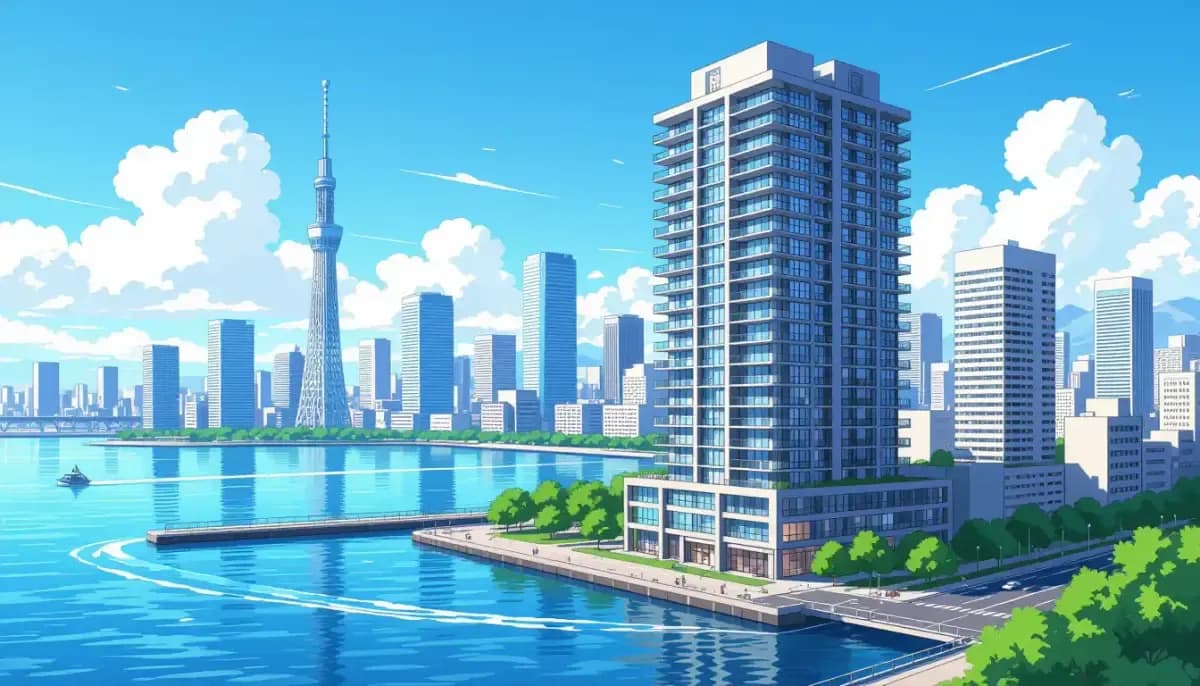
Complete guide to buying property in Tokyo's waterfront and bay area for foreigners. Covers Toyosu, Kachidoki, Ariake, prices, legal rights, financing, and investment tips.
Tokyo Waterfront and Bay Area Property Guide for Foreigners
Tokyo's waterfront districts offer some of the most exciting real estate opportunities in Japan for foreign buyers. Stretching along Tokyo Bay from Shinagawa in the west to Ariake and Odaiba in the east, the bay area combines modern high-rise living, stunning waterfront views, and convenient access to central Tokyo. Whether you're drawn by the panoramic skyline vistas, the spacious apartment layouts, or the vibrant new urban developments, the Tokyo bay area has something to offer every type of property buyer.
In this comprehensive guide, we'll walk you through everything you need to know about buying property in Tokyo's waterfront and bay area—from the key neighborhoods and current price trends to the practical steps for foreigners purchasing real estate in Japan.
Why the Tokyo Bay Area Appeals to Foreign Buyers
The Tokyo Bay Area has emerged as one of the most popular residential zones for expatriates and international investors. Unlike the dense, older neighborhoods of central Tokyo, the bay area is characterized by wide boulevards, abundant green spaces, and modern tower condominiums built to the latest earthquake-resistant standards.
Several factors make this zone particularly attractive to foreign buyers:
- Modern infrastructure: The entire bay area has been developed over the past 30–40 years on reclaimed land, meaning buildings, roads, and utilities are modern and well-maintained.
- Spacious floor plans: Waterfront condominiums typically offer larger floor plans than equivalent properties in Minato or Shibuya, often with open-concept layouts and floor-to-ceiling windows.
- Ocean views: Properties facing Tokyo Bay provide stunning views of the water, Rainbow Bridge, and the Odaiba skyline—a rarity in Japan's typically land-constrained cities.
- Affordability relative to central Tokyo: Prices in Koto Ward's bay area remain lower per square meter than in prime central wards like Minato or Chiyoda, though they have risen sharply in recent years.
- International community: Many tower condominiums in the bay area have multilingual management, international residents' associations, and proximity to international schools.
For a broader overview of buying property across Tokyo, see our Complete Guide to Buying Property in Tokyo as a Foreigner.
Key Waterfront Neighborhoods: What to Know
The Tokyo Bay Area encompasses several distinct neighborhoods, each with its own character and price point. Here is a breakdown of the most important areas:
Toyosu (豊洲)
Toyosu is the premier address in the bay area. Home to the Toyosu Market (the world's largest fish market), a massive shopping complex (LaLaport Toyosu), and dozens of luxury high-rise towers, Toyosu combines urban lifestyle amenities with a distinctly waterfront atmosphere. The Yurakucho Line connects Toyosu directly to central Tokyo in under 15 minutes.
Residential land prices near Toyosu's Rinkai Line have reached approximately ¥1,000,000 per square meter—the highest in Koto Ward—reflecting the area's status as a premier bayside destination.
Kachidoki and Harumi (勝どき・晴海)
Located on a small peninsula jutting into Tokyo Bay, Kachidoki and Harumi offer spectacular panoramic views. These areas saw major development following the 2020 Tokyo Olympics, when the Olympic Village at Harumi was converted into the massive Harumi Flag residential complex—one of the largest residential developments in Japanese history, with over 5,600 units.
Kachidoki is served by the Toei Oedo Line, making it accessible but slightly less connected than Toyosu. Property prices here are somewhat lower, making it attractive to buyers seeking value within the bay area.
Tsukishima and Tsukuda (月島・佃)
These two adjacent neighborhoods offer a unique blend of old and new. Tsukishima is famous for its traditional shopping street (Monja-yaki Street) while also hosting numerous modern tower condominiums. Tsukuda is one of the oldest surviving communities in Tokyo, with narrow lanes and traditional architecture alongside waterfront towers. Both neighborhoods sit on the Yurakucho Line and Toei Oedo Line.
Ariake and Shinonome (有明・東雲)
Ariake and Shinonome are newer developments in Koto Ward, featuring some of the most modern condominium towers in Tokyo. These areas are popular with young professional families who appreciate the spacious, well-planned urban environment. The Rinkai Line connects these neighborhoods to Osaki and Shinagawa, providing access to the Yamanote Line.
Odaiba and Daiba (お台場・台場)
Odaiba is primarily known as an entertainment and shopping destination (home to DiverCity Tokyo, teamLab Borderless, and the Fuji TV building), but it also has a growing residential population. Properties here tend to be on the higher end, and the area is served by the automated Yurikamome Line.
Shibaura and Konan (芝浦・港南)
These neighborhoods in Minato Ward sit at the western end of the bay area near Shinagawa Station—one of Tokyo's most important transit hubs with Shinkansen access and future Linear Chuo Shinkansen connections. Shibaura features a mix of converted industrial lofts and modern towers, while Konan is known for its ultra-luxury towers and waterfront promenades.
Tokyo Bay Area Property Prices: 2025 Overview
The bay area has seen significant price appreciation in recent years, driven by strong domestic and international demand.
| Neighborhood | Avg. Apartment Price Range | Land Price per m² | Key Train Lines |
|---|---|---|---|
| Toyosu | ¥80M – ¥150M | ~¥1,000,000 | Yurakucho Line, Yurikamome |
| Kachidoki / Harumi | ¥60M – ¥120M | ~¥700,000–¥900,000 | Toei Oedo Line |
| Tsukishima | ¥55M – ¥100M | ~¥800,000–¥950,000 | Yurakucho Line, Toei Oedo |
| Ariake / Shinonome | ¥50M – ¥90M | ~¥600,000–¥800,000 | Rinkai Line |
| Odaiba | ¥70M – ¥130M | ~¥700,000–¥900,000 | Yurikamome Line |
| Shibaura / Konan | ¥90M – ¥200M+ | ~¥900,000–¥1,200,000+ | Yamanote Line, Keihin-Tohoku |
Key 2025 market data:
- Koto Ward residential land prices rose 8.7% year-over-year in 2025, outpacing the Tokyo 23-ward average of 7.9%.
- Tokyo apartment prices overall surged approximately 13% from 2024 to 2025, reaching 202% of 2010 price levels.
- Tokyo ranked as the world's 2nd largest real estate investment market in 2024.
- Foreign ownership in ultra-luxury bay area towers (¥100M+) stands at approximately 29.9%.
For a comprehensive overview of market conditions across Japan, see our Japan Real Estate Market Overview and Trends.
Legal Rights for Foreign Buyers in the Bay Area
One of the most common questions from international buyers is whether foreigners can legally purchase waterfront property in Tokyo. The answer is straightforward: yes, with very few restrictions.
Japan imposes no nationality-based restrictions on property ownership. As a foreigner, you can purchase condominiums, houses, and land in Tokyo's bay area in your own name, regardless of your visa status or whether you currently reside in Japan.
However, there are some important caveats:
- As of July 1, 2025, large land transactions require disclosure of the buyer's nationality to the government for national security screening purposes. This applies primarily to land near sensitive facilities and does not typically affect standard condominium purchases.
- Purchasing property does not grant or extend your visa or residency status in Japan. If you intend to run a rental business from the property, you may need a Business Manager visa.
- Foreign Exchange Law requires notification within 20 days of contract execution for qualifying foreign investment transactions.
For a detailed breakdown of legal rights and restrictions, see our guide on whether foreigners can buy property in Japan.
You can also find excellent resources on the legal and procedural aspects of buying property at Living in Nihon's Property Buying Guide and Gaijin Buy House's Tokyo Real Estate Guide.
Financing: Getting a Mortgage for Bay Area Property
Financing is often the most challenging aspect of buying property in Tokyo's bay area for foreigners.
With Permanent Residency (PR): Foreigners with PR enjoy nearly identical mortgage access to Japanese citizens. You can apply at major banks (MUFG, SMBC, Mizuho), regional banks, and online lenders. Current rates are approximately 0.7% variable or 1.9% for a 35-year fixed mortgage (2024–2025 data).
Without Permanent Residency: Stricter conditions apply. Most lenders require:
- A Japanese spouse or guarantor
- 3+ years of continuous employment in Japan
- Stable documented income
- A down payment of 30% or more
Many foreign buyers without PR opt for cash purchases, particularly in the ¥50M–¥100M range. Foreign institutional investors and high-net-worth individuals frequently purchase bay area luxury units outright.
For detailed financing strategies, see our comprehensive guide to mortgages and home loans for foreigners in Japan.
For Work in Japan also provides guidance for working expats navigating the financing process at forworkinjapan.com.
Total Purchase Costs: What to Budget
Beyond the sticker price, buying property in Tokyo's bay area involves significant additional expenses. Budget approximately 10% of the purchase price in one-time fees:
| Cost Item | Typical Amount |
|---|---|
| Real estate agent commission | ~3% of purchase price + ¥60,000 + tax |
| Property registration tax | ~0.4% (registration) + ~1.5–3% (acquisition tax) |
| Stamp duty | ¥10,000–¥600,000 depending on price |
| Judicial scrivener fees | ¥100,000–¥200,000 |
| Building inspection fee | ¥50,000–¥100,000 |
| Fire insurance (mandatory with loans) | ¥50,000–¥200,000/year |
| Moving and setup costs | Variable |
Annual ongoing costs include:
- Property tax: approximately 1.4% of assessed value
- Urban planning tax: approximately 0.3% of assessed value
- Condominium management fee: typically ¥15,000–¥50,000/month depending on building
- Repair reserve fund: typically ¥5,000–¥30,000/month
For a complete breakdown, see our guide to hidden costs and fees when buying property in Japan and our property taxes and annual costs guide.
Investment Potential of Tokyo Waterfront Properties
Tokyo's bay area is not just a great place to live—it also offers strong investment fundamentals:
Rental demand: The waterfront zone attracts a steady flow of corporate expat tenants with generous housing allowances, particularly in the Shibaura/Konan area near Shinagawa. Rental yields in the bay area typically range from 3% to 5%, competitive by Tokyo standards.
Capital appreciation: Koto Ward's residential land prices rose 8.7% in 2025, and the long-term trajectory has been consistently upward since the Abenomics era. Areas like Toyosu and Ariake continue to benefit from large-scale urban redevelopment.
Infrastructure upgrades: The upcoming Linear Chuo Shinkansen station at Shinagawa (targeted for the 2030s) is expected to further boost western bay area values. Meanwhile, ongoing development of the Harumi Flag district and new commercial projects continue to add amenity value across the zone.
Liquidity: Bay area condominiums, particularly in established tower developments by major Japanese developers (Mitsui, Mitsubishi, Sumitomo Realty), are among the most liquid assets in the Tokyo property market due to strong secondary market activity.
Tips for Foreign Buyers Targeting the Bay Area
- Work with a bilingual agent: Many major Tokyo real estate agencies—including those catering specifically to expats—have offices or specialists covering the bay area. Ensure your agent is fluent in your language and familiar with the specific procedures for foreign buyers.
- Prioritize post-1981 (or post-2000) construction: Japan updated its building codes in 1981 (new seismic standards) and again in 2000. Properties built after 2000 offer the highest earthquake resilience and are preferred by both lenders and future buyers.
- Inspect the management company: In tower condominiums, the quality of the management company (管理組合, kanri kumiai) is crucial. Review the repair reserve fund balance, past meeting minutes, and any planned major works.
- Understand the reclaimed land risk: Much of the bay area sits on reclaimed land (埋立地, umetate chi), which carries a higher liquefaction risk in major earthquakes. This is a known and manageable risk—many buildings are engineered to address it—but it's worth discussing with your agent and reviewing the building's geological survey.
- Consider resale and rental potential: Some bay area locations, particularly Odaiba, have limited rail connectivity (the Yurikamome is automated and slow). Properties with direct subway access (Toyosu, Tsukishima, Kachidoki) tend to have stronger resale and rental demand.
- Register your address: Japan now requires domestic contact registration for foreign property purchasers. Work with a judicial scrivener (司法書士) to ensure all registrations are completed correctly.
For step-by-step guidance on the entire purchase process, see our Step-by-Step Home Buying Process for Foreigners in Japan.
Conclusion: Is Tokyo's Bay Area Right for You?
Tokyo's waterfront and bay area represents a compelling opportunity for foreign property buyers seeking modern, spacious living with strong investment fundamentals. The combination of stunning water views, world-class amenities, improving transport links, and steadily appreciating values makes this zone one of the most attractive real estate markets in Asia for international buyers.
Prices have risen significantly—especially in Toyosu and Shibaura—but relative to equivalent waterfront properties in cities like Singapore, Hong Kong, or Sydney, Tokyo's bay area still offers exceptional value. With Japan's continued openness to foreign property ownership and the ongoing development of the bay area's infrastructure, the long-term outlook remains positive.
Whether you're buying for personal use as a base in Japan, as a long-term investment, or as a rental income property, Tokyo's bay area deserves serious consideration. Take time to visit the neighborhoods in person, engage a reputable bilingual agent, and review the full legal and financial implications with professional advisors before making your purchase.
For more information on buying property across Japan, explore our Complete Guide to Buying Property in Japan as a Foreigner and our Legal Procedures and Documentation guide.
For additional resources on living and investing in Japan, visit Living in Nihon, Gaijin Buy House, and Plaza Homes Bay Area Guide.

Originally from Vietnam, living in Japan for 16+ years. Graduated from Nagoya University, with 11 years of professional experience at Japanese and international companies. Sharing information about buying property in Japan for foreigners.
View Profile →Related Articles
Tokyo Expat Neighborhoods and International Community Guide
A complete guide to the best Tokyo neighborhoods for expats and foreigners. Compare Minato, Shibuya, Shinjuku and more with rent costs, community info, and practical tips for living in Tokyo.
Read more →
How Train Station Proximity Affects Tokyo Property Value
Discover how walking distance to train stations drives Tokyo property prices. Learn the 10-minute rule, price tiers, Yamanote Line data, and key insights for foreign buyers investing in Tokyo real estate.
Read more →
Tokyo New Construction and Development Projects Guide
Complete guide to Tokyo's major new construction and development projects for foreign buyers in 2025. Covers Azabudai Hills, Takanawa Gateway, Blue Front Shibaura, investment zones, prices, and the buying process for expats.
Read more →
Tokyo Property Investment Yield Analysis by Area
Compare rental yields across Tokyo's 23 wards. Eastern wards like Edogawa (5.17%) and Adachi (5.03%) deliver the highest returns, while Minato and Shibuya yield 3–3.6%. Full area-by-area breakdown for foreign investors.
Read more →
Tokyo Suburbs: Affordable Property Options for Foreign Buyers
Discover the most affordable Tokyo suburbs for foreign property buyers in 2025. Compare prices in Nakano, Edogawa, Kichijoji, and more — with buying tips for foreigners.
Read more →
Setagaya Ward Property Guide for Foreign Families
Complete guide to buying property in Setagaya Ward Tokyo as a foreigner. Neighborhoods, prices, schools, mortgage options, and practical tips for foreign families relocating to Setagaya.
Read more →