
Renovation Permit and Building Code Requirements in Japan

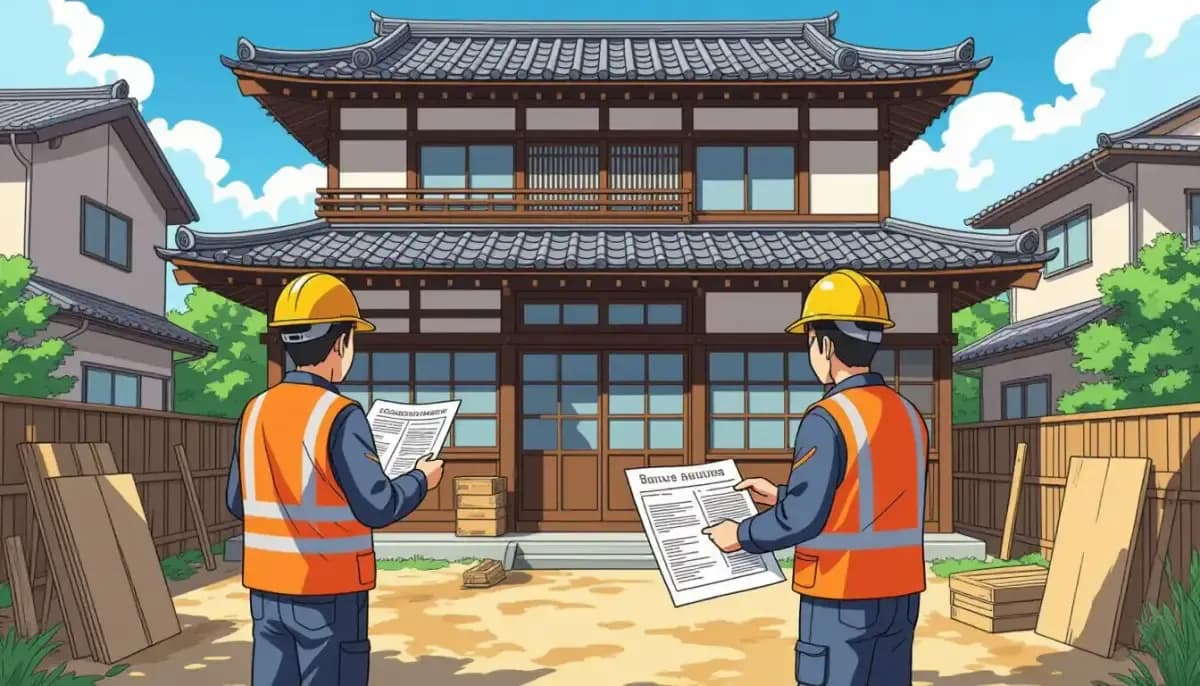
Everything foreign property owners need to know about Japan's renovation permit requirements and building codes, including 2025 amendments, permit costs, and how to apply as a foreigner.
Renovation Permit and Building Code Requirements in Japan
Renovating a property in Japan is an exciting prospect — whether you have purchased an akiya (vacant house), a downtown apartment, or a rural farmhouse. However, before swinging a hammer, foreign buyers need to understand Japan's renovation permit system and building code requirements. Japan's Building Standards Act (建築基準法, Kenchiku Kijunhō) governs what you can and cannot do, and recent 2025 amendments have significantly tightened the rules. This guide walks you through everything you need to know about obtaining permits, understanding building codes, and renovating safely and legally as a foreigner in Japan.
What Changed in April 2025: Key Building Code Amendments
The April 2025 amendments to Japan's Building Standards Act represent the most significant revision in decades. Understanding these changes is essential before planning any renovation project.
The End of the Category 4 Special Exception
Previously, wooden one- and two-story homes with a total floor area of 200 square meters or less were classified as "Category 4" buildings and largely exempt from building permit requirements for renovations. Homeowners could carry out substantial work without filing for a building confirmation. That exemption no longer exists.
As of April 2025, all two-story wooden buildings require a building permit regardless of their floor area. This change affects hundreds of thousands of akiya properties across Japan and is particularly relevant to foreign buyers seeking to renovate older rural homes.
New Energy Efficiency Standards
All renovations now must comply with updated energy conservation requirements:
- Thermal Insulation Performance Grade 4 (断熱等性能等級4) — minimum insulation standard
- Primary Energy Consumption Grade 4 (一次エネルギー消費量等級4) — energy efficiency minimum
- By 2030, these standards will be raised to ZEH (Zero Energy House) level
Enhanced Seismic and Structural Standards
Renovations affecting structural components must now meet stricter earthquake resistance criteria, with updated structural calculation requirements for wooden buildings.
For a detailed breakdown of how the 2025 changes affect your renovation plans, Heritage Homes Japan has an excellent overview.
When Do You Need a Renovation Permit in Japan?
Not every renovation requires a formal building permit, but the threshold is lower than many foreign buyers expect. Here is when a Building Confirmation Application (建築確認申請, Kenchiku Kakunin Shinsei) is required:
Structural Renovations Requiring a Building Permit
A permit is required when your renovation involves:
- More than 50% of principal structural components — walls, columns, floors, beams, roof, or stairs
- Any structural changes to a two-story or taller wooden building (post-April 2025)
- Extensions or additions that increase the total floor area
- Change of use that alters the building category (e.g., converting a warehouse to a residence)
- Demolition and rebuild of any portion of the structure
Work That Generally Does NOT Require a Permit
Minor renovations and cosmetic upgrades typically do not require a building permit:
- Interior repainting and wallpaper replacement
- Flooring replacement (tatami, wood, tile)
- Kitchen and bathroom fixture upgrades (without structural changes)
- Window replacement (same size, same location)
- Non-load-bearing partition wall changes
- Minor roof repairs (not full replacement)
The Gray Area: Notification Requirements
Some renovations fall into a middle category where a notification (todokede, 届出) must be submitted to local authorities without full permit approval. This often applies to partial structural repairs affecting under 50% of components. Your architect or contractor should clarify which category your project falls into.
Required Permits and Applications: A Complete List
Depending on the scope of your renovation, you may need one or more of the following permits:
| Permit Type | Japanese Name | When Required |
|---|---|---|
| Building Confirmation Application | 建築確認申請 | Structural changes, extensions, full rebuilds |
| Completion Inspection | 完了検査 | Mandatory after completing permitted work |
| Demolition Permit | 解体届 | Partial or full demolition |
| Renovation Notification | 大規模修繕届出 | Large-scale repairs under permit threshold |
| Electrical Work Permit | 電気工事許可 | Major electrical system upgrades |
| Plumbing Permit | 給排水工事届 | Major plumbing modifications |
| Cultural Property Approval | 文化財保護申請 | Heritage-designated buildings |
| Agricultural Land Conversion | 農地転用許可 | Converting farm buildings in agricultural zones |
For detailed guidance on the full property purchase and ownership process in Japan, see our Complete Guide to Buying Property in Japan as a Foreigner.
Understanding Japan's Building Standards Act
The Building Standards Act (建築基準法) is the cornerstone of Japan's construction regulation system. It establishes minimum standards for:
- Structural safety — earthquake resistance, load-bearing capacity
- Fire safety — fire-resistant materials, evacuation routes, fire alarms
- Sanitation — ventilation, natural lighting, plumbing
- Energy efficiency — insulation and primary energy consumption standards
- Urban planning compliance — setbacks, floor area ratios, coverage ratios
The 1981 Divide
A critical threshold in Japanese building history is 1981. In that year, Japan introduced the "New Earthquake Resistance Standards" (shinkitaishin kijun, 新耐震基準) following the 1978 Miyagi Earthquake. Buildings constructed before 1981 were built to the old (kyūkitaishin) standards and are far more likely to require seismic retrofitting when undergoing significant renovation.
If you are purchasing an older property, always check whether it was built before or after 1981. This single factor can dramatically affect the cost and complexity of your renovation. Read more about Legal Procedures and Documentation for Japan Property Purchases for what to check before buying.
Setback and Zoning Rules
Building codes also govern how close your renovated structure can be to property lines, roads, and neighboring buildings. Renovations that change the building's footprint must comply with:
- Setback distances from roads and boundaries
- Floor Area Ratio (FAR / 容積率) — the ratio of total floor area to land area
- Building Coverage Ratio (BCR / 建蔽率) — the ratio of building footprint to land area
- Height restrictions by zoning category
Understanding these restrictions is especially important in densely built areas such as Tokyo and Osaka, where many properties already sit at the maximum allowable coverage. For city-specific guidance, see our Buying Property in Tokyo as a Foreigner guide.
How to Apply for a Building Permit: Step-by-Step
The building permit application process in Japan follows a defined sequence. Here is what to expect:
Step 1: Hire a Licensed Architect
Under Japanese law, you cannot submit a Building Confirmation Application yourself unless you hold a Japanese architectural license. Homeowners must hire a registered architect (一級建築士 or 二級建築士) to prepare and submit the application on their behalf. This is non-negotiable for structural work.
Step 2: Prepare Architectural Drawings and Documentation
Your architect will prepare:
- Floor plans, elevation drawings, and structural diagrams
- Site plan showing setbacks and FAR/BCR compliance
- Structural calculation documents (for certain building types)
- Energy efficiency compliance documentation
Step 3: Submit to Building Confirmation Agency
Applications are submitted to either:
- The local government's building control department (建築主事)
- A designated private confirmation and inspection agency (指定確認検査機関)
Private agencies are often faster (2–4 weeks vs. up to 35 days for municipal offices for standard buildings).
Step 4: Receive the Building Confirmation Certificate
Once approved, you receive a Building Confirmation Certificate (確認済証). Work cannot legally begin until this document is in hand.
Step 5: Commence Construction
Your licensed contractor begins work following the approved plans. Any deviations from the approved plans require a design change application.
Step 6: Complete Inspection
Upon completion, a Completion Inspection (完了検査) is mandatory. A building official verifies that the work matches the approved plans. You receive a Completion Inspection Certificate (検査済証), which is critical for property resale.
For a broader picture of costs and budgeting, our guide on Hidden Costs and Fees When Buying Property in Japan covers what to expect at every stage.
Renovation Costs and Permit Fees in Japan
Planning your budget accurately is crucial. Here is a breakdown of typical costs:
| Cost Item | Typical Range | Notes |
|---|---|---|
| Building permit fee | ¥50,000–¥200,000 | Varies by scale; complex projects cost more |
| Architect fees | ¥300,000–¥1,500,000+ | Typically 10–15% of construction cost |
| Structural inspection | ¥50,000–¥150,000 | Recommended before any major renovation |
| Seismic retrofitting | ¥500,000–¥3,000,000+ | Highly variable by condition |
| Full akiya renovation | ¥3,000,000–¥15,000,000+ | Light to full renovation |
| Energy efficiency upgrades | ¥500,000–¥2,000,000 | Insulation, windows, HVAC |
| Asbestos/hazardous removal | ¥200,000–¥1,000,000+ | Required in pre-1989 buildings |
Government Subsidies for Renovation
Japan offers various subsidies to offset renovation costs, particularly for:
- Seismic retrofitting (耐震改修) — many municipalities subsidize up to 50%
- Energy efficiency upgrades — national and local programs available
- Akiya rehabilitation — some rural municipalities offer grants or low-interest loans
Check with your local municipal office (shiyakusho or yakuba) and the Ministry of Land, Infrastructure, Transport and Tourism (MLIT) for current programs.
Special Considerations for Foreigners Renovating in Japan
Foreign property owners face some unique challenges when navigating the renovation permit process:
Language Barriers
All permit applications must be submitted in Japanese. Architectural drawings, structural calculations, and compliance documents are Japanese-language documents. Hiring a bilingual architect or building consultant is strongly recommended. Some larger cities, including Tokyo and Osaka, have multilingual support at city hall, but rural municipalities rarely do.
Working with Japanese Contractors
Not all Japanese contractors are familiar with working with foreign clients, and miscommunication can lead to costly errors. When selecting a contractor:
- Request detailed written quotations (mitsumori, 見積書)
- Verify their contractor registration (kensetsugyō kyoka, 建設業許可)
- Confirm they hold appropriate trade licenses for electrical and plumbing work
- Ask for references from previous renovation projects
Rural Property Complications
Akiya and rural properties present additional regulatory layers:
- Agricultural land use zones — converting a farm building may require agricultural land conversion permits
- Non-rebuildable lots (再建築不可) — some older properties sit on lots that technically cannot be rebuilt under current road-access rules; renovations are permitted but rebuilding from scratch is not
- Quasi-urban and non-urban zones — different city planning zones carry different restrictions
For more on rural property opportunities and challenges, see Rural and Countryside Properties in Japan for Foreign Buyers.
What Happens If You Renovate Without a Permit?
Non-compliance with Japan's Building Standards Act carries serious consequences:
- Stop-work orders issued by building officials
- Mandatory demolition of unpermitted work
- Criminal penalties including fines and potential imprisonment
- Property value reduction — unpermitted work shows up in property records and deters future buyers
- Insurance invalidation — property insurance may be voided for unpermitted structures
- Difficulty selling — buyers and their banks will demand a Completion Inspection Certificate
As noted by Old Houses Japan, "proper adherence enhances safety, increases property value, unlocks municipal grants and subsidies, and preserves cultural heritage" — making compliance not just a legal obligation, but a financial advantage. Read their detailed guide to building codes for akiya renovations for practical tips on older properties.
Planning Your Renovation Timeline
Factor in permit processing time when scheduling your renovation:
| Phase | Estimated Duration |
|---|---|
| Pre-renovation inspection | 1–4 weeks |
| Architect consultation and planning | 2–8 weeks |
| Permit application preparation | 2–6 weeks |
| Permit review and approval | 2–5 weeks (private agency); up to 35 days (municipal) |
| Renovation work | 1–12+ months depending on scope |
| Completion inspection | 1–2 weeks |
| Total (small project) | 3–6 months |
| Total (full akiya renovation) | 6–18 months |
For advice on the overall property buying journey, the Step-by-Step Home Buying Process in Japan for Foreigners guide provides the full picture from purchase to move-in.
Useful Resources
For further reading and professional guidance on renovating in Japan:
- Living in Nihon: Buying Property and Mortgages in Japan — comprehensive resource for foreign buyers
- For Work in Japan: Housing and Living Guide for Foreigners — practical living and housing guidance
- Gaijin Buy House: Joint Property Ownership in Japan — property ownership structures for foreigners
- Relocate Japan: Complete Guide to 2025 Renovation Laws — detailed breakdown of recent legislative changes
- Old Houses Japan: Building Codes for Akiya Renovations — specialist guidance for vintage property renovation
Conclusion
Renovating property in Japan as a foreigner is absolutely achievable — thousands of international buyers successfully complete renovation projects every year. The key is understanding the regulatory framework before you buy and budgeting realistically for permit costs, professional fees, and the time required for approvals.
The 2025 amendments to the Building Standards Act mean the rules are stricter than they used to be, particularly for two-story wooden buildings that previously enjoyed exemptions. But with the right licensed architect, a reliable contractor, and a clear understanding of what your local municipality requires, you can transform a run-down property into a home that meets modern safety and efficiency standards while preserving the character that made you fall in love with it in the first place.
For a complete view of what it means to own property in Japan as a foreigner — including taxes, insurance, and ongoing costs — explore our Property Taxes and Annual Costs of Owning Property in Japan guide.

Originally from Vietnam, living in Japan for 16+ years. Graduated from Nagoya University, with 11 years of professional experience at Japanese and international companies. Sharing information about buying property in Japan for foreigners.
View Profile →Related Articles
Renovation Financing and Loan Options in Japan
Complete guide to renovation loan options in Japan for foreign property owners. Covers reform loans, combined purchase loans, Flat 35, government subsidies, and eligibility requirements for expats.
Read more →
Smart Home Technology Renovation in Japan
Complete guide to smart home technology renovation in Japan for foreign property owners. Covers devices, costs, PSE certification, electrical rules, and top brands like Panasonic, Google, and Amazon Alexa.
Read more →
Barrier-Free and Accessibility Renovation in Japan
Complete guide to barrier-free accessibility renovation in Japan for foreign homeowners. Learn about kaigo hoken subsidies up to ¥200,000, common modifications, 2025 building code changes, and how to qualify as a foreigner.
Read more →
DIY Home Improvement in Japan: Guide for Foreign Homeowners
Complete guide to DIY home improvement in Japan for foreign homeowners. Learn what projects you can do yourself, home center tips, renovation costs, government subsidies, and step-by-step project guides.
Read more →
Japan Renovation Timeline: How Long Do Projects Take?
Complete guide to Japan renovation timelines for foreign homeowners. Learn how long each phase takes—from planning and permits to construction and move-in—including 2025 building code changes.
Read more →
Renovating a Traditional Japanese House for Modern Living
Complete guide to renovating traditional Japanese houses (kominka, machiya, akiya) for modern living. Costs, subsidies, contractors, permits, and design tips for foreign owners in Japan.
Read more →