
Landslide Risk Assessment for Japan Property

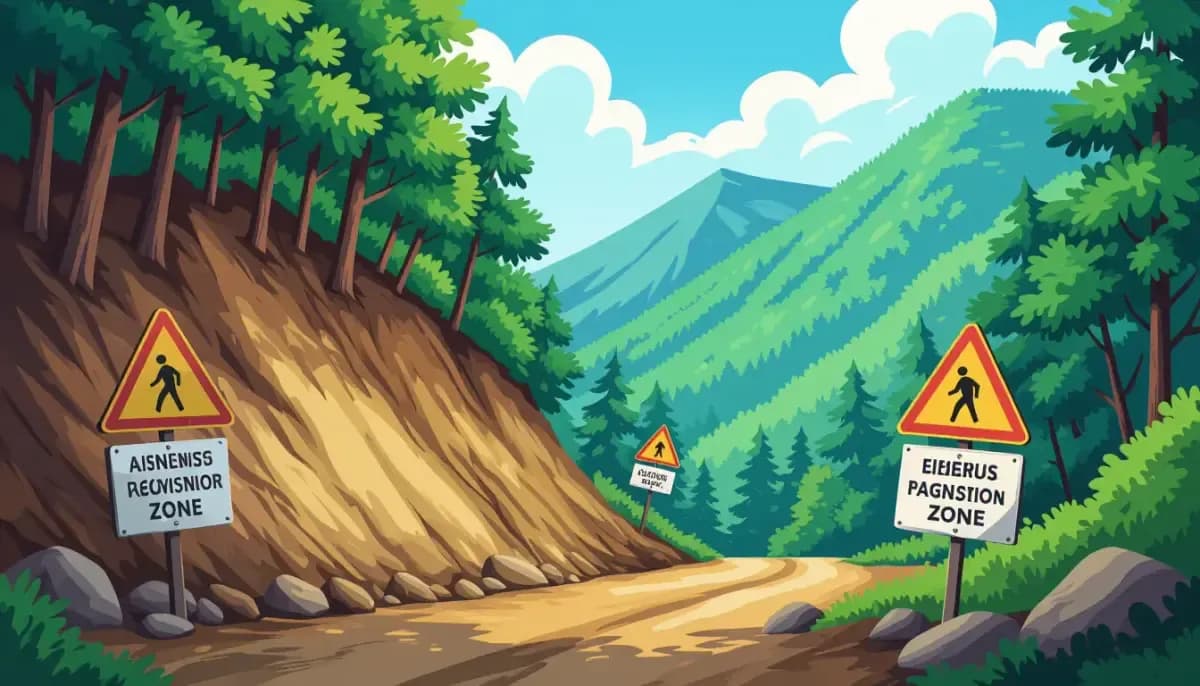
Learn how to assess landslide risk when buying property in Japan. Covers hazard zone classifications (Yellow/Red zones), official maps, legal disclosure rights, insurance, and how to evaluate risk by region.
Landslide Risk Assessment for Japan Property: A Buyer's Complete Guide
Japan is one of the world's most geologically active countries, and landslide risk is a real concern for anyone buying property here. With approximately 1.23 million households — roughly 23.1% of all homes — located in areas prone to landslide or flood-related disasters, understanding how to assess this risk before you buy is not optional. It's essential. This guide walks you through how Japan classifies landslide hazard zones, which official tools you can use, what your legal rights as a buyer are, and how to make informed decisions when purchasing property in mountainous or hilly areas of Japan.
Whether you're eyeing a rural akiya bargain near forested slopes, a hillside home in Kyoto, or an apartment in a coastal city, this guide will help you navigate Japan's landslide risk landscape with confidence.
Understanding Japan's Landslide Hazard Zone System
Japan's government has developed a detailed, legally-backed system for classifying areas at risk of sediment-related disasters. This system is governed primarily by the Sediment Disaster Prevention Act (土砂災害防止法, Doshasaigai Boshiho), which was amended in 2014 to require prefectural governments to publicly disclose the results of basic hazard investigations.
There are approximately 530,000 sediment-related disaster risk areas across Japan, and around 350,000 sediment-related disaster-warning zones, of which about 200,000 are classified as special warning zones (the most dangerous category).
Japan uses a two-tier color-coded designation system:
| Zone Type | Japanese Name | Risk Level | Legal Implications |
|---|---|---|---|
| Yellow Zone | 土砂災害警戒区域 (Keikaikuiki) | Elevated risk — caution required | Mandatory disclosure in property sales |
| Red Zone | 土砂災害特別警戒区域 (Tokubetsu Keikaikuiki) | High danger — severe damage possible | Development and construction restrictions apply |
Yellow Zones (Caution Areas) require disclosure in real estate transactions. Properties in these zones can still be purchased and developed, but buyers must be informed of the risk. Red Zones (Special Warning Areas) are the most serious — new construction is restricted, and existing structures in these areas face the highest probability of catastrophic damage. The Japanese government has stated that properties within Red Zones "should be assumed to face the possibility of severe damage."
Three types of sediment disasters are recognized:
- Debris flows (土石流, dosekiry): Fast-moving mixtures of water, rock, and debris flowing down valleys
- Slope failures (急傾斜地の崩壊, kyukeishachi no hokai): Sudden collapse of steep slopes
- Landslides (地すべり, jisuberi): Slower, large-scale movement of soil and rock
How to Check Landslide Risk Before Buying: Official Tools
Japan has excellent publicly available tools for checking landslide risk. Here's how to use them:
1. Hazard Map Portal Site (ハザードマップポータルサイト)
The Ministry of Land, Infrastructure, Transport and Tourism (MLIT) operates the Hazard Map Portal Site, which allows anyone to overlay multiple hazard layers — flooding, landslides, storm surge, tsunami — on a map of any municipality in Japan. Access it at the MLIT portal and search by address or municipality. You can view:
- Sediment disaster warning zones (Yellow and Red)
- Flood inundation zones
- Liquefaction risk areas
- Tsunami evacuation zones
This should be your first stop for any property you're seriously considering.
2. J-SHIS Landslide Distribution Maps
The Japan Seismic Hazard Information Station (J-SHIS), operated by the National Research Institute for Earth Science and Disaster Resilience (NIED), provides landslide distribution maps as a Web Map Service (WMS). Their database contains landslide topography at approximately 370,000 confirmed locations across the Japanese archipelago. This data is more granular than the standard hazard maps and is useful for identifying historical landslide terrain.
3. Municipal Hazard Maps
Every municipality in Japan publishes its own hazard maps (ハザードマップ), available free of charge from the city or town office. These include local-level detail that national maps may not capture, including specific evacuation routes, assembly points, and community-level risk assessments.
4. Japan Meteorological Agency Real-Time Risk Maps
The Japan Meteorological Agency (JMA) provides a real-time risk map at jma.go.jp/bosai/en_risk/ that shows current landslide and flood risk levels based on actual rainfall data. While this is primarily for disaster response, it gives you a sense of how frequently the area you're considering goes on high alert.
For more general disaster preparedness as a foreign resident in Japan, see the comprehensive guide at Living in Nihon's Disaster Preparedness Resource, which covers evacuation procedures, warning systems, and emergency communications.
Legal Disclosure Requirements for Property Buyers in Japan
Japan's real estate laws provide important protections for buyers regarding landslide and disaster risk disclosure. Understanding these rules is critical for any foreign buyer.
Article 35 Important Matters (重要事項説明)
Before any property sale can close, a licensed real estate broker is legally required to provide and explain an Article 35 Important Matters document (Juyojiko Setsumei). This document must disclose whether the property is located in:
- A Yellow Zone (sediment disaster caution area)
- A Red Zone (sediment disaster special warning area)
- A flood inundation zone
- A tsunami evacuation zone
- Other designated hazard areas
If a property is in a Red Zone, additional restrictions apply. Under the Sediment Disaster Prevention Act, construction of certain types of residential buildings is prohibited or restricted in Red Zones without specific reinforcement measures.
Important: If a broker fails to disclose landslide zone status, this constitutes a violation of the Real Estate Transactions Act. You have legal recourse if material hazard information was withheld.
Disclosure in Rental vs. Purchase Transactions
Note that disclosure requirements are stronger for purchases than for rentals. If you are renting first in a location you plan to buy, verify hazard zone status independently — don't assume your landlord disclosed all risks.
For a deeper understanding of legal documentation in Japanese property transactions, see our guide on Legal Procedures and Documentation for Japan Property Purchase.
Assessing Risk: What to Look For When Visiting a Property
Maps and legal documents only tell part of the story. When you visit a property in a potentially at-risk area, here's what to look for on the ground:
Physical Indicators of Landslide Risk
- Steep slopes nearby: Properties at the base or on the side of slopes steeper than 30 degrees face elevated risk
- Previous stabilization works: Check for retaining walls (擁壁, yoheki), wire mesh netting, or rockfall barriers — these indicate known risk mitigation
- Drainage patterns: Look for natural gullies, stream channels, or drainage marks that suggest water concentrates in the area
- Soil type: Red clay soils (found in much of western Japan) are more prone to sliding than granite-based soils
- Vegetation disturbance: Leaning trees, irregular terrain, or cracked ground may indicate historic slow-moving landslides
Questions to Ask the Real Estate Agent
- Has the property or surrounding area ever been affected by sediment disaster?
- Is there a community-level disaster prevention plan (地区防災計画)?
- What evacuation route is designated for this address?
- Has the retaining wall (if any) been inspected recently?
For guidance on working with real estate agents as a foreigner, see our Complete Guide to Buying Property in Japan as a Foreigner.
Landslide Risk by Region: Where Is the Risk Highest?
Japan's landslide risk is not evenly distributed. Understanding which regions carry the highest risk helps you set priorities in your property search.
| Region | Risk Level | Key Factors |
|---|---|---|
| Kyushu (especially Kumamoto, Kagoshima) | Very High | Volcanic soils, heavy typhoon rainfall |
| Kii Peninsula (Wakayama, Nara, Mie) | Very High | Extremely high annual rainfall (>4,000mm in some areas) |
| Shikoku (Kochi, Tokushima) | High | Steep mountains, high rainfall |
| Chugoku / Hiroshima | High | 2014 and 2018 disasters, granitic sandy soils |
| Hokkaido | Moderate-High | Volcanic terrain, permafrost thaw |
| Tokyo Metro Area | Low-Moderate | Urban slopes, mostly manageable risk |
| Osaka / Nagoya | Low | Relatively flat terrain, managed risk |
The Hiroshima landslides of 2014 and 2018 Western Japan floods (which triggered thousands of landslides) stand as stark reminders of how quickly risk can materialize in seemingly suburban neighborhoods. These events triggered major revisions to Japan's hazard mapping approach and disclosure requirements.
For more on specific regional property considerations, see our guides on Buying Property in Kyoto as a Foreigner and Buying Property in Fukuoka and Kyushu as a Foreigner.
Insurance Considerations for Landslide-Risk Properties
Understanding insurance coverage for landslide-prone properties is essential before you commit to a purchase.
What Water Disaster Insurance Covers
Standard Japanese homeowner's insurance includes a "water disaster" (水災, suisai) rider that covers:
- Storm damage
- Flooding from rivers and heavy rain
- Landslides and mudflows (土石流, dosekiry)
- Falling rocks and debris
Critical exception: Damage from landslides caused by earthquakes is NOT covered by water disaster insurance. This requires earthquake insurance (地震保険, jishin hoken), which is sold as a separate rider to fire insurance in Japan.
Insurance for Red Zone Properties
Properties designated as Red Zones may face:
- Higher insurance premiums
- Reduced coverage limits
- Refusal of coverage from some insurers
Always disclose the hazard zone designation to your insurer and get written confirmation of coverage terms. Some policies exclude damage in designated special warning areas.
Impact on Mortgages
New 2025 Japanese government proposals would exclude new homes in designated disaster-risk zones from housing loan tax benefits. This signals that financing for Red Zone properties may become harder to obtain over time. Some lenders already apply stricter screening to properties in Yellow or Red Zones. See our guide on Mortgages and Home Loans for Foreigners in Japan for current lending requirements.
For additional resources on disaster preparedness for housing and infrastructure, For Work in Japan's Housing Infrastructure Guide provides useful context for daily life considerations as a foreign resident.
Making the Final Decision: Risk vs. Value
Buying property in a Yellow Zone is not necessarily a bad decision — it depends entirely on the specific risk level, the quality of the existing mitigation works, your risk tolerance, and the price discount you're getting. Here is a framework for making the decision:
Decision Framework
| Scenario | Recommendation |
|---|---|
| Property in Red Zone (Special Warning Area) | Avoid unless price is deeply discounted, mitigation works are excellent, and you understand full risk |
| Property in Yellow Zone near base of slope | Proceed with caution — inspect retaining walls, drainage, and get specialist assessment |
| Property in Yellow Zone on flat ground within zone | Generally acceptable with good insurance coverage |
| Property near river in inundation zone only | Assess flood risk separately; not the same as landslide risk |
| Property with no hazard designation | Still check J-SHIS maps for historical landslide topography |
A geotechnical survey (地盤調査, jiban chosa) can provide further peace of mind. For properties you're seriously considering, a basic soil investigation costs approximately ¥50,000–¥100,000 and can reveal subsurface conditions that maps don't show.
For a comprehensive look at all the costs involved in buying property in Japan, see our guide on Hidden Costs and Fees When Buying Property in Japan.
Additional guidance for foreign property buyers can be found at Gaijin Buy House, a specialized resource for foreigners navigating Japan's real estate market.
For expert analysis of how natural disasters affect Japanese real estate investment, the detailed breakdown at Tokyo Portfolio's disaster risk guide and InvestAsian's property risk guide are both worth reading before making a final decision.
Conclusion
Japan's landslide risk is substantial but well-documented and legally regulated. As a foreign property buyer, you have access to the same tools and legal protections as Japanese citizens. The key steps are:
- Check the MLIT Hazard Map Portal for every property you're seriously considering
- Verify Article 35 disclosure covers hazard zone status and ask your broker directly
- Visit the property and look for physical risk indicators on the ground
- Understand your insurance — especially the earthquake exclusion for landslide damage
- Factor in financing risk as new regulations may affect Red Zone property values
Japan's transparency around disaster risk is actually a strength of its real estate system. Use the tools available, ask the right questions, and you'll be able to make an informed decision that balances price, location, and safety.

Originally from Vietnam, living in Japan for 16+ years. Graduated from Nagoya University, with 11 years of professional experience at Japanese and international companies. Sharing information about buying property in Japan for foreigners.
View Profile →Related Articles
Climate Change Impact on Japan Property Risk Assessment
Learn how climate change affects Japan property risk—flood zones, earthquake hazards, typhoon exposure—and how foreign buyers can assess risk using Japan's hazard maps and mandatory disclosure rules.
Read more →
Disaster Rebuilding and Insurance Claims Process in Japan
Learn how Japan's earthquake insurance and disaster rebuilding process works for foreign homeowners. Covers claims steps, payout tiers, premiums, and practical tips for expats.
Read more →
How to Read and Use Japan Hazard Maps for Property Purchase
Learn how to read and use Japan's official hazard maps before buying property. Understand flood, earthquake, and tsunami risk zones with this step-by-step guide for foreign buyers.
Read more →
Emergency Supplies and Kit Guide for Japan Homeowners
Build the perfect emergency kit for your Japan home. Essential bosai bag checklist, where to buy supplies, and special tips for foreign homeowners in earthquake-prone Japan.
Read more →
Creating a Disaster Evacuation Plan for Your Japan Home
Learn how to create a disaster evacuation plan for your Japan home as a foreign homeowner. Covers Japan's alert systems, hazard maps, emergency kits, shelter locations, and post-disaster rights for foreigners.
Read more →
Seismic Retrofitting Options for Older Homes in Japan
Learn about seismic retrofitting options for older homes in Japan: costs, government subsidies up to ¥3M, tax incentives, and step-by-step process for foreign buyers.
Read more →