
Japan Property Market Cycles: When to Buy and Sell

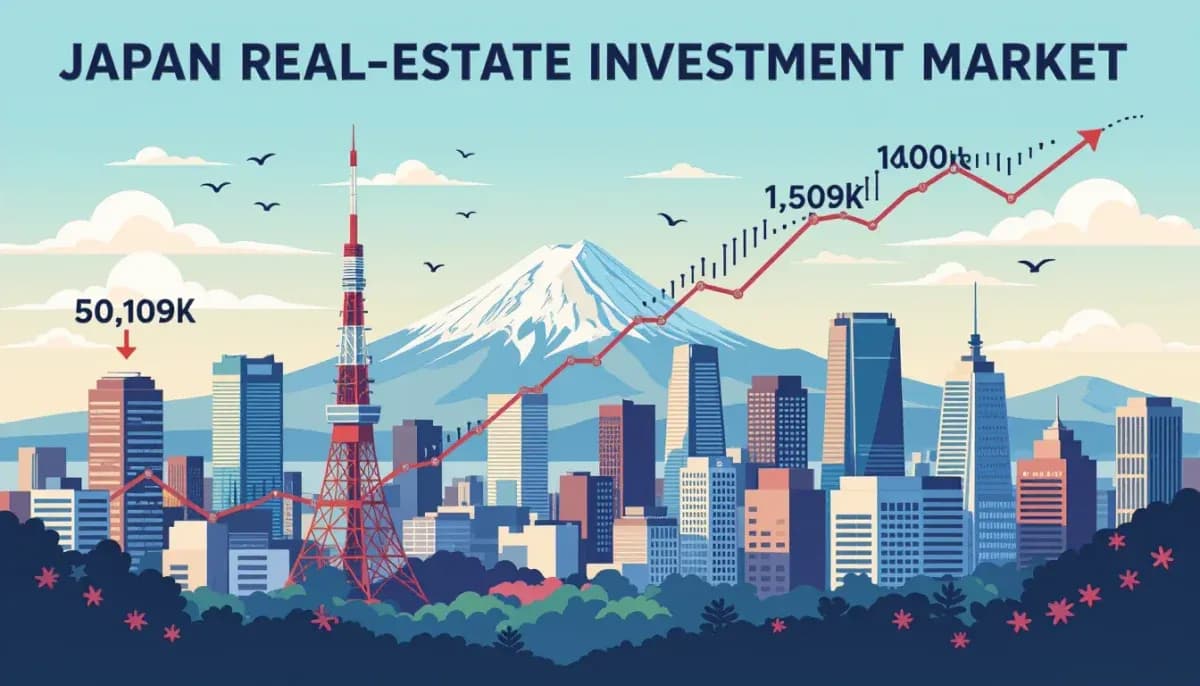
Master Japan property market cycles with this complete guide for foreign investors. Learn the best seasons to buy, when to sell for maximum returns, and how regional markets diverge in 2025-2026.
Japan Property Market Cycles: When to Buy and Sell
Understanding Japan's property market cycles is essential for any foreign investor looking to maximize returns. Unlike many Western markets, Japan's real estate operates on distinct rhythms shaped by demographic trends, monetary policy, seasonal demand patterns, and global capital flows. Whether you're a first-time buyer or a seasoned investor, knowing when to enter or exit the market can mean the difference between strong gains and missed opportunities.
Japan's real estate market was valued at USD 436 billion in 2024 and is projected to reach USD 557 billion by 2033, reflecting a CAGR of approximately 2.76%. With Tokyo ranking as the #1 city for cross-border real estate investment for seven consecutive years, understanding market cycles has never been more important for foreign buyers.
Understanding Japan's Long-Term Property Market Cycles
Japan's property market moves in multi-decade cycles, heavily influenced by macroeconomic conditions, government policy, and population dynamics. The most dramatic example was the bubble economy of the late 1980s, when Tokyo land prices tripled before collapsing by up to 70% through the 1990s. Recovery was slow, with the market only stabilizing in the mid-2000s before the 2008 global financial crisis created another dip.
Since 2013, Abenomics—the aggressive monetary easing and fiscal stimulus program—triggered a new growth cycle. Interest rates at historic lows, combined with a weakening yen (down approximately 35% vs. the USD between 1994 and 2024), attracted massive foreign capital. Japan has now experienced its fourth consecutive year of nationwide land price increases as of 2025, the strongest growth trend since 1991.
Key macro cycle indicators to watch:
- Bank of Japan interest rate decisions (currently at 0.5% as of 2025)
- Yen exchange rate fluctuations affecting foreign buying power
- National housing start data (a leading supply indicator)
- Nationwide land price surveys published annually by the Ministry of Land
The 2024 housing starts dropped to 792,195 units—the first time below 800,000 in 15 years—signaling constrained supply that supports continued price appreciation in the near term.
For a broader overview of the market environment, see our Japan Housing Market Forecast 2026 guide which covers macro trends in detail.
Current Market Phase: Where Are We in the Cycle?
As of 2025, Japan's property market—particularly Tokyo—shows characteristics of a late expansion phase, with some indicators suggesting a peak may be approaching in select segments.
Bullish signals (supporting continued growth):
- Tokyo residential price index rose 8.14% YoY in January 2025, accelerating to 12.62% YoY by July 2025
- Tokyo condo prices climbed 64% over four years; new condo averages exceeded ¥110 million (~$800,000)
- Supply near 50-year lows: only ~23,000 new condo units forecast for Tokyo metro
- Foreign investment now represents 27% of total transactions (up from 21% five years ago), with ¥2.3 trillion in 2024 alone
Cautionary signals (suggesting market maturity):
- 31% of market experts believe Tokyo prices will peak in 2025
- Price-to-income ratios in central Tokyo wards have reached 13-15x annual household income (national average is 7-9x)
- Only 15% of investors see current conditions as a buying opportunity; 36% view it as a good time to sell
- Gross rental yields have compressed from ~7% (early 2000s) to ~4.2% nationwide (Q1 2025)
This yield compression is a classic late-cycle indicator. When cap rates fall significantly from historical norms, prices are elevated relative to income, making timing your entry critically important.
Regional contrast: While Tokyo shows late-cycle dynamics, regional cities like Fukuoka (+9.0% residential land YoY, 13 consecutive years of price growth), Sapporo, and Hiroshima are in earlier expansion phases with stronger yield opportunities of 4.4–5.1%.
For neighborhood-level insights in these cities, explore our guides on Best Neighborhoods in Fukuoka for Foreign Buyers and Best Neighborhoods in Sapporo for Foreign Buyers.
Seasonal Cycles: The Best and Worst Times to Buy in Japan
Japan's property market also follows a highly predictable seasonal pattern, largely driven by the Japanese fiscal year (April–March) and corporate transfer culture. Understanding these seasonal rhythms gives buyers a tactical advantage.
| Season | Demand Level | Competition | Typical Price | Best For |
|---|---|---|---|---|
| Spring (Mar–May) | Very High | Very High | Peak prices | Sellers |
| Summer (Jun–Aug) | Low | Low | Reduced / negotiable | Buyers |
| Autumn (Sep–Nov) | Moderate | Moderate | Slightly below peak | Active buyers |
| Winter (Dec–Feb) | Very Low | Very Low | Lowest annual prices | Bargain hunters |
Spring (March–May): Peak season, avoid for buyers This is Japan's busiest real estate season. Corporate job transfers, the start of the new school year, and fiscal year changeovers drive enormous demand. Competition is fierce, and sellers hold all the negotiating power. Foreign buyers who must move during this period often pay a premium of 5-10% over comparable summer sales.
Summer (Jun–Aug): The buyer's window Summer is the sweet spot for foreign investors. Domestic demand drops sharply as families avoid moving during the hot, humid months and the school year is in session. Motivated sellers—especially those who missed the spring rush—are more willing to negotiate. Foreign buyers face less competition from domestic bidders, giving them time for thorough due diligence.
Autumn (Sep–Nov): Second chance for buyers A moderate secondary season with new listings entering the market before year-end. Sellers looking to close before December are often willing to negotiate. This is particularly good timing in regional markets outside Tokyo.
Winter (Dec–Feb): Deepest discounts, fewest choices December through February sees the absolute lowest demand. Properties that have been sitting on the market since autumn are often listed by highly motivated sellers. While inventory is thinner, the negotiating leverage for buyers is at its annual peak—particularly for older properties or those needing renovation.
For practical guidance on the buying process itself, see our Complete Guide to Buying Property in Japan as a Foreigner.
When to Sell: Timing Your Exit for Maximum Returns
Selling at the right time in Japan involves understanding both market cycle dynamics and Japan's unique tax structure, which strongly incentivizes longer holding periods.
The 5-Year Tax Threshold: The Most Important Selling Rule
Japan's capital gains tax creates a massive financial incentive to hold property for at least 5 years:
- Under 5 years (short-term): ~39.63% tax rate on capital gains (30.63% national + 9% local)
- Over 5 years (long-term): ~20.315% tax rate on capital gains (15.315% national + 5% local)
This nearly halves your tax burden simply by holding longer. For a property with ¥20 million in capital gains, crossing the 5-year threshold saves approximately ¥3.8 million in taxes. This single rule should anchor your exit strategy.
Building Age and the Depreciation Cycle
For condominiums, the 20-25 year building age range represents a natural exit threshold. Japanese properties lose approximately 50% of their value by age 20-25, driven by:
- Approaching major repair and renovation cycles (large repair reserve fund calls)
- Reduced mortgage financing availability for older buildings
- Shifting buyer preferences toward newer constructions
The optimal exit window for condominiums is typically years 10-20, before age-related value depreciation accelerates.
Market Timing Signals for Selling
Watch these indicators for favorable selling conditions:
Positive sell signals:
- Yen strengthening significantly (reduces foreign competition; lock in gains while yen is weak)
- Interest rates rising (reduces buyer purchasing power; sell before this fully prices into the market)
- Rental yields compressing below 3.5% in your area (cap rate compression = elevated prices = seller's market)
- Infrastructure announcements: new subway lines, Olympic-related development, or large employer relocations into an area often front-run price peaks
Warning signs to sell or not buy:
- Price-to-income ratios exceeding 15x in your neighborhood
- Vacancy rates rising above 10% in your building's area
- New supply pipeline increasing significantly (new zoning, government housing programs)
For current assessment of selling conditions, this analysis from INA Real Estate provides detailed guidance on sell timing in Tokyo's 23 wards.
Speed of Sale: What to Expect When Selling
One practical aspect of market timing is understanding how quickly properties sell in Japan. According to 2025 data from AkiyaHub's analysis of actual sales velocity:
- 46.3% of sold listings are under contract by Day 45
- 66.4% are sold by Day 60
- 95% are sold within 90 days
This is notably faster than many Western markets. The fastest-selling prefectures are Tokyo (40.6% sell-through by Day 45), Chiba (36.3%), Saitama (36.2%), Kanagawa (36.1%), and Osaka (34%).
Properties typically sell at 4-5% below asking price, though only 5-10% of prime central Tokyo properties sell above asking—a key indicator of market strength.
Practical implication: In Japan, once you decide to sell, you generally don't need to wait months for a buyer. But preparation matters—ensuring your property is properly registered and that your agent has marketing materials ready before listing can shave weeks off your timeline.
For guidance on ensuring your property's legal standing is clear before selling, see our Japan Property Registration System (Touki) Explained guide.
Geographic Cycle Divergence: Tokyo vs. Regional Markets
One of the most important insights for sophisticated investors is that Japan's property markets do not move in lockstep. Tokyo, Osaka, and regional cities are often in different phases simultaneously.
| Market | Current Phase | Price Trend (2025) | Yield | Risk Profile |
|---|---|---|---|---|
| Central Tokyo (Minato, Shibuya) | Late Expansion / Peak | +12-20% YoY | 3.0-3.5% | High price, low yield |
| Tokyo 23 Wards (broader) | Mid-Late Expansion | +8-12% YoY | 3.5-4.5% | Moderate |
| Osaka (Central) | Mid Expansion | Commercial +7.6% | 4.0-5.0% | Balanced |
| Fukuoka | Early-Mid Expansion | +9.0% YoY (13yr streak) | 4.4-5.1% | Growth upside |
| Sapporo / Sendai | Early Expansion | +2-5% YoY | 4.8-5.5% | Value play |
| Regional cities | Early / Pre-Expansion | +1-3% YoY | 5.0-7.0% | High yield, lower liquidity |
Strategic implication for foreign buyers: If you're concerned about Tokyo's valuations, regional markets—particularly Fukuoka, which has seen 13 consecutive years of price appreciation—offer earlier-cycle entry points with higher yields. The trade-off is lower liquidity (slower sale times) and smaller potential appreciation.
For more on these markets, explore Best Neighborhoods in Osaka for Foreign Buyers and our Best Neighborhoods in Tokyo for Foreign Buyers guide.
Foreign Buyer Considerations: Currency and Financing Cycles
For non-Japanese investors, the property market cycle interacts with two additional cycles: the yen exchange rate and foreign financing conditions.
The yen advantage window: The yen's weakness (down ~35% vs. USD since 1994) has created an extraordinary window for dollar, euro, and Australian dollar holders. A Tokyo apartment priced at ¥50 million that would have cost USD 500,000 in 1994 might cost only USD 330,000-345,000 in 2024. This currency discount effectively amplifies the buying opportunity.
However, this is a double-edged sword: when you eventually sell and repatriate funds, a yen recovery will reduce your USD-denominated returns. Monitoring Bank of Japan rate policy is therefore critical for foreign investors.
Financing options by residency status:
- Permanent residents: 70-90% LTV at historically low rates (0.18-1.4%)
- Non-permanent residents: 50-80% LTV with limited lender options
As Japan's interest rate environment normalizes (the BOJ raised rates to 0.5% in 2025 after decades near zero), borrowing costs will gradually increase—a factor that tends to soften price growth by reducing buyer purchasing power.
For a complete overview of financing requirements, see our Japan Mortgage Requirements for Foreigners guide.
For additional resources on navigating Japan's property market as a foreigner, Living in Nihon provides comprehensive lifestyle and housing guides for expats. For Work in Japan covers employment and relocation considerations that often accompany property decisions. The team at Gaijin Buy House specializes specifically in helping foreigners navigate Japan's real estate purchase process.
For broader 2025-2026 market analysis, PLAZA HOMES's Japan real estate market outlook and Tokyo Portfolio's market trends analysis provide detailed price forecasts and investment recommendations.
Key Takeaways: Timing Your Japan Property Investment
Japan's property market rewards investors who understand its unique cycles. Here are the core principles to guide your timing decisions:
For buyers:
- Seasonally: Target summer (June-August) or winter (December-February) for the best negotiating position
- Cyclically: Regional markets like Fukuoka and Sapporo offer better entry points than central Tokyo in 2025
- Currency: The current yen weakness represents a structural tailwind for foreign buyers, but is not permanent
- Watch supply: Housing starts below 800,000 (as in 2024) indicate continued price support
For sellers:
- Hold 5+ years to halve your capital gains tax rate—this is non-negotiable for tax efficiency
- Exit before age 25 for condominiums to avoid the accelerating depreciation curve
- Spring listing maximizes buyer competition and selling prices
- Watch rate rises: Bank of Japan normalization will be a signal to consider exiting leveraged positions
Japan's market is not without risks—a rapid interest rate normalization, demographic headwinds from population decline, and global economic shocks could trigger the 10-20% decline in prime Tokyo that some analysts model for downside scenarios. But historically, Tokyo has recovered from such dips within 3-5 years, making timing mistakes correctable for long-term holders.
For a complete understanding of your rights and legal framework as a foreign property owner, see our guides on Can Foreigners Buy Property in Japan and Foreign Property Ownership Rights in Japan Explained.

Originally from Vietnam, living in Japan for 16+ years. Graduated from Nagoya University, with 11 years of professional experience at Japanese and international companies. Sharing information about buying property in Japan for foreigners.
View Profile →Related Articles
Japan Property Crowdfunding Platforms Guide for Foreign Investors
Complete guide to Japan real estate crowdfunding for foreigners: top platforms (CREAL, OwnersBook, Rimawari-kun), returns, regulations, and how to invest from Japan or abroad.
Read more →
Setting Up a Company to Buy Property in Japan
Learn how to set up a KK or GK company in Japan to buy property as a foreign investor. Covers tax benefits, registration steps, GK-TK structures, and key practical tips for 2025.
Read more →
Japan Property Due Diligence Checklist for Investors
Complete due diligence checklist for foreigners buying property in Japan. Covers title verification, seismic compliance, Article 35 disclosure, zoning, taxes, and disaster risk assessment with expert tips for 2025.
Read more →
Japan Property Investment Exit Strategy Guide
Complete guide to exiting your Japan property investment: capital gains tax rates, sell vs rent comparison, timing strategy, and step-by-step selling process for foreign investors.
Read more →
How to Invest in Japan Property from Overseas
Complete guide to investing in Japan property from overseas. Legal requirements, tax obligations, financing options, property management, and step-by-step process for non-resident foreign investors.
Read more →
Japan Property Capital Appreciation Potential by Area
Discover which areas of Japan offer the best property capital appreciation potential in 2025. Compare Tokyo, Osaka, Fukuoka, Niseko and more — with data, yields, and tips for foreign investors.
Read more →