
Setting Up a Company to Buy Property in Japan

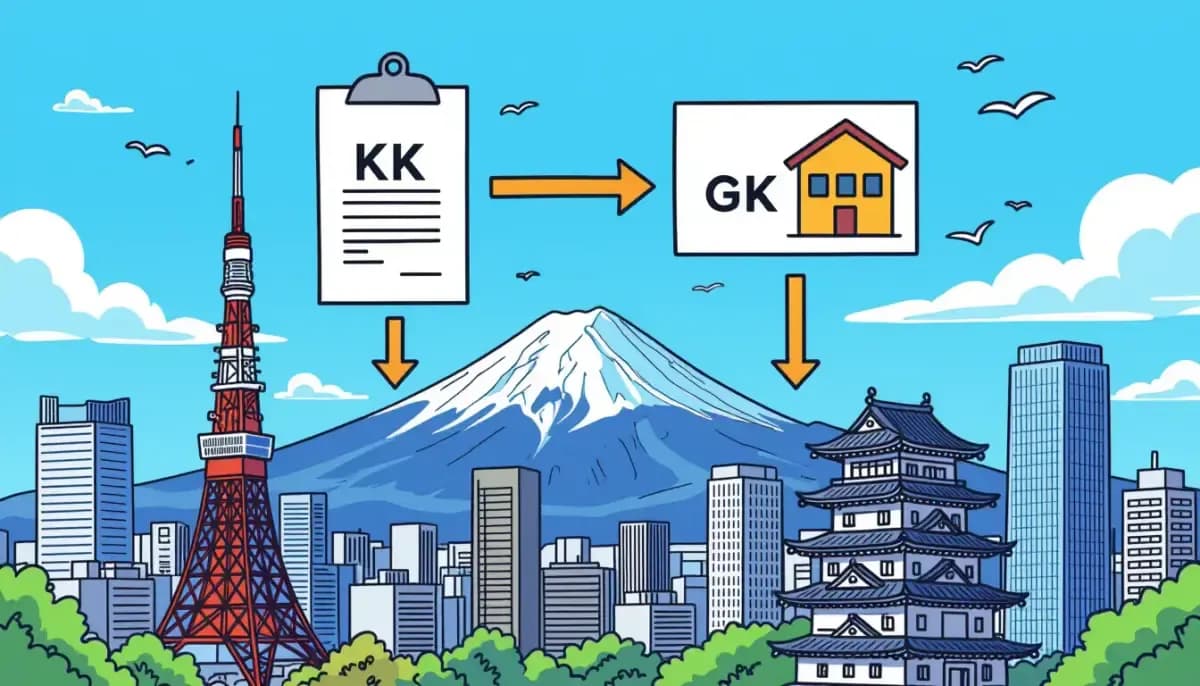
Learn how to set up a KK or GK company in Japan to buy property as a foreign investor. Covers tax benefits, registration steps, GK-TK structures, and key practical tips for 2025.
Setting Up a Company to Buy Property in Japan: A Complete Guide for Foreign Investors
Japan's real estate market has become one of Asia's most attractive destinations for foreign investors, with foreign investment exceeding $10 billion and a 45% surge in the first half of recent years. Foreign investors now comprise up to 40% of new apartment sales in central Tokyo. While individual foreigners can freely purchase property in Japan without restrictions, many savvy investors choose to set up a Japanese company as their acquisition vehicle. Using a corporate structure can unlock significant tax advantages, provide greater financing flexibility, and create a scalable platform for building a property portfolio.
This guide walks you through everything you need to know about setting up a company to buy property in Japan — from choosing between a Kabushiki Kaisha (KK) and a Godo Kaisha (GK), to understanding the GK-TK institutional investment structure, and the practical steps to get your company registered and ready to invest.
Why Use a Company Structure to Buy Property in Japan?
Before diving into the specifics, it is worth understanding why a corporate structure might be preferable to buying as an individual.
Tax efficiency is often the primary motivation. A Japanese company can deduct business expenses — including depreciation on buildings, loan interest, management fees, and operating costs — against rental income, reducing taxable profit. Corporate tax rates in Japan range from approximately 15% to 23.2% depending on income level, which can be more favorable than personal income tax rates that can climb above 45% at higher income levels.
Asset protection is another major benefit. Owning property through a company creates a legal separation between your personal assets and investment assets. If litigation arises from a rental dispute or accident on the property, your personal wealth is shielded.
Succession and transfer efficiency also favors corporate ownership. Transferring shares in a company is typically simpler and cheaper than transferring real estate title directly. This matters for estate planning and when eventually selling your portfolio.
Financing access can improve through a corporate structure. Some lenders in Japan prefer lending to companies rather than non-resident individuals, and a well-capitalized Japanese company may have access to a wider range of loan products.
For more on the general process of buying property as a foreigner, see our Complete Guide to Buying Property in Japan as a Foreigner and our detailed overview of Property Taxes and Annual Costs of Owning Property in Japan.
KK vs GK: Choosing Your Company Structure
The two main company types in Japan are the Kabushiki Kaisha (KK) — a joint-stock company similar to a corporation — and the Godo Kaisha (GK) — a limited liability company (LLC) similar to those used in the United States. Both allow 100% foreign ownership, and both provide limited liability protection to their owners.
| Feature | KK (Kabushiki Kaisha) | GK (Godo Kaisha) |
|---|---|---|
| Setup cost | ¥250,000+ (~$1,800 USD) | ¥100,000+ (~$700 USD) |
| Setup time | 2–4 weeks | 1–2 weeks |
| Prestige / recognition | High | Moderate |
| Decision-making | Proportional to share ownership | Equal among members |
| Annual shareholders meeting | Required | Not required |
| Annual minimum tax | ¥70,000+ | ¥70,000+ |
| US pass-through tax treatment | No | Yes (if US-owned) |
| Converting to KK | N/A | 1.5+ months required |
| Best for | Larger portfolios, external investors | Solo investors, US citizens |
When to choose a KK: If you plan to bring in external investors, raise capital through equity, or if your business profile needs the prestige of a KK (which is the Japanese equivalent of a well-known corporation), the KK is preferable. Decision-making power is proportional to share ownership, making it easier to structure investor relationships. Major Japanese banks and institutional partners are also more comfortable dealing with a KK.
When to choose a GK: If you are a solo investor or a small group, the GK offers lower setup costs, less administrative overhead (no mandatory annual shareholders' meeting), and a faster formation process. For US citizens or US entities, the GK has a critical tax advantage: a GK wholly owned by a US corporation can be treated as a US branch (a "disregarded entity") for US tax purposes, potentially avoiding double taxation on rental income. A KK cannot receive this treatment.
For context on broader visa and residency considerations when investing in Japan, read our guide on Visa and Residency Considerations for Property Buyers.
For more detailed KK vs GK analysis, see KK vs GK: Stock Company or LLC in Japan and the comprehensive breakdown at Setting Up a Company in Japan: KK vs GK.
Step-by-Step Process to Register Your Company in Japan
Whether you choose a KK or GK, the company registration process in Japan follows a well-defined sequence. Here is what to expect:
Step 1: Prepare your articles of incorporation You must draft the company's articles of incorporation (teikan), which include the company name, registered address in Japan, business purpose, capital amount, and member/shareholder information. For a KK, these must be notarized by a Japanese notary (cost: ¥30,000–¥50,000). For a GK, notarization is not required, which saves both time and money.
Step 2: Establish a registered address in Japan Your company needs a physical registered address in Japan. Options include a virtual office service (common for foreign-owned companies, typically ¥5,000–¥20,000/month), your own office or property, or an accountant's or attorney's address.
Step 3: Deposit capital You must deposit your company's capital into a Japanese bank account. While the legal minimum is just ¥1, a practical minimum is ¥500,000 to ¥1,000,000 for real estate purposes. For business or investor visa eligibility, ¥5,000,000 (approximately $33,000 USD) is typically required, along with at least two full-time employees.
Step 4: Register with the Legal Affairs Bureau Submit your incorporation documents to the local Legal Affairs Bureau (Homukyoku). Registration fees are ¥150,000 for a KK (plus ¥40,000 stamp duty) and approximately ¥60,000 for a GK. Processing typically takes one to two weeks.
Step 5: Obtain your corporate seal and documents After registration, obtain your corporate seal certificate (inkanshoumeisho) and corporate registry extract (touki jikohyou), which are essential for opening bank accounts and completing property transactions.
Step 6: Open a corporate bank account Opening a bank account for a newly formed foreign-owned company can be challenging. Some regional banks and online banks (such as GMO Aozora Bank or PayPay Bank) are more receptive to foreign-owned companies than the major city banks. Allow several weeks for this process.
Step 7: Register for taxes Notify the relevant tax offices (national and local) of your company's establishment within two months of incorporation.
For a broader understanding of documentation requirements in Japan, our guide to Legal Procedures and Documentation for Japan Property Purchase provides essential context.
You can also get a detailed overview of company setup at Starting a Real Estate Business in Japan.
The GK-TK Structure: Institutional Real Estate Investment in Japan
For investors looking to scale significantly or participate in institutional-grade deals, the GK-TK structure (Godo Kaisha – Tokumei Kumiai, or silent partnership) is the dominant vehicle in Japan's professional real estate market.
In a GK-TK arrangement:
- A Godo Kaisha (GK) is established as a Special Purpose Company (SPC)
- Investors contribute capital through a Tokumei Kumiai (TK) — a contractual silent partnership — rather than through direct equity ownership
- The GK typically acquires trust beneficiary interests in real estate (rather than direct property title)
This structure serves two important purposes. First, by holding trust beneficiary interests rather than real property directly, the GK avoids real estate acquisition tax (fudosan shutoku zei), which is normally 3–4% of assessed value — a significant saving on large transactions. Second, the TK structure allows the SPC to avoid being classified as a Specified Joint Real Estate Venture under Japanese law, which would trigger additional licensing requirements.
The GK-TK structure is primarily used by institutional investors, private equity funds, and J-REIT adjacent vehicles. For individual or small-group investors, a straightforward KK or GK holding direct property title is generally more appropriate.
For the underlying basics of real estate finance in Japan, see Basic Structure of Real Estate Finance in Japan on Lexology. For guidance on finding employment and work opportunities in Japan that may complement your investment plans, For Work in Japan provides useful resources for expats building their life in Japan.
Tax Considerations for Corporate Property Ownership in Japan
Understanding the tax implications of corporate property ownership is essential to evaluating whether a company structure makes financial sense for your situation.
Corporate income tax: Japan's corporate tax rate for small and medium-sized companies (capital under ¥100 million) is approximately 15% on the first ¥8 million of income and approximately 23.2% above that threshold. This is often lower than personal income tax for high earners.
Corporate residence tax (juminzei): All companies in Japan must pay a minimum annual Corporate Residence Tax of ¥70,000 regardless of profit or loss. This is an unavoidable baseline cost of maintaining a company.
Depreciation deductions: Buildings in Japan can be depreciated over 22–47 years depending on construction type. Depreciation is a non-cash expense that reduces taxable income, making it one of the most powerful tax tools for property investors.
Consumption tax (shohizei): Commercial properties (such as office buildings or commercial retail) may involve consumption tax complications. Residential properties are generally exempt from consumption tax on rent, but there are nuances around new construction.
Capital gains tax: When a company sells a property, capital gains are taxed as ordinary corporate income at corporate tax rates. For individual owners selling directly, the rate is 39.63% if the property has been held less than 5 years, or 20.315% if held 5 years or more. Corporate rates can be more favorable for long-term investors.
Non-resident reporting obligations: If the company or its owners are non-resident, property acquisitions must be reported to the Bank of Japan within 20 days of purchase. Non-resident owners must also appoint a tax representative (nouzei kanrinin) in Japan.
For detailed information on property-related taxes, visit Living in Nihon's guide to buying property and mortgages in Japan.
Practical Tips for Foreign Investors Setting Up a Company in Japan
Hire a qualified Japanese accountant and tax advisor early. The intersection of Japanese corporate law, real estate law, and international tax treaties is complex. A licensed tax accountant (zeirishi) familiar with foreign-owned companies is invaluable. Costs typically range from ¥150,000–¥500,000 per year for basic corporate accounting.
Work with a judicial scrivener (shiho shoshi) for company registration. These professionals specialize in corporate filings and can guide you through the registration process efficiently. Many offer English-language services in Tokyo and Osaka.
Consider the immigration implications carefully. Simply owning a Japanese company does not automatically grant you a visa or right to reside in Japan. A Business Manager visa requires ¥5 million in capital and at least two full-time Japanese employees, or a suitable office and ¥5 million in capital. Check our guide on Visa and Residency Considerations for Property Buyers for full details.
Plan your financing strategy before registering. Japanese banks have stringent requirements for lending to foreign-owned companies. Understand what documentation will be required — typically at least two to three years of financial statements, a business plan, and evidence of capital. Review Mortgages and Home Loans for Foreigners in Japan for the full picture on financing options.
Factor in all transaction costs. Beyond company setup costs, budget for real estate acquisition costs of approximately 7–10% of purchase price, including broker commissions (3% + ¥60,000 + consumption tax), registration taxes, stamp duty, and legal fees. See our guide on Hidden Costs and Fees When Buying Property in Japan.
Monitor your US tax obligations if applicable. For US citizens and US entities, the interaction between Japanese corporate taxes and US tax obligations can be complex. The GK's potential pass-through treatment for US tax purposes is a significant advantage worth discussing with a US-Japan tax specialist. See Godo Kaisha vs Kabushiki Kaisha: Company Types in Japan for more detail.
For broader investment context, the Japan Real Estate Investment Guide for Foreigners on Gaijin Buy House offers a comprehensive overview of the market, expected returns (3–10% gross yield, national average 4.2%), and key investment considerations.
Is a Company Structure Right for You?
Setting up a company to buy property in Japan makes the most sense when:
- You plan to purchase multiple properties and want to scale a portfolio
- You want to optimize tax efficiency through deductions and depreciation
- You are a US citizen or US entity and want to benefit from GK pass-through tax treatment
- You need asset protection from personal liability
- You plan to bring in co-investors and want a clean legal structure for profit-sharing
It may not be necessary if you are making a one-time purchase of a single residential property for personal use, or if the setup and ongoing compliance costs outweigh the tax benefits given the size of your investment.
Whether you are a seasoned institutional investor or a first-time buyer exploring Japan's unique real estate market, understanding your company structure options is a critical early step. Japan's legal framework is foreigner-friendly and the market offers compelling returns — with the right structure, your investment can be both efficient and scalable.
For a comprehensive overview of the Japan property market and investment landscape, explore our Japan Real Estate Market Overview and Trends guide.

Originally from Vietnam, living in Japan for 16+ years. Graduated from Nagoya University, with 11 years of professional experience at Japanese and international companies. Sharing information about buying property in Japan for foreigners.
View Profile →Related Articles

Japan Property Crowdfunding Platforms Guide for Foreign Investors
Complete guide to Japan real estate crowdfunding for foreigners: top platforms (CREAL, OwnersBook, Rimawari-kun), returns, regulations, and how to invest from Japan or abroad.
Read more →
Japan Property Due Diligence Checklist for Investors
Complete due diligence checklist for foreigners buying property in Japan. Covers title verification, seismic compliance, Article 35 disclosure, zoning, taxes, and disaster risk assessment with expert tips for 2025.
Read more →
Japan Property Investment Exit Strategy Guide
Complete guide to exiting your Japan property investment: capital gains tax rates, sell vs rent comparison, timing strategy, and step-by-step selling process for foreign investors.
Read more →
Japan Property Market Cycles: When to Buy and Sell
Master Japan property market cycles with this complete guide for foreign investors. Learn the best seasons to buy, when to sell for maximum returns, and how regional markets diverge in 2025-2026.
Read more →
How to Invest in Japan Property from Overseas
Complete guide to investing in Japan property from overseas. Legal requirements, tax obligations, financing options, property management, and step-by-step process for non-resident foreign investors.
Read more →
Japan Property Capital Appreciation Potential by Area
Discover which areas of Japan offer the best property capital appreciation potential in 2025. Compare Tokyo, Osaka, Fukuoka, Niseko and more — with data, yields, and tips for foreign investors.
Read more →