
Japan Property Investment Tax Strategy for Foreign Investors


Complete guide to Japan property investment taxes for foreigners: acquisition tax, fixed asset tax, rental income, capital gains, depreciation strategies, and how to minimize your tax burden legally.
Japan Property Investment Tax Strategy for Foreign Investors
Investing in Japanese real estate offers exciting opportunities — stable yields, a transparent legal system, and a property market that welcomes foreigners without nationality-based restrictions. However, understanding Japan's tax landscape is essential to protecting your returns. From acquisition taxes to capital gains, the rules vary significantly depending on whether you are a resident or non-resident, how long you hold the property, and how you structure your investment. This guide explains every major tax you will encounter as a foreign investor and outlines proven strategies to minimize your burden legally.
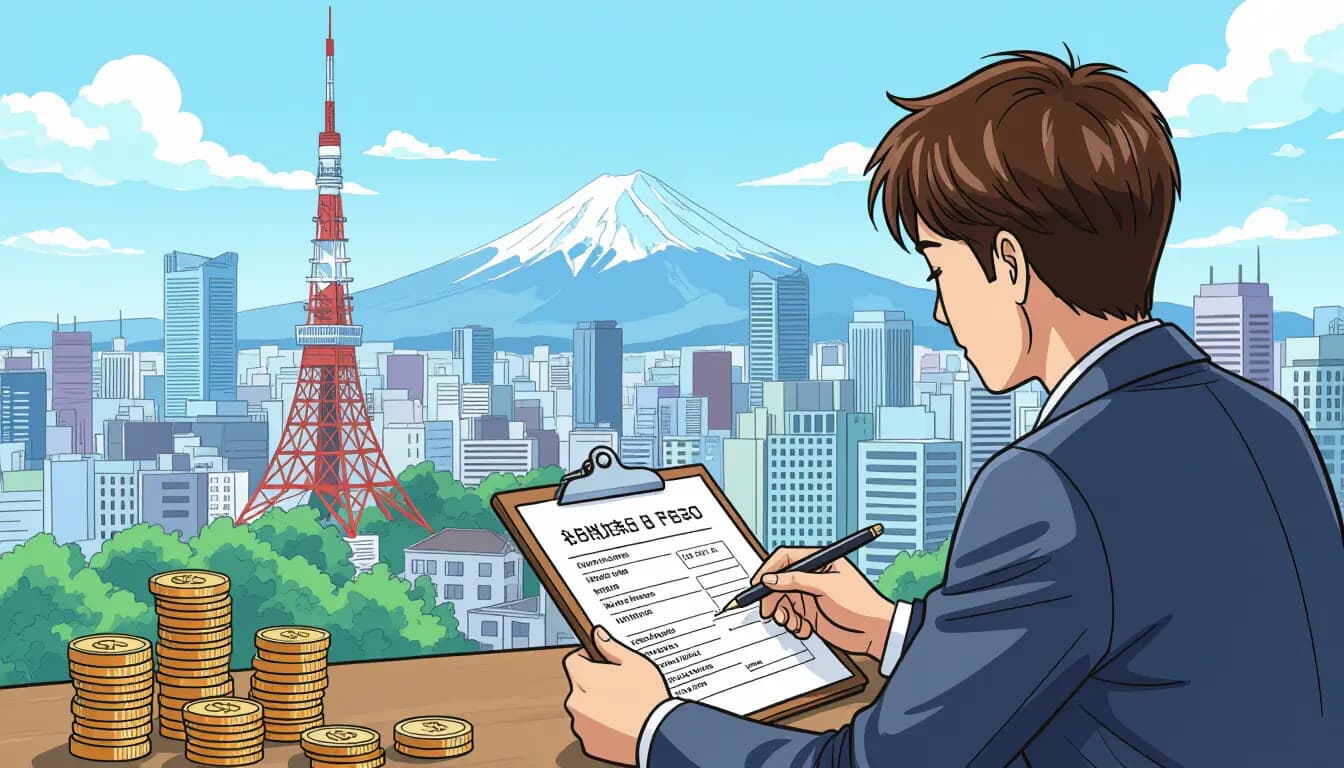
Overview of Japan's Property Tax System for Foreign Investors
Japan imposes taxes on property at three stages: acquisition, holding, and disposal (sale or rental). The good news is that foreign nationals are treated virtually the same as Japanese citizens under property tax law — there are no discriminatory surcharges or nationality-based restrictions.
However, your residency status (resident vs. non-resident) affects how and when taxes are collected:
- Residents (living in Japan) file annual income tax returns and pay taxes directly.
- Non-residents (living abroad) have taxes withheld at source on rental income and capital gains, with higher default rates before treaty adjustments.
Japan maintains tax treaties with more than 80 countries to prevent double taxation, which can significantly reduce the effective rate for investors from treaty nations.
Taxes When Buying Property in Japan
Every property purchase triggers several one-time taxes and fees. Budget for approximately 5–8% of the purchase price in upfront tax costs.
| Tax / Fee | Rate | Notes |
|---|---|---|
| Real Estate Acquisition Tax | 3% (reduced; standard 4%) | Paid 3–6 months after purchase; reduced rate valid through March 31, 2027 |
| Registration & License Tax | 0.3% (residential) / 2% (other) | Paid at registration |
| Stamp Duty | ¥200 – ¥480,000 | Based on contract value; waived for electronic contracts |
| Consumption Tax | 10% on building value only | Land is exempt; applies to new builds |
| Judicial Scrivener Fee | ~¥100,000–¥200,000 | Professional fee for registration |
Key strategy: When buying a used property, negotiate to purchase via an electronic contract to eliminate stamp duty. For new construction, consider the timing of the acquisition to maximize any available deductions in the same tax year.
For a full breakdown of all upfront costs, see our guide on Hidden Costs and Fees When Buying Property in Japan.
Annual Property Holding Taxes
Once you own Japanese real estate, two annual taxes apply regardless of whether you rent the property or leave it vacant.
Fixed Asset Tax (固定資産税)
The fixed asset tax is levied at 1.4% of the property's assessed value each year. The assessed value (課税標準額) is typically 50–70% of the market value for buildings and 70% for land, meaning your actual tax burden is lower than 1.4% of the purchase price.
Key reduction: For residential land up to 200 square meters (the most common urban plot size), the taxable land assessment is reduced to one-sixth of the standard assessment, slashing the effective rate dramatically. Land between 200–400 square meters is reduced to one-third.
City Planning Tax (都市計画税)
In urban areas, an additional city planning tax of up to 0.3% applies. Reductions mirror those for fixed asset tax — small residential parcels are assessed at one-third.
Practical estimate: For a typical Tokyo condominium with a purchase price of ¥30 million, combined fixed asset and city planning taxes often total between ¥50,000–¥120,000 per year.
Non-resident investors must appoint a Tax Agent (納税管理人) — a Japan-based individual or professional — to receive tax notices and remit payments. This requirement has been mandatory since April 1, 2024 for all overseas property owners.
For more on overall ownership costs, visit Property Taxes and Annual Costs of Owning Property in Japan.
Rental Income Tax Strategy for Foreign Investors
When you rent out your Japanese property, the income is taxable in Japan. The strategy differs significantly based on your residency.
Non-Resident Investors
Your tenant (or their representative) must withhold 20.42% of gross rental payments before remitting to you. However, this withholding is a prepayment, not a final tax. You may file an annual tax return in Japan to recalculate based on actual deductible expenses, potentially reducing your liability.
Deductible expenses for rental income:
- Building depreciation (straight-line method only, since 2016)
- Mortgage interest
- Management company fees
- Repairs and maintenance
- Property tax (fixed asset tax)
- Insurance premiums
- Advertising and leasing costs
Resident Investors
Rental income is added to your total income and taxed at Japan's progressive rates (5%–45% plus 10% resident tax). The ability to offset rental losses against salary or other income makes Japan's system favorable for residents who own older, highly depreciable properties.
Depreciation: The Most Powerful Tax Lever
Japan requires the straight-line depreciation method for all buildings since April 2016. Depreciation is calculated only on the building portion — land is never depreciable. The useful life depends on the building type:
| Building Type | Useful Life | Annual Depreciation Rate |
|---|---|---|
| Reinforced concrete (RC) | 47 years | 2.13% |
| Steel-framed (S) | 34 years | 2.94% |
| Wood | 22 years | 4.55% |
| Light steel | 19 years | 5.26% |
Strategy: Older wooden properties (akiya, etc.) often have a compressed useful life — sometimes as few as 4 years — producing large annual depreciation deductions that shelter rental income. This has attracted many foreign investors to rural and suburban properties. Note: any disregarded losses may be added back to the cost basis when calculating capital gains on sale.
Capital Gains Tax: Timing Is Everything
When you sell Japanese real estate, capital gains are taxed based on how long you held the property.
| Holding Period | Income Tax | Resident Tax | Total |
|---|---|---|---|
| 5 years or less (short-term) | 30% | 9% | 39.63% |
| More than 5 years (long-term) | 15% | 5% | 20.315% |
| Primary residence (10+ years) | varies | varies | 14–20% |
Critical rule: The 5-year threshold is measured as of January 1 of the year in which you sell — not the actual date of sale. If you bought a property in March 2020 and sell in January 2026, the holding period is just under 6 years as of January 1, 2026, qualifying for the lower rate. If you sell in December 2025, the count as of January 1, 2025 is only 4 years, triggering the short-term rate. Timing your sale by even a few weeks can mean a 19-percentage-point difference in tax.
Non-resident withholding on sale: When a Japanese resident purchases your property, they must withhold 10.21% of the purchase price at the time of payment. You may file a capital gains tax return to settle the final amount.
Primary residence exemption: Qualifying owner-occupants can exclude up to ¥30 million in capital gains from taxation. Foreigners who have genuinely lived in the property may qualify, subject to verification.

Investment Structures for Foreign Investors
How you hold the property affects your tax efficiency significantly. Three main structures are used:
1. Direct Personal Ownership
The simplest approach. Suitable for one or two properties with modest income. Income is reported on your personal tax return. Risk: if you manage the property from overseas without a local manager, you may inadvertently create a permanent establishment (PE), exposing all your Japan-sourced income to corporate-level taxation.
Mitigation: Always use an independent Japanese property management company to prevent PE designation.
2. GK-TK Structure (合同会社 + 匿名組合)
A popular structure among foreign institutional investors. A Godo Kaisha (GK) acts as the managing entity, while investors participate through a silent partnership (TK). Distributions to TK investors are deductible from the GK's taxable income, effectively passing income through to investors with favorable withholding rates under applicable tax treaties.
3. TMK Structure (特定目的会社)
A regulated special-purpose vehicle designed for larger securitized transactions. A tax-qualified TMK may deduct dividends paid to equity holders, achieving pass-through-like efficiency. Setup requires Financial Services Agency filing and takes approximately three months.
For smaller retail investors, direct ownership with professional management is typically the most practical approach. For more on the legal landscape, see our article on Legal Procedures and Documentation for Japan Property Purchase.
Double Taxation and Tax Treaties
Japan's network of tax treaties covers more than 80 countries, including the US, UK, Australia, Canada, Singapore, and most EU members. These treaties generally:
- Reduce or eliminate withholding tax on rental income (from 20.42% to 10% or lower in some cases)
- Prevent the same capital gain from being taxed in both Japan and your home country
- Allow foreign tax credits in your home country for taxes paid in Japan
Action step: Confirm your home country's treaty position with Japan before investing. A cross-border tax advisor experienced in both jurisdictions will be invaluable.
You can find more about visa and residency implications — which directly affect your tax status — in our guide on Visa and Residency Considerations for Property Buyers in Japan.
Practical Compliance: Filing, Agents, and Deadlines
| Obligation | Deadline | Who It Applies To |
|---|---|---|
| Annual income tax return | February 16 – March 15 | Anyone with rental income or capital gains |
| Fixed asset tax (quarterly) | April, July, December, February | All property owners |
| Tax Agent appointment | Before leaving Japan | Non-resident owners (mandatory since April 2024) |
| Capital gains return | Year following sale | All sellers with taxable gains |
Tax Agent (納税管理人): As a non-resident, you are legally required to designate a Japan-based tax agent. This person can be a family member, trusted friend, property manager, or professional accountant. They receive all official notices and handle payments on your behalf. Failure to appoint one may result in penalties.
For further reading on property taxes and compliance, PropertyAccess has a useful guide on Japan property tax costs for foreigners, and Housing Japan's 2025 property tax guide provides updated rates and practical examples.
Top Tax-Saving Strategies: Summary Checklist
- Hold for 5+ years to cut capital gains tax almost in half (39.63% → 20.315%)
- Time your sale after January 1 of the sixth year to lock in long-term treatment
- Maximize depreciation by investing in older wooden properties with short remaining useful lives
- Appoint a Tax Agent before departing Japan to stay compliant (mandatory since April 2024)
- Use an independent property manager to avoid permanent establishment risk
- Check your tax treaty — many investors qualify for reduced withholding rates on rent
- Consider a GK-TK structure for larger portfolios to optimize pass-through taxation
- Track all deductible expenses including management fees, repairs, insurance, and mortgage interest
For comprehensive guidance on getting started, explore the Complete Guide to Buying Property in Japan as a Foreigner and learn more about mortgages in our Mortgages and Home Loans for Foreigners in Japan guide.
You can also find additional resources and community insights at Living in Nihon's property buying guide, For Work in Japan's tax and social insurance guide, and Gaijin Buy House's real estate tax guide.
Conclusion
Japan's property tax system is complex but navigable. The core insight for foreign investors is straightforward: residency status, holding period, and investment structure are the three variables that most determine your tax burden. A long-term, well-structured investment with proper local representation can achieve effective rates that make Japan one of Asia's most competitive real estate markets for foreign capital. Work with qualified tax professionals in both Japan and your home country to build a strategy tailored to your situation.

Originally from Vietnam, living in Japan for 16+ years. Graduated from Nagoya University, with 11 years of professional experience at Japanese and international companies. Sharing information about buying property in Japan for foreigners.
View Profile →Related Articles

Japan Property Crowdfunding Platforms Guide for Foreign Investors
Complete guide to Japan real estate crowdfunding for foreigners: top platforms (CREAL, OwnersBook, Rimawari-kun), returns, regulations, and how to invest from Japan or abroad.
Read more →
Setting Up a Company to Buy Property in Japan
Learn how to set up a KK or GK company in Japan to buy property as a foreign investor. Covers tax benefits, registration steps, GK-TK structures, and key practical tips for 2025.
Read more →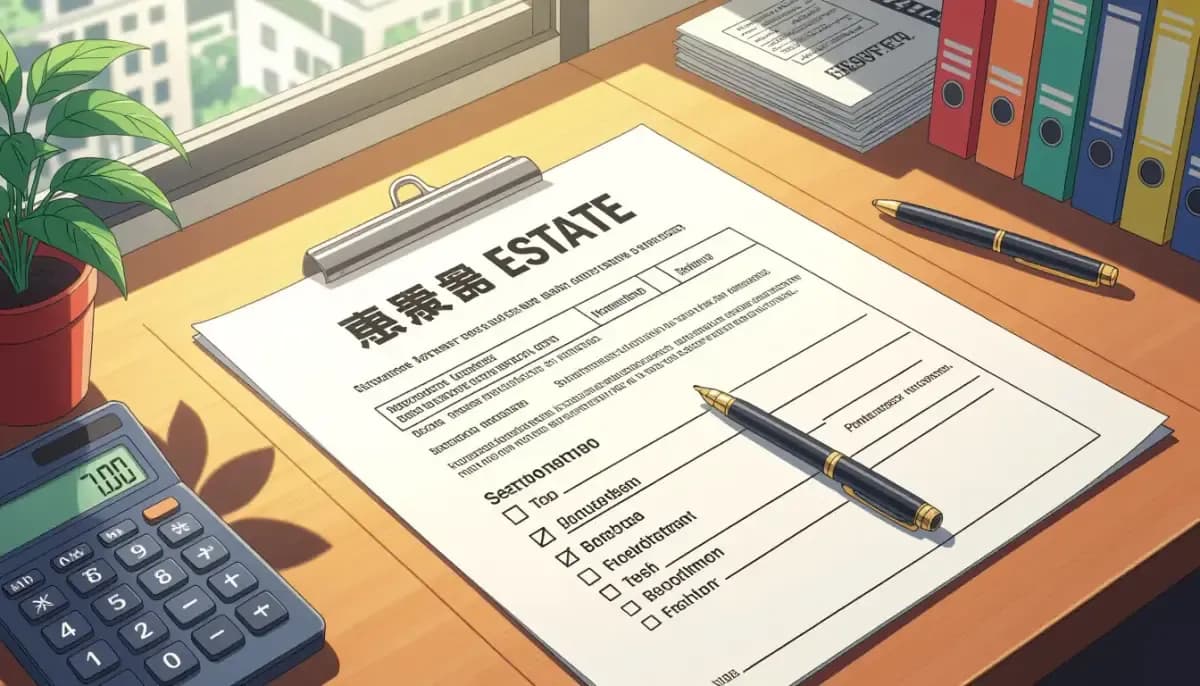
Japan Property Due Diligence Checklist for Investors
Complete due diligence checklist for foreigners buying property in Japan. Covers title verification, seismic compliance, Article 35 disclosure, zoning, taxes, and disaster risk assessment with expert tips for 2025.
Read more →
Japan Property Investment Exit Strategy Guide
Complete guide to exiting your Japan property investment: capital gains tax rates, sell vs rent comparison, timing strategy, and step-by-step selling process for foreign investors.
Read more →
Japan Property Market Cycles: When to Buy and Sell
Master Japan property market cycles with this complete guide for foreign investors. Learn the best seasons to buy, when to sell for maximum returns, and how regional markets diverge in 2025-2026.
Read more →
How to Invest in Japan Property from Overseas
Complete guide to investing in Japan property from overseas. Legal requirements, tax obligations, financing options, property management, and step-by-step process for non-resident foreign investors.
Read more →