
Property Scam Types Targeting Foreigners in Japan: How to Stay Safe

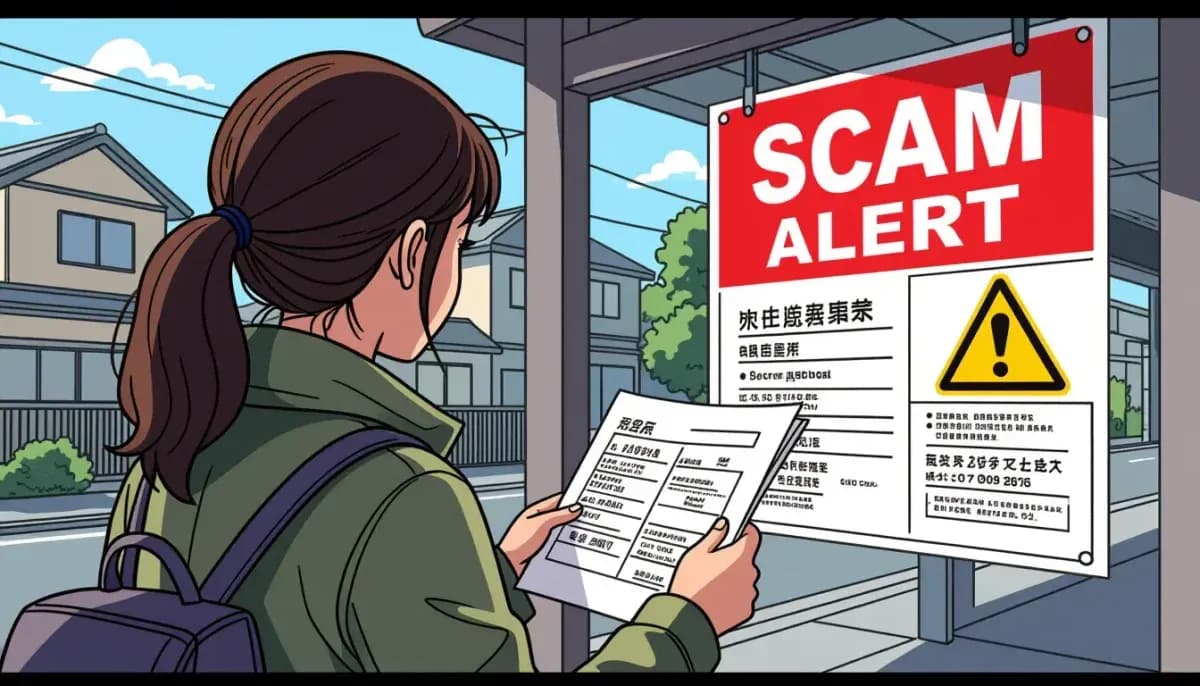
Learn about the most common property scams targeting foreigners in Japan — unlicensed agents, title fraud, akiya traps, and rental scams — and how to protect yourself with verified steps.
Property Scam Types Targeting Foreigners in Japan: How to Stay Safe
Buying property in Japan as a foreigner is an increasingly popular goal — but the process comes with real risks that many newcomers aren't prepared for. While Japan is generally considered a safe, law-abiding country, property scams targeting foreigners do occur, often exploiting language barriers, unfamiliarity with local legal systems, and the excitement of securing a dream home. This guide covers the most common types of property scams in Japan, how to recognize red flags, and the concrete steps you can take to protect yourself.
The Most Common Property Scam Types in Japan
Understanding the specific tactics used against foreign buyers is the first step to staying safe. Here are the scam types you are most likely to encounter:
1. Unlicensed Middlemen Scams
One of the most frequent scams involves individuals posing as helpful "facilitators" or "consultants" who promise to help foreigners navigate the Japanese real estate market in English. These unlicensed middlemen collect upfront fees — sometimes labeled as "translation fees," "consultation fees," or "introduction fees" — and then disappear, hand over responsibility to a third party, or fail to deliver on any promises.
In Japan, operating as a real estate agent legally requires a national or prefectural license issued by the Ministry of Land, Infrastructure, Transport and Tourism (MLIT). Licensed agents are required to post their license number prominently in their office and on all documents. Anyone who cannot provide a verifiable license number should be avoided entirely.
2. Title Confusion and Fake Ownership Scams
Title confusion scams involve buyers paying money to someone who does not actually have the legal authority to sell the property. This can happen when a property is co-owned by multiple heirs (common with inherited rural homes), when the listed seller is not the registered owner on official documents, or when fraudsters forge ownership paperwork.
The official defense against this type of scam is the registry extract (登記事項証明書 / touki jiko shomeisho), obtainable from any Legal Affairs Bureau (法務局) in Japan. This document shows the current registered owner, all liens, mortgages, and encumbrances on the property. You should always obtain this document yourself — independently, not through the seller — and carefully match the registered owner's name against the seller's official ID before paying anything.
3. The Cheap Akiya Trap
Japan has a growing stock of akiya (空き家 / abandoned houses), particularly in rural areas. These properties are sometimes advertised at extremely low prices — occasionally for just ¥1 — and attract considerable interest from budget-conscious foreign buyers. However, many of these deals are scams or at best serious financial traps.
Hidden costs associated with cheap akiya include:
- Mandatory demolition costs (often ¥1–3 million) if the structure cannot be renovated
- Access restrictions if the property has no legal road access
- Rebuilding restrictions that prevent new construction on the plot
- Agricultural land designations that prohibit residential use
Scammers exploit the excitement around these bargain listings to rush buyers into paying fees before the full picture is disclosed. Always commission a professional building inspection and verify zoning regulations before committing to any rural property deal.
4. Pre-Arrival Rental Scams
Foreigners who begin their property search before arriving in Japan are particularly vulnerable to pre-arrival scams. Fraudsters copy real listing photos from legitimate platforms like SUUMO, Homes.co.jp, or Airbnb and repost them on English-language Facebook groups, expat forums, and fake websites — often at prices that seem slightly better than market rate.
These fake "landlords" or "agents" then:
- Claim they are abroad and cannot meet in person
- Create artificial urgency ("three other people are interested")
- Request deposits via international wire, PayPal Friends & Family, or cryptocurrency
- Disappear after receiving payment
A simple reverse image search of any property photos can reveal whether the same images appear on multiple platforms. Legitimate Japanese landlords and agents never request deposits before signing a formal contract, and all payments go through Japanese bank accounts under the company's official name.
Red Flags: When to Walk Away
The following warning signs indicate a likely scam or at minimum a highly problematic transaction. If you encounter any of these, slow down or stop entirely:
| Red Flag | What It May Indicate |
|---|---|
| Payment demanded before viewing property | Pre-arrival scam or unlicensed agent |
| No physical office address or license number | Unlicensed or fake agent |
| Requests for cash, crypto, or PayPal F&F | Fraudulent transaction |
| Seller cannot verify identity or ownership | Title confusion scam |
| "Extremely urgent" pressure tactics | High-pressure fraud scheme |
| Property price far below area average | Hidden costs or outright scam |
| Agent refuses to show registry extract | Title or lien concealment |
| Contract presented in Japanese with no explanation | Language exploitation |
How to Verify a Legitimate Real Estate Agent in Japan
Japan's real estate industry is regulated by the Real Estate Transactions Act (宅地建物取引業法). Every legitimate agency must:
- Hold a valid MLIT or prefectural license — verify through the MLIT online database
- Display their license in their office — look for the "宅地建物取引業者" sign with a license number
- Assign a licensed transaction specialist (宅建士) to explain all important matters before signing
- Provide a written Explanation of Important Matters (重要事項説明書) before the sales contract is signed
Commissions for real estate agents in Japan are legally capped at approximately 3% of the property purchase price plus ¥60,000, plus consumption tax. Any agent requesting far higher fees or upfront fees before services are delivered should be treated with extreme caution.
For a full walkthrough of working with legitimate agents and understanding the purchase process, see our Step-by-Step Home Buying Process in Japan for Foreigners.
Protecting Yourself: A Practical Safety Checklist
Here is a practical checklist you can use during any property transaction in Japan:
Before Paying Anything:
- [ ] Confirm the agent's MLIT license number and verify it online
- [ ] Obtain the registry extract (touki jiko shomeisho) independently from the Legal Affairs Bureau
- [ ] Match the registered owner's name against the seller's official government-issued ID
- [ ] Research the property address on Google Maps and confirm it exists
- [ ] Check whether the property has legal road access (接道義務 / setsu-do gimu)
- [ ] Reverse image search all property photos
Before Signing a Contract:
- [ ] Have a qualified bilingual translator review all documents (not an amateur or the seller's assistant)
- [ ] Read the Explanation of Important Matters (重要事項説明書) fully before signing
- [ ] Check for any liens, mortgages, or usage restrictions on the registry extract
- [ ] Confirm all fees and commissions in writing before committing
- [ ] For rural properties: commission a professional building inspection
For Payments:
- [ ] Make all payments via Japanese bank transfer to the agent's or seller's official account
- [ ] Never pay in cash, cryptocurrency, or via PayPal Friends & Family
- [ ] Confirm the bank account holder matches the registered company or individual
For more on the Hidden Costs and Fees When Buying Property in Japan, read our dedicated guide.
Special Risks for Specific Property Types
Different property categories carry different scam risks. Understanding these nuances will help you focus your due diligence appropriately.
Investment Properties Marketed to Overseas Buyers
A growing category of scam targets foreign investors who purchase Japanese property without visiting. These deals are often marketed through overseas real estate exhibitions, English-language websites, or social media ads promising high rental yields. The reality can be:
- Overvalued properties priced above fair market value
- Fabricated or inflated rental income projections
- Properties in declining areas with poor rental demand
- Hidden management fees that eliminate projected profits
Always engage an independent local appraiser and property manager before purchasing an investment property remotely. As of 2025, foreign residents now account for approximately 3% of Tokyo new apartment buyers (rising to 7.5% in central wards), making this a target-rich environment for unscrupulous sellers.
Condo Purchases and Hidden Maintenance Costs
Condo ownership in Japan comes with ongoing obligations that some sellers deliberately obscure. These include monthly management fees (管理費), monthly repair reserve funds (修繕積立金), and potential special assessments for major building repairs. These costs typically range from ¥15,000 to ¥40,000 per month combined, and can surge significantly for older buildings facing major renovation requirements.
Always check the status of the repair reserve fund balance and ask for meeting minutes from the condo management association before purchasing. Our guide on Property Taxes and Annual Costs of Owning Property in Japan covers these ongoing expenses in detail.
Trusted Resources and Where to Report Scams
If you suspect you have been targeted by a property scam in Japan, or want to verify whether an agent is legitimate, the following resources are available:
- MLIT Real Estate Agent License Lookup: Official government database for verifying broker credentials
- Legal Affairs Bureau (法務局): Obtain official registry extracts and property records
- National Consumer Affairs Center of Japan (国民生活センター): Report consumer fraud and get advice
- Local municipal consumer centers: Prefectural and city-level support for residents
For broader context on navigating the Japanese property market as a foreigner — including success stories and cautionary tales — Gaijin Buy House's case study collection provides real-world examples that illustrate both the opportunities and the pitfalls.
Additional guidance on recognizing predatory practices and understanding your rights is available at Living in Nihon's property buying and mortgage guide and the For Work in Japan housing infrastructure guide.
For a deep dive into the specific scam mechanics and how experienced buyers navigated them, the Bamboo Routes guide to avoiding real estate scams in Japan is an excellent English-language resource.
Final Thoughts
Japan's property market offers genuine opportunities for foreign buyers, from urban condos to rural farmhouses. But those opportunities come with real risks — particularly for buyers who prioritize English-language convenience over verified credentials, or who feel pressured to move quickly in a competitive market.
The single most important rule: never pay money before you have independently verified the registry extract and confirmed the seller's legal authority to sell. Everything else — agent checks, building inspections, contract reviews — builds on that foundation.
With proper due diligence and the right professional support, you can navigate Japan's property market safely. For the full process from start to finish, see our Complete Guide to Buying Property in Japan as a Foreigner.

Originally from Vietnam, living in Japan for 16+ years. Graduated from Nagoya University, with 11 years of professional experience at Japanese and international companies. Sharing information about buying property in Japan for foreigners.
View Profile →Related Articles

Consumer Protection Rights for Foreign Property Buyers in Japan
Complete guide to consumer protection rights for foreign property buyers in Japan. Learn about the Statement of Important Matters, mandatory warranties, title registration, and dispute resolution options available to non-Japanese buyers.
Read more →
Legal Dispute Resolution for Property Issues in Japan
Facing a property dispute in Japan? Learn how to resolve legal issues as a foreigner — from mediation and arbitration to court litigation. Practical step-by-step guide with costs, timelines, and attorney tips.
Read more →
Due Diligence Mistakes That Cost Foreign Buyers in Japan
Discover the most costly due diligence mistakes foreign buyers make when purchasing property in Japan — from title verification failures to hidden fees, scams, and seismic safety oversights. Includes a complete checklist.
Read more →
Skipping Property Inspection: Consequences and How to Avoid
Skipping a property inspection in Japan can cost you millions of yen in hidden defects. Learn what happens when you skip, how much inspections cost, and how to protect yourself as a foreign buyer.
Read more →
Rushing the Purchase: Why Taking Your Time Matters in Japan
Discover why patience is essential when buying property in Japan. Learn the real costs of rushing a purchase, what due diligence steps take time, and how to protect yourself as a foreign buyer.
Read more →
Language Barrier Mistakes When Buying Property in Japan
Avoid costly language barrier mistakes when buying property in Japan. Learn how to handle Japanese contracts, mortgage documents, and legal disclosures as a foreign buyer.
Read more →