
Hanko Seal Requirements for Property Purchase in Japan

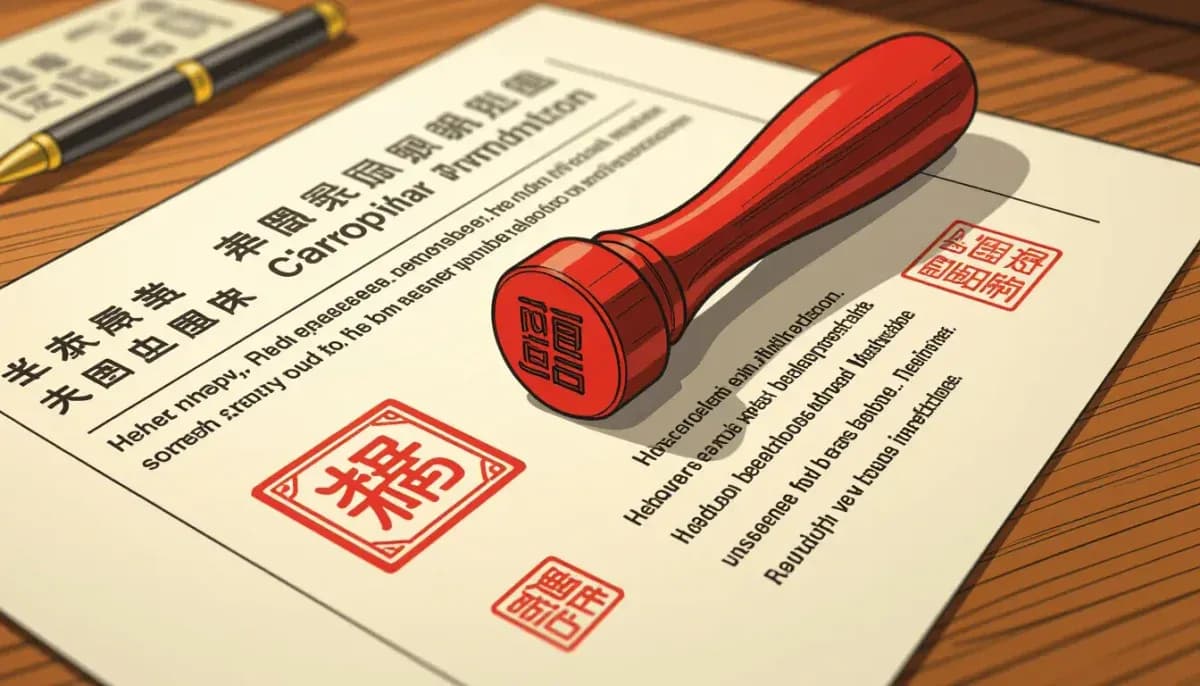
Learn everything about hanko seal requirements for buying property in Japan as a foreigner. Covers jitsuin registration, Inkan Shomeisho, non-resident alternatives, and the 2022 digital reform.
Hanko Seal Requirements for Property Purchase in Japan
If you're a foreigner planning to buy property in Japan, you'll quickly discover that a small carved stamp — the hanko — plays an outsized role in Japanese legal and financial life. Unlike most Western countries where a handwritten signature suffices for major transactions, Japan's property purchase process traditionally revolves around the hanko seal. Understanding exactly which seal you need, how to get it, and what alternatives exist for non-residents can save you significant confusion and delays. This guide covers everything foreigners need to know about hanko seal requirements for buying property in Japan.
For a full overview of the buying process, see our Step-by-Step Home Buying Process in Japan for Foreigners and the Legal Procedures and Documentation for Japan Property Purchase guide.
What Is a Hanko and Why Does It Matter for Property Purchases?
A hanko (判子), also called an inkan (印鑑), is a personal seal engraved with your name, used in place of a signature for official documents in Japan. While Japan has been gradually digitizing its paperwork since 2021, the hanko remains central to property transactions.
There are three main types of hanko in everyday Japanese life:
| Type | Japanese | Purpose | Registration Required? |
|---|---|---|---|
| Jitsuin | 実印 | Legal contracts, property purchases, important documents | Yes — at municipal office |
| Ginko-in | 銀行印 | Banking transactions only | Yes — with your bank |
| Mitome-in | 認印 | Everyday informal use (deliveries, internal forms) | No |
For property purchases, only the jitsuin (registered seal) is legally recognized. This is the most important seal a person can have in Japan, and its use carries the same weight as a notarized signature in Western legal systems. When you affix your jitsuin to a purchase agreement or property registration document, you are making a legally binding commitment that cannot be undone without significant legal process.
The Jitsuin Registration Process for Foreigners
Registering a jitsuin as a foreigner in Japan is straightforward if you are a resident, but does have specific requirements.
Who Can Register a Jitsuin?
To register a jitsuin in Japan, you must:
- Hold a residence card (在留カード) or special permanent resident certificate
- Have a certificate of residence (juuminhyo / 住民票) registered in your municipality
- Be at least 15 years old
- Not be on a temporary visitor (tourist) visa
If you are living in Japan on a work visa, spouse visa, long-term resident visa, permanent residence, or similar status, you are eligible to register a jitsuin.
Step-by-Step Registration
- Purchase or have your hanko engraved. Cost is typically ¥1,000–¥5,000 depending on material and craftsmanship. Common materials include wood, bamboo, acrylic, titanium, and ebony.
- Check your name format. Your seal must display your name as it appears on your residence registration. For foreigners, acceptable formats include katakana transliteration, alphabetic letters, or kanji if your name has a kanji form. Family name only, first name only, or full name are all valid.
- Visit your local city hall (市役所) or ward office (区役所). Bring your hanko, residence card, and passport.
- Submit a hanko registration application. Staff will verify that your seal meets the size and material requirements.
- Receive your hanko registration card. This is used to obtain the Inkan Shomeisho (印鑑証明書 — Certificate of Seal Impression) for each transaction.
- Registration fee: approximately ¥100–¥400 (varies by municipality).
- Processing time: typically 15–30 minutes.
Hanko Size and Material Requirements
Your hanko must comply with the following rules or it will be rejected:
- Larger than 8mm per side and fit within a 25mm square
- Cannot be a rubber stamp or self-inking stamp
- Cannot bear corporate logos, illustrations, or decorative frames around the name
- Only one jitsuin per person is permitted — you cannot register two seals simultaneously
- Round, square, and oval shapes are all accepted
For more information on the overall legal framework for foreigners buying property in Japan, see Can Foreigners Buy Property in Japan? Legal Rights and Restrictions.
The Inkan Shomeisho: Your Seal Certificate
Registering your hanko is only half the equation. Every time you use your jitsuin for a major transaction — including a property purchase — you must also present an Inkan Shomeisho (印鑑証明書), a Certificate of Seal Impression issued by your municipal office.
Key points about the Inkan Shomeisho:
- It certifies that the seal impression on a document was made by the registered jitsuin of the named person.
- It must be issued within 3 months of the date of the transaction. Older certificates are not accepted.
- It costs approximately ¥300–¥500 per copy. You can obtain one at city hall, a convenience store kiosk, or via the My Number Card system.
- For a property purchase, you will typically need one or two copies — one for the purchase contract and one for the property registration.
Think of the Inkan Shomeisho as the Japanese equivalent of a notary's stamp on a witnessed signature: it provides third-party governmental confirmation that the seal used was yours.
For a deeper look at all the paperwork involved, check the Legal Procedures and Documentation for Japan Property Purchase guide and the Hidden Costs and Fees When Buying Property in Japan article which covers certificate fees and other transaction costs.
Options for Non-Resident Foreigners: Buying Without a Jitsuin
Japan imposes no nationality restrictions on property ownership, meaning a foreigner living overseas can legally purchase property in Japan. However, if you do not have a Japanese residence registration, you cannot register a jitsuin. Here is what non-residents can do instead:
Notarized Signature Affidavit
For overseas buyers, a certified signature affidavit (署名証明書 / shomei shomeisho) is the standard substitute for the jitsuin + Inkan Shomeisho combination. The process:
- Visit your home country's notary public or the Japanese embassy or consulate in your country.
- Sign the relevant documents in front of the official.
- The official issues a certificate attesting to your signature.
- This certified document substitutes for the seal impression in the property transaction.
Some municipalities accept a notarization from the buyer's home country, while Japanese consulates will certify signatures under Japanese legal standards.
Power of Attorney
Many non-resident buyers appoint a trusted representative in Japan (often a real estate attorney or judicial scrivener) via a notarized Power of Attorney. This representative can:
- Execute and sign documents on your behalf
- Register the property transfer at the Legal Affairs Bureau
- Handle the practical logistics of the transaction
The Power of Attorney itself must also be notarized and in some cases apostilled.
Tax Representative Requirement
Non-resident property buyers in Japan must also appoint a tax representative (納税管理人) who is a Japan resident. This person receives tax notices and is responsible for filing on your behalf. This is a separate requirement from the POA representative.
For details on the visa and residency aspects of property ownership, see Visa and Residency Considerations for Property Buyers in Japan.
The 2022 Digital Reform: Are Seals Still Required?
In May 2022, Japan amended 48 real estate-related laws to allow digital delivery and electronic signatures for many real estate documents, including:
- Sales and purchase agreements
- Explanation of Important Matters (重要事項説明書)
- Condominium management contracts
- Real estate joint venture contracts
This was a significant reform. In principle, parties can now execute property transactions without a physical hanko if both parties consent to electronic delivery.
However, in practice, adoption has been slow:
- Only approximately 20% of real estate deals were fully digital in 2023, per Ministry of Land, Infrastructure, Transport and Tourism (MLIT) data.
- Many real estate agencies still default to paper documents and physical seals.
- Property registration applications at Legal Affairs Bureaus still require physical impressions in most cases.
- Corporate sellers and institutional sellers are more likely to use digital processes; individual sellers rarely do.
The practical advice for most buyers in 2025: assume you will need a jitsuin and prepare accordingly. Ask your real estate agent early in the process whether they support electronic documents.
For current market context, see Japan Real Estate Market Overview and Trends for Foreign Investors.
Documents That Require Your Jitsuin During a Property Purchase
Here is a practical summary of where your jitsuin will be needed during a typical residential property transaction:
| Document | Jitsuin Required? | Inkan Shomeisho Required? |
|---|---|---|
| Purchase and Sale Agreement (売買契約書) | Yes (buyer and seller) | Yes (issued within 3 months) |
| Explanation of Important Matters (重要事項説明書) | Usually yes | Sometimes |
| Property Registration Application | Yes | Yes |
| Mortgage/Loan Agreement | Yes | Yes |
| Power of Attorney (if using an agent) | Yes | Yes |
| Resident Certificate Application | No | N/A |
Beyond the jitsuin, you will also need a full set of other documentation as a foreigner. See our complete Legal Procedures and Documentation for Japan Property Purchase guide for the full document checklist.
Practical Tips for Getting Your Hanko Ready
1. Do this early. Register your jitsuin before you start seriously looking at properties. The registration itself is quick, but if you need to obtain your residence card first or update your address registration, that takes more time.
2. Choose the right material. For a seal you will use for major legal documents, opt for a durable material. Titanium and high-quality hardwoods (such as ebony or buffalo horn) are popular among foreigners for their longevity.
3. Keep your seal secure. Your jitsuin should never be kept together with your Inkan Shomeisho certificate. If both are lost or stolen together, they can be used fraudulently. Store the seal securely at home and only bring it to the city hall to request a fresh certificate when needed.
4. Request the Inkan Shomeisho close to the transaction date. Since it must be dated within 3 months, don't request it months in advance. Request it 1–2 weeks before your scheduled signing.
5. Notify the municipal office if your seal is lost. You can register a new jitsuin after reporting the old one as lost. The old seal is immediately invalidated upon notification.
6. Budget for it. The total cost of getting a quality hanko engraved and registered, plus two Inkan Shomeisho copies, is around ¥6,000–¥10,000 — a minor expense in the context of a property purchase.
For a comprehensive look at all costs involved in a Japan property purchase, see Hidden Costs and Fees When Buying Property in Japan and Property Taxes and Annual Costs of Owning Property in Japan.
Additional Resources for Foreigners Buying Property in Japan
Getting the hanko right is just one step in the process. For broader guidance on living in Japan as a foreigner, Living in Nihon offers practical guides on daily life in Japan including administrative procedures. For foreigners who came to Japan through employment, For Work in Japan covers working visa and residency topics that directly affect your eligibility to register a jitsuin. And for comprehensive real estate guidance specifically targeting foreign buyers, Gaijin Buy House is a dedicated resource covering the Japan property market.
For deeper research, Aikagi's complete hanko guide for foreigners and the Old Houses Japan blog offer detailed walkthroughs of the registration process. The official English-language update on Japan's digital real estate reform is available at realestate.co.jp.
Conclusion
The hanko seal requirement is one of the more Japan-specific aspects of buying property here, but it is not as intimidating as it first appears. If you are a resident foreigner, registering a jitsuin takes under an hour and costs a few hundred yen. If you are buying from overseas, a notarized signature affidavit provides an effective substitute. The key is to prepare early, understand exactly which documents require your jitsuin and Inkan Shomeisho, and ask your real estate agent and judicial scrivener about their preferred process.
Japan's gradual digitization is slowly reducing the role of physical seals, but for the foreseeable future, the jitsuin remains an essential tool in any foreigner's Japan property-buying toolkit. Start the Step-by-Step Home Buying Process in Japan and make hanko registration one of your first administrative tasks after establishing residency.

Originally from Vietnam, living in Japan for 16+ years. Graduated from Nagoya University, with 11 years of professional experience at Japanese and international companies. Sharing information about buying property in Japan for foreigners.
View Profile →Related Articles

Common Delays in Japan Property Purchase and How to Avoid Them
Discover the 7 most common causes of delays when buying property in Japan as a foreigner — from mortgage rejections to unregistered buildings — and practical steps to avoid them.
Read more →
Japan Property Closing Costs Complete Breakdown
A full breakdown of Japan property closing costs for foreign buyers: agent fees, stamp duty, registration tax, acquisition tax, scrivener fees, and mortgage costs. Budget accurately with our detailed guide.
Read more →
Using Power of Attorney for Japan Property Purchase
Learn how to use power of attorney (委任状) to buy property in Japan as a foreign non-resident buyer. Covers POA types, notarization, apostille, costs, and who can represent you.
Read more →
Property Registration (Touki) in Japan Explained
Learn how Japan's touki property registration system works, including process steps, costs, required documents, and special rules for foreign buyers. Updated for 2025-2026.
Read more →
Closing and Settlement Process in Japan Real Estate
Complete guide to closing and settlement in Japan real estate for foreign buyers. Learn what happens on closing day, required documents, costs (6-10%), judicial scrivener role, and post-closing obligations.
Read more →
Property Inspection and Building Survey in Japan
Learn everything about property inspection and building surveys in Japan for foreigners. Costs, qualified inspectors, what to check, and how to use findings to negotiate your purchase.
Read more →