
Property Registration (Touki) in Japan Explained


Learn how Japan's touki property registration system works, including process steps, costs, required documents, and special rules for foreign buyers. Updated for 2025-2026.
Property Registration (Touki) in Japan Explained
When you buy property in Japan, signing the contract and handing over the money is not the finish line — it is only the beginning. The critical final step is touki (登記), Japan's official property registration system. Until your name appears in the government's property register, you do not legally own the property in the eyes of Japanese law. For foreigners navigating the Japanese real estate market, understanding touki is essential to protecting your investment and your ownership rights.
This guide explains exactly what touki is, how the registration process works, what documents are required, the costs involved, and the special rules that apply to foreign buyers in Japan.
What is Touki (登記)?
Touki literally means "registration" in Japanese, and in the context of real estate it refers to the formal recording of property information in the tokibo (登記簿) — Japan's official real estate register — maintained by the Legal Affairs Bureau (法務局, Houmu-kyoku) of the Ministry of Justice.
Every parcel of land and virtually every building in Japan has its own dedicated record in this register. The tokibo for each property contains two main sections:
- Title section (表題部, hyoudaibu): Physical details including location, land area in square meters, land use category (residential, commercial, agricultural), building structure type (wood, reinforced concrete, steel-frame), floor area, and year of construction.
- Rights section (権利部, kenribu): Legal information including the current owner's name and address, the date ownership was established, any mortgages or liens (hypothec, 抵当権), easements, superficies, or other encumbrances.
The registration system exists to provide transparency and legal certainty. When you search the register before buying, you can confirm that the seller actually owns the property and see any debts or restrictions attached to it. Japan's Civil Code (Article 177) establishes a key principle: ownership rights can only be legally asserted against third parties once registered. Without registration, another buyer or creditor could theoretically challenge your claim.
For a comprehensive overview of the entire buying process, see our Complete Guide to Buying Property in Japan as a Foreigner.
Types of Property Registration in Japan
Not all registrations are the same. There are several types of touki that matter to property buyers:
| Registration Type | Japanese | When Required |
|---|---|---|
| Ownership Preservation Registration | 所有権保存登記 | New construction — first-time registration |
| Ownership Transfer Registration | 所有権移転登記 | Buying / selling / gifting existing property |
| Hypothec Registration | 抵当権設定登記 | When taking out a mortgage |
| Hypothec Cancellation | 抵当権抹消登記 | After repaying a mortgage |
| Address Change Registration | 住所変更登記 | When owner moves |
| Inheritance Registration | 相続登記 | When inheriting property |
For most foreign buyers purchasing an existing property, the key registration is the Ownership Transfer Registration (所有権移転登記). This records the official transfer of ownership from the seller to you. If you are also taking out a mortgage, a separate Hypothec Registration is filed simultaneously by your lender.
Important 2024 update: As of April 2024, Japan made inheritance registration legally mandatory. Previously, heirs often failed to register inherited property, leading to hundreds of thousands of properties with unclear ownership across the country. Now, heirs must complete registration within three years of inheriting or face fines.
The Property Registration Process Step by Step
While it is technically possible to handle registration yourself, the vast majority of buyers — Japanese and foreign alike — hire a judicial scrivener (司法書士, shihoshoshi) to manage the process. Here is how it typically unfolds:
Step 1: Appoint a Judicial Scrivener
A judicial scrivener is a nationally licensed legal professional who specializes in property registration, corporate filings, and inheritance procedures. Your real estate agent will almost always recommend one, or you can find one through the Japan Federation of Shiho-Shoshi Lawyer's Associations.
Unlike attorneys (弁護士, bengoshi), judicial scriveners cannot represent you in court disputes, but they have deeper expertise in registration documentation and are the standard choice for real estate transactions. They verify the tokibo before closing, prepare all registration documents, and submit them to the Legal Affairs Bureau on your behalf.
Step 2: Gather Required Documents
At settlement, you and the seller must provide documents to the judicial scrivener. As a foreign buyer, the list differs slightly from what a Japanese national would provide:
Documents required from foreign buyers:
- Valid passport (original)
- Residence card (在留カード, zairyu card) — both sides
- Residence certificate (住民票, juminhyo) — if you have a Japanese address
- Personal seal certificate (印鑑証明書) — if you have a registered seal in Japan
- For buyers without a Japanese address: a notarized signature certificate and address affidavit from your home country or Japanese embassy/consulate
If you reside overseas and do not have a Japanese address, you must also designate a domestic contact person (国内管理人) and register their name and address alongside the property registration.
Step 3: Settlement Day at the Bank
Settlement typically takes place at the buyer's bank branch. The judicial scrivener attends alongside the buyer, seller, real estate agents, and bank representatives. In the same session:
- The seller receives the remaining purchase balance
- All registration documents are signed and stamped
- The judicial scrivener collects the documents and submits them to the Legal Affairs Bureau
Step 4: Legal Affairs Bureau Processing
The Legal Affairs Bureau processes the registration application, which typically takes 1 to 2 weeks. The total process from document preparation to completed registration is approximately 2 to 4 weeks.
Step 5: Receive Certified Copy of Registry
Once registration is complete, you receive a touki jiko shomeisho (登記事項証明書) — a certified copy of the property registry showing your name as the registered owner. Keep this document safely; it is the official proof of your ownership. You can also request updated copies at any time from the Legal Affairs Bureau for a small fee (around ¥480–¥600).
For details on all the legal paperwork involved in a property purchase, see our guide on Legal Procedures and Documentation for Japan Property Purchase.
Costs of Property Registration in Japan
Registration in Japan involves two types of costs: the government registration tax and the judicial scrivener's professional fee.
| Cost Item | Rate / Amount | Example (¥40M property) |
|---|---|---|
| Registration Tax — Ownership Transfer | 2.0% of assessed value | ~¥800,000 |
| Registration Tax — Ownership Preservation (new builds) | 0.4% of assessed value | ~¥160,000 |
| Registration Tax — Hypothec (mortgage) | 0.4% of loan amount | ~¥800,000 on ¥200M loan |
| Judicial Scrivener Fee | ¥40,000–¥200,000 | Typically ¥100,000–¥150,000 |
| Certified Registry Copy | ¥480–¥600 per copy | Fixed fee |
Registration tax (登録免許税, toroku menkyo zei) is a national tax paid to the government at the time of registration. For existing property ownership transfers, the standard rate is 2.0% of the government-assessed value (固定資産税評価額, kotei shisan zei hyoka gaku), which is typically 60–70% of market value. This means the actual tax burden is somewhat lower than 2% of the purchase price.
Reduced rates apply in certain circumstances:
- Newly built homes meeting specific energy or quality standards may qualify for reduced rates of 0.1–0.3%
- Long-term superior housing (長期優良住宅) and low-carbon certified homes receive preferential treatment
The judicial scrivener's fee is not regulated by law and varies by firm, region, and transaction complexity. Foreign buyers may pay slightly more if translation services or additional notarization of overseas documents is required.
For a full breakdown of all transaction costs, visit our guide on Hidden Costs and Fees When Buying Property in Japan.
Special Rules for Foreign Buyers
Japan places no restrictions on foreign nationals purchasing or registering real estate. In terms of property rights, foreigners and Japanese nationals are treated identically under the law. However, there are several additional requirements and considerations specific to foreign buyers:
!Special Rules for Foreign Buyers - illustration for Property Registration (Touki) in Japan Explained
No Japanese Address? You Need a Domestic Contact Person
If you are a non-resident foreigner purchasing property in Japan without a Japanese residential address, you are required to register a domestic contact person (国内管理人, kokunai kanrinin). This is typically a trusted individual in Japan (a friend, lawyer, or property management company) whose name and address are recorded in the registry alongside yours. This rule was strengthened in recent years to prevent untraceable foreign ownership.
FEFTA Notification for Overseas Buyers
Under the Foreign Exchange and Foreign Trade Act (FEFTA / 外為法), foreigners residing overseas who acquire real estate in Japan must submit a notification (届出, todoke-de) to the Minister of Finance through the Bank of Japan within 20 days of completing the property acquisition. Failure to notify can result in penalties. Your real estate agent or judicial scrivener should remind you of this obligation.
Nationality Declaration Requirement Coming in 2026
Japan's government announced plans to require all new property buyers to declare their nationality when registering property, starting in fiscal year 2026. This is part of broader efforts to track foreign land ownership, particularly near national security-sensitive areas. The declaration will not prevent foreigners from buying or registering property, but will add their nationality to the public registry record.
Visa Status Does Not Affect Registration Rights
Whether you hold a work visa, spouse visa, permanent residency, or no visa at all (non-resident), you are legally entitled to purchase and register property in Japan. That said, visa status significantly affects your ability to obtain a Japanese mortgage. See our guide on Visa and Residency Considerations for Property Buyers in Japan for more details.
For mortgage document requirements, the team at Gaijin Buy House provides an excellent breakdown of the documentation foreign buyers typically need to prepare for mortgage applications alongside property registration.
How to Search the Property Register
Before purchasing any property, you should conduct a registry search (登記簿謄本, tokibo tohon) to verify ownership and check for encumbrances. This is a standard part of the due diligence process in Japan.
You can obtain a certified copy of the registry at: For detailed guidance on the registration system, the Ministry of Justice Real Property Registration page provides official information.
- The Local Legal Affairs Bureau (法務局): Visit in person with the property address. Costs approximately ¥600 per copy.
- Online via the Ministry of Justice (登記情報提供サービス): Available 24/7 for a fee of around ¥334–¥362 per record. This is an unofficial copy (not certified) but sufficient for research purposes.
The registry is a public document — anyone can search it, not just property owners. This transparency is intentional and protects buyers, lenders, and the public alike.
Common Problems and How to Avoid Them
Unregistered Inherited Properties
Before the April 2024 mandatory inheritance registration law, Japan had a growing problem of properties with unknown or unclear ownership due to unregistered inheritance transfers. If you are buying a property that was recently inherited, confirm that the inheritance registration is complete before proceeding.
Address Mismatches
Your registered address must exactly match the name on your identification documents. For foreigners, discrepancies between passport name, residence card, and personal seal records can create complications. Ensure all documents are consistent.
Delay in Registration
Ownership is not legally secured until registration is filed. If there is any gap between settlement and the filing date, you face a brief period of vulnerability. Competent judicial scriveners minimize this gap by filing registration documents on the same day as settlement.
Outdated Registry Information
The registry reflects historical records and may not capture recent changes. Always request a fresh certified copy immediately before closing — not one that was obtained weeks earlier.
For more guidance on navigating the full buying process, the Living in Nihon property and mortgage guide covers many of the broader considerations for foreigners buying in Japan. You can also find useful resources at For Work in Japan which covers expat life in Japan including housing topics.
After Registration: Maintaining Your Records
Once you are the registered owner, your obligations do not end there:
- Address changes: If you move, update your address in the registry. This is not legally required within a fixed deadline for residential property, but is strongly recommended to avoid complications with future sales or inheritance.
- Annual property tax: As the registered owner, you will receive annual property tax (固定資産税) bills from the municipal government, typically due in four installments. See our guide on Property Taxes and Annual Costs of Owning Property in Japan.
- Future transfers: When you eventually sell or pass on the property, another ownership transfer registration will be required.
Summary
Property registration (touki) in Japan is a straightforward but essential step in any real estate transaction. The process is transparent, well-organized, and managed by qualified judicial scriveners who handle the bureaucratic complexity on your behalf. As a foreign buyer, the key points to remember are:
- Your ownership is not legally protected until registration is complete
- Budget for registration tax (2% of assessed value for transfers) plus judicial scrivener fees (¥40,000–¥200,000)
- Non-resident buyers must designate a domestic contact person
- Overseas buyers must file a FEFTA notification within 20 days
- A mandatory nationality declaration requirement for property registration is coming in fiscal 2026
- Always search the registry before buying to verify ownership and check for encumbrances
Working with an experienced judicial scrivener and a knowledgeable real estate agent will ensure the registration process is handled correctly and efficiently. Once registered, your ownership is secure and publicly verifiable in Japan's reliable legal framework.
For the next steps after registration, explore our guides on Step-by-Step Home Buying Process in Japan for Foreigners and Property Taxes and Annual Costs of Owning Property in Japan.

Originally from Vietnam, living in Japan for 16+ years. Graduated from Nagoya University, with 11 years of professional experience at Japanese and international companies. Sharing information about buying property in Japan for foreigners.
View Profile →Related Articles

Common Delays in Japan Property Purchase and How to Avoid Them
Discover the 7 most common causes of delays when buying property in Japan as a foreigner — from mortgage rejections to unregistered buildings — and practical steps to avoid them.
Read more →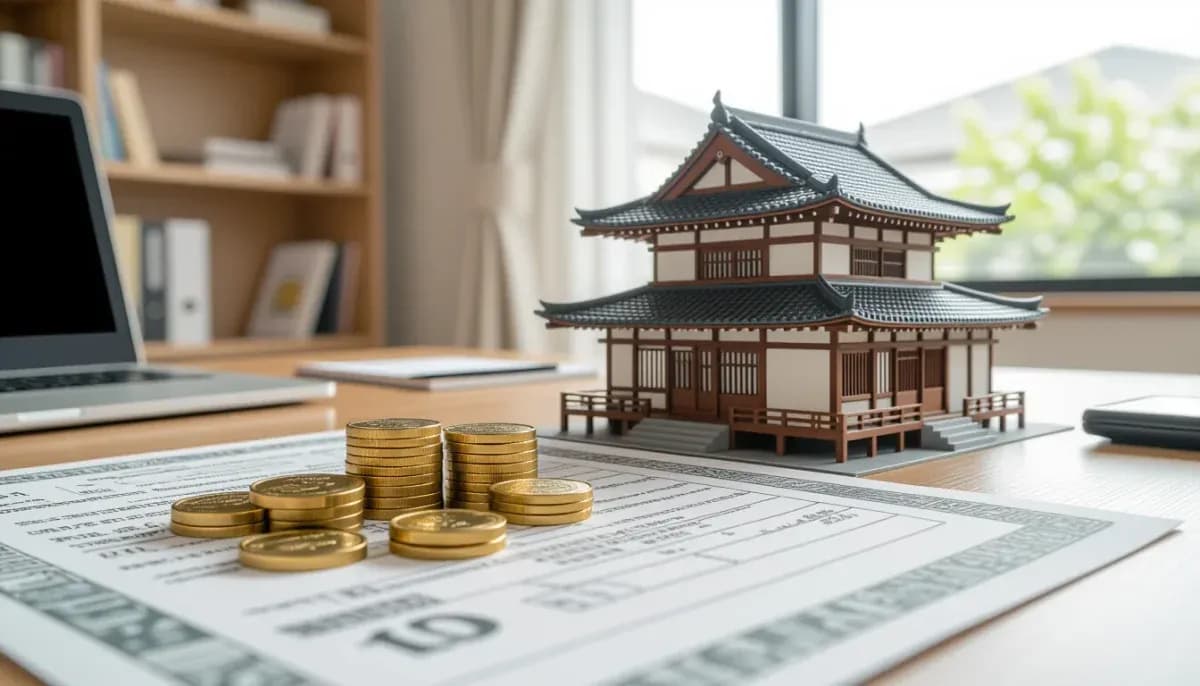
Japan Property Closing Costs Complete Breakdown
A full breakdown of Japan property closing costs for foreign buyers: agent fees, stamp duty, registration tax, acquisition tax, scrivener fees, and mortgage costs. Budget accurately with our detailed guide.
Read more →
Using Power of Attorney for Japan Property Purchase
Learn how to use power of attorney (委任状) to buy property in Japan as a foreign non-resident buyer. Covers POA types, notarization, apostille, costs, and who can represent you.
Read more →
Hanko Seal Requirements for Property Purchase in Japan
Learn everything about hanko seal requirements for buying property in Japan as a foreigner. Covers jitsuin registration, Inkan Shomeisho, non-resident alternatives, and the 2022 digital reform.
Read more →
Closing and Settlement Process in Japan Real Estate
Complete guide to closing and settlement in Japan real estate for foreign buyers. Learn what happens on closing day, required documents, costs (6-10%), judicial scrivener role, and post-closing obligations.
Read more →
Property Inspection and Building Survey in Japan
Learn everything about property inspection and building surveys in Japan for foreigners. Costs, qualified inspectors, what to check, and how to use findings to negotiate your purchase.
Read more →