
Warehouse and Logistics Property Investment in Japan

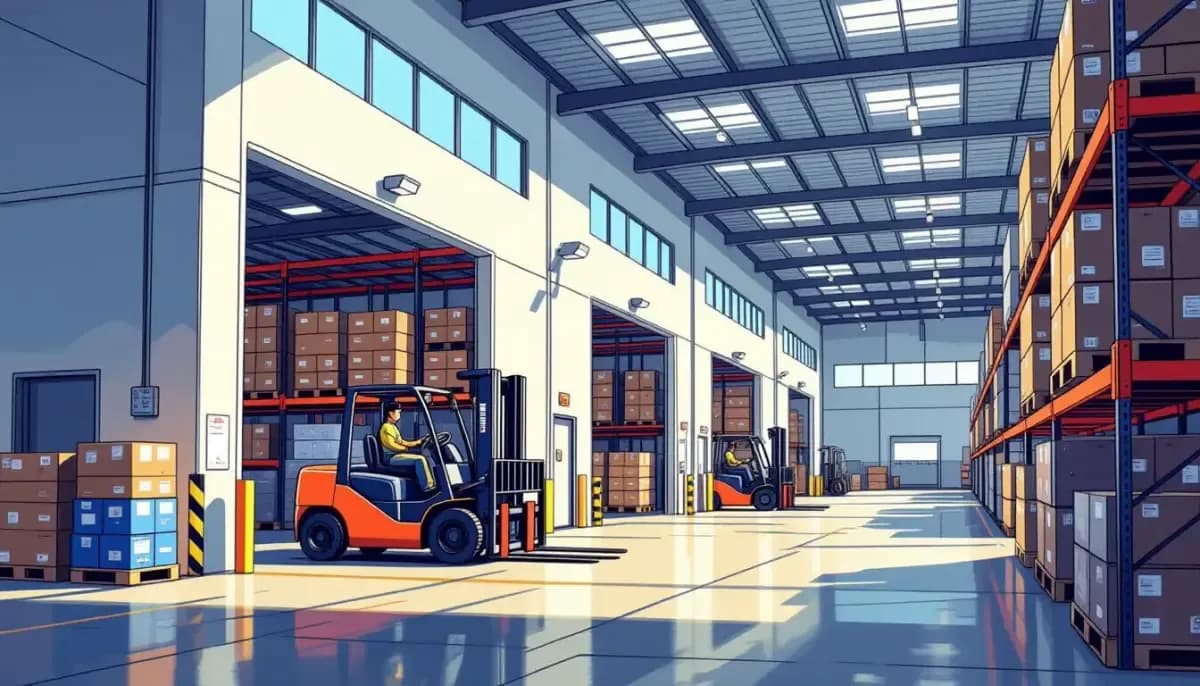
Complete guide to warehouse and logistics property investment in Japan for foreign investors. Learn about market opportunities, financing, taxes, due diligence, and how to buy logistics real estate in Japan.
Warehouse and Logistics Property Investment in Japan: A Complete Guide for Foreign Investors
Japan's logistics and warehouse property sector has become one of the most attractive commercial real estate investment opportunities in Asia. Driven by a booming e-commerce market, a structural shift in supply chain management, and favorable financing conditions, foreign investors are pouring billions into modern logistics facilities across the country. In the first half of 2023 alone, inbound real estate investment in Japan more than doubled to $5 billion, with industrial and logistics properties now accounting for 40% of all foreign real estate investment. Whether you're a seasoned investor or exploring this asset class for the first time, this guide covers everything you need to know about warehouse and logistics property investment in Japan.
Why Japan's Logistics Property Market Is Attracting Global Investors
Japan presents a uniquely compelling case for logistics real estate investment, combining stable cash flows, low financing costs, and growing structural demand.
E-Commerce Growth and the "2024 Problem"
Japan is the world's fourth-largest e-commerce market, and digital retail growth continues to fuel demand for modern distribution facilities. A key catalyst is the so-called "2024 problem"—Japan's revised labor laws that capped overtime hours for truck drivers, effectively reducing logistics capacity and creating urgent demand for more efficient, strategically located warehouses and transit hubs.
This structural shift has accelerated investment in multi-tenant logistics facilities (LMT) near major urban corridors, particularly between Tokyo, Nagoya, and Osaka.
Favorable Financing Conditions
Japanese bank financing offers some of the lowest interest rates in the world. With the Bank of Japan maintaining accommodative monetary policy for years, investors can achieve positive cash-on-cash returns on fully leveraged acquisitions—something increasingly rare in other major markets. According to Jones Lang LaSalle's Asia Pacific chief, you can "get a positive cash-on-cash" return on property investments minus financing costs.
Yen Depreciation Advantage
The yen has weakened significantly against major currencies in recent years. For USD, EUR, or SGD-denominated investors, Japanese real estate prices appear highly discounted. Global high-net-worth investors stand to benefit from both rental yield and potential foreign exchange appreciation when the yen eventually recovers.
No Legal Restrictions for Foreigners
Unlike some countries that restrict foreign ownership of commercial or industrial land, Japan imposes no major legal restrictions on foreigners purchasing real estate—including warehouses and logistics facilities. Both land and buildings can be owned by foreign nationals under the same conditions as Japanese citizens.
For more on the legal framework, see our guide on Commercial Property Investment in Japan for Foreigners.
Key Logistics Property Hubs in Japan
Location is critical in logistics real estate. Japan's major industrial corridors offer different risk-return profiles depending on market maturity and supply pipeline.
| Region | Key Advantage | Vacancy Rate (2025 est.) | Investment Appeal |
|---|---|---|---|
| Greater Tokyo | Largest market, highest liquidity | ~8%+ | High demand but elevated supply |
| Greater Osaka | Second-largest market, lower oversupply | ~3-5% | Strong fundamentals |
| Greater Nagoya | Central corridor, auto/manufacturing hub | ~3-4% | Stable, growing |
| Greater Fukuoka | Gateway to Kyushu, cross-Asia logistics | ~2-4% | Emerging, high upside |
| Sapporo (Hokkaido) | Northern distribution hub | ~4-5% | Niche but growing |
Greater Tokyo is the most active market but faces short-term headwinds from a surge in new supply. New modern multi-tenant logistics facilities in Greater Tokyo total approximately 1.9 million square meters of new supply, keeping vacancy rates above 8% through 2025. In contrast, Greater Osaka, Nagoya, and Fukuoka have tighter vacancy rates and may offer better near-term rent stability.
For city-specific guidance, see Buying Property in Tokyo as a Foreigner and Buying Property in Osaka as a Foreigner.
Types of Warehouse and Logistics Facilities to Invest In
Not all logistics properties are created equal. Understanding the major categories helps you align investments with your return objectives and risk tolerance.
Multi-Tenant Logistics (MTL) Facilities
These large, modern warehouses—typically 5+ stories in major urban markets—are leased to multiple tenants. They offer:
- Diversified income streams
- High specifications (temperature control, robotics-ready)
- Strong demand from e-commerce and 3PL operators
Institutional investors like Blackstone, GIC, ESR, and CapitaLand have collectively invested over JPY 900 billion ($6.2 billion USD) in these assets across Japan.
Single-Tenant Distribution Centers
Custom-built for a single occupier (usually a major retailer or logistics company), these offer long-term leases (10–20 years) with built-in rent escalation. Lower management overhead but concentration risk.
Cold Storage and Temperature-Controlled Facilities
Japan's sophisticated food distribution network requires specialized cold storage. These assets command premium rents and have a limited supply base, making them attractive for yield-focused investors.
Last-Mile Urban Logistics
Small-to-medium facilities close to city centers for same-day or next-day delivery operations. Growing segment driven by urban e-commerce demand, though land costs near city centers are high.
How to Invest in Japanese Logistics Real Estate as a Foreigner
There are several pathways for foreign investors to access this asset class.
Direct Property Purchase
For investors with sufficient capital (typically ¥500 million+), direct acquisition of a logistics facility is possible. The process involves:
- Identifying a target property through a licensed real estate broker
- Conducting due diligence (title, environmental, structural inspections)
- Negotiating a sale agreement
- Completing registration with the Legal Affairs Bureau
Transaction costs (stamp duty, registration fees, brokerage, taxes) typically total 6–10% of the purchase price. A judicial scrivener (shiho-shoshi) handles the legal documentation. See our detailed walkthrough: Legal Procedures and Documentation for Japan Property Purchase.
J-REITs (Japanese Real Estate Investment Trusts)
For investors who want exposure to logistics real estate without direct management, J-REITs offer a liquid, low-minimum-investment alternative. Several major J-REITs specialize in logistics and industrial assets, including:
- GLP J-REIT
- Nippon Prologis REIT
- LaSalle Logiport REIT
J-REITs are traded on the Tokyo Stock Exchange and accessible to foreign investors through most brokerage accounts. Learn more: J-REITs and Indirect Real Estate Investment in Japan for Foreigners.
Real Estate Funds and Joint Ventures
Many international fund managers operate Japan-focused logistics real estate funds, allowing institutional and high-net-worth investors to participate in diversified portfolios. Minimum investment thresholds vary but are typically $1–5 million USD for private fund vehicles.
Financing Logistics Property Acquisitions in Japan
Securing financing is one of the most significant challenges for foreign investors.
Japanese Bank Lending
Major Japanese banks—including Mizuho, SMBC, and MUFG—offer real estate investment loans. For foreign nationals, approval depends on:
- Residency status (permanent resident or long-term visa holders are preferred)
- Japanese income or corporate entity structure
- Loan-to-value ratio (typically 50–70% for commercial property)
- Asset quality and tenant covenant
Foreigners without Japanese residency may find it easier to obtain financing through a Japanese special purpose company (TMK or GK-TK structure), a common vehicle used by international investors for commercial real estate.
Offshore Financing
Some international investors arrange financing in their home country, using the Japan property as collateral. This can simplify documentation requirements but may expose the investor to currency risk if the loan is denominated in non-JPY currencies.
For a broader overview of financing options, see Mortgages and Home Loans for Foreigners in Japan.
Taxes and Ongoing Costs for Logistics Property Investors
Understanding Japan's tax environment is essential for accurate return modeling.
| Tax / Cost | Rate / Amount | Notes |
|---|---|---|
| Corporate Tax (on rental income) | ~23.2% | Applicable to domestic entities |
| Withholding Tax (non-resident) | 20.42% | On rental income remitted overseas |
| Real Property Acquisition Tax | 3–4% of assessed value | Paid at purchase |
| Registration & License Tax | ~2% of assessed value | Paid at registration |
| Fixed Assets Tax | ~1.4% of assessed value/year | Annual property tax |
| City Planning Tax | ~0.3% of assessed value/year | In designated urban areas |
| Consumption Tax | 10% | On building value (land exempt) |
| Agent Commission | ~3% + ¥60,000 + tax | Regulated maximum |
Non-resident investors are subject to Japanese withholding tax on rental income, but this can often be offset through tax treaties between Japan and the investor's home country. See our full guide on Property Taxes and Annual Costs of Owning Property in Japan.
Due Diligence for Warehouse and Logistics Properties
Logistics real estate requires specialized due diligence beyond standard residential checks.
Structural and Technical Inspections
- Seismic compliance: Verify the facility meets post-1981 or post-2000 building code standards (newer "2000 standard" highly preferred)
- Floor load capacity: Critical for robotics and heavy inventory (typically 1.5–2.0 ton/m² for modern facilities)
- Ceiling height: Modern e-commerce warehouses typically require 5.5m+ clear height
- Dock doors and truck access: Number of berths relative to floor area is a key operational metric
Tenant and Lease Analysis
- Review tenant financials and creditworthiness
- Analyze remaining lease term and renewal options
- Assess rent levels relative to market rates
- Check for any break clauses or non-compete provisions
Environmental Considerations
Japan has strict environmental regulations. Check for soil contamination (especially on former industrial or gas station sites), asbestos in older buildings, and compliance with waste disposal regulations. An environmental site assessment (Phase I and Phase II if needed) is standard practice.
For common pitfalls to avoid, see Common Mistakes and Scams to Avoid When Buying Property in Japan.
Market Outlook: Japan Logistics Real Estate in 2025–2026
The structural drivers supporting Japan's logistics real estate market remain intact:
- E-commerce penetration continues to grow, driving demand for distribution infrastructure
- Supply chain reshoring and nearshoring trends increase Japan's role as an Asian manufacturing and distribution hub
- Rising labor costs accelerate adoption of automated warehousing, supporting demand for spec-built facilities
- Foreign capital inflows remain robust as global investors seek yield in a low-growth global environment
Short-term, the Greater Tokyo market faces some rental softening due to elevated new supply. However, regional markets (Osaka, Nagoya, Fukuoka) offer more attractive near-term fundamentals.
Major institutional investors—including Blackstone's record-setting acquisition of a landmark Tokyo logistics asset—demonstrate continued confidence in Japan's logistics real estate at scale.
For the broader investment context, see Japan Real Estate Investment Guide for Foreigners.
Additional Resources for Foreign Investors
For expats navigating life and investment decisions in Japan, these resources provide valuable complementary guidance:
- Living in Nihon offers comprehensive guides for foreigners living and working in Japan, including financial and housing topics.
- For Work in Japan covers employment and career guidance for foreigners working in Japan.
- Gaijin Buy House provides practical guides on purchasing property in Japan as a foreigner, particularly on the residential and regulatory side.
- Foreign investors flock to Japan to buy warehouses and offices — Nikkei Asia's deep dive into Japan's logistics investment boom.
- Japan Real Estate Market 2024–2025 Overview — PLAZA HOMES' market analysis.
Conclusion
Japan's warehouse and logistics property market represents one of the most compelling commercial real estate investment opportunities in Asia for 2025 and beyond. With no restrictions on foreign ownership, strong structural demand drivers, favorable financing conditions, and a transparent legal framework, foreign investors of all sizes can access this dynamic sector—whether through direct property acquisition, J-REITs, or private funds.
The key to success lies in understanding regional market dynamics, conducting thorough due diligence, and structuring your investment appropriately for Japan's tax and regulatory environment. Start with a clear investment thesis, work with experienced local advisors, and leverage the resources available to foreign investors navigating Japan's real estate landscape.
See our complete overview: Japan Real Estate Market Overview and Trends for Foreigners.

Originally from Vietnam, living in Japan for 16+ years. Graduated from Nagoya University, with 11 years of professional experience at Japanese and international companies. Sharing information about buying property in Japan for foreigners.
View Profile →Related Articles
Japan Commercial Property Zoning Regulations Explained
Learn how Japan's 13 land use zones affect commercial property purchases. Understand FAR limits, permitted uses, environmental rules, and what foreign buyers need to know before investing.
Read more →
Financing Options for Commercial Property in Japan
Complete guide to financing commercial property in Japan as a foreigner. Learn about investment loan types, lender options, corporate structure routes, and eligibility requirements for expats and non-residents.
Read more →
Managing Commercial Property in Japan as a Foreign Owner
Complete guide to managing commercial property in Japan as a foreign owner. Covers legal requirements, property management, taxes, tenant relations, and overseas remittance tips.
Read more →
Commercial Property Due Diligence in Japan
Master commercial property due diligence in Japan with this complete guide for foreign investors. Covers title checks, seismic compliance, environmental assessments, lease review, tax costs, and regulatory obligations.
Read more →
Japan Mixed-Use Building Investment Guide
Complete guide to investing in Japan mixed-use buildings as a foreigner. Covers yields, financing, due diligence, taxes, and the buying process for retail-residential properties.
Read more →
Commercial Property Tax Differences in Japan
Learn how commercial property taxes in Japan differ from residential. Full guide covering acquisition tax (4% vs 3%), fixed asset tax, capital gains, and tips for foreign investors.
Read more →