
Buying Property in Japan on a Tourist Visa: What You Can Do

Foreigners can legally buy property in Japan on a tourist visa with no restrictions. Learn the documents needed, the process, financing limits, and legal requirements including the Foreign Exchange Law notification.
Buying Property in Japan on a Tourist Visa: What You Can Do
Japan is one of the few developed countries where foreigners face virtually no legal barriers to purchasing real estate — and this includes buyers who arrive on a short-term tourist visa. Whether you are visiting for two weeks or planning a long-term investment from overseas, Japan's property market is legally open to you. This guide explains exactly what tourist visa holders can and cannot do, the process involved, the key documents required, and the practical challenges you will need to navigate.
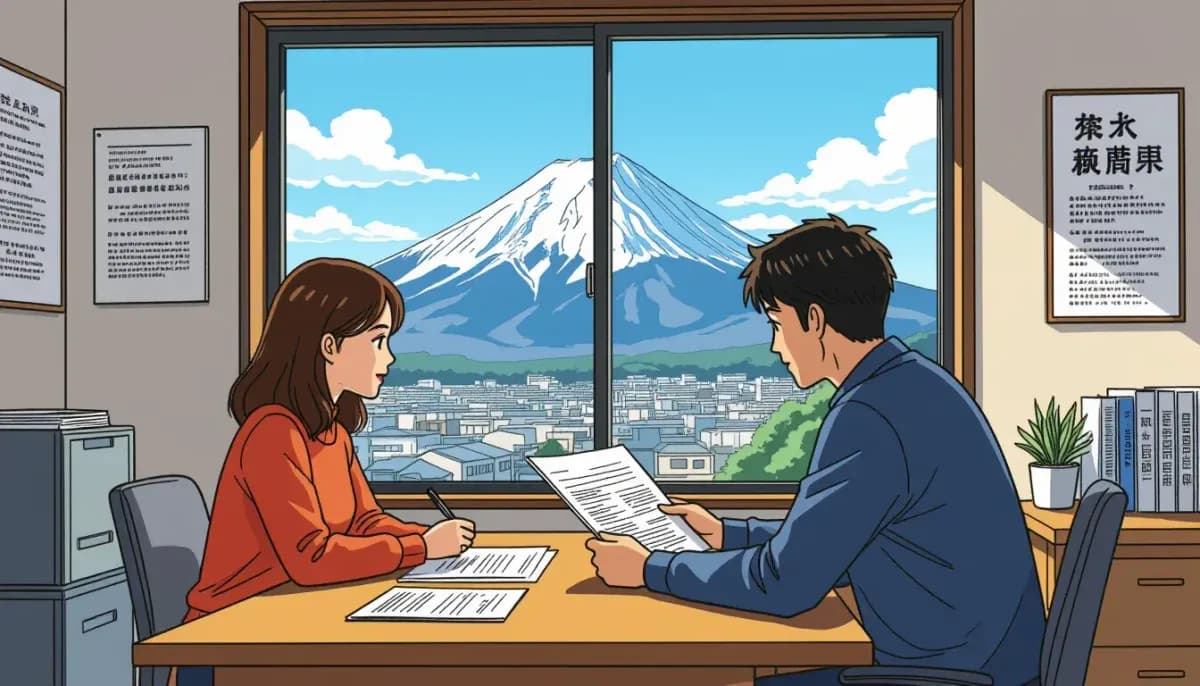
!Foreigner reviewing property documents at a Japanese real estate office
Is It Legal to Buy Property in Japan on a Tourist Visa?
The short answer is yes — completely legal. Japan does not restrict property ownership based on nationality or visa status. Foreigners have essentially the same property rights as Japanese citizens, including the right to own both buildings and the land beneath them outright. There is no expiry date on foreign-owned property, and ownership can be freely passed on through inheritance or sale.
This means you can walk into a real estate agency in Tokyo, Osaka, or Kyoto while on a 90-day tourist visa and legally purchase a property. What differs is not the legal right to buy, but the practical pathway — specifically around financing and documentation.
For a full overview of foreign property rights in Japan, see our guide: Can Foreigners Buy Property in Japan? Legal Rights Explained.
Key legal fact: Japan does not have a "golden visa" or investor residency program. Purchasing property, regardless of value, does not automatically grant you a visa extension, residency, or any special immigration status. Your tourist visa limitations remain the same after purchase.
What You Can Do on a Tourist Visa
Despite the limitations discussed later, tourist visa buyers can accomplish a great deal during their visit or entirely from overseas:
- Search for and view properties — real estate agents regularly work with non-resident foreign buyers and can arrange viewings
- Negotiate and sign a purchase agreement — the formal contract is legally valid regardless of your visa type
- Pay a deposit — typically 5–10% of the purchase price at contract signing
- Complete the full purchase — if paying cash, the entire process from offer to title transfer can be completed within 4–8 weeks
- Hire professionals remotely — notaries, judicial scriveners (土地家屋調査士), and multilingual real estate agents can handle most steps
- Appoint a power of attorney — if you cannot be present at closing, a trusted representative with a notarized power of attorney can sign on your behalf
For a detailed walkthrough of every stage, read: Step-by-Step Home Buying Process in Japan for Foreigners.
Required Documents for Non-Resident Buyers
Non-residents purchasing property in Japan need fewer documents than Japan-based residents, but the required items must be properly certified:
| Document | Details |
|---|---|
| Valid Passport | Original + copies for identification |
| Affidavit / Certificate of Identity | Certified by your country's embassy in Japan or by a notary public in your home country |
| Proof of Funds | Bank statement or wire transfer confirmation |
| Tax Identification Number | Your home country tax ID may be required by some agents |
| Power of Attorney (if not attending) | Notarized document authorizing a Japanese representative to sign on your behalf |
Note: Japan-based residents (on work visas, spousal visas, etc.) must also provide a residence card, resident registry certificate, and registered personal seal. Tourist visa holders bypass these because they are classified as non-residents for this transaction.
Critical deadline: Within 20 days of completing your property purchase, non-resident foreign buyers are legally required to file a notification with Japan's Minister of Finance under the Foreign Exchange and Foreign Trade Act. This form is available from the Bank of Japan and must include your name, nationality, address, and the purchase price. Failure to file carries legal penalties.
The Biggest Practical Challenge: Financing
While the legal path is clear, the financial path for tourist visa buyers is narrow. Getting a mortgage in Japan without residency is extremely difficult. Most major Japanese banks — including MUFJ and Mizuho — require permanent residency as a prerequisite for home loan applications.
For buyers who do not hold permanent residency, a small number of institutions do offer mortgages, but with strict conditions:
| Bank | Minimum Residency | Income Requirement | Down Payment |
|---|---|---|---|
| Aeon Bank | 3+ years | Standard | ~30% |
| Suruga Bank | 1+ year | ¥2M+ annually | ~30% |
| Tokyo Star Bank | 3+ years | ¥5M+ annually | ~30% |
For tourist visa holders who are not Japan residents at all, these options are effectively unavailable. The practical reality is that tourist visa buyers must pay in full cash, typically via international wire transfer. This is a significant barrier that limits the tourist-visa purchase route to buyers with substantial liquid assets.
For more on financing options, see: Mortgages and Home Loans for Foreigners in Japan.
The team at Gaijin Buy House provides an excellent breakdown of how mortgage screening works for foreign buyers, including specific documentation requirements by residency status.
The Purchase Process Step by Step
Even on a tourist visa, the purchase follows Japan's standard real estate procedure:
1. Find an agent and property Choose a multilingual real estate agent who has experience with foreign buyers. Online portals such as SUUMO and AtHome list properties nationwide.
2. Submit a Letter of Intent (Purchase Application Form) This formally expresses your intention to purchase and is submitted to the seller. It is not yet legally binding.
3. Receive the Explanation of Important Matters (重要事項説明書) A licensed real estate agent must explain this document to you in detail before you sign anything. It covers legal encumbrances, building code compliance, and all material facts about the property.
4. Sign the Purchase Agreement and Pay the Deposit At this stage the deal becomes legally binding. The deposit is typically 5–10% of the purchase price. If you withdraw after this point, you forfeit the deposit; if the seller withdraws, they must return double.
5. Final Settlement and Title Transfer The remaining balance is paid, and a judicial scrivener registers the title transfer with the Legal Affairs Bureau. This is the point at which you officially become the owner.
6. File the Foreign Exchange Law Notification Submit your notification to the Minister of Finance within 20 days.
!Japan real estate transaction process documents and keys
What You Cannot Do: Key Limitations
Owning property on a tourist visa comes with real constraints:
You cannot live there long-term. A tourist visa (typically 90 days per visit, sometimes 15 days depending on nationality) restricts how long you can stay in Japan. Owning a house does not change this. If you want to reside in your property for extended periods, you need to apply for an appropriate visa — such as a long-term resident visa, spouse visa, or a business-related visa.
You cannot rent it out commercially without proper setup. Short-term vacation rentals (minpaku) require registration under Japan's Minpaku Law, and managing a rental property from overseas is operationally complex. You will typically need a local property management company.
You cannot get a mortgage without residency. As discussed, cash purchases are the only realistic route for non-residents.
You cannot easily open a Japanese bank account. Without a residence card, most Japanese banks will not open accounts for you. This affects how you transfer purchase funds and pay ongoing property taxes.
For guidance on visa pathways that could expand your options, see: Visa and Residency Considerations for Property Buyers in Japan.
You can also find excellent visa information at For Work in Japan and Living in Nihon.
Total Costs to Budget For
Beyond the purchase price itself, budget for an additional 8–10% to cover all transaction costs:
| Cost Item | Approximate Amount |
|---|---|
| Real Estate Agent Fee | 3% + ¥60,000 + tax |
| Registration and License Tax | 1.5–2% of assessed value |
| Real Estate Acquisition Tax | 3–4% of assessed value |
| Judicial Scrivener Fee | ¥80,000–¥150,000 |
| Building Inspection Fee | ¥50,000–¥100,000 |
| Stamp Duty | ¥10,000–¥60,000 |
| Moving / Furnishing | Variable |
Ongoing annual costs include property tax (固定資産税) at approximately 1.4% of assessed value, plus urban planning tax (都市計画税) at 0.3% in designated urban areas. Condominium owners also pay monthly management and maintenance fees ranging from ¥15,000 to ¥50,000.
For a complete breakdown of all costs, see: Hidden Costs and Fees When Buying Property in Japan and Property Taxes and Annual Costs of Owning Property in Japan.
Also, see: Tokyo Portfolio's guide for foreigners for an up-to-date breakdown of costs and the purchase timeline.
Practical Tips for Tourist Visa Buyers
Plan your visit around the purchase timeline. The full process takes 4–8 weeks under normal conditions. If your tourist visa allows only 15 days, you may need to execute certain steps remotely or via power of attorney.
Hire a multilingual judicial scrivener. This professional handles title registration and can guide you through the Foreign Exchange Law notification process. Their fees are well worth the legal certainty.
Wire funds early. International wire transfers to Japan can take 3–5 business days and may require additional verification. Confirm the transfer process with your home bank well in advance of closing.
Consider a property management company from day one. If you will not be in Japan regularly, a local management company handles everything from maintenance requests to tax filings. Fees typically run 5–10% of rental income or a flat monthly fee for vacant properties.
Consult a Japanese tax advisor. As a non-resident property owner, you are subject to Japanese income tax on rental income and capital gains tax on eventual sale. A bilingual tax accountant can help you structure ownership efficiently.
For inspiration on where to buy, explore our regional guides: Buying Property in Tokyo, Osaka, and Kyoto. If you are considering rural options, see Rural and Countryside Properties in Japan for Foreigners.
Summary: What Tourist Visa Buyers Can Realistically Achieve
Buying property in Japan on a tourist visa is legally straightforward but practically demanding. The key requirements — cash payment, embassy-certified documents, a Foreign Exchange Law notification, and careful coordination with local professionals — are all manageable with preparation.
The biggest limitation is not legal but financial: without residency, mortgages are essentially unavailable, which means tourist visa buyers need to have the full purchase price available in cash. If that condition is met, Japan's open property market welcomes you with one of the most foreigner-friendly ownership frameworks in Asia.
For a comprehensive starting point on the entire buying journey, visit our Complete Guide to Buying Property in Japan as a Foreigner. You can also read MailMate's guide on living in Japan after buying a house for important residency considerations.

Originally from Vietnam, living in Japan for 16+ years. Graduated from Nagoya University, with 11 years of professional experience at Japanese and international companies. Sharing information about buying property in Japan for foreigners.
View Profile →Related Articles
Zairyu Card (Residence Card) and Property Purchase in Japan
Learn how Japan's Zairyu Card (residence card) affects your ability to buy property, qualify for a mortgage, and complete legal procedures as a foreigner in Japan.
Read more →
Non-Resident and Absentee Ownership of Japan Property
Everything you need to know about owning property in Japan as a non-resident: legal rights, tax obligations, appointing a tax agent, property management options, and exit strategies for absentee owners.
Read more →
Changing Your Residency Status After Buying Property in Japan
Learn how buying property in Japan affects your residency status. Explore visa options, step-by-step status change procedures, permanent residency requirements, and key rules for non-resident property owners.
Read more →
Japan Investor Visa and Real Estate: Is It Worth Pursuing?
Japan has no Golden Visa—property ownership alone grants no residency. Learn how the Business Manager Visa works, the 2025 rule changes (¥30M capital requirement), and whether real estate qualifies as a valid business model for living in Japan.
Read more →
Long-Term Resident Visa and Property Ownership in Japan
Complete guide to Japan's Long-Term Resident Visa (定住者) and its relationship to property ownership. Learn who qualifies, application steps, and how owning property can support your path to permanent residency in Japan.
Read more →
Highly Skilled Professional Visa and Japan Property Purchase
Learn how Japan's Highly Skilled Professional visa affects your ability to buy property and get a mortgage. HSP to PR fast-track, bank options, and mortgage tips for foreigners.
Read more →