
Stamp Duty (Inshi Zei) on Japan Property Purchases

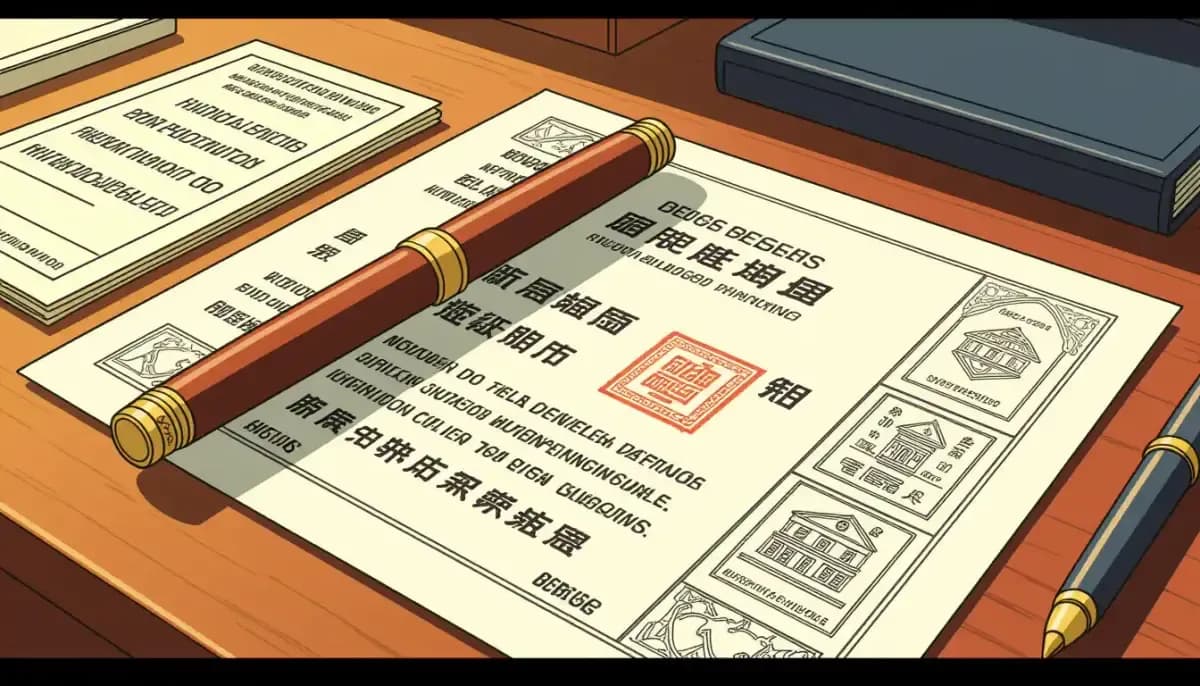
Everything foreigners need to know about stamp duty (inshi zei) when buying property in Japan: rates, how to pay, reduced rates until 2027, penalties, and cost-saving tips.
Stamp Duty (Inshi Zei) on Japan Property Purchases: A Complete Guide for Foreigners
If you are buying property in Japan, one of the smaller but still important costs you will encounter is stamp duty, known in Japanese as 印紙税 (inshi zei). While it may not be the largest expense in your purchase, understanding how it works, how much you will pay, and how to minimize it can save you time, money, and confusion at the contract signing table.
This guide covers everything foreigners need to know about stamp duty on Japan property purchases, including current rates, the payment process, reduced rates available through 2027, penalties for non-compliance, and practical tips to reduce your costs.
What Is Stamp Duty (Inshi Zei) in Japan?
Stamp duty is a national tax levied on certain legal documents and contracts in Japan. When you purchase real estate, a property sales contract (売買契約書, baibai keiyakusho) is one of the documents that requires a revenue stamp (収入印紙, shuunyuu inshi).
The logic behind this tax dates back to the Meiji era: the government treats the document itself as taxable, not the transaction. As a result, the stamp must be affixed to the physical paper contract and then "canceled" (消印, keshiin) with either a personal seal (hanko) or a signature to confirm it has been used.
As a foreign buyer, the same rules apply to you as to Japanese nationals. Japan does not discriminate on stamp duty based on nationality — if you are signing a property contract in Japan, you pay stamp duty.
For a complete picture of the other costs involved in buying property in Japan, see our Hidden Costs and Fees When Buying Property in Japan guide.
Stamp Duty Rates for Property Purchases in 2025
The amount of stamp duty you pay depends on the stated sales price in your contract. Japan applies a tiered rate system. Importantly, reduced rates are currently in effect and valid until March 31, 2027 — these represent approximately a 50% reduction from the standard rates.
Reduced Stamp Duty Rate Table (Valid Until March 31, 2027)
| Contract Sales Price | Reduced Rate (Until Mar 2027) | Standard Rate |
|---|---|---|
| Under ¥1,000,000 | ¥200 | ¥400 |
| ¥1,000,001 – ¥5,000,000 | ¥1,000 | ¥2,000 |
| ¥5,000,001 – ¥10,000,000 | ¥5,000 | ¥10,000 |
| ¥10,000,001 – ¥50,000,000 | ¥10,000 | ¥20,000 |
| ¥50,000,001 – ¥100,000,000 | ¥30,000 | ¥60,000 |
| ¥100,000,001 – ¥500,000,000 | ¥60,000 | ¥100,000 |
| ¥500,000,001 – ¥1,000,000,000 | ¥160,000 | ¥200,000 |
| Over ¥1,000,000,000 | ¥320,000 | ¥400,000 |
Key takeaway: For most residential purchases in the ¥20M–¥80M range, you are looking at stamp duty of ¥10,000–¥30,000 — a relatively modest cost compared to other closing fees. However, once you move into higher price brackets, it becomes more significant.
Note that this tax applies to the sales contract, not the mortgage contract. If you are also signing a loan agreement (金銭消費貸借契約書), that document requires a separate stamp as well.
For more on all annual property taxes you will face as an owner, see our guide to Property Taxes and Annual Costs of Owning Property in Japan.
How to Pay Stamp Duty in Japan
Paying stamp duty in Japan is a straightforward process, but it involves a few physical steps:
Step 1 — Purchase revenue stamps. You can buy 収入印紙 (shuunyuu inshi) at any post office (郵便局) across Japan. You can also purchase them at Legal Affairs Bureau (法務局) offices and some convenience stores. Simply tell the clerk how much you need and pay for the stamps.
Step 2 — Affix the stamp to the contract. The revenue stamp must be attached to the physical copy of the sales contract. Your real estate agent or judicial scrivener (司法書士) will usually help you with this step.
Step 3 — Cancel the stamp. The stamp must be "canceled" by placing your personal seal (hanko) or signature straddling the edge of the stamp and the contract paper. This prevents the stamp from being reused.
Who pays? In most cases, the buyer and seller each sign their own copy of the contract, meaning each party pays the stamp duty for their respective copy. If there is only one original contract (see the cost-saving tip below), both parties typically split the cost or the party keeping the original pays.
For a broader understanding of the legal steps in buying property, see our Step-by-Step Home Buying Process in Japan for Foreigners.
Stamp Duty and Other Property Purchase Taxes in Context
Stamp duty is just one of several one-time taxes you pay when purchasing property in Japan. To put it in perspective, here is a summary of all the taxes typically incurred at the time of purchase:
One-Time Property Purchase Taxes (2025)
| Tax | Rate | Notes |
|---|---|---|
| Stamp Duty (印紙税) | ¥1,000 – ¥320,000 | Based on contract value; reduced rates until Mar 2027 |
| Real Estate Acquisition Tax (不動産取得税) | 3% of assessed value | Reduced from 4% for residential; valid until Mar 2027 |
| Registration and License Tax – Land (登録免許税) | 1.5% of assessed value | Reduced from 2%; valid until Mar 2027 |
| Registration and License Tax – Building (登録免許税) | 0.1% – 0.3% of assessed value | Reduced for residential; valid until Mar 2027 |
| Consumption Tax (消費税) | 10% on building value | Applies to building only (not land); charged by seller if a company |
Total acquisition-stage taxes typically represent 5–8% of the property price, and total closing costs (including agent fees, judicial scrivener fees, etc.) often reach 10% of the purchase price.
For an in-depth breakdown of what foreigners need to know about property taxes in Japan, visit Gaijin Buy House's Real Estate Tax Guide for Foreigners.
How to Reduce or Eliminate Stamp Duty
There are legitimate ways to reduce your stamp duty burden in Japan:
1. Use an Electronic Contract
This is the most powerful strategy: electronic contracts are not subject to stamp duty at all. Under Japanese law, 印紙税 applies only to paper documents. If your real estate agent or seller agrees to execute the contract electronically (e.g., via a digital signature platform), you legally owe zero stamp duty.
Electronic contracts are increasingly common in Japan's real estate market, especially with tech-forward agencies. Ask your agent upfront if this option is available.
2. Produce Only One Original Contract
Traditionally, both the buyer and seller each keep an original signed contract, requiring stamps on both copies. However, it is perfectly legal to produce only one original — typically for the buyer — while the seller retains a photocopy. This halves the stamp duty obligation (only one stamped document exists).
3. Avoid Stating Prices on Multiple Documents
Stamp duty is levied per taxable document. Avoid creating multiple stamped originals unnecessarily. Work with your judicial scrivener to minimize the number of separate documents that require stamps.
For more tips on managing costs when buying property, read the comprehensive Complete Guide to Buying Property in Japan as a Foreigner. You may also want to review Living in Nihon's guide on buying property and mortgages for foreigners for additional context.
Penalties for Non-Compliance
Japan takes stamp duty compliance seriously. According to Japan Law Tax's detailed stamp duty guide, If you fail to attach the required revenue stamp to a taxable document, or if you attach it but fail to properly cancel it, you face a penalty charge of 3 times the original stamp amount.
For example:
- If you owe ¥10,000 in stamp duty but do not attach the stamp, the penalty is ¥30,000.
- If you attach the stamp but forget to cancel it with a seal or signature, the same 3x penalty applies.
In practice, your real estate agent, judicial scrivener, or lawyer will oversee this process and ensure proper compliance. However, as the buyer, it is helpful to understand your obligations.
Stamp Duty for Foreign Buyers: Key Points
As a foreigner buying property in Japan, here is what is most relevant to your situation:
- No special rules for foreigners. Stamp duty applies equally to all buyers regardless of nationality. There are no exemptions or additional burdens for foreign nationals.
- Foreigners can buy freely. Japan has no restrictions on foreign property ownership. As For Work in Japan's tax guide explains, foreigners in Japan are subject to the same tax framework as residents.
- Non-residents can still buy. Even if you do not live in Japan, you can purchase property and will be subject to the same stamp duty requirements when the contract is executed.
- English-language support. Many real estate agents in major cities (Tokyo, Osaka, Fukuoka) offer English-language services and will guide you through the contract signing process, including stamp duty.
- Budget approximately 10% for total costs. Stamp duty alone is a small line item, but when combined with acquisition tax, registration tax, agent fees, and judicial scrivener fees, total closing costs typically reach about 10% of the purchase price.
For information on your visa and residency status and how it affects your property purchase, see Visa and Residency Considerations for Property Buyers in Japan.
Summary: Stamp Duty (Inshi Zei) at a Glance
Stamp duty in Japan is a straightforward tax on paper property contracts, currently benefiting from reduced rates through March 2027. For most residential purchases, you will pay between ¥10,000 and ¥60,000 — a manageable cost. The most effective way to eliminate it entirely is to use an electronic contract.
Key takeaways:
- Stamp duty is based on the contract price, not the assessed value
- Reduced rates (approximately 50% off) apply until March 31, 2027
- Electronic contracts are fully exempt from stamp duty
- Penalties for non-compliance are 3× the original stamp amount
- Your real estate agent or judicial scrivener will typically handle the mechanics
For a deeper dive into all property taxes and costs involved in purchasing real estate in Japan, see the Housing Japan Property Taxes Guide (2025) and our own guide to Legal Procedures and Documentation for Japan Property Purchases.

Originally from Vietnam, living in Japan for 16+ years. Graduated from Nagoya University, with 11 years of professional experience at Japanese and international companies. Sharing information about buying property in Japan for foreigners.
View Profile →Related Articles

Currency Exchange Costs for Foreign Buyers Purchasing Japan Property
A complete guide to currency exchange costs when buying property in Japan as a foreigner. Learn about bank markups, wire transfer fees, AML requirements, and how to save thousands using specialist FX services.
Read more →
Repair Reserve Fund (Shuuzen Tsumitate Kin) in Japan Condos
Everything foreigners need to know about Japan's condo repair reserve fund (shuuzen tsumitatekin): monthly costs, red flags, due diligence checklist, and what happens if you don't pay.
Read more →
Condo Management and Maintenance Fees in Japan
Understand Japan condo management fees and repair reserve fund fees. Learn average costs, what they cover, payment methods for foreigners, and how to evaluate fees before buying.
Read more →
Fire and Earthquake Insurance Costs in Japan
Complete guide to fire insurance (kasai hoken) and earthquake insurance (jishin hoken) costs in Japan for foreign property owners. Premiums, coverage, providers, and tips for expats.
Read more →
Renovation Costs for Used Properties in Japan
Complete guide to renovation costs for used properties in Japan. Room-by-room cost breakdowns, real-world examples, government subsidies, and budgeting tips for foreign buyers.
Read more →
Furniture and Appliance Costs for Your New Home in Japan
Complete guide to furniture and appliance costs when setting up a new home in Japan. Realistic budgets, where to buy, rental options, and tips for foreigners.
Read more →