
Real Estate Agent Commission in Japan: How Much and Who Pays

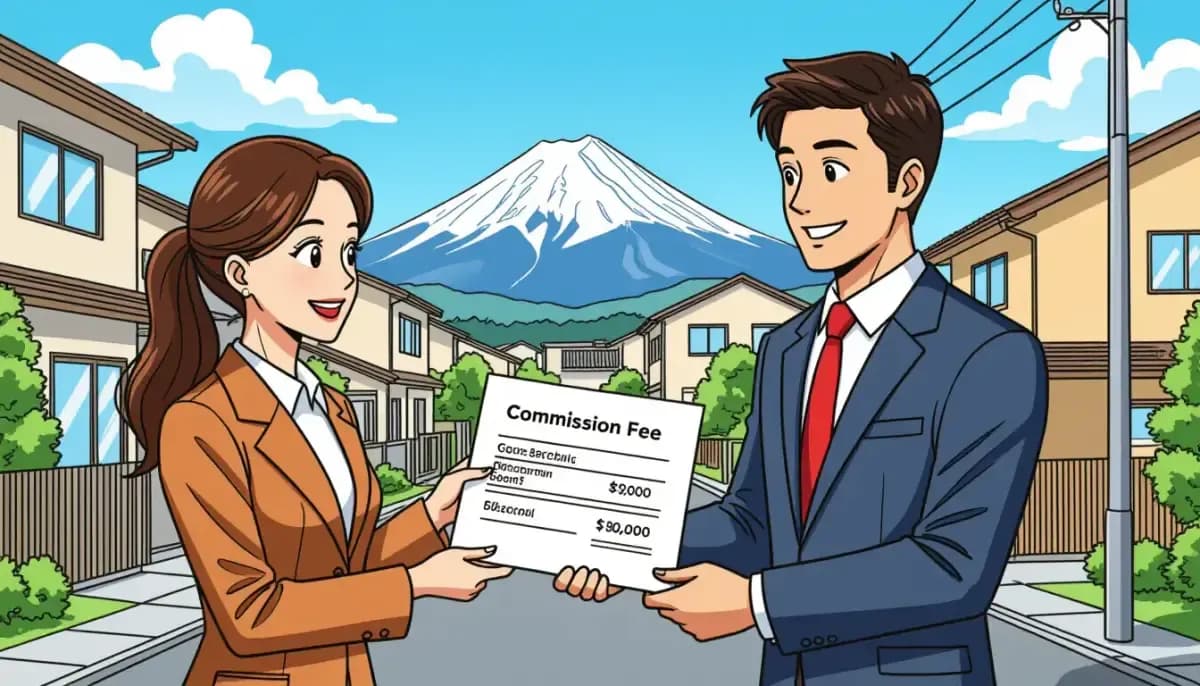
Learn exactly how real estate agent commissions work in Japan. Standard rates are capped at 3.3% + ¥66,000 for purchases and 1 month's rent for rentals. Find out who pays, dual agency explained, and tips for foreign buyers.
Real Estate Agent Commission in Japan: How Much and Who Pays
If you're buying or renting property in Japan as a foreigner, one of the first questions you'll have is: how much does the real estate agent charge, and who actually pays it? Japan has a clear, legally regulated commission system — but there are nuances around dual agency, hidden fees, and rental vs. purchase transactions that every foreign buyer should understand before signing anything.
This guide breaks down exactly how real estate agent commissions work in Japan, what's legally allowed, who pays what, and how to avoid common pitfalls.
How Real Estate Agent Commissions Are Regulated in Japan
Japan's real estate commissions are not freely negotiable in the way they are in some Western countries. The maximum rates are set by law under the Real Estate Brokerage Act (宅地建物取引業法, Takuchi Tatemono Torihiki Gyōhō). Every licensed real estate broker (不動産仲介業者, fudōsan chūkai gyōsha) must comply with these statutory limits.
The commission is technically a success fee — you only pay it if a contract is successfully concluded. You do not owe anything simply for viewing properties, attending consultations, or receiving quotes from agents. This is an important protection for buyers and renters.
Japan has approximately 1.18 million licensed real estate agents registered as of FY2023, making it one of the most densely agented property markets in Asia. With that many agents competing for business, understanding the legal commission structure gives you real negotiating power.
Commission Rates for Property Purchases
For property sales, the Real Estate Brokerage Act sets tiered maximum commission rates based on the sale price. Agents cannot charge more than these amounts, though they can charge less.
| Property Sale Price | Maximum Commission Rate |
|---|---|
| Up to ¥2,000,000 | 5% of price |
| ¥2,000,001 to ¥4,000,000 | 4% of price + ¥20,000 |
| Over ¥4,000,000 | 3% of price + ¥60,000 |
For the vast majority of property transactions in Japan — which exceed ¥4 million — the commonly used simplified formula is:
Commission = (Sale Price × 3%) + ¥60,000 + 10% Consumption Tax
When you include consumption tax, the formula becomes: (Sale Price × 3.3%) + ¥66,000.
Practical Commission Examples
To make this concrete, here are real commission amounts for common price points in Japan:
| Property Price | Commission (excl. tax) | Commission (incl. 10% tax) |
|---|---|---|
| ¥10,000,000 | ¥360,000 | ¥396,000 |
| ¥20,000,000 | ¥660,000 | ¥726,000 |
| ¥30,000,000 | ¥960,000 | ¥1,056,000 |
| ¥50,000,000 | ¥1,560,000 | ¥1,716,000 |
| ¥80,000,000 | ¥2,460,000 | ¥2,706,000 |
A special rule applies to properties priced at ¥8 million or less: the commission is capped at ¥300,000 + tax (¥330,000 total), regardless of which formula would otherwise apply. This simplified cap was introduced to help facilitate transactions on lower-value properties.
For a full overview of all the fees involved in purchasing, see our guide on Hidden Costs and Fees When Buying Property in Japan.
Commission Rates for Rental Properties
For lease contracts, the rules differ. The maximum commission is capped at one month's rent (excluding consumption tax). With the 10% tax added, that means renters typically pay up to 1.1 months' rent as a brokerage fee.
In practice, most real estate companies in Japan charge the full one month's rent as commission. You'll sometimes see agents advertising "半月分" (half a month's rent) commissions, particularly in competitive urban markets, but this is less common.
Important note for renters: Under Japanese law, if the landlord has not explicitly agreed to pay more than half the monthly rent in commission, the agent can only charge the tenant up to half a month's rent. However, a tenant who voluntarily agrees to pay one month's rent in writing may be charged the full amount. In practice, agents routinely include this agreement in standard contracts, so most tenants end up paying the full month.
Who Pays the Commission — Buyer, Seller, or Both?
This is where Japan's commission system can confuse foreign buyers. The answer depends on how many agents are involved in the transaction.
Scenario 1: Separate Agents (Most Transparent)
When the buyer and seller each have their own agent, each party pays their own agent's commission. The buyer pays their agent, and the seller pays their agent. Both commissions are capped at the statutory maximum.
Scenario 2: Dual Agency / Double-Ended Transaction (Most Common)
In Japan, it is extremely common for one agent to represent both the buyer and the seller in the same transaction (referred to as 両手取引, ryōte torihiki, literally "both-hand transaction"). Research indicates that 7 out of 10 brokers close dual-agency deals, collecting commission from both sides simultaneously.
In this case, the single brokerage firm receives:
- Commission from the buyer (up to the statutory maximum)
- Commission from the seller (up to the statutory maximum)
This means the agent earns up to double the commission of a single-sided deal. Critics argue that this creates a conflict of interest — an agent representing both parties may be incentivized to close deals quickly rather than secure the best price for either side. Research has confirmed that dual-agency deals in Japan tend to result in lower sale prices for sellers.
For a broader understanding of how the purchase process unfolds, see our Step-by-Step Home Buying Process in Japan for Foreigners.
Discount Brokers: Are They Worth It?
Some real estate companies in Japan advertise discounted commissions — for example, charging only 1% instead of 3%. At first glance, this sounds appealing. However, these firms may offset their reduced headline rate with other charges, such as:
- 消毒費 (shōdoku-hi) — "Property disinfection fee" (often ¥15,000–¥30,000, though its value is questionable)
- 書類作成費 (shorui sakusei-hi) — "Document preparation fee"
- 事務手数料 (jimu tesūryō) — "Administrative handling fee"
Before celebrating a discount, always ask for a full itemized quote and compare the total cost — not just the commission line.
How Commission Fits Into Your Total Buying Budget
Real estate agent commission is one of several purchasing costs. A general rule of thumb is to budget an additional 10% of the property price to cover all ancillary expenses. Here's how the typical cost breakdown looks:
| Cost Item | Approximate Amount |
|---|---|
| Real estate agent commission | ~3.3% of price + ¥66,000 |
| Registration and transfer taxes | ~2–3% of property value |
| Judicial scrivener (司法書士) fees | ¥100,000–¥150,000 |
| Property acquisition tax | ~3–4% of assessed value |
| Stamp duty on contract | ¥1,000–¥60,000 depending on price |
| Fire insurance (mandatory) | Varies |
| Mortgage processing fee | ¥50,000–¥100,000+ |
For a complete breakdown, our Property Taxes and Annual Costs of Owning Property in Japan article covers everything you'll owe both at purchase and ongoing.
Tips for Foreign Buyers Dealing With Japanese Agents
Navigating a Japanese real estate transaction as a foreigner comes with unique challenges. Here's what to keep in mind:
1. Use a foreigner-specialist agent when possible. There is a meaningful difference between agents who "speak some English" and agencies with dedicated foreign client teams. The latter understand visa-related lending constraints, overseas fund transfers, and cross-cultural contract communication. See gaijinbuyhouse.com's guide to choosing a real estate agent in Japan for detailed selection criteria.
2. Always ask if the agent is representing both sides. Directly ask: "Are you also representing the seller?" If yes, you are in a dual-agency transaction. This is legal and common in Japan, but you should be aware of the potential conflict of interest.
3. Request a full written cost breakdown before signing. Before you sign any contract, ask for a 費用明細書 (hiyō meisaisho) — a full itemized cost statement. This should include all fees, taxes, and charges beyond the headline commission.
4. Understand that commission is negotiable (within limits). Agents legally cannot charge more than the statutory maximum, but they can charge less. In slower markets or for high-value properties, some negotiation is possible — especially if you are a serious, pre-approved buyer.
5. Know that commission is due at contract signing, not at key handover. In Japan, the commission is typically split: half paid at contract signing (契約時, keiyaku-ji) and half at the handover of keys (引き渡し時, hikiwatashi-ji). Confirm this schedule in writing.
For a deeper dive into the full legal and documentation requirements, refer to our guide on Legal Procedures and Documentation for Japan Property Purchase.
Resources for Further Research
Understanding the commission structure is just one part of the picture. Here are additional resources to help you navigate Japan's property market:
- Living in Nihon's Property Purchase and Mortgage Guide — Covers mortgage eligibility, visa impacts, and buying costs for foreigners
- For Work in Japan's Housing and Living Infrastructure Guide — Practical day-to-day information for foreign residents
- PLAZA HOMES: Agent Commission in Japan — Detailed explanation from a major Tokyo brokerage
- Tokyo Portfolio: Agency Commission Guide — Comprehensive breakdown with examples for renters and buyers
Also see our Complete Guide to Buying Property in Japan as a Foreigner for the full picture from start to finish.
Summary
Real estate agent commissions in Japan are legally capped, transparent, and apply equally to Japanese citizens and foreigners. The key formula for most property purchases is 3.3% of the purchase price + ¥66,000 (tax included). For rentals, expect to pay one month's rent + 10% consumption tax as a standard brokerage fee.
The most important thing to understand is whether you are in a dual-agency transaction — where a single agent earns commission from both you and the seller. This is extremely common in Japan and legal, but it's worth knowing about. Always get a full written cost breakdown, ask questions, and if possible, work with an agent experienced in serving foreign buyers.
With commission rates regulated by law and a contingency-fee structure that protects you from paying anything unless a deal closes, Japan's real estate commission system is actually quite buyer-friendly — once you understand the rules.

Originally from Vietnam, living in Japan for 16+ years. Graduated from Nagoya University, with 11 years of professional experience at Japanese and international companies. Sharing information about buying property in Japan for foreigners.
View Profile →Related Articles

Currency Exchange Costs for Foreign Buyers Purchasing Japan Property
A complete guide to currency exchange costs when buying property in Japan as a foreigner. Learn about bank markups, wire transfer fees, AML requirements, and how to save thousands using specialist FX services.
Read more →
Repair Reserve Fund (Shuuzen Tsumitate Kin) in Japan Condos
Everything foreigners need to know about Japan's condo repair reserve fund (shuuzen tsumitatekin): monthly costs, red flags, due diligence checklist, and what happens if you don't pay.
Read more →
Condo Management and Maintenance Fees in Japan
Understand Japan condo management fees and repair reserve fund fees. Learn average costs, what they cover, payment methods for foreigners, and how to evaluate fees before buying.
Read more →
Fire and Earthquake Insurance Costs in Japan
Complete guide to fire insurance (kasai hoken) and earthquake insurance (jishin hoken) costs in Japan for foreign property owners. Premiums, coverage, providers, and tips for expats.
Read more →
Renovation Costs for Used Properties in Japan
Complete guide to renovation costs for used properties in Japan. Room-by-room cost breakdowns, real-world examples, government subsidies, and budgeting tips for foreign buyers.
Read more →
Furniture and Appliance Costs for Your New Home in Japan
Complete guide to furniture and appliance costs when setting up a new home in Japan. Realistic budgets, where to buy, rental options, and tips for foreigners.
Read more →