
Real Estate Acquisition Tax in Japan: Rates and Calculations

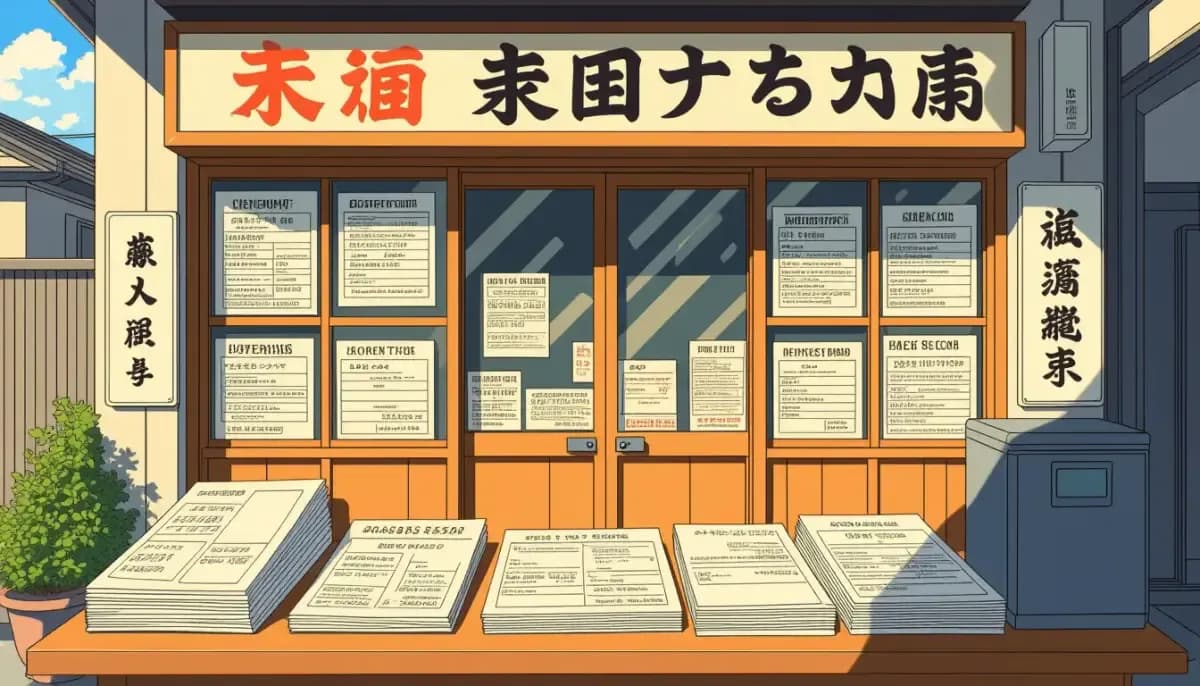
Complete guide to Japan's real estate acquisition tax (fudosan shutoku zei): current 3% residential rate, how to calculate using assessed value, ¥12M deduction for new homes, and rules for foreign buyers.
Real Estate Acquisition Tax in Japan: Rates and Calculations
When you buy property in Japan, one of the most important one-time costs to budget for is the real estate acquisition tax (不動産取得税, fudosan shutoku zei). Many foreign buyers are surprised to receive a tax bill months after their purchase is complete. Understanding how this tax works — what rate applies, how to calculate it, and what deductions you qualify for — can save you thousands of dollars and prevent unwelcome surprises.
This guide breaks down everything you need to know about Japan's real estate acquisition tax, from current rates and calculation formulas to deductions available for residential properties and specific rules that apply to foreign buyers.
What Is the Real Estate Acquisition Tax?
The real estate acquisition tax is a one-time prefectural tax levied on anyone who acquires real estate in Japan. This includes purchases through sale, donation, exchange, and newly constructed buildings. Notably, it does not apply to property inherited through succession — inheritance is one of the few acquisition methods exempt from this tax.
The key phrase here is "one-time." Unlike the annual fixed asset tax (固定資産税) that you pay every year you own property, the acquisition tax is only charged once, at the time of acquisition. Once paid, you won't owe it again unless you buy another property.
This tax is administered at the prefectural level, meaning the Tokyo Metropolitan Government, Osaka Prefecture, and similar authorities collect it — not the national government. Because of this, the specific payment procedures and notices may vary slightly by prefecture, but the core rates and rules are nationally standardized.
Current Tax Rates for 2025–2027
Japan's standard real estate acquisition tax rate is 4%, but the government has applied reduced rates for residential properties as part of ongoing policy incentives. Here is an overview of the current rates:
| Property Type | Standard Rate | Reduced Rate | Valid Until |
|---|---|---|---|
| Residential land | 4% | 3% | March 31, 2027 |
| Residential buildings (houses/condos) | 4% | 3% | March 31, 2027 |
| Non-residential buildings (commercial) | 4% | 4% (no reduction) | — |
| Non-residential land (commercial) | 4% | 4% (no reduction) | — |
For most foreign buyers purchasing a home or apartment in Japan, the effective rate is currently 3%, which significantly reduces your one-time tax burden. This reduced rate is not permanent — it has been extended multiple times but is currently set to expire on March 31, 2027. If you are planning a purchase near that deadline, it is worth confirming whether the reduction has been extended.
How Is the Tax Calculated?
The single most important thing to understand about Japan's real estate acquisition tax is that it is not based on the purchase price you paid. Instead, it is calculated using the property's assessed value (固定資産税評価額, kotei shisan zei hyoka gaku), which is the official valuation registered in the municipal fixed asset tax ledger.
The assessed value is typically 60–70% of the market value for buildings, and around 70% of the publicly posted land price for land. This means the taxable base is usually significantly lower than the actual transaction price — which is good news for buyers.
Basic formula:
Real Estate Acquisition Tax = Assessed Value × Tax RateExample calculation for a ¥50 million condo:
Assume the property is a residential condo with:
- Purchase price: ¥50,000,000
- Government assessed value: ¥28,000,000 (roughly 56% of purchase price)
- Tax rate: 3% (residential, current reduced rate)
¥28,000,000 × 3% = ¥840,000Before any deductions, the estimated acquisition tax would be ¥840,000 (approximately $5,600 USD). However, deductions can reduce this significantly — often to zero for new homes.
Key Deductions and Exemptions
Japan's tax code provides generous deductions for residential property purchases, particularly for new homes. These deductions are applied to the assessed value before calculating the tax, which can dramatically lower — or even eliminate — your tax bill.
New Residential Buildings (新築住宅)
If you purchase a newly built house or condo, you can deduct ¥12,000,000 from the building's assessed value, provided:
- The floor area is between 50 m² and 240 m² (for your primary residence)
- For investment properties, the floor area must be between 40 m² and 240 m²
If the building's assessed value is less than the deduction amount, the tax on the building itself is effectively zero.
Bonus for certified long-term quality housing (長期優良住宅): An enhanced deduction of ¥13,000,000 applies for buildings certified as long-term quality housing, valid for purchases made before March 31, 2026.
Used Residential Buildings (中古住宅)
For second-hand homes, a deduction is available if the property meets earthquake resistance standards. The deduction amount depends on when the home was built:
- Built after 1997: ¥12,000,000 deduction
- Built 1989–1997: ¥11,000,000 deduction
- Built 1985–1989: ¥10,000,000 deduction
- Built 1981–1985: ¥7,000,000 deduction
- Built before 1981: Generally no deduction unless retrofitted to current standards
Older homes that have undergone seismic retrofitting and obtained a certificate may also qualify.
Residential Land Deductions
For land associated with a residential purchase, a special deduction applies. You receive whichever amount is greater:
- ¥45,000 flat deduction, OR
- [Assessed value of land ÷ Total floor area] × 200 m² × 3%
This calculation effectively reduces the taxable land value significantly for most residential properties. Additionally, if you build a house on the land within 3 years, you can receive a full or partial refund of the land acquisition tax paid.
Properties Fully Exempt from Acquisition Tax
Some acquisitions are entirely exempt from this tax:
- Property acquired through inheritance
- Acquisitions resulting from corporate mergers or qualified company splits
- Property acquired through land readjustment projects
- Assets with an assessed value below the minimum threshold: ¥100,000 for land, ¥230,000 for new buildings, ¥120,000 for other transfers
When Will You Receive the Tax Bill?
This is one of the most frequently asked questions from foreign buyers — and the source of much confusion. Unlike most taxes, the real estate acquisition tax bill does not arrive immediately after your purchase.
Typically, you will receive your tax notice 6 months to 1 year after you complete your property registration. The exact timing depends on the prefecture. Some prefectures process quickly (3–6 months), while others may take up to a year.
The bill will be mailed to the registered address of the property. This is important to note: if you are a non-resident who has purchased property as an investment, you may not be living at that address when the bill arrives. Make arrangements to receive or redirect this mail.
Once you receive the notice, payment can be made at:
- Prefectural or municipal government offices
- Bank branches
- Convenience stores (using the payment slip barcode)
- Online banking in some prefectures
For more on understanding your ongoing property tax obligations, see our guide on Property Taxes and Annual Costs of Owning Property in Japan.
Rules for Foreign Buyers and Non-Residents
Japan's real estate acquisition tax applies equally to all property owners regardless of nationality or visa status. There are no additional surcharges or special rates for foreigners. Whether you are a permanent resident, a worker on a long-term visa, or a non-resident investor purchasing from overseas, the same rates and deductions apply.
However, there is one important administrative consideration for non-resident buyers: you are required to appoint a tax administrator (納税管理人, nozei kanrinin) in Japan. This is a designated representative who will:
- Receive tax notices on your behalf
- File any necessary declarations
- Handle payments to the prefectural government
Failure to appoint a tax administrator means tax notices may go to the property address, potentially resulting in missed deadlines and penalties.
Additionally, as of 2024, new regulations require non-resident foreign owners to register domestic contact information in property registrations. Consult with a licensed judicial scrivener (司法書士) or tax accountant when completing your purchase to ensure all administrative requirements are met.
For more context on the full legal and documentation process, see our article on Legal Procedures and Documentation for Japan Property Purchase.
Real Calculation Examples
Example 1: New Condo in Tokyo (¥60 million purchase price)
- Assessed value of building: ¥18,000,000
- New home deduction: ¥12,000,000
- Taxable building value: ¥18,000,000 − ¥12,000,000 = ¥6,000,000
- Building tax: ¥6,000,000 × 3% = ¥180,000
- Assessed value of land share: ¥12,000,000
- Land deduction: ¥12,000,000 ÷ 60 m² × 200 m² × 3% = ¥120,000
- Or flat ¥45,000 — use whichever is greater: ¥120,000
- Land tax after deduction: (¥12,000,000 × 0.5) × 3% − ¥120,000 = ¥180,000 − ¥120,000 = ¥60,000
Total estimated acquisition tax: approximately ¥240,000
Example 2: Used Single-Family Home Built in 1990 (¥25 million purchase price)
- Assessed value of building: ¥8,000,000
- Used home deduction (built 1989–1997): ¥11,000,000
- Since deduction exceeds assessed value: Building tax = ¥0
- Assessed value of land: ¥14,000,000
- Land deduction calculation: ¥14,000,000 ÷ 120 m² × 200 m² × 3% = ¥70,000
- Land tax after deduction: (¥14,000,000 × 0.5) × 3% − ¥70,000 = ¥210,000 − ¥70,000 = ¥140,000
Total estimated acquisition tax: approximately ¥140,000
Example 3: Commercial Property (¥100 million purchase price)
- Assessed value: ¥60,000,000
- No deductions apply (commercial use)
- Tax rate: 4%
- Tax = ¥60,000,000 × 4% = ¥2,400,000
This illustrates why understanding the difference between residential and commercial classification is so important.
How to Apply for Deductions
Deductions are not always applied automatically. In many prefectures, especially for residential properties, you may need to submit an application to the prefectural tax office to claim your deductions. Required documents typically include:
- Copy of property registration certificate
- Copy of your purchase contract
- Certificate of floor area
- For used homes: earthquake resistance certificate or inspection certificate
It is strongly recommended to work with your real estate agent or a tax professional to ensure all deduction applications are submitted correctly and on time. If you overpay because you missed a deduction, you generally have a 5-year window to file an amended return and receive a refund.
For a comprehensive overview of all purchase-related costs, see our guide on Hidden Costs and Fees When Buying Property in Japan.
How This Tax Fits Into Your Total Purchase Budget
The real estate acquisition tax is just one of several one-time costs when buying property in Japan. Here is how it compares to other upfront fees:
| Cost Item | Typical Amount |
|---|---|
| Real estate acquisition tax | 0–3% of assessed value |
| Registration and license tax | 0.1–2% of assessed value |
| Stamp duty (revenue stamps) | ¥10,000–¥600,000 depending on price |
| Real estate agent commission | Up to 3% + ¥60,000 + consumption tax |
| Judicial scrivener fees | ¥100,000–¥300,000 |
| Fire insurance (1 year) | ¥50,000–¥200,000 |
| Total one-time costs | Approximately 5–8% of purchase price |
The acquisition tax typically represents a relatively small fraction of total costs for residential buyers, especially after deductions are applied. For commercial property buyers, however, it can be a more significant line item.
For a complete breakdown of all purchase costs, visit our Complete Guide to Buying Property in Japan as a Foreigner.
Further Reading and Resources
Understanding Japan's tax system as a foreigner can feel daunting. Here are some additional resources to help:
- For a comprehensive overview of all taxes you'll encounter as a foreign property owner, see Living in Nihon's complete guide to taxes and tax filing in Japan, which covers everything from income tax to property-related taxes in one place.
- If you're still deciding whether buying makes sense compared to long-term renting, Gaijin Buy House's analysis of selling vs. renting when leaving Japan provides useful financial modeling for foreign owners.
- For housing and living infrastructure guidance as a working foreigner, For Work in Japan's housing and infrastructure guide covers the practical aspects of establishing yourself in Japan.
- The detailed rate schedule from Tsujiuchi Accounting Office provides historical and current rate tables directly from a Japanese tax professional.
- MailMate's Real Estate Acquisition Tax Guide offers a well-structured English-language overview with additional calculation examples.
Summary: Key Takeaways
The real estate acquisition tax in Japan is manageable and often lower than buyers expect, thanks to generous deductions for residential properties. Here are the most important points to remember:
- Current rate is 3% for residential properties (through March 2027), 4% for commercial
- Tax is on assessed value, not the purchase price — usually 50–70% of market value
- New home deduction of ¥12 million can reduce or eliminate tax on the building
- Bill arrives 6–12 months after registration, mailed by the prefectural government
- Foreigners pay the same rates as Japanese nationals — no additional surcharges
- Non-residents need a tax administrator to handle notices and payments in Japan
- Apply for deductions proactively — they may not be applied automatically
With this knowledge, you can budget accurately for your Japan property purchase and avoid being caught off guard when that tax notice arrives in the mail. For more guidance on navigating the entire purchase process, visit our Step-by-Step Home Buying Process in Japan for Foreigners.

Originally from Vietnam, living in Japan for 16+ years. Graduated from Nagoya University, with 11 years of professional experience at Japanese and international companies. Sharing information about buying property in Japan for foreigners.
View Profile →Related Articles

Currency Exchange Costs for Foreign Buyers Purchasing Japan Property
A complete guide to currency exchange costs when buying property in Japan as a foreigner. Learn about bank markups, wire transfer fees, AML requirements, and how to save thousands using specialist FX services.
Read more →
Repair Reserve Fund (Shuuzen Tsumitate Kin) in Japan Condos
Everything foreigners need to know about Japan's condo repair reserve fund (shuuzen tsumitatekin): monthly costs, red flags, due diligence checklist, and what happens if you don't pay.
Read more →
Condo Management and Maintenance Fees in Japan
Understand Japan condo management fees and repair reserve fund fees. Learn average costs, what they cover, payment methods for foreigners, and how to evaluate fees before buying.
Read more →
Fire and Earthquake Insurance Costs in Japan
Complete guide to fire insurance (kasai hoken) and earthquake insurance (jishin hoken) costs in Japan for foreign property owners. Premiums, coverage, providers, and tips for expats.
Read more →
Renovation Costs for Used Properties in Japan
Complete guide to renovation costs for used properties in Japan. Room-by-room cost breakdowns, real-world examples, government subsidies, and budgeting tips for foreign buyers.
Read more →
Furniture and Appliance Costs for Your New Home in Japan
Complete guide to furniture and appliance costs when setting up a new home in Japan. Realistic budgets, where to buy, rental options, and tips for foreigners.
Read more →