
How to Schedule and Conduct Property Viewings in Japan

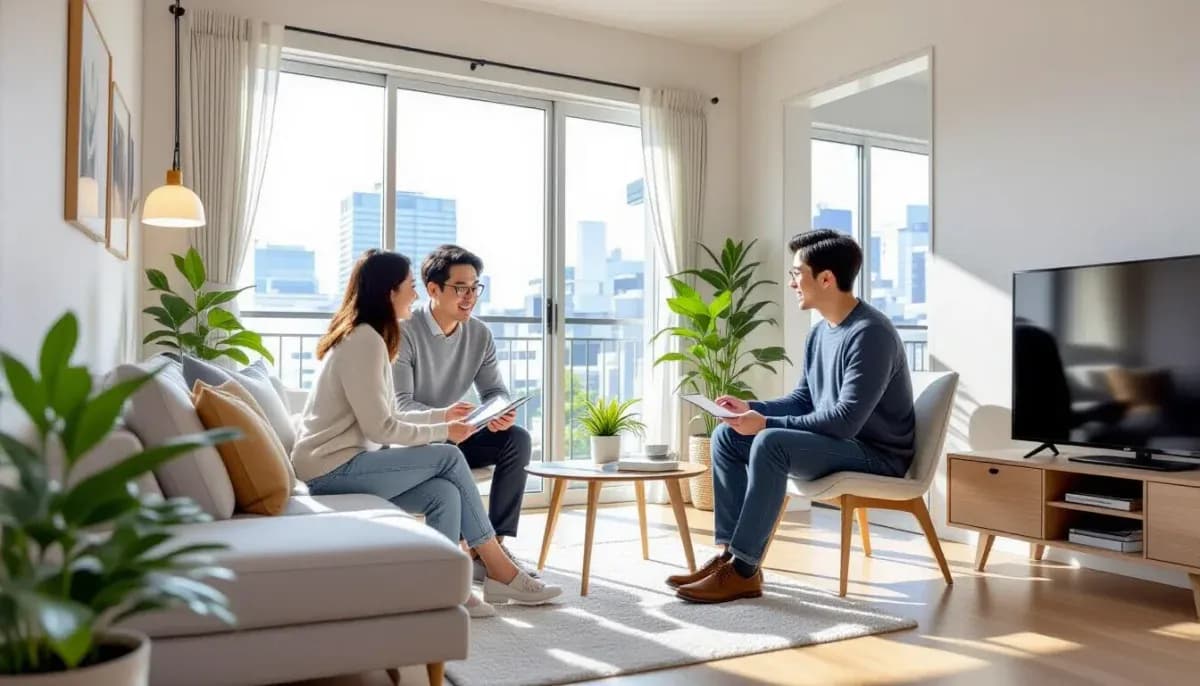
Learn how to schedule and conduct property viewings in Japan as a foreigner. Covers booking process, cultural etiquette, what to inspect, questions to ask, and next steps after your visit.
How to Schedule and Conduct Property Viewings in Japan: A Complete Guide for Foreigners
If you're looking to buy or rent property in Japan as a foreigner, one of the most important steps in the process is the property viewing. Unlike in some Western countries where you might simply show up at an open house, Japan has its own etiquette and procedures for scheduling and conducting property viewings. Understanding how the system works will save you time, make a better impression on agents, and help you make the most informed decision possible.
This guide covers everything you need to know: how to book viewings, what to bring, what to inspect, cultural etiquette, and how to move forward after the visit.
How Property Viewings Work in Japan
In Japan, property viewings are almost always arranged through a licensed real estate agency (不動産屋, fudōsan-ya). You will not typically be able to view a property independently — a real estate agent will accompany you at all times during the viewing.
Here is the standard flow:
- You find a listing online (on portals like SUUMO, AtHome, HOMES, or foreigner-friendly platforms like Wagaya Japan, YOLO HOME, or BEST-ESTATE.JP).
- You contact the agency handling the listing (by phone, online form, or in person at their office).
- The agency staff calls or emails you to schedule an appointment for a specific date and time.
- An agent meets you at the property or at the agency office and escorts you to the property.
- You tour the property, ask questions, and take notes.
Walk-in viewings are uncommon. Unlike in some countries where you can simply knock on the door of a rental property or attend an open house, Japan requires advance appointments for virtually all viewings. Plan ahead accordingly.
According to a 2021 survey in the Greater Tokyo area, 70.4% of rental property consumers viewed properties exclusively in person, while approximately 13.5% used only contactless online viewings. The vast majority of property decisions in Japan are still made after an in-person visit.
Scheduling Multiple Viewings in One Day
One of the most efficient strategies when searching for property in Japan is to schedule several viewings on the same day with the same agent. This is entirely standard and agents expect it.
Before contacting the agency, pre-screen properties online and create a shortlist of 3–6 properties in a similar area or price range. When you contact the agent, share your full shortlist and ask them to arrange sequential viewings in a logical order. A good agent will plan an efficient route so you can cover multiple properties in a single afternoon.
Practical tips:
- Contact agencies on weekdays — many Japanese real estate offices are closed on Wednesdays.
- Viewing slots are typically 30–60 minutes per property. Allow buffer time between appointments.
- Morning and early afternoon slots are ideal, as natural lighting is better and you have more energy to evaluate critically.
- If you are searching in a competitive market like central Tokyo (where vacancy rates are only around 2.6%), acting quickly after identifying your preferred property is important.
For comprehensive guidance on the overall buying process, see our Step-by-Step Home Buying Process in Japan for Foreigners.
Virtual and Remote Viewings for Overseas Buyers
If you are still living abroad and cannot travel to Japan yet, some agencies now offer virtual property viewings via video call (Zoom, LINE, etc.). An agent will walk through the property with a smartphone or camera while you observe remotely and ask questions in real time.
Some foreigner-friendly platforms have made this a core feature:
- BEST-ESTATE.JP — Book a Zoom consultation; operators arrange and conduct viewings online. Supports English, Chinese, Korean, Vietnamese, and Nepali.
- Wagaya Japan — Provides English support and can arrange remote viewings.
- YOLO HOME — Specializes in foreigners and offers online consultation services.
While virtual viewings are useful for narrowing down your shortlist, we strongly recommend visiting your top candidates in person before signing any contract. Photos and video cannot convey noise levels, natural light at different times of day, or the feel of the neighborhood.
For more on how foreigners can legally purchase property in Japan, visit Living in Nihon for expat lifestyle resources, and Gaijin Buy House for foreigner-specific real estate guidance.
What to Bring to a Property Viewing
Japanese real estate agents appreciate clients who come prepared. Here is what to bring:
| Item | Why You Need It |
|---|---|
| Passport | Required for identity verification at the agency |
| Residence Card (在留カード, zairyu kādo) | Confirms your visa status; required for rental applications |
| Notepad and pen | For notes, measurements, and observations |
| Smartphone or camera | For photos of the property condition |
| Property shortlist | Show the agent which listings you want to see |
| Budget and move-in date | Agents will ask about your requirements |
| Questions list | Prepare specific questions about the property in advance |
You do not need to bring financial documents to the initial viewing. Those (employment certificate, payslips, bank statements) will be requested only after you decide to apply for a specific property.
Cultural Etiquette During Property Viewings in Japan
Observing Japanese cultural norms during property viewings is important. Here are the key etiquette rules:
Remove your shoes at the entrance. All Japanese residential properties have a genkan (entryway) where outdoor shoes are removed. This is non-negotiable and deeply ingrained in Japanese culture. Wear clean socks — not sandals without socks — when visiting properties. Slip-on shoes are convenient.
Be punctual. Arrive on time or slightly early. Arriving late without notice is considered disrespectful and will start your relationship with the agent poorly.
Stay with the agent. Do not wander through the property on your own without the agent. Follow their lead and ask permission before opening closets, checking under sinks, or testing appliances.
Be respectful of the space. If an existing tenant still occupies the property, be especially considerate of their space and privacy.
Avoid direct criticism. Even if the property has obvious flaws, raising concerns politely ("I notice the room size is smaller than I expected — is the floor plan accurate?") is more effective than blunt criticism. Japanese business culture values indirect communication.
For guidance on working with agents and the legal side of property transactions, see our Legal Procedures and Documentation for Japan Property Purchase.
What to Inspect During the Viewing
Make the most of your time at each property by systematically checking these key areas:
Natural light and orientation Check which direction the windows face. South-facing (minami-muki) apartments receive the most sunlight throughout the day and are highly valued in Japan. Note the light at the time of your viewing — morning light and afternoon light differ significantly.
Noise levels Listen carefully for noise from nearby train lines, roads, or neighboring units. Check proximity to stations (convenient but loud), busy roads, schools, or commercial establishments.
Included appliances and fixtures Many Japanese apartments — especially unfurnished units — do not include a refrigerator, washing machine, or air conditioner. Confirm exactly which appliances are included, and factor replacement costs into your budget. Kitchen setup (gas vs. IH induction) is also worth confirming.
Storage and space Japanese apartments are famously compact. Typical Tokyo apartments are 60–80 m², considerably smaller than Western equivalents. Finding a property over 100 m² with multiple bathrooms in central Tokyo is uncommon. Assess storage spaces, including closets (oshi-ire) and whether a balcony (beranda) is present for laundry drying.
Water pressure and plumbing Turn on taps and check water pressure. Check under sinks for any signs of moisture or previous leaks. If the unit has a unit bath (combined bath/shower/toilet), note the size.
Signs of damage or aging Check walls and ceilings for stains, cracks, or mold — especially in bathrooms and near windows. Photograph anything that looks like pre-existing damage; this protects you from deposit disputes at move-out. As of October 2023, Japan has roughly 9 million vacant homes (13.8% national vacancy rate), so older properties with deferred maintenance exist even in desirable areas.
Building facilities Inspect the building entrance, mailbox area, garbage disposal area, bicycle parking, and elevator (if present). Note whether auto-lock (auto-roku) security is present at the entrance — this is increasingly standard.
Mobile phone reception Check your phone signal inside the unit, particularly in interior rooms. This is easy to overlook but matters daily.
For an overview of different property types you might encounter during viewings, see our Types of Properties Available in Japan: A Complete Guide.
Questions to Ask the Agent During the Viewing
Come prepared with questions. Here are the most important ones:
| Question | Why It Matters |
|---|---|
| Why is the current tenant/owner leaving? | Reveals potential issues with the property or building |
| How long has this property been on the market? | Longer = more room for negotiation (rare but possible) |
| What are the monthly management fees (kanri-hi)? | Separate from rent; can add ¥10,000–¥30,000/month |
| Is the property earthquake-resistant (taishin)? | Especially important for older buildings (pre-1981 law) |
| Are pets / foreign nationals / smokers accepted? | Many landlords have restrictions |
| What is the earliest available move-in date? | Key for planning |
| Are there any planned repairs or renovation works? | Affects both habitability and potential assessment delays |
| What is the internet connection situation? | Fiber availability and speed vary widely |
| What are the neighbors like? | Agents may give you useful context |
Japanese real estate agents are generally knowledgeable and happy to answer questions. Having a bilingual agent — one who speaks both Japanese and English fluently — is a significant advantage throughout the entire process. All contracts and legal documents in Japan are written in Japanese only.
For more information on working with bilingual agents and the financial aspects of property ownership, see For Work in Japan for expat resources and our article on Hidden Costs and Fees When Buying Property in Japan.
After the Viewing: Next Steps
After completing your viewings, here is the typical timeline:
Property search phase: 1 day to 1 month depending on your criteria and market availability.
Application: After selecting a property, you submit a rental/purchase application. For rentals, screening takes 3–7 business days; for purchases, an offer letter (mōshi-komi) is submitted, followed by negotiation.
Contract preparation: 2–5 days for rentals; 60–90 days for purchases (from accepted offer to final settlement).
Price negotiation: Unlike many Western markets, significant price reductions are uncommon in Japan. Submit realistic offers close to the asking price rather than expecting a large discount. For rentals, some landlords may waive one month's reikin (key money) or shikikin (deposit) in a slow market, but negotiating the rent itself downward is rare.
Key takeaway after the viewing:
- If you liked a property, express interest to the agent promptly — say something like, "We are very interested, please let us know how to proceed."
- Do not take too long to decide in competitive areas. In central Tokyo, popular listings can receive multiple applications within days.
- Request a floor plan (madori) and all relevant property documents before signing anything.
For a full overview of the purchase process and what comes after the viewing, see our Complete Guide to Buying Property in Japan as a Foreigner.
You can also find extensive property search resources at Housing Japan and Tokyo Luxury Towers' rental guide.
Summary: Property Viewing Checklist
Use this checklist before, during, and after each property viewing:
Before:
- [ ] Pre-screen listings and prepare a shortlist
- [ ] Book an appointment through the agency
- [ ] Pack: passport, residence card, camera, notepad, questions list
During:
- [ ] Remove shoes at the genkan
- [ ] Check natural light, noise, appliances, storage, plumbing
- [ ] Photograph any pre-existing damage
- [ ] Test mobile phone signal
- [ ] Ask all key questions (management fees, earthquake resistance, move-in date)
After:
- [ ] Compare notes across properties
- [ ] Express interest promptly if you liked a property
- [ ] Request floor plans and property documents before proceeding
- [ ] Work with a bilingual agent for all paperwork
Property viewings in Japan are a systematic, professional process. Come prepared, observe the cultural norms, and use your time at each property efficiently — and you'll be well-positioned to find and secure the right home.

Originally from Vietnam, living in Japan for 16+ years. Graduated from Nagoya University, with 11 years of professional experience at Japanese and international companies. Sharing information about buying property in Japan for foreigners.
View Profile →Related Articles

Common Delays in Japan Property Purchase and How to Avoid Them
Discover the 7 most common causes of delays when buying property in Japan as a foreigner — from mortgage rejections to unregistered buildings — and practical steps to avoid them.
Read more →
Japan Property Closing Costs Complete Breakdown
A full breakdown of Japan property closing costs for foreign buyers: agent fees, stamp duty, registration tax, acquisition tax, scrivener fees, and mortgage costs. Budget accurately with our detailed guide.
Read more →
Using Power of Attorney for Japan Property Purchase
Learn how to use power of attorney (委任状) to buy property in Japan as a foreign non-resident buyer. Covers POA types, notarization, apostille, costs, and who can represent you.
Read more →
Hanko Seal Requirements for Property Purchase in Japan
Learn everything about hanko seal requirements for buying property in Japan as a foreigner. Covers jitsuin registration, Inkan Shomeisho, non-resident alternatives, and the 2022 digital reform.
Read more →
Property Registration (Touki) in Japan Explained
Learn how Japan's touki property registration system works, including process steps, costs, required documents, and special rules for foreign buyers. Updated for 2025-2026.
Read more →
Closing and Settlement Process in Japan Real Estate
Complete guide to closing and settlement in Japan real estate for foreign buyers. Learn what happens on closing day, required documents, costs (6-10%), judicial scrivener role, and post-closing obligations.
Read more →