
Overpricing and Foreigner Markup: How to Spot and Avoid It

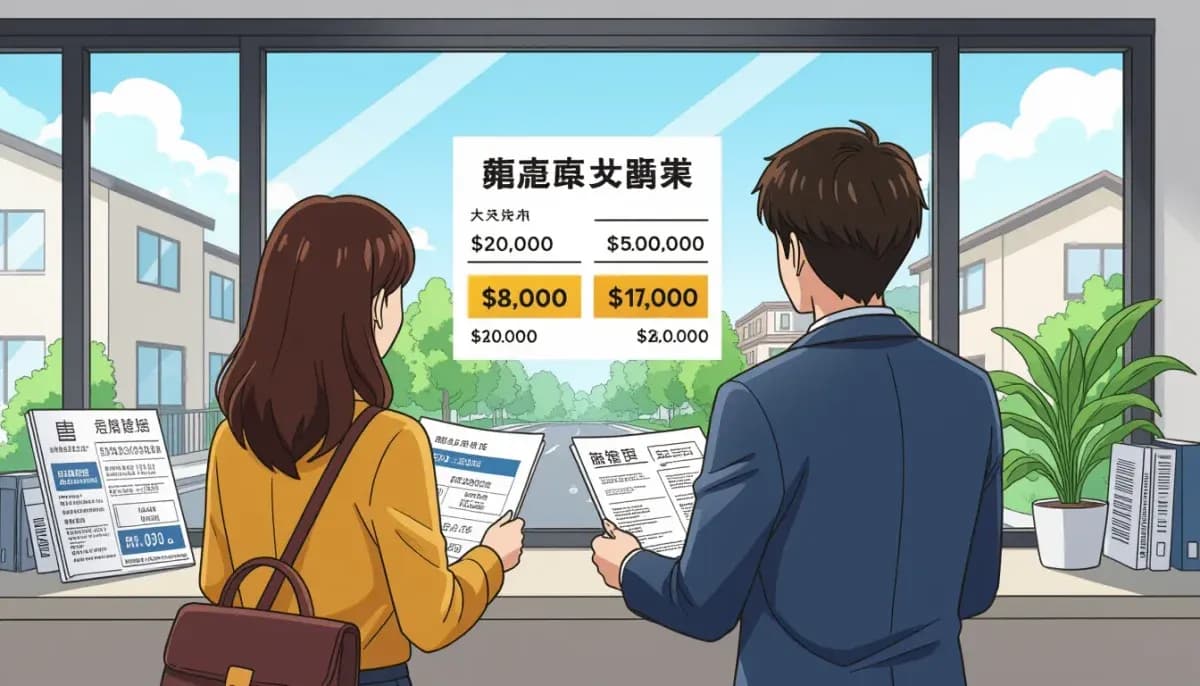
Learn how foreigner markup works in Japan's real estate market, what fees are legally capped, and practical strategies to verify fair pricing and negotiate effectively as a foreign buyer.
Overpricing and Foreigner Markup: How to Spot and Avoid It When Buying Property in Japan
Buying property in Japan as a foreigner is more accessible than most people expect — but that doesn't mean the process is without pitfalls. One of the most frustrating challenges foreign buyers face is overpricing and the so-called "foreigner markup": inflated prices, excessive fees, and service charges that Japanese buyers rarely encounter. Understanding how this markup works, where it shows up, and how to protect yourself can save you hundreds of thousands of yen on your purchase.
This guide walks you through the realities of foreigner pricing in Japan's real estate market, how to identify when you're being overcharged, and practical steps you can take to pay a fair price.
Does Foreigner Markup Actually Exist in Japan?
The short answer is: it depends on the context. Japan does not have a formal "foreigner tax" on property, and legally, foreigners can purchase real estate with the same rights as Japanese nationals. However, overcharging happens in more subtle ways.
A 2016 survey commissioned by Japan's Ministry of Justice found that 40% of foreign residents reported experiencing discrimination in housing — and this extends beyond rental rejections into purchase transactions as well. Foreigner-oriented real estate agencies sometimes charge a premium for English-language services, translation support, and international buyer assistance that can add ¥200,000 to ¥1,000,000 on top of standard transaction costs.
Where foreign markup is most documented:
- Brokerage fees: For rental properties, brokerage fees are legally capped at 0.5 months' rent unless the tenant explicitly agrees in writing to pay more. Many foreigner-oriented agencies charge a full month's rent as a default, assuming foreign clients won't know the legal limit.
- Service fees for English support: Some agencies add "international support" or "translation fees" that aren't itemized clearly in quotes.
- Agent commission on purchases: This is legally capped at 3% of the purchase price + ¥60,000 + 10% consumption tax (effective ~3.3%). Some unscrupulous agents attempt to charge more to buyers who are unfamiliar with the regulation.
- Renovation markups: Foreigners buying akiya (abandoned homes) or older properties sometimes pay significantly inflated renovation quotes when hiring contractors who assume they have larger budgets or less market knowledge.
How to Identify Overpricing Before You Commit
Spotting overpricing starts with doing your own market research before speaking to any agent. Here's what to look for:
Compare Listed Prices with Official Data
Japan has several reliable platforms for checking market-rate property prices. Use SUUMO (suumo.jp) and HOME'S (homes.co.jp) to search similar properties in the same neighborhood with comparable size, age, and proximity to train stations. If a property is priced 15–20% above similar listings without a clear reason (new construction, prime location, recent renovation), that's a red flag.
The Land General Information System (土地総合情報システム) published by Japan's Ministry of Land, Infrastructure, Transport and Tourism provides actual transaction prices for past sales. This lets you see what real buyers paid — not just asking prices.
Check How Long the Property Has Been Listed
Properties that have been on the market for 3 months or more without selling often indicate the price is above what buyers consider fair. In Japan's market, well-priced properties — especially in urban areas — move within weeks. A long listing duration is leverage you can use in negotiations.
Get Multiple Quotes for Fees and Services
Never accept the first quote for legal fees, translation services, or agent commissions. Request itemized written quotes from at least two agencies and compare line by line. Standard fees in Japan are:
| Service | Legal Maximum / Market Rate |
|---|---|
| Agent commission (purchase) | 3% of price + ¥60,000 + 10% tax |
| Agent commission (rental) | 0.5 months' rent (unless you agree to more) |
| Judicial scrivener (登記) | ¥50,000–¥150,000 depending on transaction |
| Home inspection | ¥30,000–¥80,000 |
| Translation services | ¥20,000–¥80,000 per document set |
| Total closing costs (typical) | 6–10% of purchase price (broker), 4–8% (developer direct) |
If any quote significantly exceeds these benchmarks, ask for an explanation in writing. Legitimate agencies welcome the question; overcharging ones often become evasive.
Red Flags That Suggest You're Being Overcharged
Not every overcharge is obvious. Watch for these warning signs throughout the buying process:
Vague or bundled fee structures: If an agency presents you with a single "service fee" or "foreigner support package" rather than itemized costs, push back and ask for a breakdown. Legitimate fees should correspond to identifiable services.
Pressure to skip independent legal review: A trustworthy agent will encourage you to hire an independent judicial scrivener (司法書士) for property registration. If an agent discourages independent review or insists you use only their in-house legal service, that's a serious warning sign.
Comparisons to Western markets: Some agents use phrases like "this is much cheaper than London" or "American buyers pay more at home" to anchor your expectations higher. Japanese property should be priced against the Japanese market, not your home country.
Inflated renovation estimates on aging properties: If you're buying an older house and the agent refers you to a renovation company for a quote, always get at least two independent estimates. Foreigner buyers are sometimes quoted 20–40% above market rates for renovation work, particularly in rural areas with fewer English-speaking contractors.
Delayed or incomplete registration: Signing a purchase contract in Japan does not make you the legal owner — your name must appear in the official property register. If an agent suggests delaying registration or using informal ownership arrangements, walk away immediately.
Negotiation Strategies to Counter Inflated Prices
Even if the initial price isn't inflated for foreigners specifically, all property prices in Japan are negotiable to some degree. Here's how to approach negotiations effectively:
Target 3–5% Below Asking Price
Japan has a strong cultural norm around respectful negotiation. Requesting a 3% reduction is considered reasonable and won't damage the relationship with the seller or agent. Asking for 10% or more in the first offer typically ends serious negotiations.
On a ¥50 million property, a 3% reduction saves ¥1.5 million. On a ¥80 million property, 5% saves ¥4 million — well worth the effort.
Use Data, Not Emotion
Justify your lower offer with comparable sales data from SUUMO, HOME'S, or the Land General Information System. A comment like "comparable properties in this area have sold for ¥X in the past six months" carries far more weight in Japanese business culture than saying you think the price seems high.
Leverage Property-Specific Weaknesses
Properties with the following characteristics warrant stronger negotiating positions:
- Built before 1981 (pre-earthquake standard: 旧耐震基準)
- Upper floors in buildings without elevators
- Located more than 10 minutes' walk from the nearest train station
- Visible maintenance needs or required repairs
- High monthly management fees or reserve fund contributions (管理費・修繕積立金)
Time Your Offer Strategically
March and September are the end of fiscal years for most Japanese real estate companies, meaning agents are strongly motivated to close deals before the books close. Submitting an offer during these months can increase your negotiating leverage. Properties listed for 3+ months are also prime candidates for price reductions.
For more details on the end-to-end purchase process, see our guide: Step-by-Step Home Buying Process in Japan for Foreigners.
Choosing the Right Agent to Avoid Being Overcharged
Your choice of real estate agent is the single most important factor in avoiding foreigner markup. Here's what to look for:
Licensed agents only: Verify that anyone handling your transaction holds a 宅地建物取引士 (Takken-shi) license. This is Japan's national real estate license and is required for all legally compliant transactions. You can verify licenses through the Ministry of Land's online database.
Bilingual agents with Japanese-language access: An agent who simply translates for you (while relying entirely on Japanese-only networks) is less useful than one with genuine access to Japanese seller networks and MLS databases. The best bilingual agents can advocate for you in Japanese while keeping you informed in English.
Avoid agents who only work with foreigners: Ironically, agencies that exclusively serve expat clients can sometimes charge more because their entire business model is built around a market segment with less price sensitivity. Look for agencies that serve both Japanese and international clients — they tend to maintain competitive, market-rate fee structures.
Ask for referrals from the community: Expat forums, online communities, and word-of-mouth from foreigners who have successfully purchased property in Japan are invaluable. A single recommendation from someone who went through the process recently is worth more than an agency's marketing claims.
For a comprehensive overview of the costs you'll encounter, read our detailed breakdown: Hidden Costs and Fees When Buying Property in Japan.
Using Market Data Tools to Verify Fair Pricing
Japan offers better pricing transparency than many countries, if you know where to look. These tools are free and publicly accessible:
SUUMO (suumo.jp): Japan's largest real estate portal, with hundreds of thousands of active listings. Use the advanced search to filter by neighborhood, building age, floor area, and distance to station to find genuine comparables.
HOME'S (homes.co.jp): A competing portal with strong coverage of both Tokyo and regional markets. Useful for cross-referencing SUUMO prices.
Reins Market Information (reins.or.jp): Japan's official Real Estate Information Network System provides actual past transaction data. Access to detailed records may require working through a licensed agent, but the public portal shows aggregate data by area.
Land General Information System: Run by Japan's Ministry of Land, this tool (tochi.mlit.go.jp) shows actual buyer-reported transaction prices, making it the gold standard for verifying whether an asking price reflects real market conditions.
For more on navigating the broader market, see: Japan Real Estate Market Overview and Trends for Foreign Investors.
What to Do If You Suspect You've Been Overcharged
If you believe an agent has charged you improperly or a transaction involved fraud:
- Request a full written itemization of all fees collected and the legal basis for each charge.
- Contact the prefectural real estate authority (都道府県の宅建業免許窓口): All licensed real estate agencies are regulated at the prefectural level, and complaints are taken seriously.
- Consult a judicial scrivener or attorney: For significant disputes, a 司法書士 or 弁護士 can review your contracts and advise on recovery options.
- Japan Housing Finance Agency (住宅金融支援機構): Provides consumer protection guidance for mortgage-related disputes.
Practical Resources for Fair Property Buying
For additional research and community support:
- Complete Guide to Buying Property in Japan as a Foreigner — Overview of the entire process
- Can Foreigners Buy Property in Japan? Legal Rights and Restrictions — Your legal standing as a buyer
- Living in Nihon — Buying Property and Mortgage Guide for Foreigners — Comprehensive resource on navigating the purchase process
- For Work in Japan — Housing and Living Infrastructure Guide — Broader context on housing costs and options
- Gaijin Buy House — Used Condo Price Negotiation Tips — In-depth negotiation tactics for the Japanese market
- Bamboo Routes — Tips for Foreigners Buying Property in Japan — Practical foreigner-focused advice
- Tokyo Portfolio — Myths and Misconceptions About Japan Real Estate — Correcting common misunderstandings
Buying property in Japan as a foreigner doesn't have to mean paying a premium. With the right knowledge, the right agent, and the right tools to verify market prices, you can negotiate from a position of strength and avoid the markups that catch less-prepared buyers off guard. The key is doing your homework before you step into any agency — and knowing exactly what the legal fee limits are before anyone quotes you a price.

Originally from Vietnam, living in Japan for 16+ years. Graduated from Nagoya University, with 11 years of professional experience at Japanese and international companies. Sharing information about buying property in Japan for foreigners.
View Profile →Related Articles

Consumer Protection Rights for Foreign Property Buyers in Japan
Complete guide to consumer protection rights for foreign property buyers in Japan. Learn about the Statement of Important Matters, mandatory warranties, title registration, and dispute resolution options available to non-Japanese buyers.
Read more →
Legal Dispute Resolution for Property Issues in Japan
Facing a property dispute in Japan? Learn how to resolve legal issues as a foreigner — from mediation and arbitration to court litigation. Practical step-by-step guide with costs, timelines, and attorney tips.
Read more →
Due Diligence Mistakes That Cost Foreign Buyers in Japan
Discover the most costly due diligence mistakes foreign buyers make when purchasing property in Japan — from title verification failures to hidden fees, scams, and seismic safety oversights. Includes a complete checklist.
Read more →
Skipping Property Inspection: Consequences and How to Avoid
Skipping a property inspection in Japan can cost you millions of yen in hidden defects. Learn what happens when you skip, how much inspections cost, and how to protect yourself as a foreign buyer.
Read more →
Rushing the Purchase: Why Taking Your Time Matters in Japan
Discover why patience is essential when buying property in Japan. Learn the real costs of rushing a purchase, what due diligence steps take time, and how to protect yourself as a foreign buyer.
Read more →
Language Barrier Mistakes When Buying Property in Japan
Avoid costly language barrier mistakes when buying property in Japan. Learn how to handle Japanese contracts, mortgage documents, and legal disclosures as a foreign buyer.
Read more →