
Land Survey and Boundary Confirmation in Japan

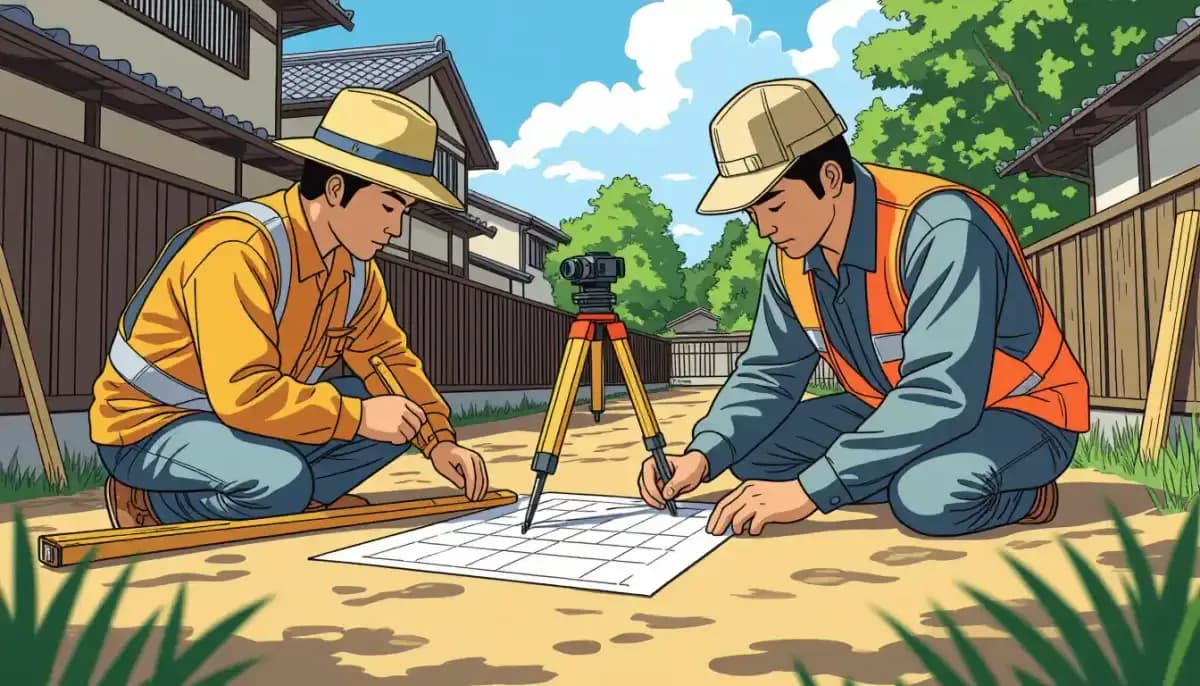
Complete guide to land survey and boundary confirmation (境界確認) in Japan for foreigners. Learn the 5-step process, costs (¥300K–¥1M), timelines, key professionals, and what to watch out for as a foreign buyer.
Land Survey and Boundary Confirmation in Japan: A Complete Guide for Foreigners
Buying land or property in Japan as a foreigner is an exciting milestone — but it comes with a critical due diligence step that many buyers overlook: land survey and boundary confirmation (境界確認, kyōkai kakunin). Before any real estate transaction can legally close in Japan, the boundaries of the land must be clearly defined, agreed upon by all neighboring landowners, and officially recorded. Skipping or rushing this step can lead to costly disputes, failed transactions, and legal headaches that linger for years.
This comprehensive guide explains everything you need to know about the land survey and boundary confirmation process in Japan — from the professionals involved and the step-by-step procedure to costs, timelines, and what foreigners specifically need to watch out for.
Why Land Surveys Matter in Japan
Japan's land registration system has existed for centuries, but historical records at the Legal Affairs Bureau (法務局, Hōmu-kyoku) are frequently inaccurate. Many cadastral (land) records were created using outdated measurement technology — often hand-drawn maps from the Meiji era — meaning the official registered area of a plot may not match its actual physical dimensions.
This discrepancy is not a minor technicality. It can affect:
- The legal size of the property and therefore its market value
- Whether you can obtain a building permit on the land
- Future resale value and the ability to sell the property
- Your ability to secure a mortgage from Japanese banks
- Neighbor disputes over fences, walls, and encroachments
For foreigners buying property in Japan, boundary confirmation is the first and most essential item on any due diligence checklist. Japanese real estate agents and lenders routinely require a completed survey before any sale can proceed.
According to data from Japan's Statistics Bureau Housing and Land Survey — conducted every five years since 1948, with the most recent survey completed in October 2023 — Japan has over 52 million occupied dwellings, each of which depends on accurate land records for taxation, ownership, and transfer purposes.
Key Professionals: Who Handles Land Surveys in Japan
Two distinct licensed professionals handle property surveys and registration in Japan. Understanding their roles is essential:
| Professional | Japanese Title | Role |
|---|---|---|
| Land and House Investigator | 土地家屋調査士 (Tochi Kaoku Chōsashi) | Conducts boundary surveys, creates official survey maps, handles boundary confirmation with neighbors |
| Judicial Scrivener | 司法書士 (Shihō Shoshi) | Handles property title transfer and registration at the Legal Affairs Bureau |
| Real Estate Agent | 宅地建物取引士 (Takuchi Tatemono Torihiki-shi) | Coordinates the transaction, may help find surveyor |
| Neighbor Landowners | 隣地所有者 | Must agree to and sign off on confirmed boundaries |
The 土地家屋調査士 (Land and House Investigator) is the core professional for survey work. They are licensed by the Ministry of Justice and specialize in measuring land, resolving boundary disputes, and submitting accurate maps to the Legal Affairs Bureau. Do not confuse this role with a general real estate agent or architect — only a licensed 土地家屋調査士 can officially confirm boundaries.
For more on the legal framework and property buying process, see our guide on Legal Procedures and Documentation for Japan Property Purchase.
The 5-Step Land Survey and Boundary Confirmation Process
The standard land survey process in Japan involves five distinct phases. Here is what to expect:
Step 1: On-Site Survey and Legal Research
The 土地家屋調査士 begins by visiting the property and gathering all available documentary evidence: existing registration maps (公図, kōzu), survey records from the Legal Affairs Bureau, historical deed documents, and any previous survey records from neighboring properties.
They also inspect the physical site — looking for existing boundary markers (境界標, kyōkai-hyō), which may be concrete posts, metal pins, or wooden stakes set in the ground. In older neighborhoods, these markers may be missing, damaged, or disputed.
Step 2: Preliminary Map Creation
Based on the physical measurements taken on-site and the documentary research, the surveyor creates a preliminary survey map. This draft map shows the proposed boundary lines and is used as the basis for discussions with neighboring landowners.
At this stage, discrepancies between the registered area and the measured area become apparent. In many cases, registered areas are smaller than actual measurements — meaning you may be getting more land than the documents suggest. In other cases, the opposite is true.
Step 3: Boundary Meetings with Neighboring Landowners
This is often the most time-consuming and challenging step. The surveyor convenes meetings with all adjacent landowners — including owners of neighboring private lots and representatives of the local municipal government if the property borders a public road.
Each neighbor must agree to the boundary line shown on the preliminary map. If a neighbor disputes the proposed boundary, the surveyor must negotiate a solution — sometimes requiring additional measurement, research into historical records, or legal mediation.
Foreigners should be aware that:
- Neighbor cooperation is legally required — you cannot finalize a boundary confirmation without signatures from all adjacent landowners
- Absentee neighbors, overseas heirs, or deceased owners with unclear succession can significantly delay this step
- In rural areas and with older properties (akiya), finding all neighboring landowners can be particularly difficult
Step 4: Boundary Confirmation Document Exchange
Once all neighbors agree on the boundary lines, they sign a formal 境界確認書 (kyōkai kakuninsho) — a boundary confirmation agreement. This legally binding document is signed by all parties and becomes part of the permanent property record.
This document is critical. Without it, the survey cannot be submitted to the Legal Affairs Bureau and the property transaction cannot close.
Step 5: Final Survey Map Completion and Registration
With all signatures collected, the 土地家屋調査士 completes the final 地積測量図 (chiseki sokuryō-zu) — the official survey map — and submits it to the Legal Affairs Bureau. This updates the official land records with accurate measurements and confirmed boundaries.
The transaction can now legally proceed to title transfer and registration by the 司法書士.
For more on navigating the full buying process, see our Step-by-Step Home Buying Process in Japan for Foreigners.
Costs: How Much Does a Land Survey Cost in Japan?
Survey costs in Japan vary significantly based on several factors:
| Factor | Lower Cost | Higher Cost |
|---|---|---|
| Land size | Small urban lot (under 100 sq m) | Large rural plot (over 500 sq m) |
| Number of neighbors | 1–2 adjacent owners | 5+ adjacent owners (corner lots, complex shapes) |
| Road frontage | Private road only | Public road requires municipal coordination |
| Existing boundary markers | All markers in place | Missing or disputed markers |
| Access to neighbors | Easy — all local and cooperative | Difficult — absentees, overseas heirs, or disputes |
Typical cost range: ¥300,000 to ¥1,000,000
For complex properties — particularly older rural properties, corner lots, or plots bordering multiple roads — costs can exceed ¥1,500,000. Always request a detailed written quote from your 土地家屋調査士 before engaging their services.
This cost is typically paid by the seller in a standard property sale, but in private sales or akiya (abandoned house) purchases, it may fall to the buyer. Clarify responsibility for survey costs in your purchase agreement before signing.
For a full picture of costs involved in Japanese property purchases, see our guide on Hidden Costs and Fees When Buying Property in Japan.
Timeline: How Long Does a Land Survey Take?
A straightforward land survey with cooperative neighbors typically takes 2 to 3 months from engagement to completion of the final map. However, several factors can extend this significantly:
- Public road frontage: Requires coordination with the municipal government road department, which operates on its own schedule
- Missing neighbors: Tracking down absentee or overseas landowners can take months
- Disputes: Boundary disputes that require legal mediation or court proceedings can take a year or more
- Seasonal delays: Winter in northern Japan (especially Hokkaido) may delay physical site work
If you are purchasing property with a mortgage, be aware that most Japanese banks will not finalize a loan until a survey is complete. This means transactions literally cannot close without a completed survey — factor the survey timeline into your purchase schedule from the start.
Special Considerations for Foreigners
As a foreign buyer in Japan, there are several additional factors to keep in mind regarding land surveys and boundary confirmation:
Language barrier: All boundary confirmation documents (境界確認書) are in Japanese. Ensure you have a bilingual agent, lawyer, or interpreter who can explain what you are signing. Never sign a legal document you do not fully understand.
Unregistered buildings: In rural Japan and akiya properties, it is common to find buildings that are physically present but not registered at the Legal Affairs Bureau. Unregistered buildings cause serious problems — they are ineligible for property insurance, cannot claim the residential land tax reduction, and complicate future sales. If you are buying such a property, completing the initial registration (表題登記, hyōdai tōki) requires both a 土地家屋調査士 and a 司法書士. For more on rural properties, see our guide on Rural and Countryside Properties in Japan for Foreigners.
New 2026 nationality registration requirement: Starting in fiscal year 2026, Japan will require all new property registrants to declare their nationality in the national real estate registry database. This applies at the point of ownership transfer — the survey process itself is unaffected, but foreign buyers should be aware that their nationality will be part of the official ownership record going forward.
No restrictions on foreigners: Japan places no legal restrictions on foreigners owning land. You do not need permanent residency or any specific visa to complete a land purchase. For a broader overview, see Can Foreigners Buy Property in Japan? Legal Rights.
Working with a Land Surveyor as a Foreigner: Practical Tips
Finding and working with a qualified 土地家屋調査士 is straightforward if you know where to look:
- Ask your real estate agent: Most established agents have preferred surveyors they work with regularly
- Use the official directory: The Japan Federation of Land and House Investigators (日本土地家屋調査士会連合会) maintains a searchable member directory at the Ministry of Justice website
- Get multiple quotes: For larger or more complex properties, obtaining 2–3 quotes is advisable
- Request a bilingual surveyor: Some firms serving international clients can provide documentation in English — ask specifically if this is important to you
Gaijin Buy House offers resources and community insights specifically for foreign property buyers navigating the Japanese real estate market, including tips on finding English-speaking professionals.
For general guidance on living in Japan and navigating bureaucratic processes as a foreigner, Living in Nihon is a valuable resource covering everything from visas to daily life in Japan.
If you are also navigating work visas or residence status alongside your property purchase, For Work in Japan covers employment and residency considerations for foreign workers.
What Happens If There's a Boundary Dispute?
Boundary disputes (境界紛争) between neighboring landowners are not uncommon in Japan, particularly in older urban neighborhoods and rural areas where historical records are unclear. If a neighbor refuses to agree to the proposed boundary, several resolution paths exist:
Negotiated settlement: The 土地家屋調査士 works with both parties to find a mutually agreeable boundary line, often based on a compromise between historical records, physical evidence, and practical considerations.
Mediation: Japan's Legal Affairs Bureau offers a boundary dispute mediation (筆界特定制度, hikkei tokutei seido) service, introduced in 2006. This allows a government-appointed boundary investigator to make a determination about the official boundary without going to court. The process typically takes 6–12 months and costs significantly less than litigation.
Court proceedings: In unresolvable disputes, litigation is the final option. Court cases can take years and are expensive — this should be a last resort.
For property buyers, discovering an unresolved boundary dispute during due diligence is a serious red flag. If the seller cannot resolve the dispute before closing, strongly consider walking away from the transaction.
For more on the legal aspects of property ownership in Japan, see our guide on Legal Procedures and Documentation for Japan Property Purchase and the complete overview of property taxes and annual costs associated with Japanese real estate ownership.
Checklist: Land Survey Due Diligence for Foreign Buyers
Before finalizing any land purchase in Japan, work through this checklist:
- [ ] Confirm whether a recent survey (within 10–15 years) already exists for the property
- [ ] Verify all boundary markers (境界標) are physically present and in good condition
- [ ] Identify all adjacent landowners and confirm they are reachable
- [ ] Clarify who pays for the survey — buyer or seller
- [ ] Engage a licensed 土地家屋調査士 and get a written quote
- [ ] Check whether any buildings on the property are properly registered
- [ ] Confirm no active boundary disputes exist with neighbors
- [ ] Understand the timeline and how it fits your purchase schedule
- [ ] Have all boundary confirmation documents reviewed by a bilingual professional before signing
- [ ] Confirm the final survey map has been submitted to the Legal Affairs Bureau before closing
For a comprehensive look at the entire property buying journey in Japan, our Complete Guide to Buying Property in Japan as a Foreigner covers every step from initial search to move-in.
Conclusion
Land survey and boundary confirmation is not optional — it is a legal requirement for property transactions in Japan and a critical protection for your investment. As a foreign buyer, understanding this process gives you a significant advantage: you know what to expect, what questions to ask, and what red flags to watch for.
The process can be time-consuming and occasionally complicated by uncooperative neighbors or unclear historical records, but with the right professional team — a licensed 土地家屋調査士, a trusted judicial scrivener, and a bilingual real estate agent — you can navigate it successfully.
Japan's property market offers tremendous opportunities for foreign buyers, and accurate boundary confirmation ensures that the land you purchase is exactly what you are paying for — no more, no less.

Originally from Vietnam, living in Japan for 16+ years. Graduated from Nagoya University, with 11 years of professional experience at Japanese and international companies. Sharing information about buying property in Japan for foreigners.
View Profile →Related Articles

Notarization and Authentication of Foreign Documents for Japan Property
Learn how to notarize and authenticate foreign documents for buying property in Japan. Covers affidavits, apostilles, consular authentication, translation requirements, and step-by-step process for non-resident foreign buyers.
Read more →
Tax Representative Requirements for Non-Resident Property Owners in Japan
Learn about Japan's tax representative (納税管理人) requirements for non-resident property owners. Who needs one, how to appoint one, costs, and penalties for non-compliance.
Read more →
Anti-Money Laundering Regulations for Japan Property Purchases
Complete guide to Japan's AML regulations for foreign property buyers. Learn identity verification requirements, fund transfer thresholds, FEFTA obligations, and how to ensure smooth compliance when buying property in Japan.
Read more →
Understanding Japan Property Ownership Certificates
Everything foreigners need to know about Japan's touki (property ownership certificate) system: how to obtain records, registration costs, 2024 rule changes for foreign names, and the new 2026 certificate system.
Read more →
Condominium Management Rules for Foreign Owners in Japan
A complete guide to Japan's condominium management rules for foreign owners: kanri kumiai membership, monthly fees, voting rights, 2026 law changes, and obligations for non-resident overseas investors.
Read more →
Japan Building Code Compliance and Certificates Explained
Learn how Japan's Building Standards Act works, what the Kensazumisho (completion inspection certificate) is, and how to verify building code compliance before buying property in Japan as a foreigner.
Read more →