
Japan Real Estate Securitization Explained for Investors

Understand Japan's real estate securitization market — J-REITs, TMK, and GK-TK structures explained. A complete guide for foreign investors with tax implications, market trends, and how to get started.
Japan Real Estate Securitization Explained for Investors
Japan's real estate securitization market has grown into one of the most sophisticated investment ecosystems in Asia, offering foreign investors structured pathways to access high-quality assets — without necessarily owning physical property. Whether you're considering J-REITs, TMK vehicles, or GK-TK partnerships, understanding how securitization works in Japan is essential before committing capital. This guide breaks down the key structures, regulations, tax implications, and practical steps for foreign investors entering Japan's securitized real estate market.
What Is Real Estate Securitization in Japan?
Real estate securitization is the process of converting property assets into tradeable securities. In Japan, this market was formally established in the late 1990s following the 1998 enactment of the Act on Securitization of Assets (SPC Law). The government created this legal framework primarily to help banks and corporations offload non-performing real estate assets after the bubble economy collapsed.
By fiscal year 2023, Japan's real estate securitization market was estimated at 59.8 trillion yen — up from 53.3 trillion yen the prior year. This growth reflects robust institutional and foreign investor demand, particularly in logistics, residential, and office assets.
Securitization works by placing real property into a special purpose vehicle (SPV), which then issues securities (equity stakes, bonds, or trust beneficiary interests) to investors. The underlying asset — the real estate — generates rental income that flows through to investors as dividends or interest payments, while the property itself is held off the balance sheet of the original owner.
Key benefits of securitization:
- Investors gain real estate exposure without direct ownership burdens
- Properties can be sold in fractions, lowering entry costs
- Structures are typically bankruptcy-remote, protecting investors from the original owner's insolvency
- Returns are more predictable compared to direct property speculation
For a broader overview of how foreigners approach Japan property, see our Japan Real Estate Investment Guide for Foreigners.
The Three Major Securitization Structures
Japan uses three primary legal structures for real estate securitization. Each has distinct tax treatment, regulatory requirements, and suitability for different investor types.
1. J-REITs (Japan Real Estate Investment Trusts)
J-REITs are the most accessible structure for foreign retail investors. Launched in 2001, they are listed on the Tokyo Stock Exchange (TSE) and trade like stocks. As of 2024, the J-REIT market capitalization exceeds 15 trillion yen, making it one of the largest REIT markets in the world.
How J-REITs work:
- A trust company holds the underlying real estate
- Units are sold to investors and listed on the TSE
- By law, J-REITs must distribute 90% or more of taxable income to unitholders
- This "pass-through" tax treatment avoids double taxation at the trust level
For foreigners: You can invest in J-REITs through any international brokerage that provides access to the Tokyo Stock Exchange. The process is similar to buying any listed stock — open an account, fund it via wire transfer, and place a buy order.
2. TMK Structure (Tokutei Mokuteki Kaisha)
The TMK, or "Specified Purpose Company," is a special-purpose limited liability corporation created exclusively for asset securitization. Introduced under the 1998 SPC Law, a TMK may only acquire real estate-related assets and conduct limited activities, keeping it "bankruptcy remote" from its sponsors.
How TMK works:
- A TMK issues preferred equity or specified bonds to investors
- The nominal equity (with management rights) is held by a foundation or sponsor
- Investors receive returns as dividends (preferred equity) or interest (bonds)
- Meets tax-qualification requirements to avoid entity-level corporate tax
TMKs are commonly used by institutional investors and private equity funds. They are regulated under Japan's Financial Instruments and Exchange Act (FIEA), with fewer regulatory restrictions than the GK-TK structure.
3. GK-TK Structure (Godo Kaisha – Tokumei Kumiai)
The GK-TK structure pairs a Godo Kaisha (GK, a Japanese LLC) with a Tokumei Kumiai (TK), which is a silent partnership agreement. This is the most widely used structure for private real estate funds and foreign institutional investors.
How GK-TK works:
- Investors enter into TK agreements with the GK, making anonymous contributions
- The GK uses TK funds to acquire real estate (often via a trust beneficiary interest)
- The GK manages the property and distributes income to TK investors
- TK investors are treated as anonymous partners — their names do not appear on public records
Key advantage: Under proper structuring, TK investors receive a "pass-through" for Japanese income tax purposes, meaning only the investor's portion of income is taxed — not the GK itself. This is particularly attractive for foreign funds seeking to minimize Japanese corporate tax exposure.
| Structure | Listed? | Min. Investment | Investor Type | Tax Pass-Through |
|---|---|---|---|---|
| J-REIT | Yes (TSE) | ~¥100,000+ | Retail & institutional | Yes (90%+ distribution) |
| TMK | No | ¥100M+ typically | Institutional | Yes (if qualified) |
| GK-TK | No | ¥50M+ typically | Institutional/private | Yes (TK pass-through) |
| Direct Ownership | N/A | Variable | Any | No |
How Foreign Investors Access These Structures
Foreign investors are not restricted from investing in any of the three main securitization structures, but practical access varies significantly.
J-REITs are the easiest entry point. Under Japan's Foreign Exchange and Foreign Trade Law, non-residents can freely acquire listed J-REIT units from Japanese residents. You simply need a brokerage account with TSE access — firms like Interactive Brokers, Saxo Bank, or Rakuten Securities (with foreign registration) provide this service.
TMK and GK-TK structures require legal counsel and typically minimum investments of ¥50–100 million or more. Foreign funds and family offices typically access these through:
- Direct co-investment with Japanese developers or operators
- Subscribing to private real estate funds (J-funds) that use GK-TK wrappers
- Partnering with a Japanese asset manager licensed under the FIEA
For understanding how to approach property acquisition directly, review our guide on Legal Procedures and Documentation for Japan Property Purchase.
Tax Implications for Foreign Investors
Tax treatment is one of the most important — and complex — aspects of real estate securitization in Japan. The rules differ based on your residency status, the structure used, and whether your home country has a tax treaty with Japan.
Withholding Tax on J-REIT Distributions
J-REIT distributions to non-resident investors are subject to Japanese withholding tax of approximately 20.42% (including the 2.1% reconstruction special income tax). However, Japan has tax treaties with over 70 countries, and many reduce this rate to 10–15%.
For example:
- US investors: 10% under the Japan–US tax treaty
- UK investors: 10% under the Japan–UK treaty
- Investors from non-treaty countries: 20.42% standard rate
TMK and GK-TK Tax Treatment
For TMK investors (preferred equity holders), dividends distributed by a qualifying TMK are taxed similarly to J-REIT distributions — subject to withholding tax at treaty-reduced rates. TMKs that meet the "tax-qualified" criteria under Japanese tax law can deduct distributions paid to investors, effectively eliminating corporate tax at the TMK level.
For GK-TK investors, TK income is taxed in Japan as business income. Non-resident TK investors are generally subject to a 20.42% withholding tax on their TK distributions. The GK itself is also subject to corporate tax unless carefully structured.
Important: Always consult a Japanese tax advisor or international tax specialist before investing. The interaction between Japan's domestic tax rules, bilateral tax treaties, and your home country's foreign tax credit rules can be complex. See our article on Property Taxes and Annual Costs of Owning Property for related guidance.
Market Trends Driving Securitization Demand
Several macro trends make Japan's securitized real estate market attractive in the mid-2020s:
1. Weak Yen The yen's multi-decade lows have made Japanese real estate cheap for dollar- and euro-denominated investors. Foreign real estate investment in Japan reached JPY 2.3 trillion ($15.7 billion USD) in 2024 — a 12% year-over-year increase.
2. Rising Tokyo Office and Logistics Demand Tokyo's commercial real estate transactions hit US$34 billion in 2024, a 50% increase year-over-year, making it the world's top investment market for the first time in 15 years. Industrial and logistics properties attract 40% of all foreign real estate investment, driven by e-commerce growth.
3. Institutional Capital Inflows Major global investors including Blackstone, GIC, and ESR have collectively invested over JPY 900 billion ($6.2 billion USD) in Japanese logistics assets, validating the market's depth and liquidity.
4. Residential Demand Resilience Investment in residential assets by foreign entities grew by 18% year-over-year to reach JPY 740 billion ($5 billion USD) in 2024, fueled by demand for multifamily rental properties and co-living spaces.
These trends directly benefit J-REIT investors and private fund participants in logistics, residential, and office-focused vehicles. For more on Japan's investment landscape, see J-REITs and Indirect Real Estate Investment in Japan for Foreigners.
Choosing the Right Securitization Vehicle
The right structure depends on your investment size, liquidity needs, risk tolerance, and whether you want hands-on involvement.
Choose J-REITs if:
- You want liquidity — units can be sold on any trading day
- Your investment is under ¥10 million
- You prefer professional management without property responsibilities
- You want regular dividend income with transparent reporting
Choose TMK/GK-TK if:
- You are an institutional investor or family office
- You seek higher returns through control and leverage
- Your investment exceeds ¥50–100 million
- You can tolerate illiquidity (typical hold periods: 3–7 years)
- You want to co-invest alongside experienced Japanese operators
For context on direct property investment as an alternative, see our Complete Guide to Buying Property in Japan as a Foreigner and Commercial Property Investment in Japan for Foreigners.
Additional resources for research:
- Can Foreigners Buy REIT in Japan? 2025 Guide — practical walkthrough for retail investors
- Basic Structure of Real Estate Finance in Japan — legal overview from Chambers
- Japan REIT Official Site — data on all listed J-REITs
- How to Invest in Japanese Real Estate: Options for Foreigners — overview of all vehicle types
- Living in Nihon — Wealth Building in Japan — financial planning guide for foreigners in Japan
- Gaijin Buy House — Real Estate Investment Guide — investment strategies for foreign buyers
- For Work in Japan — Expat Financial Resources — financial resources for working expats
Key Risks to Understand Before Investing
No investment vehicle is without risk. Securitized real estate in Japan carries the following specific risks:
Currency Risk: All returns are denominated in yen. A strengthening yen increases returns for foreign investors; a weakening yen erodes them. While the weak yen has been favorable recently, currency cycles are unpredictable.
Interest Rate Risk: The Bank of Japan's gradual normalization of interest rates — after decades of near-zero rates — could increase borrowing costs for leveraged real estate funds and compress J-REIT valuations. Monitor BOJ policy closely.
Liquidity Risk: J-REITs offer daily liquidity, but TMK and GK-TK investments are highly illiquid. Early exit provisions are typically limited and may involve penalties.
Regulatory Risk: Japan's FIEA and real estate regulations are subject to change. Foreign investors must ensure their structures remain compliant, particularly regarding the registration requirements for FIEA-licensed asset managers.
Vacancy and Rental Risk: Underlying properties must generate income. Japan's demographic decline in rural areas creates vacancy risk in non-prime locations, while urban core properties — especially Tokyo — remain resilient.
Conclusion: A Market Worth Taking Seriously
Japan's real estate securitization market combines legal clarity, institutional depth, and diversified asset classes into one of Asia's most attractive investment ecosystems. For foreign retail investors, J-REITs offer a low-friction entry point with strong liquidity and transparent governance. For institutional players, TMK and GK-TK structures provide the flexibility to pursue value-add and core-plus strategies with favorable tax treatment.
The key to success lies in understanding which structure suits your capital size and goals — and working with qualified Japanese legal and tax advisors to execute properly. Japan's market rewards informed, patient investors who take the time to understand its unique frameworks.
For those just starting their Japan property journey, begin with our Complete Guide to Buying Property in Japan as a Foreigner and explore Rental Property Investment in Japan for Foreign Landlords for income-generating strategies.

Originally from Vietnam, living in Japan for 16+ years. Graduated from Nagoya University, with 11 years of professional experience at Japanese and international companies. Sharing information about buying property in Japan for foreigners.
View Profile →Related Articles
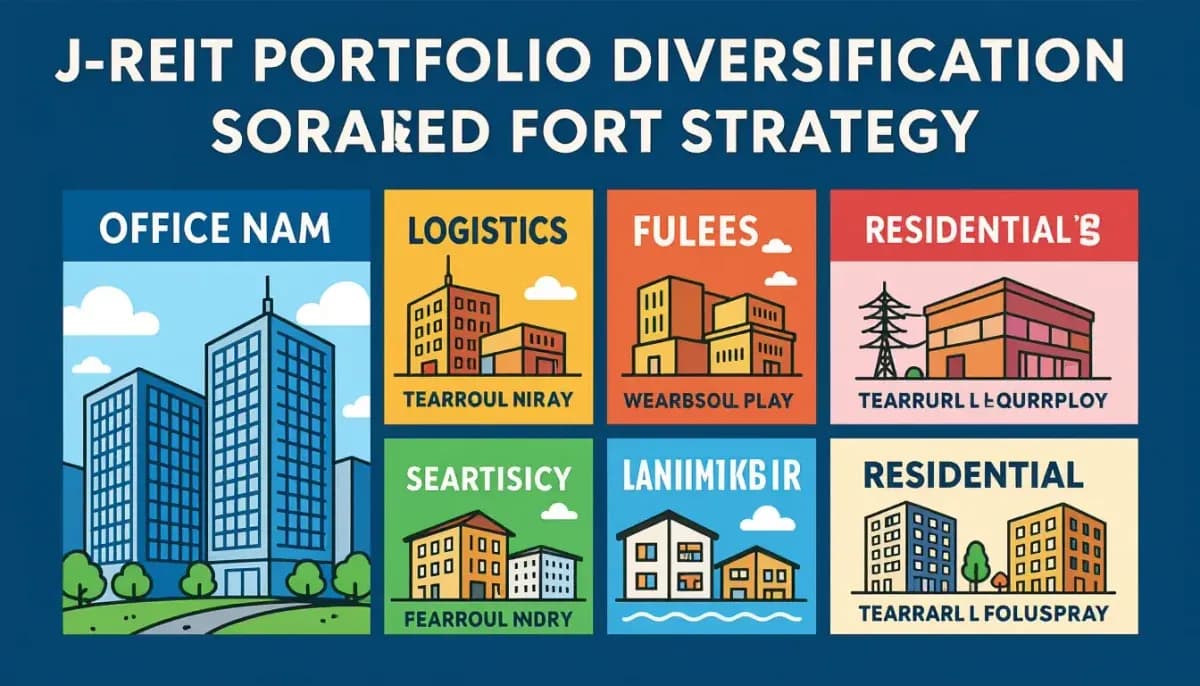
Building a J-REIT Portfolio: Diversification Strategy Guide
Learn how to build a diversified J-REIT portfolio as a foreign investor in Japan. Covers sector allocation, ETF strategies, interest rate risk, tax efficiency, and sample portfolios with real yield data.
Read more →
J-REIT Market Performance and Historical Returns Analysis
Comprehensive analysis of J-REIT market performance and historical returns for foreign investors. Learn about dividend yields averaging 4.61%, how to invest as a foreigner, tax considerations, and sector breakdowns across Japan's ¥16 trillion REIT market.
Read more →
Private REITs and Institutional Real Estate Investment in Japan
Comprehensive guide to private REITs and institutional real estate investment in Japan. Learn how private J-REITs work, who can access them, market trends, and how foreigners can invest in Japan's property market through REITs and direct ownership.
Read more →
J-REIT Tax Implications for Foreign Investors
Complete guide to J-REIT tax implications for foreign investors: withholding tax rates (20.42%), treaty reductions, capital gains rules, double taxation relief, and filing requirements explained.
Read more →
Japan Real Estate Crowdfunding Platforms: Complete Guide
Complete guide to Japan real estate crowdfunding platforms for foreign investors. Compare CREAL, OwnersBook, Minna De Ooyasan and learn how foreigners can invest with as little as ¥10,000.
Read more →
Japan Real Estate Investment Funds: Options Beyond REITs
Discover Japan real estate investment fund options beyond J-REITs: GK-TK structures, private REITs, crowdfunding platforms like COZUCHI, and more for foreign investors.
Read more →