J-REITs and Indirect Real Estate Investment in Japan for Foreigners
Japan's real estate market is one of the most attractive in Asia, but direct property ownership can be complex, expensive, and demanding for foreigners. J-REITs (Japan Real Estate Investment Trusts) offer a powerful alternative: a way to invest in Japanese real estate through publicly traded securities, without the need to manage tenants, navigate complex legal procedures, or commit millions of yen to a single property. This comprehensive guide explains everything foreigners need to know about J-REITs and other indirect real estate investment vehicles in Japan.
What Are J-REITs? Understanding the Basics
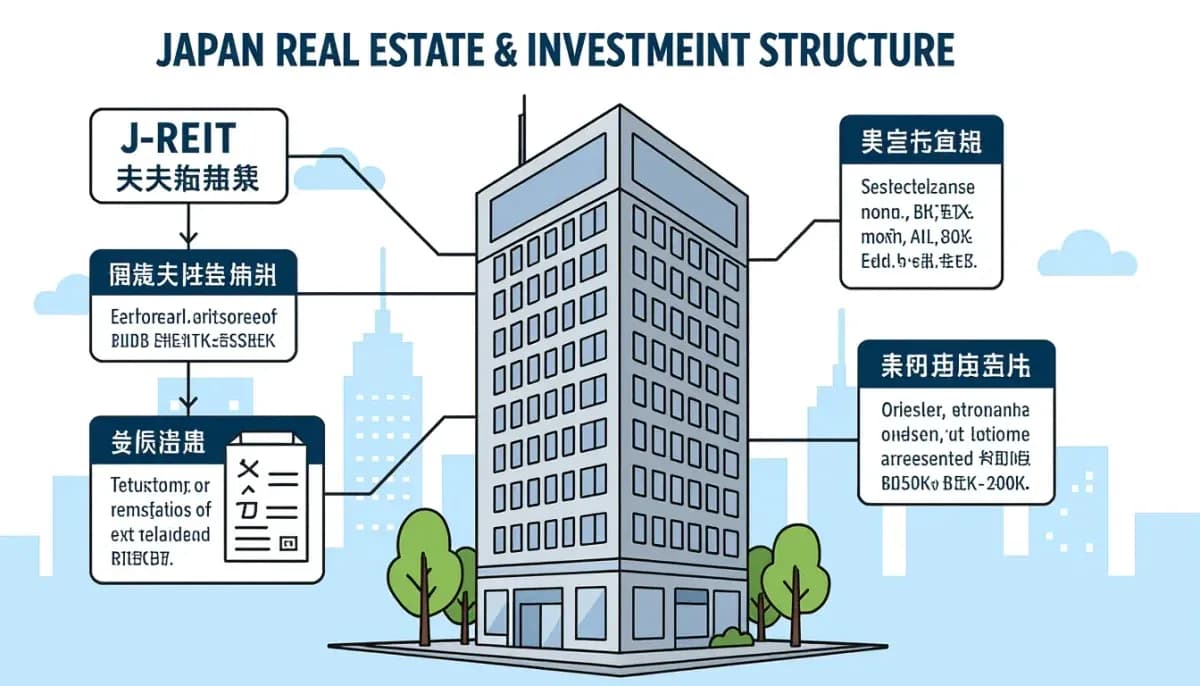
J-REITs are investment vehicles that pool money from multiple investors to acquire, manage, and operate income-generating properties across Japan. Listed on the Tokyo Stock Exchange (TSE), J-REIT units trade like stocks, making them highly accessible to both domestic and international investors.
Established in 2001, Japan's REIT market has grown into one of the largest in the world. As of 2023, there were 58 publicly traded J-REITs with a combined market capitalization of approximately 15.4 trillion Japanese yen, collectively owning around 4,700 properties valued at 22.8 trillion yen on an acquisition basis.
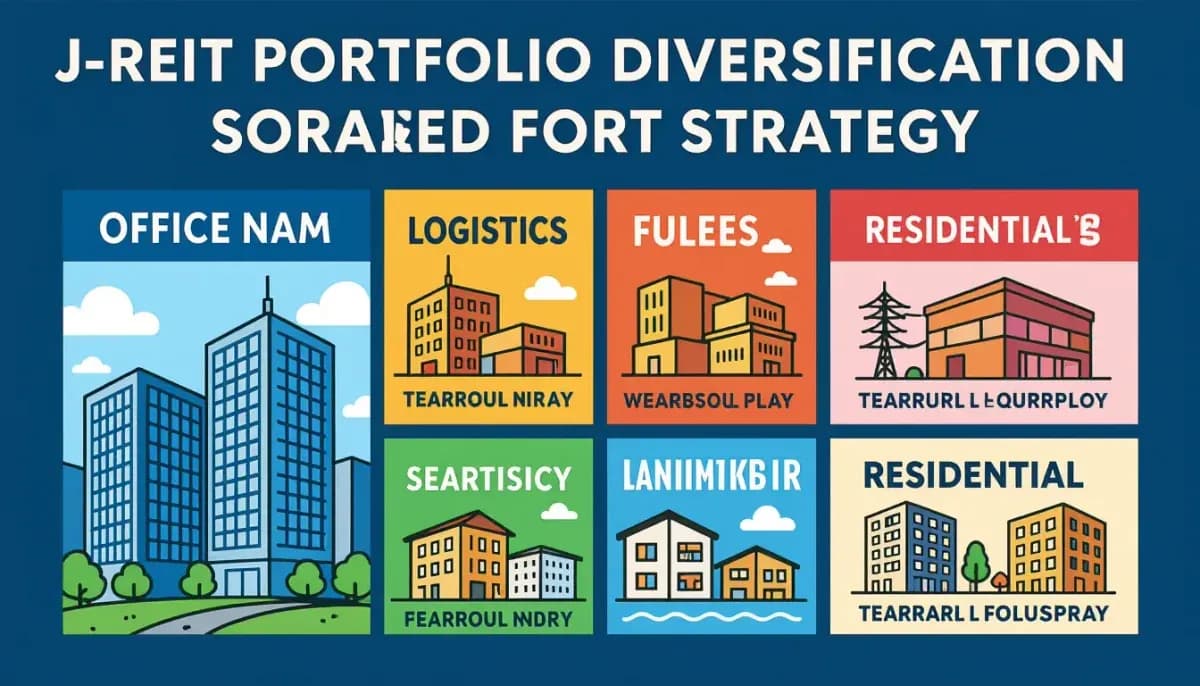
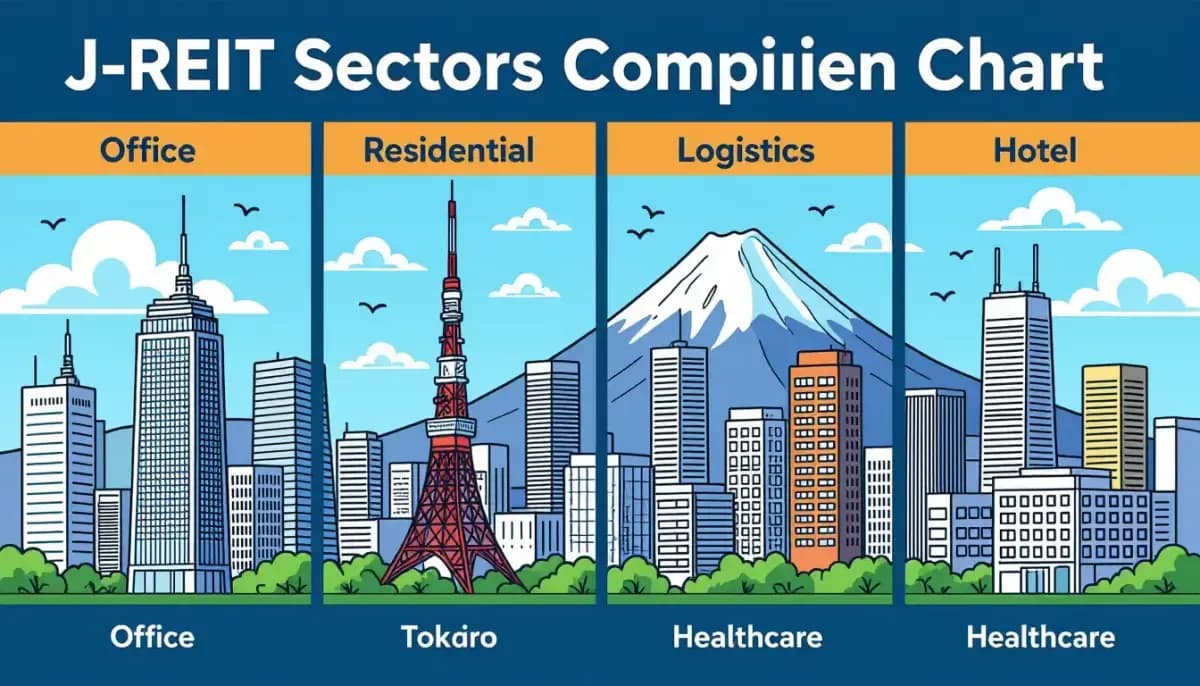
J-REITs invest in a wide range of property types:
| Property Type | Examples | Typical Focus |
|---|
| Office Buildings | Tokyo Grade-A towers, regional offices | Stable long-term leases |
| Residential | Tokyo apartments, urban condominiums | Steady rental income |
| Retail/Shopping | Malls, supermarkets, street-front retail | Consumer spending |
| Logistics | Warehouses, distribution centers | E-commerce growth |
| Hotels/Hospitality | City hotels, resort properties | Tourism recovery |
| Healthcare | Nursing homes, medical clinics | Aging population |
| Mixed/Diversified | Multiple asset classes | Broad diversification |
One of the most compelling features of J-REITs is their legally mandated distribution requirement: J-REITs must distribute at least 90% of their taxable income to investors each year. This ensures regular dividend payouts and makes J-REITs particularly attractive for income-seeking investors.
Can Foreigners Invest in J-REITs?
Yes — and with very few restrictions. Under Japan's Foreign Exchange and Foreign Trade Act (外国為替及び外国貿易法), non-residents can freely acquire units of J-REITs listed on the Tokyo Stock Exchange from Japanese residents. There are no citizenship or residency requirements to purchase J-REIT units.
This stands in stark contrast to direct property purchases, which, while legally available to foreigners, involve significant procedural hurdles: navigating Japanese-language contracts, obtaining a hanko (personal seal), registering with municipal authorities, and arranging local banking. J-REITs bypass all of these complexities.
For more comprehensive information about your rights as a foreign real estate investor in Japan, see Can Foreigners Buy Property in Japan? Legal Rights and Restrictions.
How to Invest in J-REITs: Step-by-Step
Option 1: International Brokerage Account (Recommended for Non-Residents)
The simplest approach for foreigners living outside Japan is to open an account with an international brokerage that provides access to the Tokyo Stock Exchange. Major platforms include Interactive Brokers, Saxo Bank, and certain regional brokers in Asia. Steps:
- Open a brokerage account with an internationally-focused broker that supports TSE trading
- Fund your account via international wire transfer
- Research specific J-REITs by analyzing their sector focus, distribution yield, NAV (Net Asset Value), and management track record
- Place a buy order using the J-REIT's TSE ticker symbol (e.g., 8951 for Nippon Building Fund)
- Receive distributions twice yearly in most cases, credited to your brokerage account
Option 2: Japanese Brokerage Account (For Japan Residents)
Foreigners residing in Japan with a valid visa and Japanese address can open accounts with domestic brokerages such as SBI Securities, Rakuten Securities, or Monex. These platforms offer:
- Lower commission fees compared to international brokers
- Full access to all 58 J-REITs on the TSE
- Japanese-language research tools and reports
- NISA (少額投資非課税制度) eligibility for tax-free investment up to annual limits
For residents of Japan, NISA accounts provide a significant tax advantage, sheltering J-REIT distributions and capital gains from Japanese income tax within the allowable annual contribution limits.
For more on financial services available to foreigners in Japan, Living in Nihon has an excellent Wealth Building and Life Planning Guide for Foreigners covering investment strategies and financial planning fundamentals.
Option 3: Global ETFs and Mutual Funds Tracking J-REITs
For investors who prefer a fully diversified, hands-off approach, several global ETFs include J-REIT exposure:
- iShares Asia Property Yield UCITS ETF — includes Japanese REITs alongside other Asian markets
- FTSE EPRA Nareit Developed REITs Japan Index — tracks Japanese REIT performance
- Invesco Japan All Cap REIT Index — focused exclusively on J-REITs
These can typically be purchased through any standard brokerage without requiring TSE access.
Tax Implications for Foreign Investors
Understanding the tax treatment of J-REITs is crucial before investing. The key points:
Withholding Tax on Distributions: Distributions paid to non-resident investors are subject to Japanese withholding tax at a standard rate of 20.42%. However, Japan has tax treaties with many countries that reduce this rate — typically to 10% or 15% for treaty-country residents. Countries with favorable treaties include the US, UK, Australia, Canada, Germany, and most EU member states.
Capital Gains Tax: Capital gains from selling J-REIT units are subject to Japanese taxation for non-residents in certain circumstances. The applicable treaty between Japan and your home country will determine the actual liability. In many treaty relationships, capital gains on listed securities are taxed only in the investor's country of residence.
Tax Filing: If you receive J-REIT income and your country requires worldwide income reporting (such as the US under FATCA), you will need to report this income domestically. Foreign tax credits may be available to offset Japanese withholding taxes already paid.
Always consult a qualified tax advisor experienced in cross-border investments before committing capital. The interaction between Japanese tax law and your home country's tax obligations can be complex.
For more on Japanese tax obligations related to property ownership, see Property Taxes and Annual Costs of Owning Property in Japan.
J-REIT Performance and Returns
J-REITs are widely regarded as one of the higher-yielding REIT markets globally. Key performance metrics:
- Average dividend yield: Approximately 4.36% (2023), with ranges typically between 3.5% and 5.5%
- This compares favorably to US REITs (typically 3-4%), European REITs (2-4%), and Australian REITs (4-5%)
- Yields have remained relatively stable at 3-5% since 2013
- The TSE REIT Index stood at 1,691.63 points as of March 2025
These distributions are paid semi-annually for most J-REITs, providing a predictable income stream. For investors from low-interest-rate environments, J-REIT yields represent an attractive return, particularly given the added benefit of currency diversification via Japanese yen exposure.
For context on broader Japan Real Estate Market Overview and Trends, including how macroeconomic factors affect REIT valuations, that guide provides useful background reading.
For investors researching direct vs. indirect investment strategies, Old Houses Japan offers a helpful comparison in their Japan Real Estate Investment Trusts: A Beginner's Guide.
Top J-REITs to Know: Major Players
While investment decisions should always be based on independent research, these are some of the largest and most well-known J-REITs by market capitalization:
| J-REIT Name | TSE Code | Focus | Notes |
|---|
| Nippon Building Fund | 8951 | Office | Japan's first J-REIT (2001) |
| Japan Real Estate Investment | 8952 | Office | Top-tier Tokyo office assets |
| Nippon Prologis REIT | 3283 | Logistics | E-commerce warehouse focus |
| GLP J-REIT | 3281 | Logistics | Global logistics player |
| Activia Properties | 3279 | Retail + Office | Diversified urban assets |
| Japan Hotel REIT | 8985 | Hotels | Tourism recovery beneficiary |
| Advance Residence Investment | 3269 | Residential | Urban apartment portfolio |
Always review each J-REIT's latest financial disclosures, distribution history, and occupancy rates before investing. The official J-REIT.jp information portal maintained by the Investment Trusts Association of Japan provides reliable data on all listed trusts.
Risks and Considerations
Like all investments, J-REITs carry risks that foreign investors should understand:
Interest Rate Risk: Rising interest rates in Japan increase borrowing costs for J-REITs and can reduce valuations. The Bank of Japan's gradual shift away from ultra-loose monetary policy warrants attention.
Currency Risk: All J-REIT investments are denominated in Japanese yen. A weakening yen reduces returns when converted back to foreign currencies. Conversely, a strengthening yen amplifies returns.
Market Volatility: J-REIT units trade on the stock exchange and are subject to daily price fluctuations driven by investor sentiment, economic data, and global market conditions — regardless of the underlying property values.
Sector Concentration: Some J-REITs concentrate heavily in specific property types (e.g., office or retail), exposing investors to sector-specific downturns.
Management Quality: The asset management company running each J-REIT has significant influence over performance. Research the track record and fee structure of the management entity.
For foreigners considering the full spectrum of Japanese property investment — both direct and indirect — Gaijin Buy House provides practical guides for international buyers at gaijinbuyhouse.com. Similarly, For Work in Japan covers financial planning aspects relevant to expats at forworkinjapan.com.
J-REITs vs. Direct Property: Which Is Right for You?
| Factor | J-REIT | Direct Property |
|---|
| Minimum Investment | ~¥100,000+ (one unit) | ¥10–100 million+ |
| Liquidity | High (listed on TSE) | Low (months to sell) |
| Management Required | None | Yes (or hire PM) |
| Diversification | Built-in across properties | Single asset risk |
| Dividend Income | Semi-annual, high yield | Rental income varies |
| Capital Appreciation | Market-driven unit price | Property value gains |
| Leverage | Pre-managed by REIT | You control/apply |
| Language Barrier | Minimal | Significant |
| Residency Required | No | Helpful but not required |
J-REITs are best suited for: investors seeking passive income, those without Japanese residency or language skills, investors with smaller capital, and those wanting diversification without management responsibility.
Direct property may be better for: those seeking specific location ownership, investors planning to use the property personally, buyers targeting capital appreciation in specific submarkets, or those wanting greater control over their investment.
For a full exploration of what direct ownership entails, Complete Guide to Buying Property in Japan as a Foreigner provides a thorough walkthrough of the process.
Conclusion: J-REITs as a Gateway to Japanese Real Estate
J-REITs represent one of the most accessible, transparent, and liquid ways for foreigners to invest in Japan's robust real estate market. With a 20+ year track record, a legally mandated high distribution ratio, strong regulatory oversight, and no ownership restrictions for foreign investors, J-REITs remove virtually all of the barriers that make direct property ownership challenging for international investors.
Whether you're an expat resident of Japan seeking to build wealth locally, or an overseas investor looking to gain exposure to Japan's resilient real estate fundamentals, J-REITs deserve serious consideration as part of a balanced investment portfolio.
Start with small positions, diversify across sectors, stay mindful of currency and tax implications, and leverage the official Japan REIT market data to track performance over time.