
How Japan Property Tax Assessment Values Are Calculated

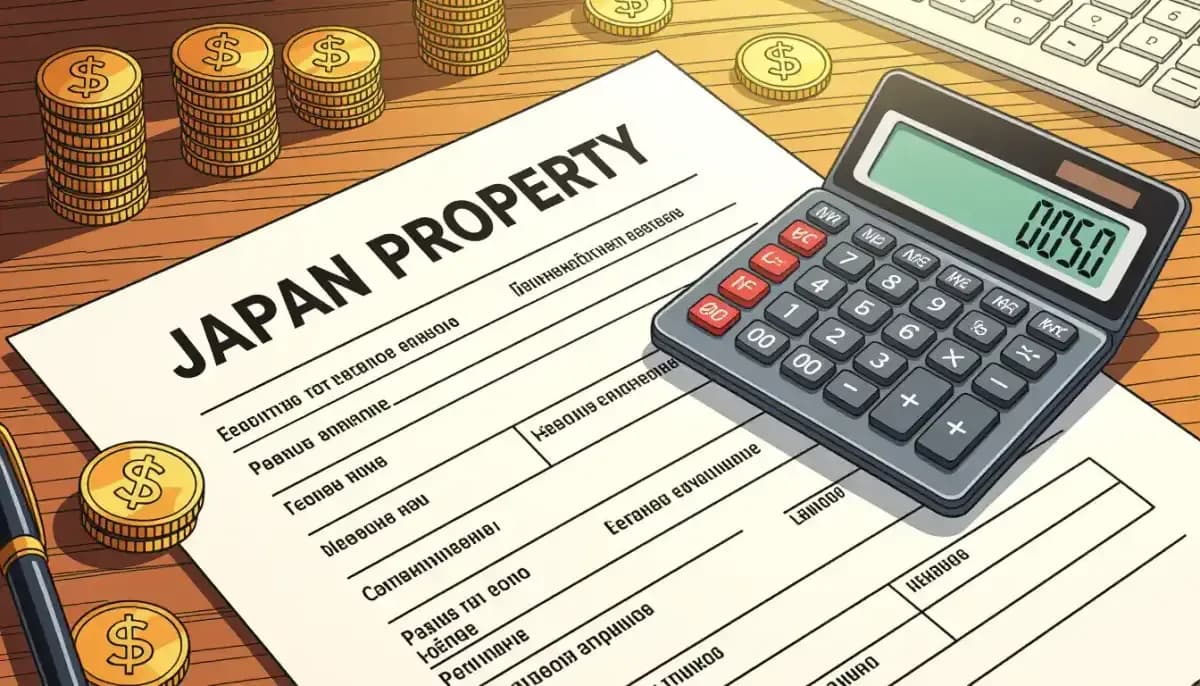
Learn exactly how Japan calculates property tax assessment values for land and buildings, what reductions apply, the 3-year reassessment cycle, and how foreign property owners are taxed.
How Japan Property Tax Assessment Values Are Calculated
Understanding how Japan calculates property tax assessment values is one of the most important—and least explained—aspects of owning real estate in Japan. Unlike many countries where property taxes are based on purchase price or current market value, Japan uses an independently assessed value that is typically far below what you paid. This gap between market price and assessed value can mean significant tax savings, but also surprises if you don't understand the system.
This guide explains the full mechanics: how land and building values are assessed separately, what reductions apply, how often values are recalculated, and what this means for your annual tax bill as a foreign property owner in Japan.
The Core Tax Formula: Land and Building Assessed Separately
Japan's primary recurring property tax is called Fixed Asset Tax (固定資産税, koteishisan-zei). The annual tax is calculated using a simple formula:
Annual Tax = (Assessed Land Value + Assessed Building Value) × Tax Rate
The standard Fixed Asset Tax rate is 1.4%. In areas designated as urbanization promotion zones, an additional City Planning Tax (都市計画税, toshi-keikaku-zei) of up to 0.3% applies. Combined, the maximum rate is 1.7%.
What makes Japan's system unique is that the assessed value used in this formula is not your purchase price and not current market value. It is a figure set independently by the municipal government based on national standards—and it is almost always considerably lower than what a buyer would pay on the open market.
| Tax Type | Rate | Applies To |
|---|---|---|
| Fixed Asset Tax (固定資産税) | 1.4% | All taxable properties nationwide |
| City Planning Tax (都市計画税) | Up to 0.3% | Urbanization promotion areas only |
| Combined Maximum | 1.7% | Urban properties in planning zones |
For a deeper overview of all ongoing ownership costs, see our guide to Property Taxes and Annual Costs of Owning Property in Japan.
How Land Assessment Value Is Determined
Land is assessed based on a standard published annually by the national government: the Official Land Price (公示地価, kojichika). This price is published each spring and represents benchmark transaction values for reference points across Japan.
Municipal governments then set the assessed land value (課税標準額, kazei-hyoujungaku) at approximately 70% of the official land price. This 70% figure is a nationally mandated cap designed to prevent assessed values from exceeding market reality.
The chain works like this:
Market Transaction Price → Official Land Price → ×70% = Assessed Land Value
In practice, this means:
- In resort areas like Niseko (Hokkaido), where foreign demand has driven up actual prices dramatically, assessed land values may be 50% or more below the real purchase price
- In established urban neighborhoods, the gap may be smaller but still significant
- In rural areas with declining populations, official land prices (and thus assessed values) may be very low
Practical example: If you buy a rural plot for ¥5,000,000 but the official land price values it at ¥2,000,000, the assessed land value is approximately ¥1,400,000—and that is the figure your annual tax is based on.
For foreign buyers considering rural or countryside property, understanding this discount is essential. Read more in our guide to Rural and Countryside Properties in Japan for Foreigners.
How Building Assessment Value Is Determined
Buildings are assessed entirely separately from land, using a depreciated replacement cost method:
- Reconstruction cost: How much would it cost to build an identical structure today, in the same location?
- Depreciation: How much value has the building lost due to age and wear since it was built?
Assessed Building Value = Reconstruction Cost − Accumulated Depreciation
Factors the municipality considers include:
- Building structure (wood, reinforced concrete, steel-frame)
- Construction materials and finishes
- Floor area
- Location of the property
- Year of construction
- Current physical condition
The depreciation component is significant. Older Japanese wooden structures (mokuzou) depreciate quickly. Buildings that are 30–40+ years old may have an assessed building value near zero. This is why purchasing an older akiya (vacant house) often comes with very low annual property taxes—the building itself contributes almost nothing to the tax bill.
Practical example: A 40-year-old wooden house may be assessed at ¥0 for the building component, meaning you only pay tax on the land.
For buyers considering older properties, see our overview of Types of Properties Available in Japan.
The 3-Year Reassessment Cycle
Japan does not reassess property values every year. Instead, municipalities recalculate assessed values on a 3-year cycle, using nationally standardized methods published by the Ministry of Internal Affairs and Communications.
- The most recent major reassessment year was 2024
- The next scheduled reassessment is 2027
- Between reassessment years, values remain fixed (with limited exceptions for major renovations, demolitions, or disasters)
This means if you buy a property between reassessment years, your tax is based on the previous cycle's values until the next reassessment. In rising markets (like parts of Tokyo or Niseko), this can mean your assessed value is lower than current market conditions would suggest.
Important note for akiya buyers: If you demolish an old building on the land before reassessment, the municipal government will not wait until the 3-year cycle—they will immediately remove the residential land discount (explained in the next section), and your land tax can multiply sharply.
The Most Important Discount: Residential Land Reductions
The single most impactful feature of Japan's property tax system is the residential land area reduction. When a residential building stands on the land, a large reduction is applied to the taxable land value:
| Land Category | Qualifying Area | Fixed Asset Tax Reduction | City Planning Tax Reduction |
|---|---|---|---|
| Small residential land (小規模住宅用地) | First 200 m² | Reduced to 1/6 of assessed value | Reduced to 1/3 |
| General residential land (一般住宅用地) | Portion over 200 m² | Reduced to 1/3 | Reduced to 2/3 |
What this means in practice: For a 200 m² residential plot, instead of paying 1.4% on the full assessed land value, you pay 1.4% on just 1/6 of that value. The effective land tax rate becomes just 0.23%.
This is the largest single tax break in the system—and it is easily lost. The discount is revoked if:
- The residential building is demolished (even temporarily)
- The property is officially designated a "Special Vacant House" (特定空き家, tokutei-akiya) under the 2015 Vacant House Special Measures Act
- The land use changes to non-residential
The akiya trap: Many buyers plan to demolish an old structure to build new. During the period between demolition and new construction completion, the land loses the 1/6 reduction, and annual land tax can jump by 5–6x. Plan your demolition and construction timeline carefully to minimize this window.
For more on the costs involved in buying property, see our guide to Hidden Costs and Fees When Buying Property in Japan.
New Construction Building Tax Reductions
Newly built residential properties receive a temporary building tax discount:
| Property Type | Reduction | Duration |
|---|---|---|
| Standard new residential building | 50% reduction on building tax | First 3 years |
| Fire-resistant apartment / condo building | 50% reduction on building tax | First 5 years |
This 50% discount applies to the floor area used for residential purposes, up to 120 m². For larger homes, the portion above 120 m² is taxed at the standard rate from year one.
After the discount period ends, expect a notable increase in annual taxes—budget for this in advance, especially if you are financing the purchase with a mortgage.
Tax-Free Minimums
Small assessed values below certain thresholds are fully exempt from Fixed Asset Tax:
- Land: Assessed value below ¥300,000 → no tax
- Buildings: Assessed value below ¥200,000 → no tax
- Depreciable business assets: Below ¥1,500,000 → no tax
This exemption is particularly relevant for very old rural properties where both land and building values may be minimal—meaning some akiya homes have essentially zero ongoing property tax.
Practical Tax Calculation Examples
| Property Type | Assessed Land Value | Assessed Building Value | Land Reduction | Annual Fixed Asset Tax (1.4%) |
|---|---|---|---|---|
| Small rural akiya (old wooden, 200 m² plot) | ¥1,000,000 | ¥0 (fully depreciated) | 1/6 = ¥166,667 taxable | ~¥2,333/year |
| Mid-size countryside house (200 m² plot) | ¥3,000,000 | ¥500,000 | 1/6 = ¥500,000 + ¥500,000 | ~¥14,000/year |
| Urban condo in Tokyo (60 m² unit) | ¥8,000,000 (land share) | ¥6,000,000 | 1/6 = ¥1,333,333 + ¥6,000,000 | ~¥103,000/year |
| New suburban house (200 m² plot, new build) | ¥5,000,000 | ¥8,000,000 | 1/6 + 50% building discount | ~¥80,000/year (first 3 yrs) |
Note: City Planning Tax adds up to 0.3% on top of these figures in urban areas.
How Foreign Owners Are Taxed
Japan's property tax applies equally to all property owners regardless of nationality. There is no surcharge or different rate for foreign buyers.
However, non-resident foreign owners face one specific administrative requirement: you must designate a Tax Agent (納税管理人, nōzei kanrinin) who is based in Japan to receive tax notices and make payments on your behalf. This can be:
- A trusted friend or family member resident in Japan
- A property management company
- A legal or accounting professional
Tax notices (納税通知書, nōzei-tsūchisho) are sent once per year, typically in April or May, by the municipal government where the property is located. The bill covers the full year and can be paid in 4 installments, with deadlines typically in June, September, December, and February (exact dates vary by municipality).
Late payment penalties:
- Under 1 month late: 2.4% surcharge
- Over 1 month late: 8.7% surcharge
- Penalties under ¥1,000 are waived
For a full overview of the buying process and ongoing ownership requirements, visit Living in Nihon's guide for foreigners in Japan and Gaijin Buy House for practical buyer perspectives.
How to Find Your Property's Assessed Value
After purchase, you will receive the official assessed value certificate (固定資産評価証明書, koteishisan hyōka shōmeisho) from the municipal government. You can also:
- Request a copy from the municipal tax office (役所, yakusho) in the city/town where the property is located
- Check the tax notice sent each spring—it breaks down the assessed value of land and building separately
- Review the fixed asset ledger (固定資産課税台帳, koteishisan kazei daichō)—property owners have the right to inspect this
Foreign buyers using a real estate agent should ask for the most recent assessed value certificate as part of due diligence. For more on the documentation involved, see our guide to Legal Procedures and Documentation for Japan Property Purchase.
For working professionals in Japan looking to understand the full tax picture, For Work in Japan offers additional context on financial obligations for foreign residents.
Summary: Key Points to Remember
- Japan property taxes are based on assessed value, not purchase price or market value
- Land is assessed at approximately 70% of the official land price—already below market
- Residential land under 200 m² gets a further 1/6 reduction—the most important discount in the system
- Buildings depreciate over time; old structures may have near-zero assessed building value
- Assessed values are recalculated every 3 years (next: 2027)
- Demolishing a building triggers immediate loss of the 1/6 land discount—plan accordingly
- Foreign non-resident owners must appoint a tax agent to receive notices
- Annual taxes are paid in 4 installments; late payment incurs surcharges
Understanding assessment values before you buy is essential to accurate budgeting. The gap between what you pay and what you are taxed on is one of Japan's most buyer-friendly features—provided you protect the residential land discount by maintaining a building on the land.
For a full picture of ongoing costs, read our Complete Guide to Buying Property in Japan as a Foreigner and the detailed breakdown of Property Taxes and Annual Costs of Owning Property in Japan.
Additional resources:

Originally from Vietnam, living in Japan for 16+ years. Graduated from Nagoya University, with 11 years of professional experience at Japanese and international companies. Sharing information about buying property in Japan for foreigners.
View Profile →Related Articles
Filing Tax Returns in Japan as a Foreign Property Owner
Complete guide to filing Japanese tax returns as a foreign property owner. Covers residency status, rental income tax rates (20.42%), capital gains, tax representatives, double taxation treaties, and step-by-step filing instructions.
Read more →
Tax Treaty Benefits for Foreign Property Owners in Japan
Learn how Japan's tax treaties protect foreign property owners from double taxation. Covers rental income, capital gains, how to claim treaty benefits, and non-resident rules.
Read more →
Japan Property Depreciation and Tax Benefits for Investors
Learn how Japan's property depreciation system works, how to calculate tax deductions, accelerated depreciation on used buildings, and strategies to maximize your investment returns as a foreign investor in Japan.
Read more →
Gift Tax on Japan Property Transfers Explained
Understand Japan's gift tax (zoyo zei) on property transfers. Covers tax rates up to 55%, key exemptions including the ¥30M housing deduction, visa status rules for expats, and how to file your return.
Read more →
Inheritance Tax on Japan Property for Foreign Nationals
Understand Japan's inheritance tax on property for foreign nationals: rates up to 55%, residency rules, property valuation discounts, exemptions, and estate planning strategies for expats.
Read more →
Capital Gains Tax on Japan Property Sales for Foreign Owners
Complete guide to capital gains tax on Japan property sales for foreign owners. Learn about tax rates (20.315% vs 39.63%), non-resident withholding rules, the ¥30M primary residence exemption, and how to minimize your tax bill.
Read more →