
Japan Property Purchase Contract Explained for Foreigners

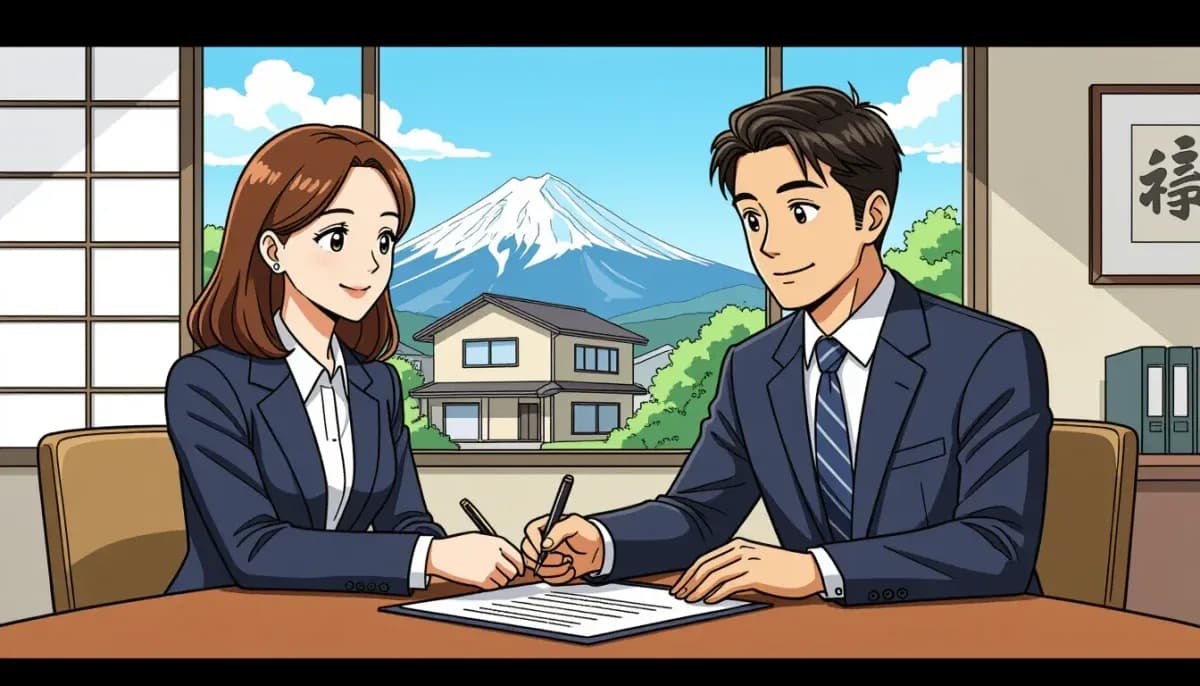
A complete guide to Japan property purchase contracts for foreigners: understand the Sales Agreement, Important Matters Explanation, deposit rules, required documents, and legal obligations step by step.
Japan Property Purchase Contract Explained for Foreigners
Purchasing property in Japan is a straightforward legal process — but the paperwork can feel overwhelming if you don't know what to expect. For foreign buyers, the contract stage is especially critical: misunderstanding a clause or missing a key document can delay your purchase or, worse, cause you to lose your deposit. This guide breaks down every document, step, and legal obligation you need to understand before you sign anything.
Whether you're buying a condo in Tokyo or a countryside house in rural Japan, the core contract process is the same. Japan does not restrict foreign nationals from owning property — you have full ownership rights, including the right to inherit. But the paperwork must be followed precisely.
The Two Core Documents You Will Sign
The Japanese property purchase process revolves around two major documents: the Explanation of Important Matters (重要事項説明書 / jūyō jikō setsumeisho) and the Sales and Purchase Agreement (売買契約書 / baibai keiyakusho). Understanding the difference between them — and what each covers — is essential.
1. Explanation of Important Matters (重要事項説明書)
This is a legally mandated disclosure document prepared by the seller's real estate agent. Under Japan's Real Estate Brokerage Act, it must be delivered in writing and explained verbally to the buyer before the purchase agreement is signed.
The document typically ranges from 20 to 100 pages and covers:
- Existing mortgages, liens, or encumbrances on the property
- Boundary disputes and easement agreements
- Building restrictions (minimum road frontage, setback requirements)
- Zoning classification and proximity to industrial areas
- Location of sewage, water, gas, and electrical infrastructure
- For condominiums: monthly management fees, repair reserve funds, planned renovations, and parking rights
- Earnest money conditions and loan cancellation provisions
- Breach penalties and remedies
- Property condition disclosures: past damage, suicides on the premises, nearby undesirable features (cemeteries, noise sources)
- Environmental concerns: soil pollution, asbestos
As a foreign buyer, insist on a bilingual version or bring a certified translator. The verbal explanation must be delivered by a licensed real estate agent (宅地建物取引士 / takuchi tatemono torihiki shi). Do not waive this step or rush through it.
2. Sales and Purchase Agreement (売買契約書)
Once you are satisfied with the Important Matters explanation, you proceed to sign the Sales and Purchase Agreement. This is the binding contract that commits both parties to the transaction.
At signing, you will pay the earnest money deposit (手付金 / tetsuke-kin), typically 5–10% of the purchase price. This deposit is non-refundable if you back out without legal cause. If the seller cancels, they must return double the deposit amount.
The Sales and Purchase Agreement contains:
- Purchase price and payment schedule
- Closing date and conditions
- Loan cancellation clause (if you can't secure financing, you can withdraw)
- Defect liability terms
- Penalty clauses for breach
Important: Once you sign this contract, the transaction is legally binding. There is no cooling-off period for real estate in Japan (unlike some consumer products).
Step-by-Step: The Full Contract Process
Here is the complete sequence from offer to ownership transfer. For a detailed walkthrough of the entire home buying journey, see our Step-by-Step Home Buying Process in Japan for Foreigners.
| Step | Action | Timeframe |
|---|---|---|
| 1 | Submit Letter of Intent (LOI) | Day 1 |
| 2 | Negotiate price and terms | 1–2 weeks |
| 3 | Receive Explanation of Important Matters | 1 day |
| 4 | Sign Sales and Purchase Agreement + pay deposit (5–10%) | 1 day |
| 5 | Secure mortgage final approval | 2–4 weeks |
| 6 | Settlement: pay balance, receive keys | 1 day |
| 7 | Register ownership transfer | Within 1 month |
| 8 | File Bank of Japan notification (non-residents) | Within 20 days |
Required Documents at Contract Signing
Your required documents depend on your residency status in Japan. Foreign buyers with a residence card have a smoother process; non-residents face more bureaucratic steps.
| Document | Japan Resident | Non-Resident |
|---|---|---|
| Photo ID | Residence card (both sides) | Valid passport |
| Proof of address | Residence registration | Affidavit from embassy |
| Seal certificate | Required | May require consular seal |
| Corporate documents | N/A | Certified registration copy (if corporate buyer) |
For mortgage applications, additional documents are required. These typically include 2–3 years of withholding tax statements, pay stubs from the past 3 months, employment verification, and tax certificates from your municipality. For a full breakdown, see the Mortgages and Home Loans for Foreigners in Japan guide.
Legal Obligations Unique to Foreign Buyers
Bank of Japan Notification
If you are a non-resident purchasing property in Japan, you must file a notification with the Ministry of Finance (via the Bank of Japan) within 20 days of signing the purchase contract, under the Foreign Exchange and Foreign Trade Act (外国為替及び外国貿易法). Failure to comply can result in fines.
Important Land Investigation Law
Properties located near national borders, defense facilities, or critical infrastructure may require additional notification to the Cabinet Office under the Important Land Investigation and Investigation Law (重要土地等調査法). This law was enacted in 2021 and applies to designated sensitive zones. Your real estate agent or judicial scrivener should advise you if this applies.
Agricultural Land Restrictions
Purchasing agricultural land (農地) requires approval from the local Agricultural Committee (農業委員会). This is a separate process and can be complex for foreigners. Most standard residential and commercial purchases are not affected.
Tax Representative Requirement
Non-resident property owners must appoint a tax representative (納税管理人 / nōzei kanrinin) who handles Japanese tax obligations on your behalf. This is a legal requirement, not optional. The representative can be a trusted individual in Japan or a professional tax accountant.
The Role of the Judicial Scrivener (司法書士)
One role that surprises many foreign buyers: at settlement, a judicial scrivener (司法書士 / shiho shoshi) is present to handle the official ownership registration. This legal professional:
- Verifies the identity of all parties
- Confirms the seller has clear title to transfer
- Files the ownership transfer registration at the Legal Affairs Bureau (法務局)
- Officially records your name as the new owner in Japan's property registry
The judicial scrivener's fee is typically 50,000–100,000 yen and is included in the overall closing costs. For a full breakdown of what you'll pay, see Hidden Costs and Fees When Buying Property in Japan.
Deposit Rules: What Happens If Something Goes Wrong
The deposit (手付金) paid at contract signing serves as a financial anchor for both parties. Here's how it works in different scenarios:
| Scenario | Outcome |
|---|---|
| You back out without legal cause | Forfeit 100% of deposit |
| Seller backs out | Seller returns 200% of deposit (double) |
| Loan cancellation clause invoked | Full deposit returned |
| Property fails inspection (if clause included) | Full deposit returned |
| Mutual agreement to cancel | Negotiable |
This is why the loan cancellation clause (融資利用の特約 / yūshi riyō no tokuyaku) is critical. Always ensure this clause is in your contract. If your mortgage is denied, you should be able to withdraw and recover your deposit.
Understanding Contract Language: Key Japanese Terms
Even if you work with an English-speaking agent, you'll encounter Japanese legal terminology in documents. Here are the most important terms:
| Japanese | Romaji | Meaning |
|---|---|---|
| 売買契約書 | baibai keiyakusho | Sales and Purchase Agreement |
| 重要事項説明書 | jūyō jikō setsumeisho | Explanation of Important Matters |
| 手付金 | tetsuke-kin | Earnest money / deposit |
| 融資利用の特約 | yūshi riyō no tokuyaku | Loan cancellation clause |
| 司法書士 | shiho shoshi | Judicial scrivener |
| 所有権移転登記 | shoyūken iten tōki | Ownership transfer registration |
| 不動産登記 | fudōsan tōki | Real estate registration |
| 仲介手数料 | chūkai tesūryō | Real estate agent commission |
Costs at Contract Signing
Signing the purchase contract involves immediate out-of-pocket costs beyond the deposit. Plan for the following:
| Cost | Amount |
|---|---|
| Earnest money deposit | 5–10% of purchase price |
| Real estate agent commission (partial) | 3% + 60,000 yen (+ tax), often split between signing and closing |
| Stamp duty on contract | 1,000–60,000 yen (based on purchase price) |
| Judicial scrivener fee | 50,000–100,000 yen |
| Registration license tax | 0.4–2% of assessed value |
Total additional costs at closing typically come to approximately 10% of the purchase price. For a full cost analysis, see Property Taxes and Annual Costs of Owning Property in Japan.
Tips for Foreigners Navigating the Contract Process
Get a bilingual agent. The verbal explanation of Important Matters is legally required and will be delivered in Japanese. A bilingual agent or licensed interpreter is essential — this is not a step to rush.
Never waive the loan cancellation clause. If your mortgage is denied after signing without this clause, you lose your deposit. Always verify this protection is in your contract.
Allow time for overseas fund transfers. Sending money from abroad to Japan for your deposit or closing payment requires 2–3 weeks lead time due to anti-money laundering compliance checks. Start this process early.
Verify the Important Matters document for defects. Look carefully at the property condition disclosure section. Japan requires sellers to disclose known defects, including if someone died on the property (suicide or unattended death) — these properties are often called jiko bukken (事故物件) and must be disclosed.
Confirm the zoning classification. Japan's zoning laws determine what can be built, renovated, or operated on the property. This matters if you plan any construction or commercial use.
For comprehensive legal information beyond the contract stage, see our Legal Procedures and Documentation for Japan Property Purchase guide and the Can Foreigners Buy Property in Japan? Legal Rights and Restrictions overview.
Additional Resources
For more detailed guidance on the mortgage application process as a foreigner, including documents required and how permanent residency affects your options, read the comprehensive breakdown at Gaijin Buy House: Foreigner Mortgage Application Documents in Japan.
For a complete overview of the property purchase and mortgage process in Japan for foreigners — including the 7-step buying timeline and what documents you need based on your visa status — visit Living in Nihon: Buying Property & Mortgage Guide for Foreigners in Japan.
For general housing and living infrastructure guidance for foreigners navigating Japan's real estate system, For Work in Japan: Housing & Living Infrastructure Guide provides practical context on finding and securing housing as an expat.
The legal process is also well-documented at Apartment Japan: The Legal Process of Buying Property in Japan as a Foreigner and at Realestate.co.jp: Explanation of Important Matters.
Understanding the Japan Real Estate Market Overview and Trends and Types of Properties Available in Japan will also help you make a more informed purchase decision before reaching the contract stage.

Originally from Vietnam, living in Japan for 16+ years. Graduated from Nagoya University, with 11 years of professional experience at Japanese and international companies. Sharing information about buying property in Japan for foreigners.
View Profile →Related Articles

First-Time Home Buyer Guide for Foreigners in Japan
Complete first-time home buyer guide for foreigners in Japan. Learn the step-by-step process, costs (5-7% extra fees), mortgage options without PR, and key mistakes to avoid when buying Japanese property.
Read more →
Japan Property Viewing Tips for Foreign Buyers
Complete guide to property viewings (naiken) in Japan for foreign buyers. Learn what to check, bring, and ask — including earthquake safety, home inspections, and neighborhood tips.
Read more →
How to Search for Property Online in Japan as a Foreigner
Learn how to search for property online in Japan as a foreigner. Discover the best Japanese real estate portals, English-friendly websites, and expert tips for finding your ideal home from anywhere in the world.
Read more →
Japan Real Estate Terminology Glossary for Foreign Buyers
Complete glossary of Japanese real estate terms for foreign buyers. Covers area measurements, legal documents, zoning laws, financial terms, and key 2025-2026 regulatory changes — with Japanese, romaji, and English explanations.
Read more →
Property Handover and Settlement Process in Japan
A complete guide to Japan's property settlement process for foreign buyers. Learn what happens on closing day, required documents, costs, and post-settlement obligations.
Read more →
Deposit and Earnest Money in Japan Real Estate Transactions
Learn everything about earnest money (手付金 tetsukekin) in Japan real estate: how much to pay, what happens if the deal falls through, and tips for foreign buyers navigating the deposit system.
Read more →